---
title: The Digital Construction Shift with CPWD in 2026
description: Learn how CPWD is adopting digital construction with BIM and smart workflows to improve project efficiency, collaboration, and delivery.
image: https://blog.novatr.com/hubfs/How%20CPWD%20is%20Embracing%20Digital%20Construction%20in%202026%20(1).jpg
---
[Blogs](https://www.novatr.com/learning-hub)
- [Architecture & Construction](https://www.novatr.com/learning-hub?category=Architecture+%26+Construction)
- [BIM](https://www.novatr.com/learning-hub?category=BIM)
- [Computational Design](https://www.novatr.com/learning-hub?category=Computational+Design)
- [Company News](https://www.novatr.com/learning-hub?category=Company+News)
- [Expert Talks](https://www.novatr.com/learning-hub?category=Expert+Talks)
Explore Courses
[Just Launched  BIM Professional Program v.2026 Take your career to the next level by mastering the real-world application of BIM. Know More](https://www.novatr.com/courses/bim-professional-program)
[ Master Computational Design Course Break into an advanced career by learning to apply the power of computation to the art of design. Know More](https://www.novatr.com/courses/computational-design)
[Blogs](https://www.novatr.com/learning-hub)
Explore Blogs
- [Architecture & Construction](https://www.novatr.com/learning-hub?category=Architecture+%26+Construction)
- [BIM](https://www.novatr.com/learning-hub?category=BIM)
- [Computational Design](https://www.novatr.com/learning-hub?category=Computational+Design)
- [Company News](https://www.novatr.com/learning-hub?category=Company+News)
- [Expert Talks](https://www.novatr.com/learning-hub?category=Expert+Talks)
Courses
- [BIM Professional Program v.2026](https://www.novatr.com/courses/bim-professional-program)
- [Master Computational Design](https://www.novatr.com/courses/computational-design)
- [Archi/](https://www.novatr.com/learning-hub?category=BIM)
Featured Article
# How CPWD is Embracing Digital Construction in 2026

Harshita Chaudhary
May 22, 2026
5 min read
.jpg)

The Central Public Works Department (CPWD) is behind some of India's most significant government projects, from central government buildings to large public infrastructure across the country. And in 2026, the way it builds is changing.
CPWD has published its own BIM guidelines, formally establishing digital construction as a governance tool. This means the government has mandated that all projects be built using BIM. It includes a defined budget threshold, with a focus on 3D, 4D, and 5D BIM for planning, design, and construction.
In this blog, we take a look at what that shift means in practice, how BIM adoption is reshaping construction technology workflows within CPWD, and what it means for the broader direction of smart construction and BIM India across public sector delivery.
## Key Takeaways
- CPWD has formally mandated BIM projects through its own guidelines, integrating 3D, 4D, and 5D workflows across government projects, making BIM adoption a baseline requirement
- Beyond design, CPWD is combining digital construction with ERP, IoT, and digital twins for real-time visibility across large public infrastructure projects
- Smart construction through BIM creates a transparent, auditable digital record of every cost, design, and schedule change, critical for publicly funded government projects
- With BIM India adoption accelerating rapidly, driven by government mandates and a construction sector undergoing digital transformation, professionals with construction technology skills are increasingly in demand across public and private sector infrastructure projects.
Unlock High-Paying Careers With BIM
Master BIM workflows, software and skills on real projects.
Apply Now
\*Limited seats available
## How Is CPWD Adopting Digital Construction and BIM in 2026?
CPWD has published its own BIM guidelines, formally titled "Introducing BIM in CPWD, "establishing digital construction as a structured governance approach rather than just a visualisation tool, with the integration of 3D, 4D scheduling, and 5D costing covering planning, design, and construction of government projects ([source](https://www.smartpatna.co.in/mission.aspx)).
The Ministry of Housing and Urban Affairs (MoHUA) and CPWD have begun mandating BIM projects for large public infrastructure projects above a defined budget threshold, following a model similar to the UK's BIM Level 2 requirement ([source](https://globalbim.org/news/info-country/india/)).
The Ministry of Housing and Urban Affairs (MoHUA) has also introduced digital construction through 3D BIM in projects like the Delhi Mass Rapid Transit System Phase IV, signalling that BIM adoption is moving from policy to active implementation across government projects.
This government push is creating real market demand, making BIM skills in India more valuable for engineers and construction professionals working on public infrastructure and smart construction projects across the country ([source](https://www.businesstoday.in/opinion/columns/story/making-cities-smart-why-india-needs-to-embrace-this-new-technology-to-rapidly-transform-its-urban-space-406419-2023-11-20)).
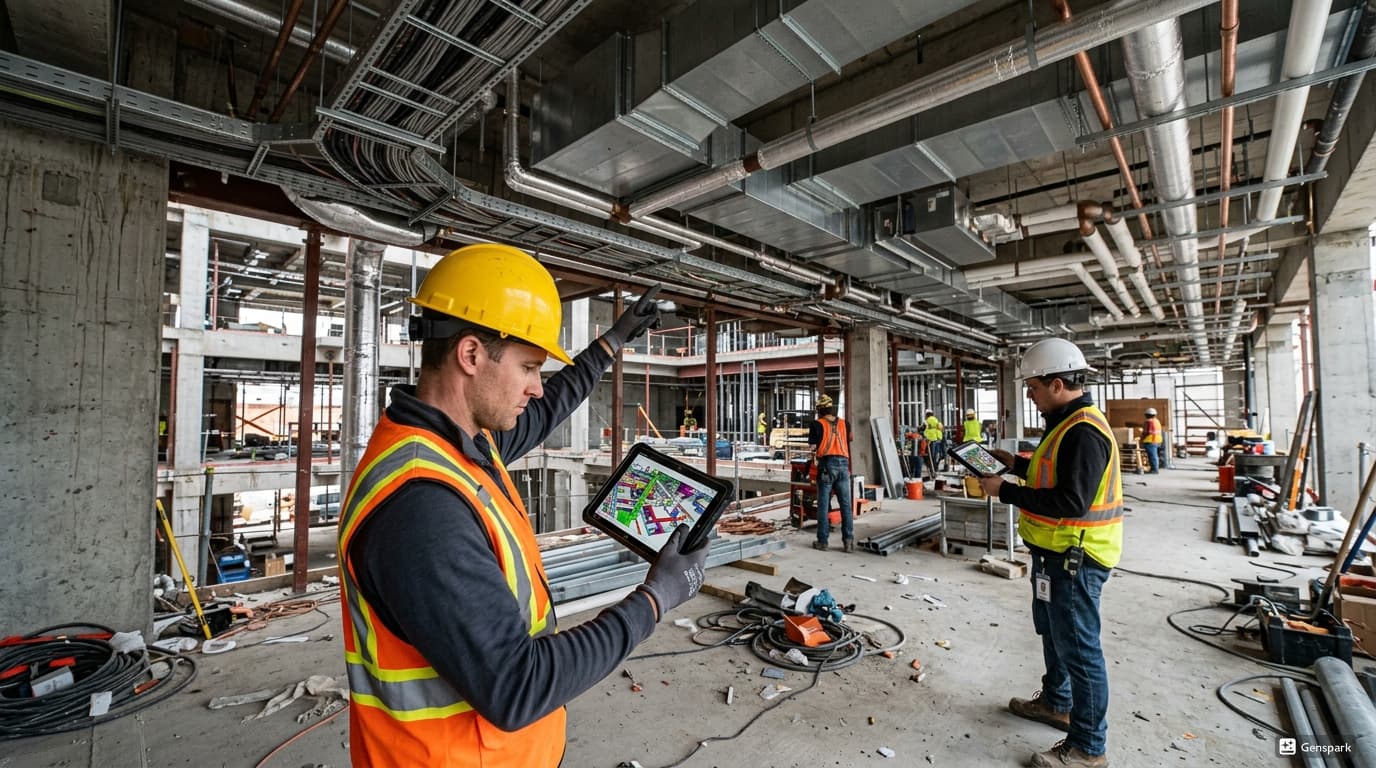
## What Technologies Like BIM, Digital Twins, and ERP Are Used by CPWD?
CPWD's shift toward digital construction is not limited to BIM. It is part of a broader move to adopt interconnected technologies across the full lifecycle of government projects.
BIM projects under CPWD now integrate 3D design, 4D scheduling, and 5D costing, moving beyond basic modelling to cover planning, construction coordination, and project delivery across public infrastructure ([source](https://www.smartpatna.co.in/mission.aspx)).
Alongside BIM adoption, technologies such as ERP platforms for schedule and cost management, IoT sensors for site monitoring, drones for progress tracking, and AI for risk modelling are increasingly used on large smart construction projects in India.Moreover, Digital Twin technology, involving real-time digital modelling of physical assets using BIM, GIS, AI, and IoT, is also gaining mainstream traction in Indian public infrastructure, enabling better monitoring, maintenance, and long-term asset management.
Together, these tools are helping CPWD move from project-by-project digital construction workflows to a more connected, data-driven approach to managing public infrastructure at scale.
[Also Read: Top 30 Architecture Thesis Topics and Ideas for Students](https://www.novatr.com/blog/architecture-thesis-projects)
## Why Is Digital Construction Critical for Government Infrastructure Projects?
India's government projects have long struggled with two recurring issues: delays and cost overruns. According to industry data, BIM-enabled public infrastructure projects in India have reported reduced project costs and fewer design clashes compared to traditional delivery methods.
Understanding how CPWD is using BIM in construction projects starts with recognising that it goes further than 3D modelling. BIM projects combined with ERP platforms, IoT sensors, and AI-driven analytics give project teams real-time visibility into schedules, costs, and site conditions, reducing the coordination gaps that typically cause delays on large government projects.
CPWD's digital construction strategy in 2026 comes down to structured, phased BIM adoption, starting with large projects and progressively expanding across public infrastructure delivery. Government projects are now expected to use 5D BIM for cost control and follow ISO 19650 standards for managing project information.
## How Does CPWD’s Digital Shift Improve Project Efficiency and Transparency?
Why CPWD is adopting BIM for government buildings comes down to accountability. BIM projects enhance transparency by maintaining a comprehensive digital record of the entire project. Every change in design, every cost update, and every schedule adjustment is documented within the model, creating a clear audit trail that can be reviewed at any stage.
Digital construction through BIM adoption supports better planning, reduces errors during execution, and improves long-term asset management for publicly funded infrastructure. For an organisation like CPWD, which manages projects across hundreds of ministries and departments, this level of data visibility is critical.
How BIM improves CPWD project delivery is evident in how teams work cross-functionally. All stakeholders contribute to a coordinated model; any updates made by one team are immediately visible to others, reducing miscommunication and keeping government projects aligned across all phases.
Smart construction through BIM India has become a baseline eligibility requirement for government projects, fundamentally changing how public infrastructure is planned, designed, built, and maintained across the country.
[Also Read: Top Architectural Design Trends to Watch This Year](https://www.novatr.com/blog/top-architectural-design-trends)
Master BIM and Get Hired Faster
Join a community of 8500+ Architects and Engineers.
Explore Now
\*Limited seats available
## **Conclusion**
CPWD's move toward digital construction and BIM adoption reflects a larger shift in how India plans and delivers public infrastructure. It is backed by policy and is already underway to expand.
As BIM projects become a standard requirement for government projects, professionals who understand these workflows will find themselves in increasing demand across CPWD, other public agencies, and the private sector.
For architects, engineers, and construction technology professionals, the direction is clear. Smart construction and BIMskills are no longer optional. Structured learning is the most practical way to build that foundation before stepping into these roles, and this is where [Novatr’s](https://www.novatr.com/learning-hub) [BIM Course for Architects](https://www.novatr.com/courses/building-information-modelling)comes in.
## FAQs
### **1. What is the role of BIM in CPWD projects?**
BIM projects help CPWD coordinate design, scheduling, and cost management across government projects, reducing errors, improving transparency, and streamlining public infrastructure delivery from planning to completion.
### **2. Why is CPWD using BIM for public infrastructure projects?**
Digital construction through BIM adoption gives CPWD better control over timelines, costs, and coordination, making smart construction a practical necessity for large, complex government projects.
### **3. What are the key digital technologies used by CPWD in 2026?**
CPWD is using BIM projects, digital twins, ERP platforms, IoT sensors, and AI-driven analytics to improve efficiency and transparency across public infrastructure delivery.
Was this content helpful to you
Like Yes
Dislike No
.jpg)
TABLE OF CONTENTS
BIM Is The New Standard. Are You Certified?
Get Certified in BIM
SHARE ON YOUR SOCIALS
Link Copied Successfully
Related articles
[.png) BIM Archi How BIM is Transforming Airport Construction in India (Jewar, Navi Mumbai, and Beyond) 12 May 2026 5 min read](https://blog.novatr.com/blog/why-bim-is-necessary-for-india-airport-infrastructure) [ BIM Archi 13th Annual Urban Rail India Conference - BIM and Digital Engineering in the Spotlight 12 May 2026 3 min read](https://blog.novatr.com/blog/13th-annual-urban-rail-india-conference) [ BIM Archi Gati Shakti Meets BIM - How India Is Building Smarter, Faster and Digitally 14 May 2026 4 min read](https://blog.novatr.com/blog/gati-shakti-and-bim-in-india) [.png) BIM Archi Keyboard Shortcuts and Productivity Hacks in Autodesk Construction Cloud 12 May 2026 4 min read](https://blog.novatr.com/blog/autodesk-construction-cloud-shortcuts-for-productivity)
Download Syllabus
## BIM Professional Program
Next Cohort
June 2026
Program Duration
7 Months
Premium Program benefits
8 Credentials from Autodesk, NSDC, Novatr
1 program. 10 career paths. Infinite Growth.
40+ ISO 19650 & RIBA real-world projects to practice
1-on-1 guidance. Access 400+ industry experts.
Access the biggest AEC-Tech community on the planet. 8500+ and counting
Curated for you by 100+ global BIM leaders.
Lifelong access to course content
Enter your details to download the program syllabus.
##### BIM Professional Program
June 2026, 7 Months
Your Name Invalid name.
Phone Number Enter a valid phone number
Email Please enter a valid email address.
Select years of experience\* Currently studying 0-1 years 1-2 years 2-4 years 4-8 years 8-10 years 10-12 years 12+ years Invalid selection.
Specialisation Select your background\* Architecture Civil Engineering Mechanical Engineering Electrical Engineering Invalid selection.
Are you professionally trained in interior design?
Yes
No
I agree to the [Terms of Use](https://www.novatr.com/terms-and-conditions) and [Privacy Policy](https://www.novatr.com/privacy-policy), and consent to be contacted by Email, Call, WhatsApp, or SMS.
Submit
Ready to skyrocket your career?
Begin your next chapter in AEC
with Novatr!
We are here to help you take the industry by storm with advanced, tech-first skills.
[Explore Courses](https://www.novatr.com/#courses)
Join our newsletter
Submit
Thank you for signing up.
We’ll send you a nice letter once per week. No spam.

Dare to Disrupt.
Join thousands of people who organise
work and life with Novatr.
Company
- [About Us](https://www.novatr.com/about)
- [BIM Professional Program v.2026](https://www.novatr.com/courses/bim-professional-program)
- [Masters Computational Design](https://www.novatr.com/courses/computational-design)
- [Become a Mentor](https://www.novatr.com/apply-as-mentor)
- [Hiring from Us](https://www.novatr.com/hire-from-us)
- [Careers at Novatr](https://www.novatr.com/career)
Resources
- [Blog](https://www.novatr.com/learning-hub)
- [Media Room](https://www.novatr.com/media-room-home-page)
- [Career Builder](https://www.novatr.com/career-navigator)
- [Events & Webinars](https://www.novatr.com/webinars)
- [FAQs & Support Center](https://www.novatr.com/contact-us)
- [Contact Us](https://www.novatr.com/contact-us)
- [Privacy Policy](https://www.novatr.com/privacy-policy)
- [Terms of Use](https://www.novatr.com/terms-and-conditions)
©2023 Oneistox Network Pvt. Ltd.
All Rights Reserved
```json
{
"@context" : "https://schema.org",
"@type" : "BlogPosting",
"author" : {
"@type" : "Person",
"name" : "Harshita Chaudhary",
"url" : "https://blog.novatr.com/blog/author/harshita-chaudhary"
},
"dateModified" : "2026-06-10T05:46:37.408Z",
"datePublished" : "2026-05-22T09:19:18.000Z",
"headline" : "The Digital Construction Shift with CPWD in {{year}}",
"image" : [ "https://blog.novatr.com/hubfs/How%20CPWD%20is%20Embracing%20Digital%20Construction%20in%202026%20(1).jpg" ],
"mainEntityOfPage" : {
"@id" : "https://blog.novatr.com/blog/digital-construction-shift-with-cpwd",
"@type" : "WebPage"
},
"publisher" : {
"@type" : "Organization",
"logo" : {
"@type" : "ImageObject",
"url" : "https://blog.novatr.com/hubfs/Novatr%20Prev%20OX-2.svg"
}
}
}
```