---
title: "13th Annual Urban Rail India Conference: Key Takeways for BIM"
description: BIM is reshaping India's urban rail. Explore key insights from the conference on digital construction, metro projects, & why BIM skills are now essential.
image: https://blog.novatr.com/hubfs/13th%20Annual%20Urban%20Rail%20India%20Conference%20-%20BIM%20and%20Digital%20Engineering%20in%20the%20Spotlight.png
---
[Blogs](https://www.novatr.com/learning-hub)
- [Architecture & Construction](https://www.novatr.com/learning-hub?category=Architecture+%26+Construction)
- [BIM](https://www.novatr.com/learning-hub?category=BIM)
- [Computational Design](https://www.novatr.com/learning-hub?category=Computational+Design)
- [Company News](https://www.novatr.com/learning-hub?category=Company+News)
- [Expert Talks](https://www.novatr.com/learning-hub?category=Expert+Talks)
Explore Courses
[Just Launched  BIM Professional Program v.2026 Take your career to the next level by mastering the real-world application of BIM. Know More](https://www.novatr.com/courses/bim-professional-program)
[ Master Computational Design Course Break into an advanced career by learning to apply the power of computation to the art of design. Know More](https://www.novatr.com/courses/computational-design)
[Blogs](https://www.novatr.com/learning-hub)
Explore Blogs
- [Architecture & Construction](https://www.novatr.com/learning-hub?category=Architecture+%26+Construction)
- [BIM](https://www.novatr.com/learning-hub?category=BIM)
- [Computational Design](https://www.novatr.com/learning-hub?category=Computational+Design)
- [Company News](https://www.novatr.com/learning-hub?category=Company+News)
- [Expert Talks](https://www.novatr.com/learning-hub?category=Expert+Talks)
Courses
- [BIM Professional Program v.2026](https://www.novatr.com/courses/bim-professional-program)
- [Master Computational Design](https://www.novatr.com/courses/computational-design)
- [Archi/](https://www.novatr.com/learning-hub?category=BIM)
Featured Article
# 13th Annual Urban Rail India Conference - BIM and Digital Engineering in the Spotlight

Harshita Chaudhary
May 12, 2026
3 min read
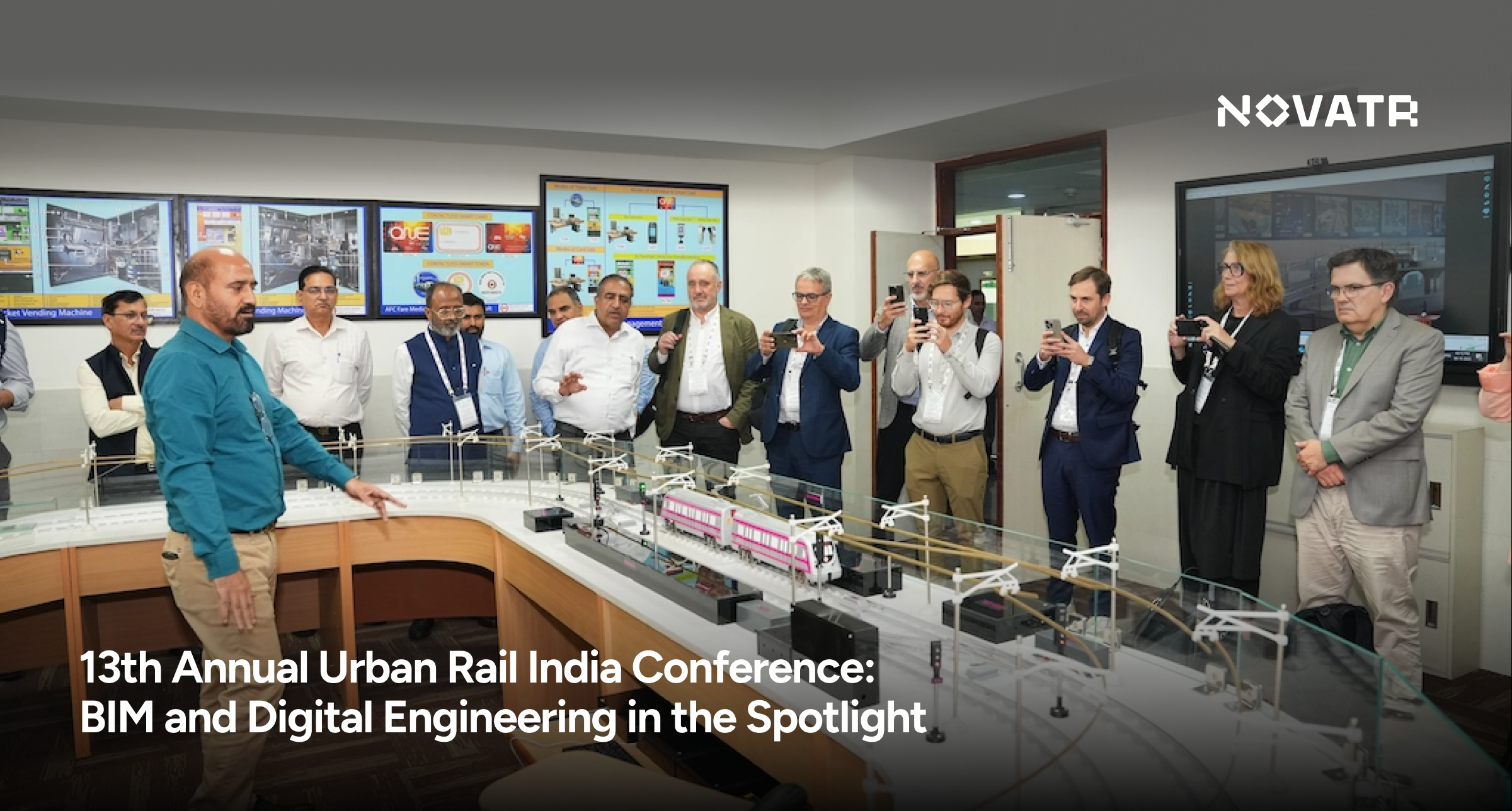

The 13th Annual Urban Rail India Conference brought together engineers, planners, and technology professionals to discuss the future of urban rail development in India, and digital construction and Building Information Modelling (BIM) were highlights of those conversations.
As infrastructure projects grow in scale and complexity, the industry is now shifting towards how BIM, construction, and digitisation can improve the way rail networks are planned, coordinated, and delivered.
This blog covers the key themes, discussions, and takeaways from the conference, and what they mean for professionals working at the intersection of infrastructure design, construction technology, and urban mobility in the Indian AEC industry.
## Key Takeaways
- BIM construction and digital engineering were central themes at the conference, reflecting how rapidly these tools are becoming standard on large urban rail projects in India
- India's urban rail network is expected to expand to over 3,000 km by 2032, making BIM skills increasingly essential for professionals in the infrastructure sector
- Real-world projects like Mumbai Metro Line 3 and Nagpur Metro demonstrate how digital construction through BIM improves coordination, reduces errors, and supports long-term asset management
- For architects, engineers, and infrastructure professionals, understanding BIM workflows is no longer an added advantage. It is becoming a baseline requirement for complex urban rail and infrastructure projects
Unlock High-Paying Careers With BIM
Master BIM workflows, software and skills on real projects.
Apply Now
\*Limited seats available
## What Is the 13th Annual Urban Rail India Conference and Why Does It Matter?
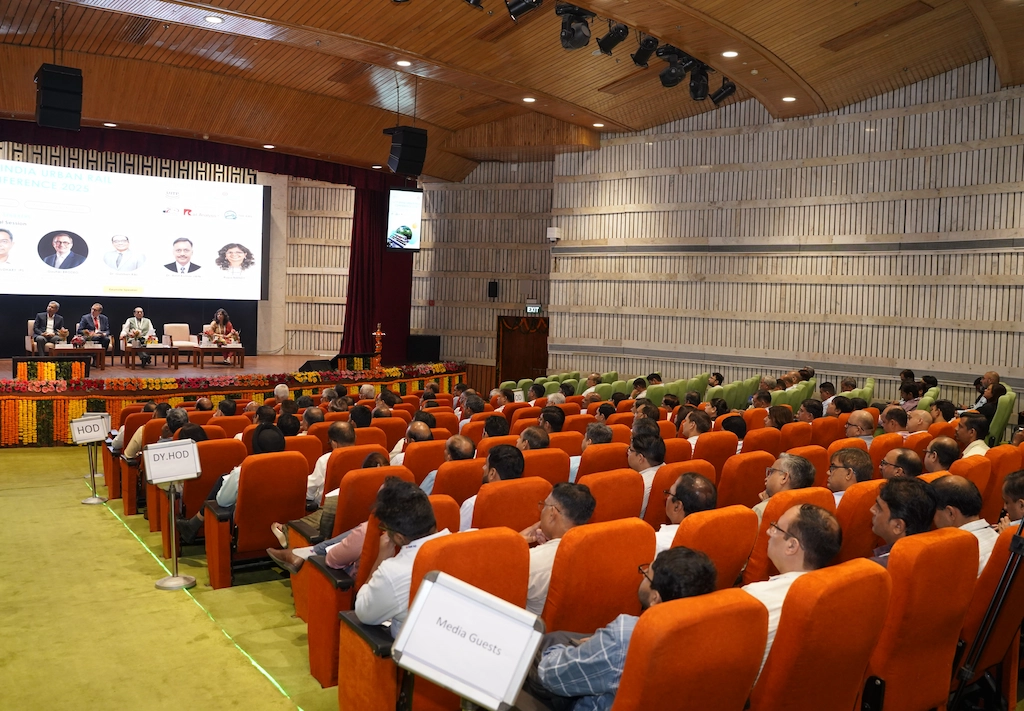
The 13th Annual Conference on Urban Rail in India was held on December 17-18, 2025, at Le Meridien, New Delhi, bringing together key stakeholders from across the urban rail industry for focused sessions and panel discussions on metro expansion, new technologies, safety, sustainability, and passenger experience.
For the infrastructure projects driving India's urban mobility projects, a conference like this matters because it is where policy, technology, and practice meet on the same platform. Decision-makers, engineers, and technology providers come together to discuss not just where urban rail is today, but what tools and workflows, including BIM construction and digital construction, will shape how these networks are built and managed going forward.
## How are BIM and Digital Engineering Shaping Urban Rail Projects in India?
Urban rail projects in India are considered to be one of the most technically demanding infrastructure projects in the country. This is primarily because tunnelling, station construction, MEP systems, and more are running simultaneously across multiple teams.
One of the examples is Mumbai Metro Line 3, India's largest fully underground metro corridor spanning 33.5 kilometres, where an end-to-end digital construction workflow took the project from design coordination to a fully operational transportation system.
Nagpur Metro went a step ahead, becoming the first project in India to implement 5D BIM visualisation and later extending it to 6D BIM, creating a digital twin with a fully integrated asset management system.
BIM construction platforms provide better coordination between teams through a centralised, data-rich model that all stakeholders can access and update in real time, reducing the miscommunication that typically slows down large urban rail projects.
## What Key Trends and Technologies Were Highlighted at the Conference?
Across the discussions held at the 13th Annual Urban Rail India Conference, a few themes stood out clearly.
- Technologies like BIM construction, digital twins, IoT, drones, sensors, and AI are seeing increased adoption across urban rail projects to improve planning, coordination, and operations.
- Understanding why BIM is important for airport construction projects and large transit infrastructure comes down to the same reason: complexity. Sessions highlighted how the convergence of IT and operational technology in modern metro systems is enhancing efficiency, predictive maintenance, and passenger experience ([source](https://globalbim.org/news/info-country/india/)).
- How BIM improves large infrastructure projects was a recurring theme, with discussions around reducing interface conflicts, improving multi-team coordination, and managing assets after construction is complete.
- Digital construction and infrastructure design through BIM were specifically discussed for their role in minimising integration challenges across complex urban rail projects, with speakers emphasising that digitalisation is no longer optional but a necessity for modern rail systems.
When you look at what are the benefits of BIM in airport design and apply the same thinking to rail, the outcomes are consistent: brisk coordination, fewer errors, and better-managed assets across the project lifecycle.
## What Does This Mean for Architects, Engineers, and Infrastructure Professionals?
The trends coming out of conferences like the 13th Annual Urban Rail India Conference make it clear that digital and BIM construction are becoming a standard on large urban rail and infrastructure projects.
For architects and engineers, this means the ability to work within BIM workflows is increasingly a benchmark skill. As India's urban rail network is expected to expand to over 3,000 km by 2032, with key projects including Delhi Metro Phase IV and Chennai Metro Phase II, the pipeline of work that demands these skills is growing.
For infrastructure professionals already working in the field, it means staying current with how infrastructure design and project delivery workflows are evolving, from 3D coordination and clash detection to digital twins and asset management.
To tackle this, structured programs like Novatr's [BIM Course for Architects](https://www.novatr.com/courses/building-information-modelling) are built. The program covers the tools, workflows, and coordination processes that large urban rail and infrastructure projects use.
Master BIM and Get Hired Faster
Join a community of 8500+ Architects and Engineers.
Explore Now
\*Limited seats available
## **Conclusion**
The 13th Annual Urban Rail India Conference reinforced that BIM construction and digital construction are now central to how large urban rail projects are delivered.
As projects get more complex, the need for professionals who understand these workflows grows with them. Professionals are now expected to have Infrastructure design skills that were once considered advanced.
For those looking to build that foundation, the starting point is clear. Learn the tools, understand the workflows, and get as close to real project experience as possible before stepping into one.
To access more insights, tips, and expert guidance, visit the[Novatr Resource Page](https://www.novatr.com/learning-hub) and continue growing your architectural career with confidence.
## FAQs
### **1. What is the 13th Annual Urban Rail India Conference?**
It is an annual gathering of engineers, planners, and technology leaders to discuss the future of urban rail development, policy, and technology in India.
### **2. Why is the 13th Annual Urban Rail India Conference important for India's infrastructure sector?**
It brings together decision-makers and technology providers working on India's expanding urban rail and infrastructure projects, making it a key platform for industry direction.
### **3. What role did BIM play at the 13th Annual Urban Rail India Conference?**
BIM construction and digital construction were highlighted as essential workflows for managing the complexity of modern urban rail infrastructure projects efficiently.
Was this content helpful to you
Like Yes
Dislike No

TABLE OF CONTENTS
BIM Is The New Standard. Are You Certified?
Get Certified in BIM
SHARE ON YOUR SOCIALS
Link Copied Successfully
Related articles
[ BIM Archi Gati Shakti Meets BIM - How India Is Building Smarter, Faster and Digitally 14 May 2026 4 min read](https://blog.novatr.com/blog/gati-shakti-and-bim-in-india) [ BIM Archi Architecture Courses vs BIM Courses: Which One Gives Better Career Growth? 12 May 2026 4 min read](https://blog.novatr.com/blog/architecture-courses-vs-bim-courses) [.png) BIM Archi Highest Paying Career Paths for Architects (And How to Get There) 7 May 2026 5 min read](https://blog.novatr.com/blog/highest-paying-career-paths-for-architects) [ BIM Civil Want to Work on Mеtro Projеcts? Lеarn Thеsе BIM Skills 28 May 2026 7 min read](https://blog.novatr.com/blog/bim-skills-for-metro-projects-and-infrastructure-careers)
Download Syllabus
## BIM Professional Program
Next Cohort
June 2026
Program Duration
7 Months
Premium Program benefits
8 Credentials from Autodesk, NSDC, Novatr
1 program. 10 career paths. Infinite Growth.
40+ ISO 19650 & RIBA real-world projects to practice
1-on-1 guidance. Access 400+ industry experts.
Access the biggest AEC-Tech community on the planet. 8500+ and counting
Curated for you by 100+ global BIM leaders.
Lifelong access to course content
Enter your details to download the program syllabus.
##### BIM Professional Program
June 2026, 7 Months
Your Name Invalid name.
Phone Number Enter a valid phone number
Email Please enter a valid email address.
Select years of experience\* Currently studying 0-1 years 1-2 years 2-4 years 4-8 years 8-10 years 10-12 years 12+ years Invalid selection.
Specialisation Select your background\* Architecture Civil Engineering Mechanical Engineering Electrical Engineering Invalid selection.
Are you professionally trained in interior design?
Yes
No
I agree to the [Terms of Use](https://www.novatr.com/terms-and-conditions) and [Privacy Policy](https://www.novatr.com/privacy-policy), and consent to be contacted by Email, Call, WhatsApp, or SMS.
Submit
Ready to skyrocket your career?
Begin your next chapter in AEC
with Novatr!
We are here to help you take the industry by storm with advanced, tech-first skills.
[Explore Courses](https://www.novatr.com/#courses)
Join our newsletter
Submit
Thank you for signing up.
We’ll send you a nice letter once per week. No spam.

Dare to Disrupt.
Join thousands of people who organise
work and life with Novatr.
Company
- [About Us](https://www.novatr.com/about)
- [BIM Professional Program v.2026](https://www.novatr.com/courses/bim-professional-program)
- [Masters Computational Design](https://www.novatr.com/courses/computational-design)
- [Become a Mentor](https://www.novatr.com/apply-as-mentor)
- [Hiring from Us](https://www.novatr.com/hire-from-us)
- [Careers at Novatr](https://www.novatr.com/career)
Resources
- [Blog](https://www.novatr.com/learning-hub)
- [Media Room](https://www.novatr.com/media-room-home-page)
- [Career Builder](https://www.novatr.com/career-navigator)
- [Events & Webinars](https://www.novatr.com/webinars)
- [FAQs & Support Center](https://www.novatr.com/contact-us)
- [Contact Us](https://www.novatr.com/contact-us)
- [Privacy Policy](https://www.novatr.com/privacy-policy)
- [Terms of Use](https://www.novatr.com/terms-and-conditions)
©2023 Oneistox Network Pvt. Ltd.
All Rights Reserved
```json
{
"@context" : "https://schema.org",
"@type" : "BlogPosting",
"author" : {
"@type" : "Person",
"name" : "Harshita Chaudhary",
"url" : "https://blog.novatr.com/blog/author/harshita-chaudhary"
},
"dateModified" : "2026-06-08T06:22:23.579Z",
"datePublished" : "2026-05-12T07:08:01.000Z",
"headline" : "13th Annual Urban Rail India Conference: Key Takeways for BIM",
"image" : [ "https://blog.novatr.com/hubfs/13th%20Annual%20Urban%20Rail%20India%20Conference%20-%20BIM%20and%20Digital%20Engineering%20in%20the%20Spotlight.png" ],
"mainEntityOfPage" : {
"@id" : "https://blog.novatr.com/blog/13th-annual-urban-rail-india-conference",
"@type" : "WebPage"
},
"publisher" : {
"@type" : "Organization",
"logo" : {
"@type" : "ImageObject",
"url" : "https://blog.novatr.com/hubfs/Novatr%20Prev%20OX-2.svg"
}
}
}
```