---
title: "Gati Shakti & BIM in India: Transforming Infrastructure 2026"
description: Learn how Gati Shakti and BIM in India are enabling smarter infrastructure planning, faster delivery, and better coordination.
image: https://blog.novatr.com/hubfs/Gati%20Shakti%20Meets%20BIM_%20How%20India%20is%20building%20smarter%2c%20faster%20and%20digitally.png
---
[Blogs](https://www.novatr.com/learning-hub)
- [Architecture & Construction](https://www.novatr.com/learning-hub?category=Architecture+%26+Construction)
- [BIM](https://www.novatr.com/learning-hub?category=BIM)
- [Computational Design](https://www.novatr.com/learning-hub?category=Computational+Design)
- [Company News](https://www.novatr.com/learning-hub?category=Company+News)
- [Expert Talks](https://www.novatr.com/learning-hub?category=Expert+Talks)
Explore Courses
[Just Launched  BIM Professional Program v.2026 Take your career to the next level by mastering the real-world application of BIM. Know More](https://www.novatr.com/courses/bim-professional-program)
[ Master Computational Design Course Break into an advanced career by learning to apply the power of computation to the art of design. Know More](https://www.novatr.com/courses/computational-design)
[Blogs](https://www.novatr.com/learning-hub)
Explore Blogs
- [Architecture & Construction](https://www.novatr.com/learning-hub?category=Architecture+%26+Construction)
- [BIM](https://www.novatr.com/learning-hub?category=BIM)
- [Computational Design](https://www.novatr.com/learning-hub?category=Computational+Design)
- [Company News](https://www.novatr.com/learning-hub?category=Company+News)
- [Expert Talks](https://www.novatr.com/learning-hub?category=Expert+Talks)
Courses
- [BIM Professional Program v.2026](https://www.novatr.com/courses/bim-professional-program)
- [Master Computational Design](https://www.novatr.com/courses/computational-design)
- [Archi/](https://www.novatr.com/learning-hub?category=BIM)
Featured Article
# Gati Shakti Meets BIM - How India Is Building Smarter, Faster and Digitally

Harshita Chaudhary
May 14, 2026
4 min read
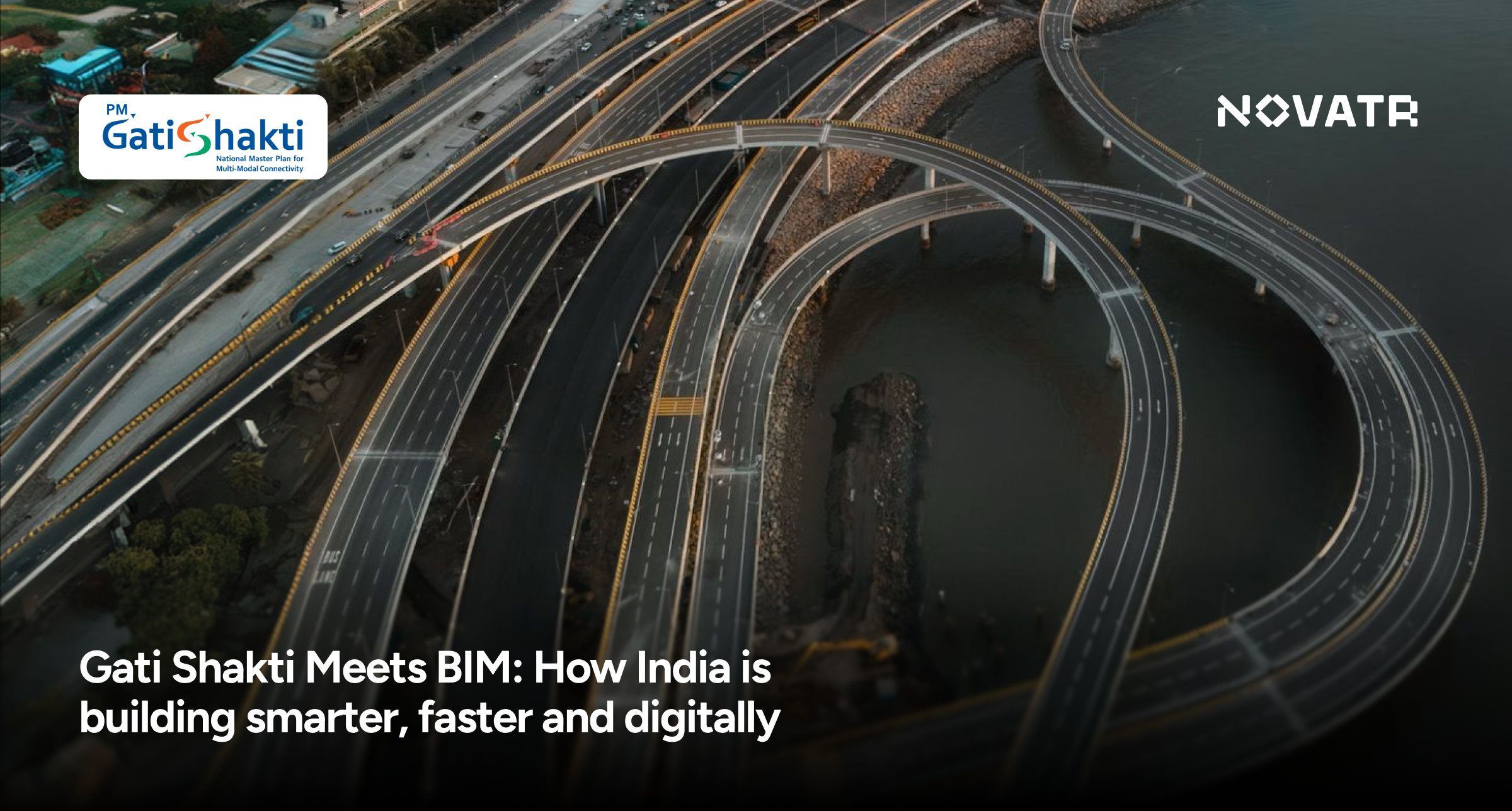

India's Gati Shakti National Master Plan was built on the idea that better coordination among ministries and agencies could foster faster, more efficient infrastructure planning across the country.
BIM in India is now being applied within that same vision. As national infrastructure projects grow in scale and complexity, digital construction tools and BIM are helping teams plan, coordinate, and deliver smart infrastructure more effectively than traditional methods.
This blog explores what PM Gati Shakti is and how it works with BIM, what that means for how infrastructure projects are being built in India, and why this merger matters for the country's construction and construction technology sectors.
## Key Takeaways
- Gati Shakti brings 16 ministries together on a single digital infrastructure platform, and BIM is the tool that makes coordinated planning and execution across those ministries practically possible
- BIM construction enables 50% faster designs and saves up to USD 13.6 million per road project, making it a critical enabler for large-scale national infrastructure delivery under Gati Shakti
- Real BIM projects like Nagpur Metro, Mumbai Metro Line 3, and Bharatmala are already demonstrating how digital construction reduces delays, cuts costs, and improves multi-agency coordination on the ground
- As India's infrastructure projects grow in scale and complexity, professionals who understand BIM construction and smart infrastructure workflows will be in increasing demand across both public and private sector projects
Unlock High-Paying Careers With BIM
Master BIM workflows, software and skills on real projects.
Apply Now
\*Limited seats available
## How Is Gati Shakti Integrating With BIM in India’s Infrastructure Development?
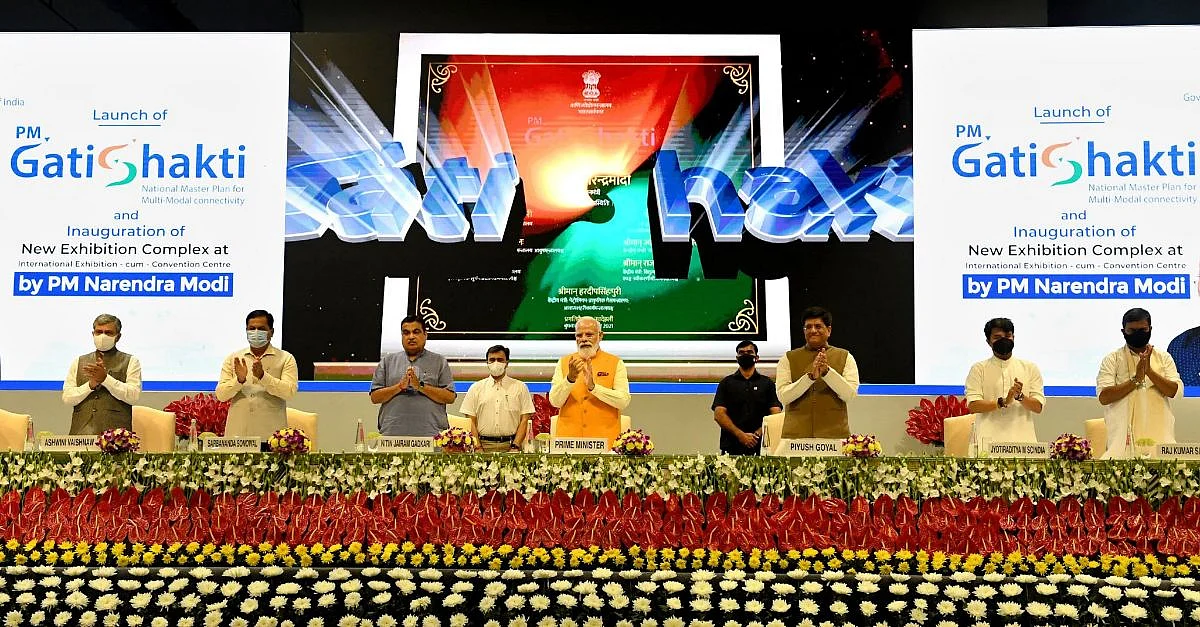
Gati Shakti is a digital infrastructure platform that brings together 16 ministries, including Railways and Roadways, for infrastructure planning and implementation. At its core, it solves a problem that has long slowed India's development: government departments working separately.
Digital initiatives like Gati Shakti reflect the government's intention to encourage digital construction and transformation across the construction and infrastructure sector.
Initiatives like the Smart Cities Mission and the Gati Shakti National Master Plan are using BIM projects to ensure integrated and efficient urban development, programs that inherently require a digital approach to manage the complexity of urban planning and multi-modal connectivity.
Together, Gati Shakti and BIM in India are helping move national infrastructure delivery from delayed execution to a more coordinated, data-driven model. This is why BIM is important for Gati Shakti projects.
## What Role Does BIM Play in Multi-Modal and Large-Scale Projects Under Gati Shakti?
Gati Shakti covers roads, railways, ports, waterways, airports, and logistics, all operating simultaneously, often within the same geographic corridors. Managing that kind of overlap without a shared digital model is where coordination breaks down.
BIM in India and digitalisation will play a critical role in helping India achieve its infrastructure development goals under Gati Shakti's multi-modal framework.
From highways to rail networks, BIM projects play a key role in streamlining infrastructure planning, resolving design conflicts, and optimising spatial layouts across large project areas.
Several large-scale infrastructure projects already demonstrate this. Government-backed programs like Bharatmala, Sagarmala, and metro rail systems are already using BIM construction as a key tool for ensuring project efficiency and delivery at scale.
Moreover, public sector bodies such as the Delhi Metro Rail Corporation have mandated the use of BIM in their projects, setting a precedent for broader adoption across India's infrastructure sector.These are a few of the ways how BIM helps in national infrastructure planning in India.
[Also Read: Top 7 Places to Learn BIM (Building Information Modelling) in India ](https://www.novatr.com/blog/top-7-places-to-learn-bim-in-india)
## Why Is Digital Integration Critical for Faster and Smarter Infrastructure Delivery?
India's **i**nfrastructure projects have faced two consistent problems: delays and cost overruns. In a country where over 30% of projects exceed their timelines and budgets, digital construction through BIM provides a foundation for timely, within-budget delivery. [(source)](https://www.trustpilot.com/review/novatr.com)
The numbers behind digital infrastructure adoption make a compelling case. According to an Autodesk report, BIM construction enables 50% faster designs, saves up to USD 13.6 million per road project, and has reduced water infrastructure construction timelines by 256 days. ([source)](https://www.novatr.com/us/courses/bim-for-civil-engineers)
For a program like Gati Shakti, which coordinates roads, railways, ports, and airports simultaneously, this level of efficiency is not just useful; it is necessary. BIM will play a critical role in helping India achieve its national infrastructure goals under the Gati Shakti framework.
Smart infrastructure delivery depends on teams working from the same data, catching problems early, and making decisions based on accurate information. Digital construction through BIM projects creates a collaborative environment where stakeholders can share and update data in real time through a single model, making large, complex infrastructure planning more manageable and less prone to the coordination failures that cause delays.
## How Does BIM Improve Coordination, Planning, and Execution Across Agencies?
Large infrastructure projects in India involve multiple agencies working across the same location, often without a shared view of what the other is doing. That is where coordination breaks down, and delays begin.
BIM construction addresses this directly by acting as a central platform where architects, engineers, contractors, and government bodies all work from the same model. This streamlines workflows, removes data silos, and keeps every stakeholder aligned through every phase of the project. Across large public infrastructure projects, BIM helps reduce costs and delays by identifying clashes early, improving coordination, and supporting accurate scheduling, cutting down on rework and change orders that typically push timelines off track. [(source)](https://www.autodesk.com/solutions/aec/bim/mep)
For a program like Gati Shakti, which manages national infrastructure across multiple ministries simultaneously, this kind of coordination is not optional. Digital construction through BIM India centralises project data into a shared environment, giving all stakeholders involved access to the same information, enabling more precise infrastructure planning and better decision-making at every stage.
[Also Read: Top BIM Courses With Placements This Year](https://www.novatr.com/blog/best-bim-courses-with-placements)
Master BIM and Get Hired Faster
Join a community of 8500+ Architects and Engineers.
Explore Now
\*Limited seats available
## **Conclusion**
Gati Shakti has set an ambitious vision for India's national infrastructure, aiming to deliver faster, coordinate better, and plan smarter across roads, railways, ports, and airports. Building Information Modelling is what makes that vision executable on the ground.
From resolving multi-agency coordination challenges to enabling data-driven infrastructure planning, BIM construction and digital construction are becoming central to how India builds at scale.
As Gati Shakti expands and infrastructure projects grow in complexity, the professionals who understand these digital infrastructure workflows will drive delivery. For those looking to build that foundation, structured learning in BIM is the most direct path into this space, and [Novatr’s](https://www.novatr.com/learning-hub) [BIM Course for Architects](https://www.novatr.com/courses/building-information-modelling) is a great place to begin.
## FAQs
### **1. How is BIM integrated with PM Gati Shakti?**
BIM India supports Gati Shakti by providing a shared digital model that helps multiple agencies coordinate infrastructure planning and project execution more efficiently.
### **2. Why is India combining BIM with PM Gati Shakti?**
Because Gati Shakti's multi-ministry infrastructure projects require precise coordination across roads, railways, and ports, digital construction through BIM directly enables.
### **3. How does BIM improve infrastructure planning under PM Gati Shakti?**
BIM projects centralise data across agencies, identify design conflicts early, and support accurate scheduling, making national infrastructure delivery faster and more coordinated.
Was this content helpful to you
Like Yes
Dislike No

TABLE OF CONTENTS
BIM Is The New Standard. Are You Certified?
Get Certified in BIM
SHARE ON YOUR SOCIALS
Link Copied Successfully
Related articles
[ BIM Archi 13th Annual Urban Rail India Conference - BIM and Digital Engineering in the Spotlight 12 May 2026 3 min read](https://blog.novatr.com/blog/13th-annual-urban-rail-india-conference) [.png) BIM Archi Keyboard Shortcuts and Productivity Hacks in Autodesk Construction Cloud 12 May 2026 4 min read](https://blog.novatr.com/blog/autodesk-construction-cloud-shortcuts-for-productivity) [ BIM Archi Architecture Courses vs BIM Courses: Which One Gives Better Career Growth? 12 May 2026 4 min read](https://blog.novatr.com/blog/architecture-courses-vs-bim-courses) [.png) BIM Archi Highest Paying Career Paths for Architects (And How to Get There) 7 May 2026 5 min read](https://blog.novatr.com/blog/highest-paying-career-paths-for-architects)
Download Syllabus
## BIM Professional Program
Next Cohort
June 2026
Program Duration
7 Months
Premium Program benefits
8 Credentials from Autodesk, NSDC, Novatr
1 program. 10 career paths. Infinite Growth.
40+ ISO 19650 & RIBA real-world projects to practice
1-on-1 guidance. Access 400+ industry experts.
Access the biggest AEC-Tech community on the planet. 8500+ and counting
Curated for you by 100+ global BIM leaders.
Lifelong access to course content
Enter your details to download the program syllabus.
##### BIM Professional Program
June 2026, 7 Months
Your Name Invalid name.
Phone Number Enter a valid phone number
Email Please enter a valid email address.
Select years of experience\* Currently studying 0-1 years 1-2 years 2-4 years 4-8 years 8-10 years 10-12 years 12+ years Invalid selection.
Specialisation Select your background\* Architecture Civil Engineering Mechanical Engineering Electrical Engineering Invalid selection.
Are you professionally trained in interior design?
Yes
No
I agree to the [Terms of Use](https://www.novatr.com/terms-and-conditions) and [Privacy Policy](https://www.novatr.com/privacy-policy), and consent to be contacted by Email, Call, WhatsApp, or SMS.
Submit
Ready to skyrocket your career?
Begin your next chapter in AEC
with Novatr!
We are here to help you take the industry by storm with advanced, tech-first skills.
[Explore Courses](https://www.novatr.com/#courses)
Join our newsletter
Submit
Thank you for signing up.
We’ll send you a nice letter once per week. No spam.

Dare to Disrupt.
Join thousands of people who organise
work and life with Novatr.
Company
- [About Us](https://www.novatr.com/about)
- [BIM Professional Program v.2026](https://www.novatr.com/courses/bim-professional-program)
- [Masters Computational Design](https://www.novatr.com/courses/computational-design)
- [Become a Mentor](https://www.novatr.com/apply-as-mentor)
- [Hiring from Us](https://www.novatr.com/hire-from-us)
- [Careers at Novatr](https://www.novatr.com/career)
Resources
- [Blog](https://www.novatr.com/learning-hub)
- [Media Room](https://www.novatr.com/media-room-home-page)
- [Career Builder](https://www.novatr.com/career-navigator)
- [Events & Webinars](https://www.novatr.com/webinars)
- [FAQs & Support Center](https://www.novatr.com/contact-us)
- [Contact Us](https://www.novatr.com/contact-us)
- [Privacy Policy](https://www.novatr.com/privacy-policy)
- [Terms of Use](https://www.novatr.com/terms-and-conditions)
©2023 Oneistox Network Pvt. Ltd.
All Rights Reserved
```json
{
"@context" : "https://schema.org",
"@type" : "BlogPosting",
"author" : {
"@type" : "Person",
"name" : "Harshita Chaudhary",
"url" : "https://blog.novatr.com/blog/author/harshita-chaudhary"
},
"dateModified" : "2026-06-10T05:44:32.595Z",
"datePublished" : "2026-05-14T09:43:29.000Z",
"headline" : "Gati Shakti & BIM in India: Transforming Infrastructure {{year}}",
"image" : [ "https://blog.novatr.com/hubfs/Gati%20Shakti%20Meets%20BIM_%20How%20India%20is%20building%20smarter%2c%20faster%20and%20digitally.png" ],
"mainEntityOfPage" : {
"@id" : "https://blog.novatr.com/blog/gati-shakti-and-bim-in-india",
"@type" : "WebPage"
},
"publisher" : {
"@type" : "Organization",
"logo" : {
"@type" : "ImageObject",
"url" : "https://blog.novatr.com/hubfs/Novatr%20Prev%20OX-2.svg"
}
}
}
```