



Which Software Tools Should Every Civil Engineer Know?
Aspiring engineering professionals need a versatile toolkit to handle diverse project tasks like basic drafting, geometric calculation, and geographic layout.
If you are expanding your professional capabilities, ensure you explore this essential civil engineering tools list:
- FreeCAD: A powerful open-source parametric 3D modeler. It acts as an excellent free BIM software tools for civil engineer training, allowing you to design real-world objects and maintain precise structural design dimensions.
- LibreCAD: A dedicated, lightweight 2D drafting application. It serves as an ideal alternative to standard commercial drafting programs, providing beginners with an excellent entry-level software for civil engineering students to master basic layout geometry.
- QGIS: A top-tier free Geographic Information System tool. It allows infrastructure planners to view, manage, edit, and analyze geospatial data, which is essential for large-scale land development projects.
- Blender BIM: A powerful, free add-on that transforms the open-source Blender application into an advanced data-rich creation environment, making it a great introductory BIM software platform.
What Can These Tools Actually Help Engineers Do?
Free engineering systems are not just basic learning programs; they offer serious technical capabilities. They help young professionals manage complex geometric tasks, evaluate site conditions, and organize project information accurately.
These systems enable entry-level technicians to execute several primary project tasks:
- Parametric Modeling: Engineers can build structural elements where altering one structural dimension automatically adjusts the adjoining connected components, preserving total structural consistency.
- Geospatial Mapping: Users can overlay regional satellite maps with structural layouts to analyze terrain changes, manage water drainage paths, and plan pipeline routes accurately.
- Precision 2D Drafting: Technicians can generate clean, highly accurate structural blueprints, foundation layouts, and cross-section details that mirror strict field assembly standards.
- Information Management: These tools allow beginners to attach detailed material specifications directly to digital model components, ensuring project data stays highly organized.
Are Free Tools Enough for Real-World Projects?
Free platforms are exceptional for educational upskilling, personal portfolio construction, and small-scale private consulting projects.
However, complex commercial assignments usually demand premium construction software tools due to specific operational factors:
- Team Collaboration: Large commercial projects require dozens of designers to work on a single file simultaneously, a feature best supported by cloud-connected corporate networks.
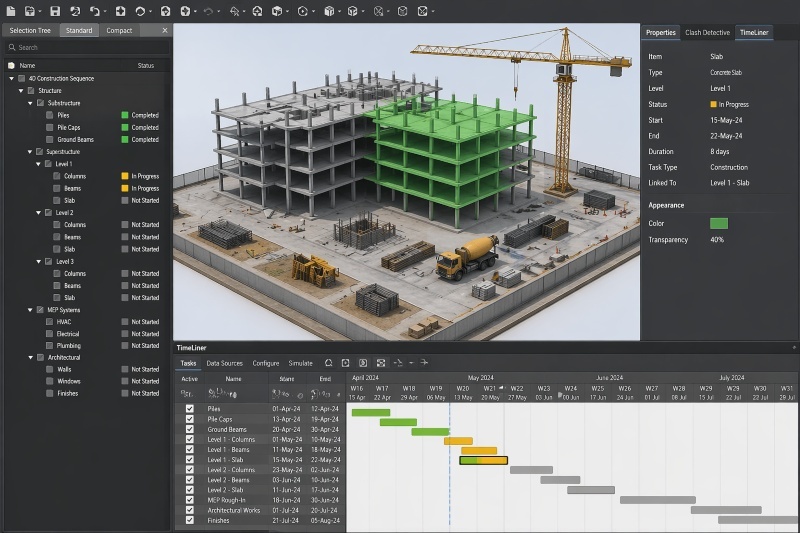
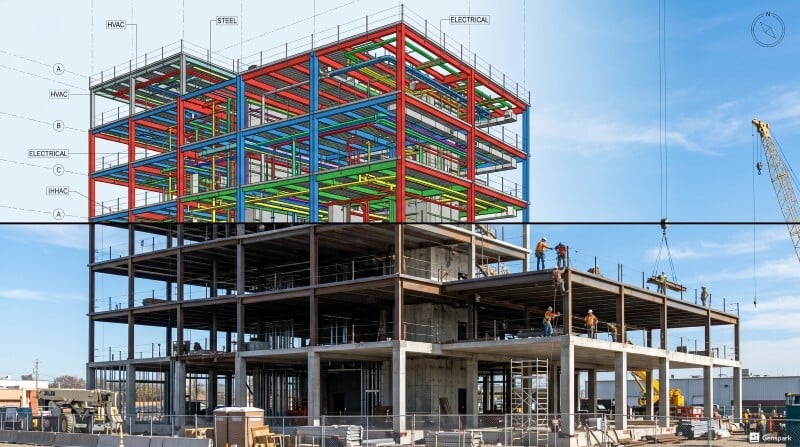
- Advanced Automation: Premium packages offer automated structural clash detection, instantly flagging design conflicts before physical construction begins.
- Industry Standardization: Major international developers expect files formatted for specific tools like Autodesk Civil 3d, which makes absolute file compatibility essential.
- Customer Support: Corporate projects rely on immediate technical troubleshooting from software developers to prevent costly timeline delays on site.
Which Software Skills are Companies Actively Looking For?
Modern construction companies are no longer searching for employees who simply know how to input basic lines or draw static shapes.
To secure top-tier roles, look to develop your technical capacity across these highly valued operational skills:
- 3D Corridor Modeling: Designing complex, multi-layered highway profiles that adapt dynamically to real-world topography variations.
- Clash Resolution: Finding hidden physical interference points between structural frames and utility systems before fabrication teams arrive on site.
- Centralized Data Sharing: Utilizing shared cloud environments to update project documents, ensuring remote field workers and office designers see identical data.
- Visual Programming Scripts: Learning basic parametric coding structures to automate repetitive modeling tasks across expansive architectural layouts.
Can Learning Software Early Create Better Career Opportunities?

Mastering essential engineering software for beginners before stepping into a professional interview gives job seekers a distinct competitive advantage.
Investing time into early digital education delivers several distinct career advantages:
- Portfolio Presentation: Graduating with a diverse portfolio of complex digital models sets you apart from candidates who only possess theoretical knowledge.
- Immediate Project Utility: Landing a role with pre-existing software knowledge allows you to handle real drafting assignments from your very first week.
- Rapid Promotion Potential: Professionals who blend engineering theory with strong digital execution move into lucrative management and coordination tracking roles much faster.