


What Do Employers Look for in BIM Graduates?
The growing adoption of BIM has extended the list of skills AEC firms expect from recent BIM graduates. They look for:
Strong BIM Fundamentals: Employers expect candidates to have expertise in BIM concepts, processes, and workflows that find application in real-world projects.
Practical Project Exposure: Working on capstone projects gives individuals an opportunity to demonstrate what they have learned and use BIM across different project stages.
Understanding of Project Workflows: BIM professionals should have a clear picture of how design, documentation, coordination, and information exchange come together.
Software Proficiency: Familiarity with relevant BIM tools can help graduates contribute more effectively to project teams and adapt to the construction technology workflows.
Workplace Readiness: Employers value people who can communicate effectively, collaborate with different teams, and approach challenges with a problem-solving mindset.
How Do Employers Assess BIM Skills, Portfolios, and Technical Ability?
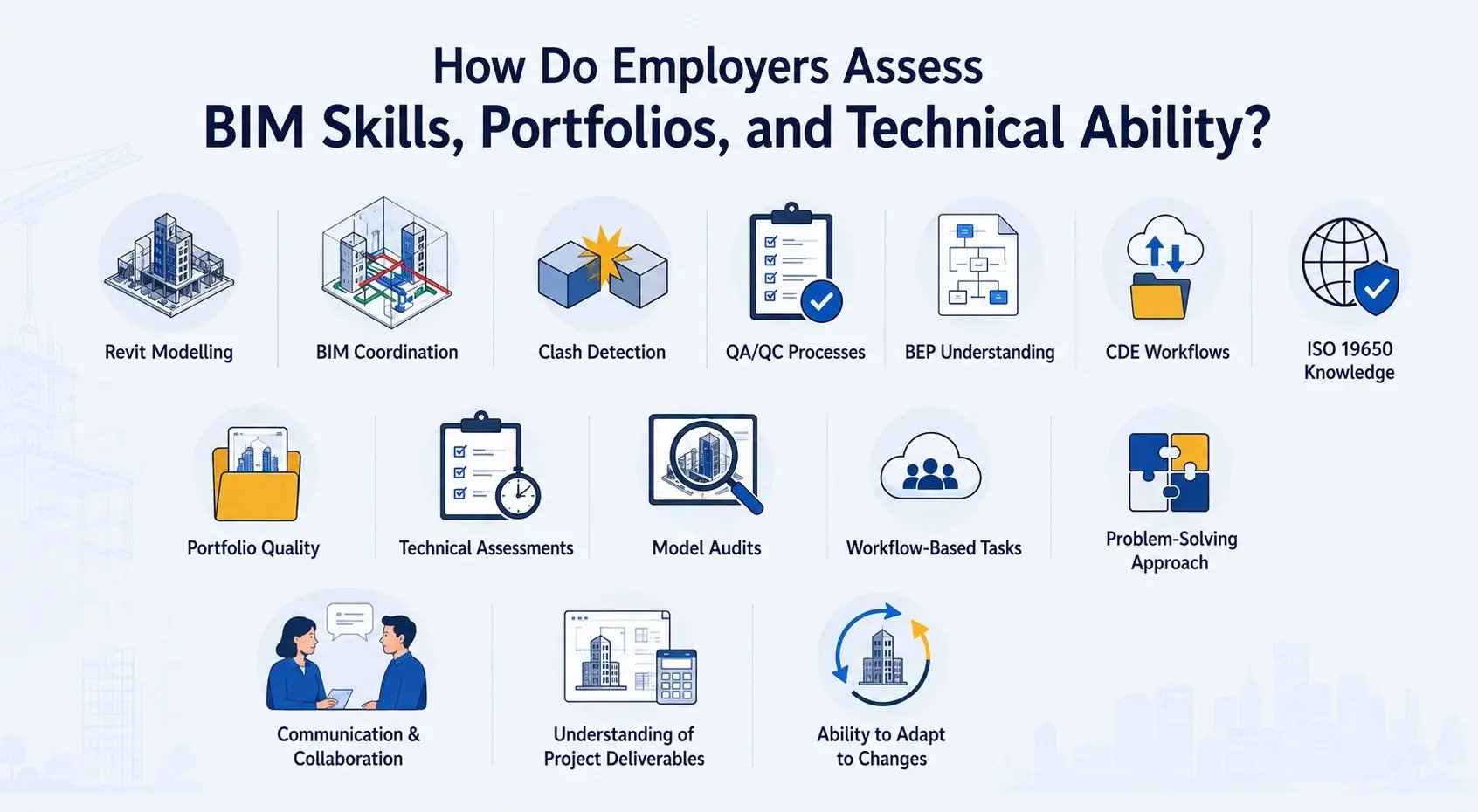
Individuals seeking job opportunities in BIM are evaluated based on their expertise in industry workflows and familiarity with real-world challenges. Here’s how they assess these attributes:
Revit Modelling: Candidates may be asked to display their ability to create and manage Revit models, develop families, and generate project documentation. Employers may also look at how accurately they model design elements and maintain consistency across the project.
BIM Coordination: Employers assess whether individuals understand how various disciplines work together and can coordinate architectural, structural, and MEP models. Familiarity with Navisworks can show the ability to review combined models and identify coordination issues.
Clash Detection: Expertise with tools and processes for identifying, reviewing, and resolving clashes can indicate how well candidates understand project coordination. Firms may look for candidates who can distinguish between critical clashes and issues that can be resolved.
QA/QC Processes: BIM graduates may be judged on their ability to follow model standards, review information, identify errors, and maintain consistency across project deliverables. Attention to naming conventions and documentation standards can also form part of this assessment.
BEP Understanding: Knowledge of a BIM Execution Plan (BEP) helps prove that individuals understand project-specific requirements, responsibilities, and delivery standards. It also shows whether they can work within a defined process instead of approaching every project in the same way.
CDE Workflows: Employers might look for familiarity with Common Data Environment (CDE) workflows and how project information is organised, shared, and managed. Understanding how information moves between different stages can be useful when working with teams.
ISO 19650 Knowledge: An understanding of ISO 19650 can show that candidates are familiar with internationally recognised principles for managing information across BIM projects. This can also exhibit awareness of information management and standardised project workflows.
Portfolio Quality: A strong portfolio allows applicants to exemplify their approach to modelling, documentation, coordination, and problem-solving through relevant examples. Employers may also consider whether the portfolio reflects an understanding of complete project workflows.
Technical Assessments: Some organisations use practical tests to evaluate how candidates handle modelling and coordination within a given timeframe. These assignments can support employers in understanding how effectively an applicant translates their learning into work.
Model Audits: Individuals may be asked to review an existing model and identify issues related to accuracy, consistency, and standards. This can reveal how candidates examine information and whether they can spot problems before they affect downstream work.
Workflow-Based Tasks: Employers may look for familiarity with Autodesk Construction Cloud and other CDE platforms used to organise, share, and manage project information. This can indicate whether candidates understand how information moves between project stakeholders.
Problem-Solving Approach: Employers may also assess how candidates respond when something does not go according to plan. The ability to analyse an issue, identify possible solutions, and explain the reasoning behind a decision can be valuable across BIM roles.
Communication and Collaboration: BIM involves constant interaction between different stakeholders. Candidates who can explain their decisions clearly, receive feedback, and work effectively with others are often better positioned to contribute to multidisciplinary teams.
Understanding of Project Deliverables: Employers may check if BIM graduates understand how different models, drawings, schedules, and other information outputs are created. This helps distinguish applicants who understand the purpose of BIM deliverables.
Ability to Adapt to Changes: Companies may look at how comfortably candidates respond to design revisions, updated requirements, and shifting project priorities while maintaining the quality of their work.
How Are BIM Graduates Evaluated During Interviews?
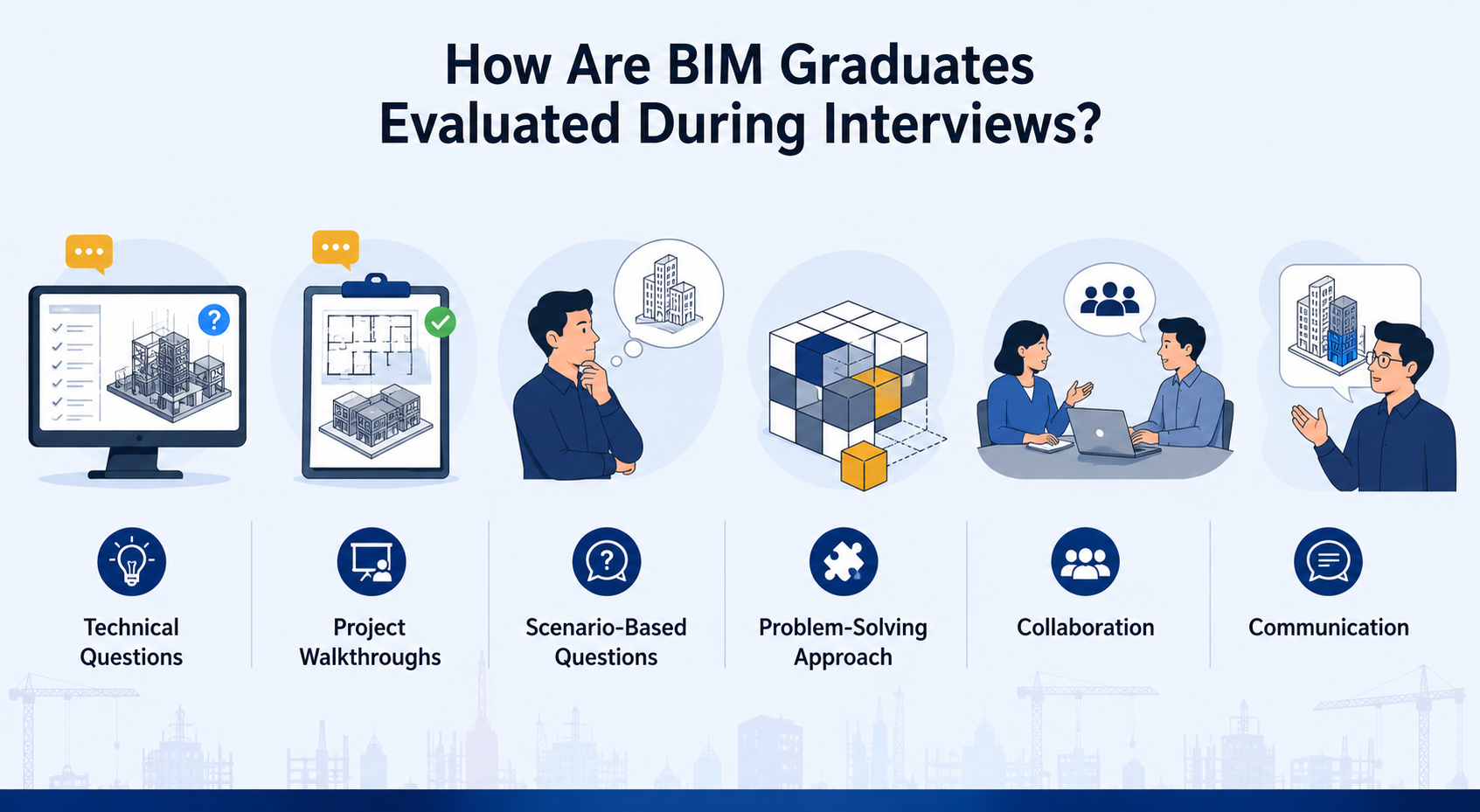
While interviewing for BIM careers, employers focus on how candidates approach challenges and make decisions. They consider:
Technical Questions: Interviewers may ask about digital construction, BIM concepts, modelling practices, and coordination processes. These queries help comprehend if candidates can apply their knowledge to projects.
Project Walkthroughs: Candidates may be asked to explain projects they have worked on. For instance, they may be asked to talk about their role, responsibilities, and challenges they faced. This gives employers a better understanding of their practical exposure.
Scenario-Based Questions: Hypothetical project situations can help interviewers check how candidates would respond to design changes, coordination issues, tight deadlines, or conflicting requirements.
Problem-Solving Approach: Employers may focus on how BIM graduates break down a problem before arriving at a solution. The ability to explain the reasoning behind a decision can be as important as the solution itself.
Collaboration: BIM projects involve multiple disciplines and stakeholders. Applicants may thus be judged on how they handle disagreements, coordinate with team members, and incorporate feedback during a project.
Communication: Straightforward communication is vital when explaining technical information to architects, engineers, consultants, and other stakeholders. Interviews can reveal how people present their ideas in a structured and understandable manner.
How Can You Prepare for a BIM Hiring Process?
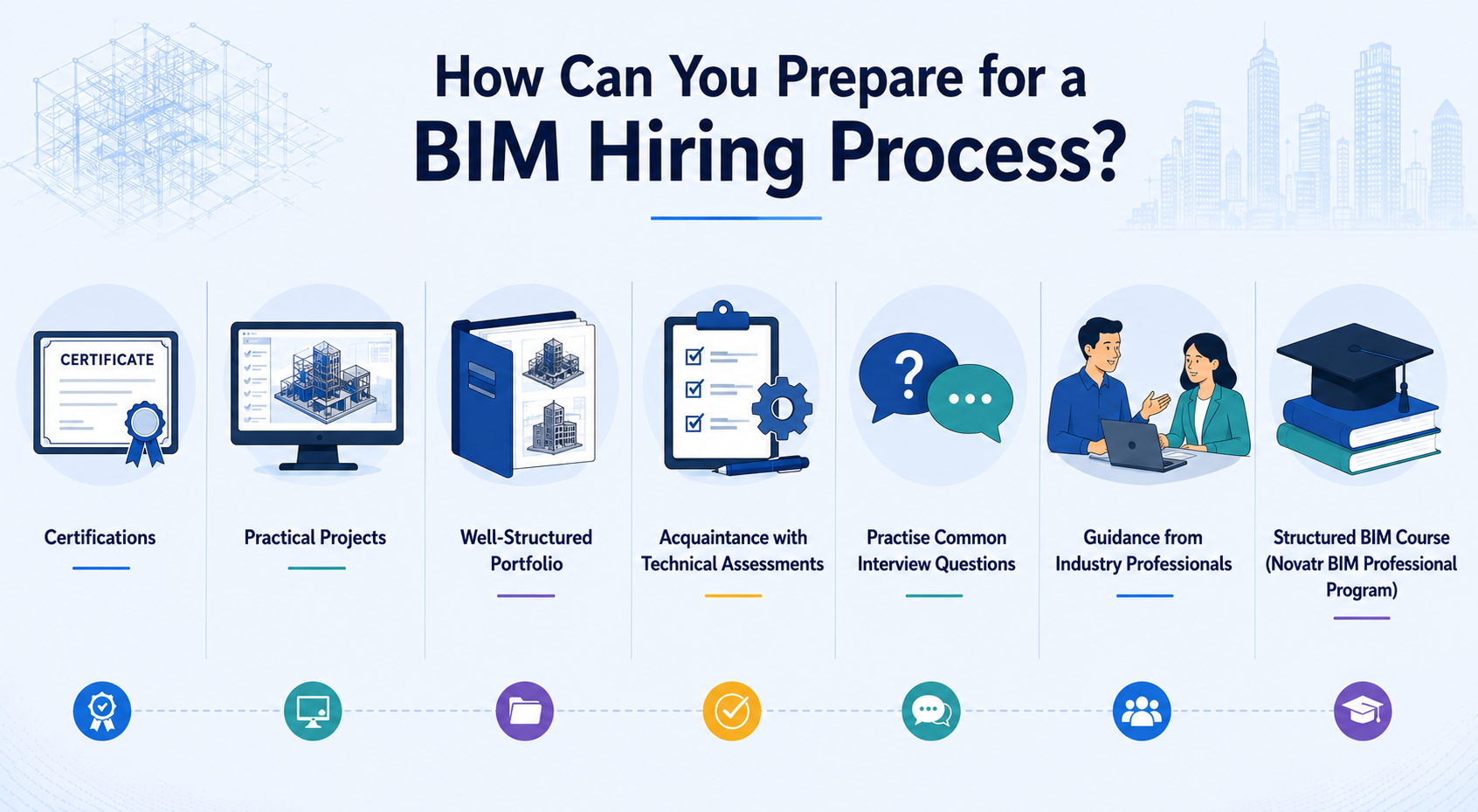
Preparing for a BIM interview means knowing what to expect, what to showcase, and how to demonstrate your readiness for the role.
-
Certifications can help aspirants in architecture and engineering jobs to validate their commitment to professional development.
-
Practical projects allow learners to apply BIM tools and workflows in situations that are closer to real-world project requirements.
-
A well-structured portfolio can help BIM graduates display their modelling work, project contributions, and approach to solving challenges.
-
Acquaintance with technical assessments can help individuals approach practical tests with greater confidence and clarity.
-
Practising common interview questions can make it easier to explain project decisions, respond to scenarios, and communicate ideas effectively.
-
Guidance from industry professionals can help individuals know employer expectations and identify areas that need improvement.
-
A structured BIM course such as the BIM Professional Program by Novatr can bring together software training, practical projects, industry guidance, and career preparation to help learners become more job-ready.