


Why Do Working AEC Professionals Need BIM Upskilling?
The AEC industry is changing as projects become more connected, data-driven, and dependent on digital workflows. For working professionals, developing stronger BIM skills can make it easier to adapt to these changes and take on more specialised responsibilities. BIM upskilling can also support career advancement by helping professionals work with newer construction technology and manage more complex project requirements.
-
Stay Relevant to Changing Workflows: BIM is becoming part of everyday project delivery, so professionals need to understand how models, data, and documentation work together across different stages of a project.
-
Take on Greater Responsibilities: Stronger BIM skills can help professionals move beyond basic modelling and contribute to coordination, documentation, project delivery, and information management.
-
Work Better Across Disciplines: BIM requires architects, engineers, contractors, and other teams to work from coordinated information, making collaboration skills increasingly important.
-
Adapt to New Construction Technology: As digital tools become more common across the industry, BIM upskilling helps professionals become more comfortable with technology-driven ways of planning and delivering projects.
-
Create More Career Opportunities: Practical BIM experience can open pathways into roles such as BIM Coordinator, BIM Manager, VDC professional, and digital construction specialist.
Which BIM Skills and Industry Requirements Should a Professional Upskilling Program Cover?
A good BIM upskilling programme should go beyond basic software lessons. It should combine technical skills with the coordination, BIM standards, workflows, and project experience professionals need to handle real AEC projects.
|
Skill Area |
What the Programme Should Cover |
|
Advanced Modelling |
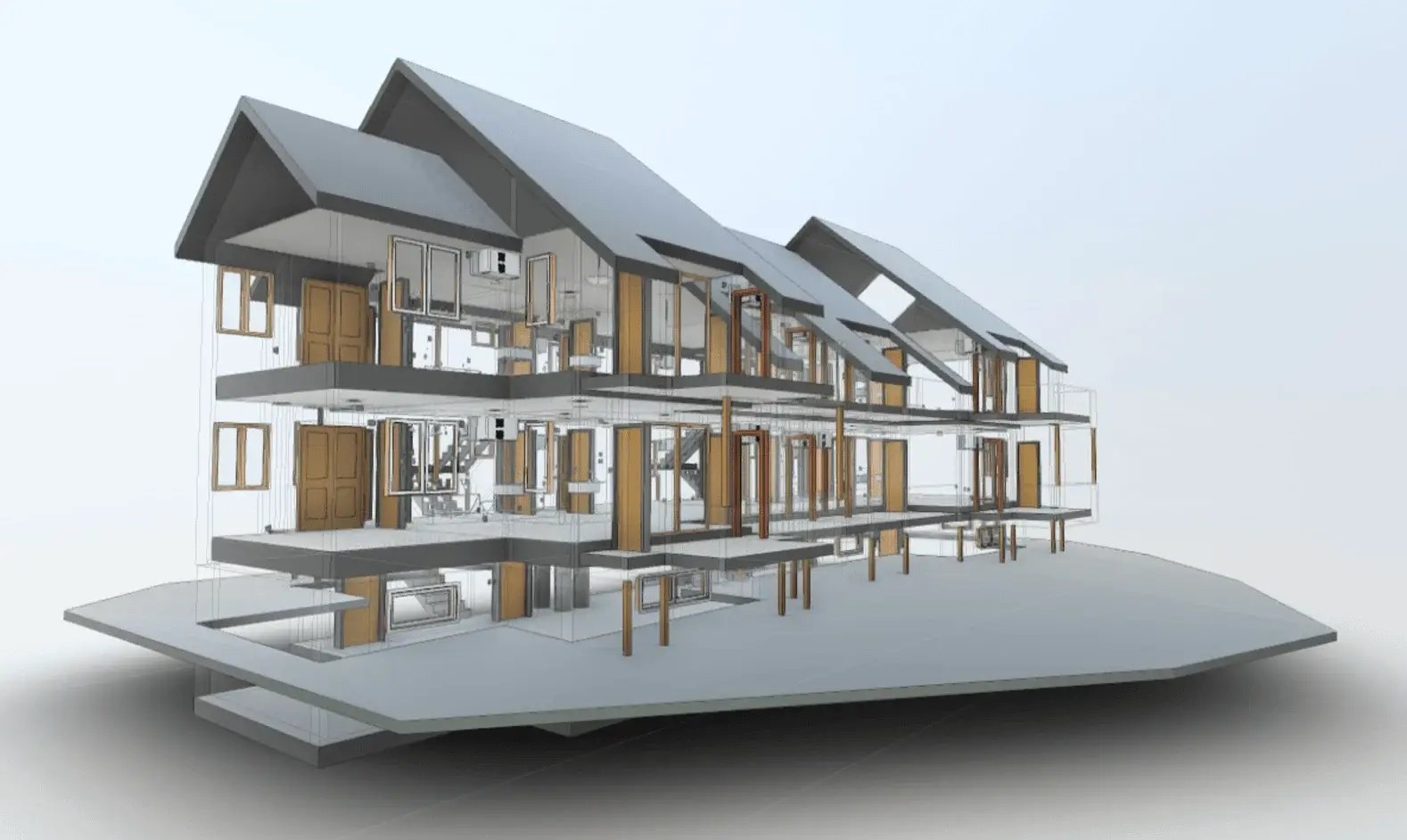
Professionals should learn how to create accurate, information-rich models rather than simply produce 3D geometry. Training should cover model development, families, parameters, templates, and project-specific modelling requirements. |
|
Revit Training |
Revit training should move beyond basic commands and focus on how the software is used in real projects. This can include model setup, documentation, worksharing, families, views, schedules, and model management. |
|
BIM Coordination |
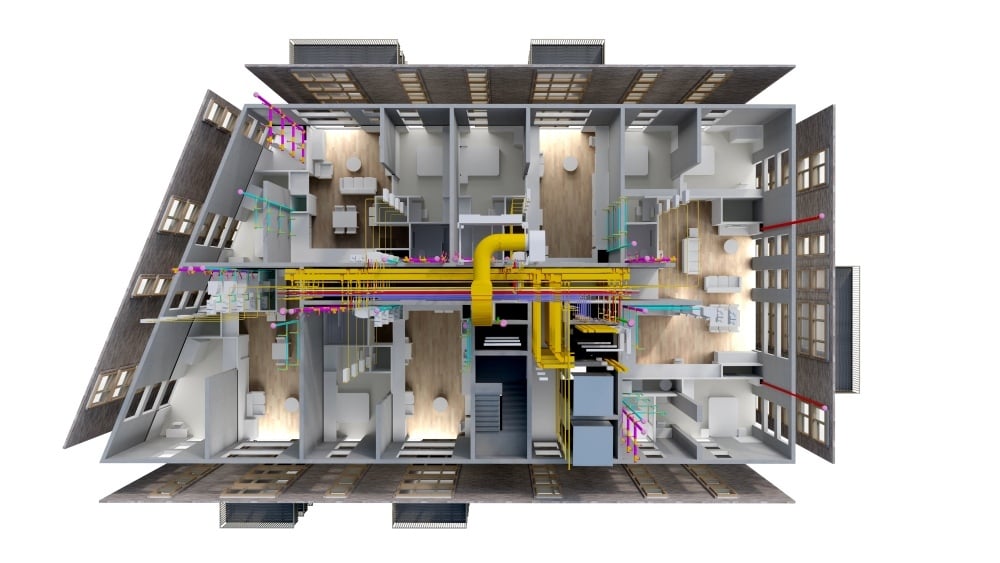
BIM coordination should teach professionals how to combine information from different disciplines, identify design conflicts, manage model exchanges, and keep project information aligned throughout delivery. |
|
Clash Detection |
Training should cover how to identify, review, prioritise, and resolve clashes before they create problems during construction. Professionals should also understand how clash reports support communication between project teams. |
|
BIM Management |
BIM management should include model standards, information requirements, project procedures, responsibilities, quality checks, and methods for managing BIM deliverables across a project. |
|
CDE Workflows |
Professionals should understand how a Common Data Environment (CDE) is used to store, share, review, and control project information. The focus should be on practical information workflows rather than simply learning the terminology. |
|
ISO 19650 |
The programme should introduce the principles of ISO 19650 and show how they apply to information management, naming conventions, information exchanges, approvals, and project documentation. |
|
Automation and Digital Tools |
Upskilling should include practical exposure to automation where relevant, such as Dynamo, scripting, or other digital tools that can reduce repetitive tasks and improve model efficiency. |
|
Software Ecosystem |
BIM does not operate through one application alone. Professionals should understand how tools for modelling, coordination, analysis, documentation, visualisation, and project management connect within a wider digital workflow. |
|
Project Workflows |
Learning should reflect the way information moves from design and modelling through coordination, documentation, construction, and handover. This gives professionals a clearer understanding of where their BIM responsibilities fit into the wider project. |
|
Multidisciplinary Coordination |
The programme should provide opportunities to work with architectural, structural, and MEP information so professionals learn how decisions in one discipline can affect others. |
|
Role-Specific Skills |
Training should match the learner’s career direction. An architect may need deeper modelling and design coordination skills, while an engineer may require discipline-specific workflows, and an aspiring BIM Manager may need stronger coordination, standards, and information management capabilities. |
|
Practical Project Application |
Finally, professionals should have opportunities to apply these skills to realistic projects. Working through project scenarios helps connect software knowledge with the decisions, coordination challenges, and deliverables encountered in practice. |
What Makes a BIM Upskilling Program Practical and Valuable for Working Professionals?
A BIM upskilling programme should help professionals apply what they learn to work they could actually encounter on a project. For someone already working in the BIM industry, the value comes from practical exposure, useful feedback, and a learning format that fits around a full-time role.
-
Real-World Project Experience
Working on realistic projects helps professionals understand how BIM modelling fits into actual project delivery. Instead of completing isolated software exercises, learners should work through tasks such as model development, coordination, documentation, and information exchange.
-
Exposure to Real BIM Workflows
A strong programme should reflect how BIM is used across design and construction teams. Learners should understand how information moves between disciplines, how models are coordinated, and how issues are addressed before they affect project delivery.
-
Feedback From Industry Mentors
Feedback from experienced BIM professionals can help learners spot mistakes and improve their approach. Mentors can also explain why a particular workflow is used, giving learners context that software tutorials often miss.
-
Portfolio Development
A portfolio gives working professionals something concrete to show when applying for new roles or taking on greater responsibility. Project-based learning can help them build work that demonstrates their modelling, coordination, documentation, and problem-solving abilities.
-
Flexible Learning Formats
Working professionals need a format that fits around project deadlines and working hours. Live online sessions, recorded resources, flexible schedules, or a combination of these can make it easier to continue learning without putting work commitments aside.
-
Connection to Career Opportunities
The programme should also help learners understand how their new skills relate to BIM jobs and evolving roles. Knowing which skills employers value and how to present project experience can make the transition from learning to career growth more practical.
How Can You Choose a BIM Upskilling Program That Fits Your Career Goals?
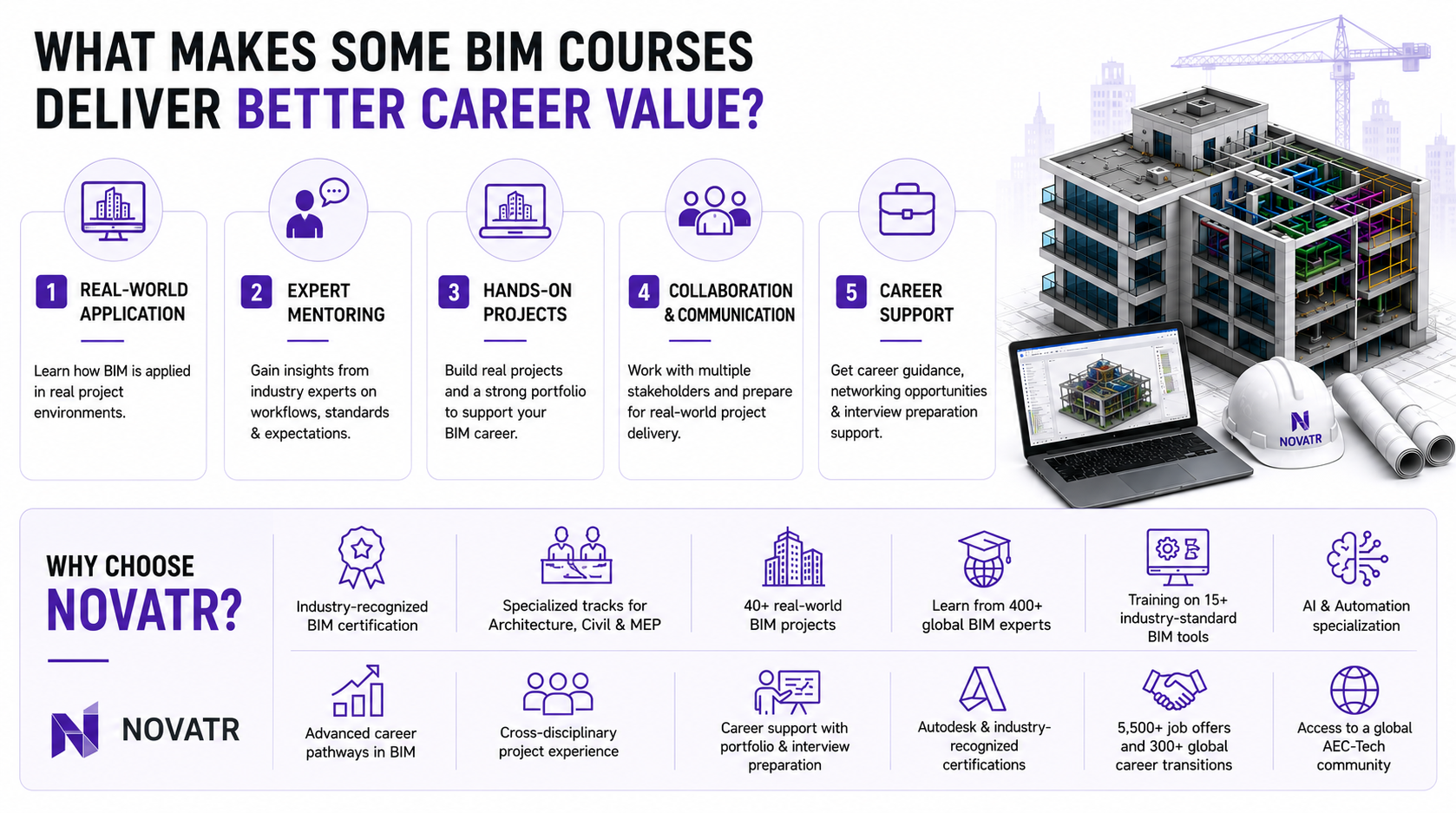
The right BIM course should match where you want your career to go, not just the software you want to learn. Look at whether the programme can strengthen your technical responsibilities, give you meaningful project work, and help you build a portfolio that reflects your abilities. For BIM professionals, the aim should be to gain skills that support progression into more advanced roles rather than simply collecting another certificate.
This is where Novatr’s BIM Professional Program can be useful for professionals looking for structured, industry-focused BIM education:
-
Learn through real-world BIM projects covering modelling, coordination, documentation, and project delivery.
-
Build practical experience that can strengthen your portfolio and demonstrate your capabilities to employers.
-
Learn from industry practitioners who can provide guidance and feedback throughout the programme.
-
Explore advanced career paths across BIM management, automation, AI, infrastructure, structural modelling, sustainability, and project management.
-
Develop skills designed to support progression towards more specialised BIM roles and greater project responsibilities.