---
title: "Top Industry Applications for BIM: Where is BIM Used in Construction?"
description: Discover the uses of BIM in construction industry. Learn about popular BIM software, real-world applications, and career paths in 2026.
image: https://blog.novatr.com/hubfs/Top%20Industry%20Applications%20for%20BIM%20Where%20is%20BIM%20Used%20in%20Construction.jpg
---
[Blogs](https://www.novatr.com/learning-hub)
- [Architecture & Construction](https://www.novatr.com/learning-hub?category=Architecture+%26+Construction)
- [BIM](https://www.novatr.com/learning-hub?category=BIM)
- [Computational Design](https://www.novatr.com/learning-hub?category=Computational+Design)
- [Company News](https://www.novatr.com/learning-hub?category=Company+News)
- [Expert Talks](https://www.novatr.com/learning-hub?category=Expert+Talks)
Explore Courses
[Just Launched  BIM Professional Program v.2026 Take your career to the next level by mastering the real-world application of BIM. Know More](https://www.novatr.com/courses/bim-professional-program)
[ Master Computational Design Course Break into an advanced career by learning to apply the power of computation to the art of design. Know More](https://www.novatr.com/courses/computational-design)
[Blogs](https://www.novatr.com/learning-hub)
Explore Blogs
- [Architecture & Construction](https://www.novatr.com/learning-hub?category=Architecture+%26+Construction)
- [BIM](https://www.novatr.com/learning-hub?category=BIM)
- [Computational Design](https://www.novatr.com/learning-hub?category=Computational+Design)
- [Company News](https://www.novatr.com/learning-hub?category=Company+News)
- [Expert Talks](https://www.novatr.com/learning-hub?category=Expert+Talks)
Courses
- [BIM Professional Program v.2026](https://www.novatr.com/courses/bim-professional-program)
- [Master Computational Design](https://www.novatr.com/courses/computational-design)
- [BIM/](https://www.novatr.com/learning-hub?category=BIM)
Featured Article
# Top Industry Applications for BIM: Where is BIM Used in Construction?

Pragya Sharma
June 22, 2026
7 min read
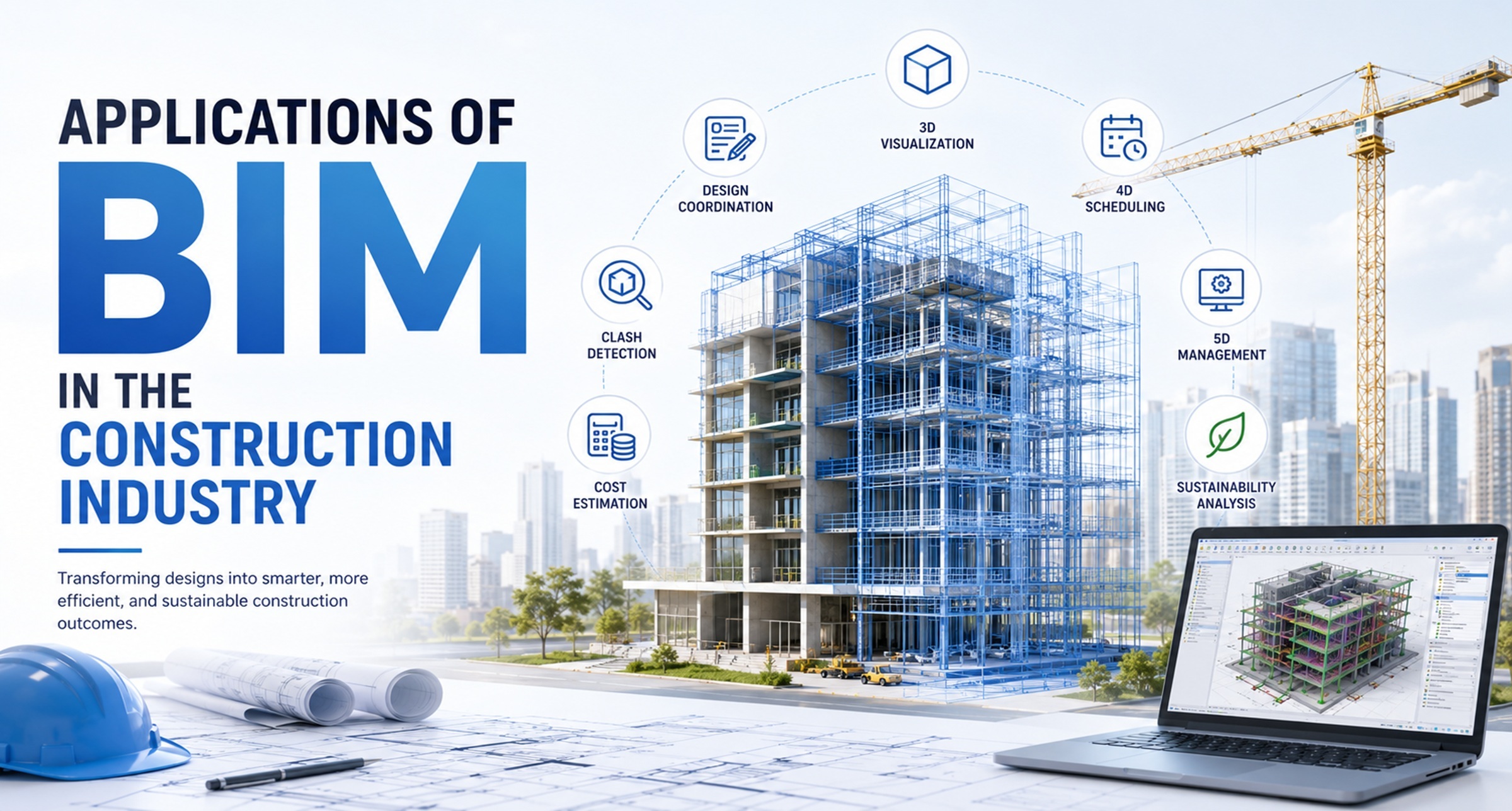

Construction is a multi-faceted job. It requires the contribution of various stakeholders such as engineers, contractors, MEP consultants, and facility managers to bring a project from paper to realisation. Managing the coordination of these professionals alongside drawings, schedules, budgets, and site activities is a complex task. But when BIM enters this picture, it simplifies the workflows.
An acronym for Building Information Modelling, BIM is a process that uses data-rich 3D models to ideate, build, and manage construction and infrastructure projects. These models contain information such as structural design, BOQs, construction schedules, MEP systems, and facility management data to facilitate the effective application of BIM.
Such access to comprehensive project data allows professionals to execute designs with more accuracy and confidence.
## **Key Takeaways**
- BIM is widely being adopted in the construction industry to streamline workflows, speed up processes, and systemise the gamut.
- Civil 3D, Navisworks, Tekla Structures, and Autodesk Cloud Construction (ACC) are the key software used in construction and infrastructure works.
- BIM supports better collaboration between architects, engineers, contractors, and facility managers by serving as a single source of truth.
- Learning BIM can help AEC professionals climb up the career ladder. It can allow them to explore lucrative job opportunities in top firms the pay well.
- Individuals can learn BIM through YouTube tutorials, LinkedIn courses, and long-format programs that teach industry-relevant skills.
Unlock High-Paying Careers With BIM
Master BIM workflows, software and skills on real projects.
Apply Now
\*Limited seats available
## **Where is BIM used in Construction and Infrastructure Industry?**
The application of BIM in the design and build fraternity starts right at the concept stage and evolves until after the structure is completed. Every level of work needs a distinct intensity of BIM integration. Let’s have a closer look at how BIM makes its place in the AEC ecosystem.
### **1. Concept Design and Planning:**
BIM helps architects and planners visualise project ideas through intelligent [3D models](https://www.novatr.com/blog/everything-about-3d-modelling-in-construction). Teams can evaluate design options, study site constraints, and communicate concepts more effectively to clients and stakeholders before detailed design begins.
### **2. Design Coordination:**
This is where BIM application in construction comes to life. As projects progress, BIM becomes a central platform for collaboration between architects, structural engineers, MEP consultants, and other stakeholders. This helps with clash detection, quantity takeoffs, and management.
### **3. Construction Documentation:**
BIM-generated drawings, construction schedules, and BOQs ensure consistency across project documents. Since all information is linked to the model, any changes are automatically reflected in the documentation. This reduces manual errors and the need for rework throughout the project.
### **4. Construction Planning and Execution:**
The uses of BIM in construction extends beyond the design stage. Contractors use BIM to plan construction sequences, optimise resource allocation, and monitor project progress. [4D BIM](https://www.novatr.com/blog/what-is-4d-bim-a-complete-guide-to-construction-planning-using-bim) integrates scheduling data with the model, while 5D BIM incorporates cost information to improve project control and forecasting.
### **4. Infrastructure Development:**
BIM is increasingly used in roads, bridges, railways, airports, and utility networks. It helps teams manage large volumes of data sets, coordinate multidisciplinary inputs, and improve decision-making throughout the project lifecycle.
### **5. Facility and Asset Management:**
A key application of BIM is that facility managers can use 3D models to access asset information, plan maintenance activities, track equipment performance, and manage building operations more efficiently.
### **6. Renovation and Retrofit Projects:**
BIM also supports the upkeep of heritage structures. Using technologies such as photogrammetry and laser scanning, teams can create accurate digital replicas of existing buildings and plan restoration work with minimal intervention.
## **Why is BIM Becoming Essential for Infrastructure Projects?**
Large-scale projects such as roads, highways, public plazas, waterfront developments, and flyovers demand fierce coordination and planning. From the number of documents to people and resources involved, every aspect must be meticulously managed to ensure a seamless execution. Here’s why BIM shines in infrastructure projects:
### **1. Managing Project Complexity:**
Infrastructure projects often stretch across vast geographical areas and involve multiple stakeholders, agencies, consultants, and contractors. BIM creates a centralised source of information that reduces the risk of miscommunication.
### **2. Improving Coordination:**
Civil and [structural engineers](https://www.novatr.com/blog/structural-engineering-career-guide), MEP consultants, environmental experts, and contractors typically work on the same project. BIM applications in infrastructure allows these disciplines to collaborate within a shared digital environment.
### **3. Enhancing Cost and Schedule Control:**
Delays and budget overruns can have significant consequences in public infrastructure projects. By integrating project timelines and cost data with digital models, [BIM](https://www.novatr.com/blog/what-is-building-information-modeling-bim) enables better forecasting, resource allocation, and project monitoring.
### **4. Agile Decision Making:**
Infrastructure projects generate enormous amounts of information throughout their lifecycle. BIM helps organise and visualise this data, allowing project teams to evaluate alternatives, assess risks, and make informed decisions.
### **5. Streamlining Asset Management:**
BIM provides a digital record of the asset that can be used for inspections, maintenance planning, repairs, and future upgrades, ensuring the long-term operational efficiency of a structure.
### **6. Facilitating Sustainable Development:**
One of the key uses of BIM in construction is that it helps teams analyse environmental impacts, optimise material usage, and improve resource efficiency. This supports the delivery of infrastructure that is both resilient and environmentally responsible.
## **What are the Top BIM Software Used in Construction?**
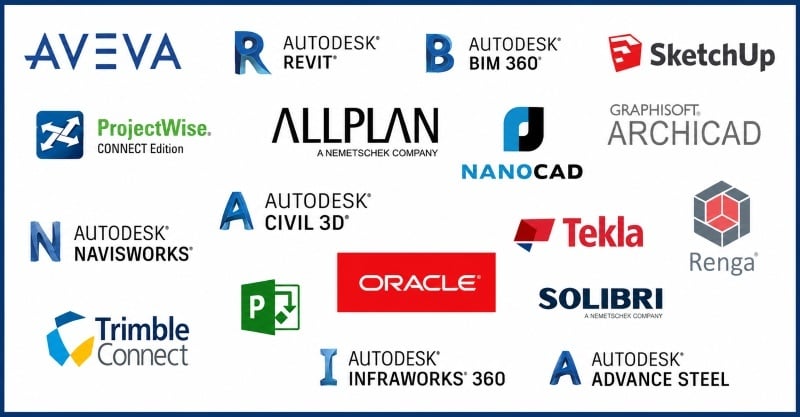
BIM software are tools that help professionals visualise and manage 3D models of a structure. This data feeds construction processes, allowing engineers to make informed decisions during the construction phase. Let’s explore the key uses of BIM in construction:
### **1. Revit:**
Touted as an architect’s favourite, [Revit](https://www.novatr.com/blog/what-is-revit-software) is widely know for its design visualization and iteration capabilities. Its parametric environment ensures that changes made in one view are automatically reflected throughout the project.
### **2. Autodesk Construction Cloud (ACC):**
Serving as a Common Data Environment (CDE), ACC connects project stakeholders through a single source of truth. Teams can manage documents, track issues, review models, and collaborate in real time without worrying about conflicts.
### **3. Navisworks:**
Known for its coordination capabilities, Navisworks enables project teams to aggregate models from multiple disciplines and perform clash detection. This helps identify potential conflicts before they translate into costly site issues.
### **4. Archicad:**
Favoured by architects for its design-centric approach, [Archicad](https://www.novatr.com/blog/what-is-archicad-and-why-do-architects-use-it) combines modelling, documentation, and collaboration tools within a unified platform. Its BIM software uses support open BIM workflows, making coordination easier across different software ecosystems.
### **5. Bentley OpenBuildings:**
Designed to handle layered building and infrastructure developments, OpenBuildings provides a robust environment for multidisciplinary collaboration. Its strength lies in managing large datasets and delivering highly detailed project information.
### **6. Tekla Structures:**
Widely adopted for structural and fabrication modelling, the benefits of using BIM using Tekla Structures delivers a high level of accuracy for steel and concrete projects. Detailed constructability information generated through the software helps bridge the gap between design and execution.
### **7. Allplan:**
Combining BIM functionality with advanced engineering workflows, Allplan supports everything from conceptual design to construction documentation. The platform is particularly valued in projects that demand precision and technical detailing.
### **8. Vectorworks Architect:**
Offering a balance between creative freedom and BIM capabilities, [Vectorworks](https://www.novatr.com/blog/vectorworks-vs-archicad) Architect allows designers to develop detailed building models while maintaining a flexible design process. Its visualisation tools further enhance design communication and presentation.
## **Can BIM Speed up Your Career?**
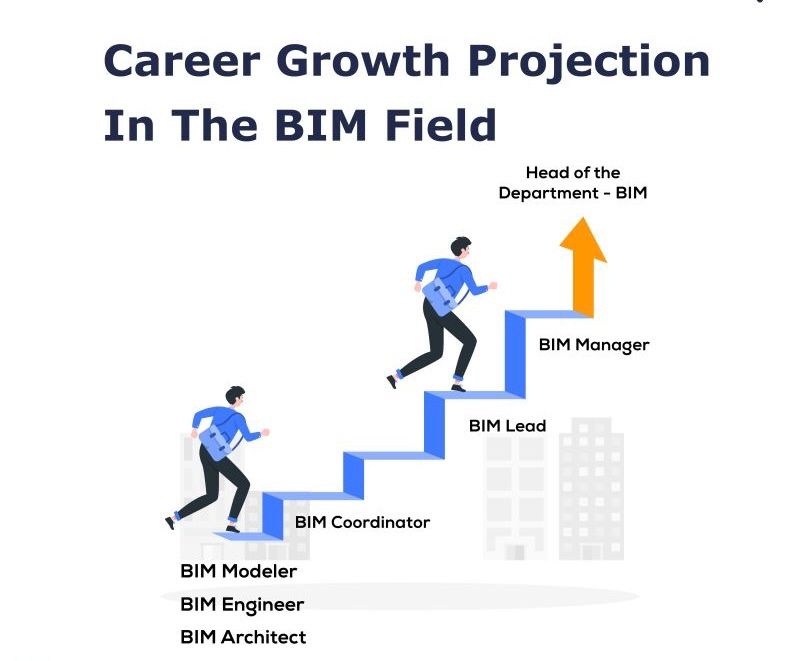
BIM is gaining traction in the AEC industry. And early adopters of the technology are reaping its benefits through better work opportunities, higher pay scale, and leadership industry positions. Here are the most promising BIM careers in the construction domain:
**1. BIM Modeler:** Often considered the entry point into the BIM paradigm, BIM Modelers are responsible for creating and maintaining digital building models. The role requires a strong understanding of design principles, construction systems, and BIM software such as Revit.
**2. BIM Coordinator:** Acting as a bridge between different project stakeholders, [BIM Coordinators](https://www.novatr.com/blog/bim-coordinator-guide) ensure that architectural, structural, and MEP models work together seamlessly. They ensure BIM applications in buildings by enabling clash detection, model reviews, and interdisciplinary collaboration.
**3. BIM Manager:** With organisations increasingly adopting BIM workflows, the demand for BIM Managers continues to rise. These professionals develop BIM standards, oversee project implementation, train teams, and ensure that digital delivery goals are met across projects.
**4. BIM Consultant:** Many firms rely on BIM Consultants to guide their digital transformation journey. From developing BIM execution plans to streamlining workflows and technology adoption, consultants help organisations maximise the value of BIM implementation.
**5. VDC Specialist:** [Virtual Design and Construction (VDC) Specialists](https://www.novatr.com/blog/how-to-become-a-vdc-engineer) oversee the application of BIM by data to support project planning, scheduling, cost management, and construction sequencing. Their expertise helps bridge the gap between design intent and on-site execution.
**6. BIM Automation Specialist:** As the industry embraces AI, professionals who can develop scripts, workflows, and custom BIM solutions are becoming increasingly valuable. These specialists improve efficiency by reducing repetitive tasks and enhancing data management processes.
**7. Digital Twin Specialist:** The growing adoption of smart buildings and infrastructure has created demand for [Digital Twin](https://www.novatr.com/blog/digital-twin-parametric-buildings-the-future-of-smart-architecture) Specialists and boosted the uses of BIM in construction. By connecting BIM models with real-time operational data, they help owners monitor asset performance and make informed decisions throughout a facility's lifecycle.
**8. BIM Trainer and Educator:** With the BIM talent gap still evident across many regions, skilled professionals are also finding opportunities in training and education. Their role involves helping students and industry practitioners develop the technical and collaborative skills required for BIM-enabled project delivery.
## **Where to Learn BIM?**
Today, professionals can upskill in BIM through various free and paid resources. For beginners, expert blogs and YouTube videos are a great help to start understanding the theory and subject fundamentals. Individuals can also sign up for short-term tutorials on LinkedIn or Coursera for levelling up their knowledge. However, for in-depth learning and experience, long-term courses are more beneficial.
[Novatr’s BIM Professional Program](https://www.novatr.com/courses/bim-professional-program?utm_source=organic_search&utm_medium=blog&utm_campaign=top-industry-applications-for-bim-where-is-bim-used-in-construction) for architects, engineers, and construction professionals is an extensive 7-month course that prepares its learners for the real-world practice. The course curriculum includes fundamentals of BIM, software, coordination, standards, compliance, and project delivery. Participants learn through pre-recorded lectures, live sessions, case studies, and capstone projects that ready them for the industry.
Master BIM and Get Hired Faster
Join a community of 8500+ Architects and Engineers.
Explore Now
\*Limited seats available
## Conclusion
BIM use cases in construction and infrastructure projects prove the mettle of this technology. It signifies that the future of the AEC industry is data-driven, collaborative, and efficient. To keep up with this wave of change, professionals need to learn BIM as a skill that makes them more employable and future-relevant.
We suggest you explore the [BIM Professional Program](https://www.novatr.com/courses/bim-professional-program?utm_source=organic_search&utm_medium=blog&utm_campaign=top-industry-applications-for-bim-where-is-bim-used-in-construction) by [Novatr](https://www.novatr.com/). This certification course is tailored to equip professionals with BIM skills. What sets it apart is its focus on outcomes rather than software training alone. Through a structured studio-based approach, industry mentorship, and project-led learning, participants gain exposure to the collaborative workflows used by leading AEC firms. The program also connects learners with a broad hiring network, making it a practical pathway for professionals looking to transition into BIM-focused roles or accelerate their career growth.
Explore the [course](https://www.novatr.com/courses/bim-professional-program?utm_source=organic_search&utm_medium=blog&utm_campaign=top-industry-applications-for-bim-where-is-bim-used-in-construction) today!
Visit our [Resources Page](https://www.novatr.com/learning-hub) to learn about the latest trends in architecture and engineering.
## **FAQs**
### **1. What are the main applications of BIM?**
BIM is used for 3D modelling, clash detection, quantity take-offs, construction scheduling, cost estimation, and facility management.
### **2. Is BIM used only for buildings?**
No, BIM is also widely used for infrastructure projects such as roads, urban plazas, highways, bridges, railways, airports, and utility networks.
### **3. How is BIM used in infrastructure projects?**
BIM helps infrastructure teams improve planning, design coordination, construction sequencing, and asset management throughout the project lifecycle.
### **4. What is the role of BIM in facility management?**
BIM provides a centralized repository of asset and maintenance data, helping facility managers operate, monitor, and maintain buildings more efficiently.
### **5. How does BIM help reduce construction errors?**
BIM identifies design clashes and coordination issues before construction begins, reducing rework, delays, and costly on-site errors.
### **6. Which industries are adopting BIM the fastest?**
The architecture, engineering, construction, real estate, and infrastructure sectors are among the fastest adopters of BIM technologies.
### **7. Can BIM support smart city projects?**
Yes, BIM can support smart city initiatives by integrating data from buildings, infrastructure, utilities, and digital twins to enable better urban planning and management.
Was this content helpful to you
Like Yes
Dislike No

TABLE OF CONTENTS
BIM Is The New Standard. Are You Certified?
Get Certified in BIM
SHARE ON YOUR SOCIALS
Link Copied Successfully
Related articles
[ BIM Civil What is 4D BIM? A Complete Guide to Construction Planning Using BIM 30 April 2026 6 min read](https://blog.novatr.com/blog/what-is-4d-bim-a-complete-guide-to-construction-planning-using-bim) [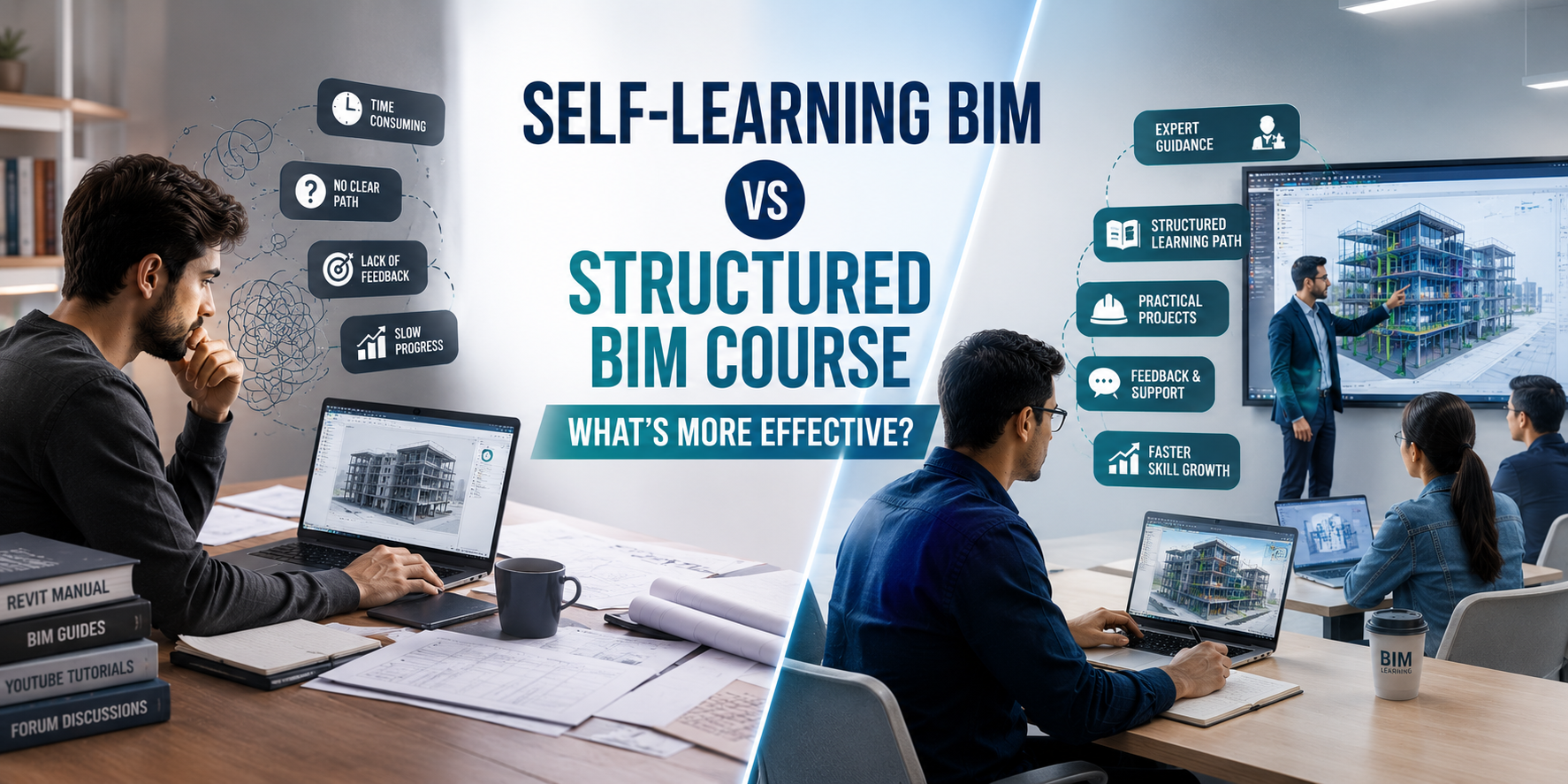 BIM Self-Learning BIM vs Structured BIM Course: What’s More Effective? 22 June 2026 6 min read](https://blog.novatr.com/blog/self-learning-bim-vs-structured-bim-course) [ BIM Easy Ways to Learn BIM Faster and Smarter as an Architect 18 June 2026 7 min read](https://blog.novatr.com/blog/bim-learning-for-architects) [ BIM Civil How Delhi-Mumbai Industrial Corridor Are Built using BIM? 5 June 2026 7 min read](https://blog.novatr.com/blog/how-delhi-mumbai-industrial-corridor-are-built-using-bim)
Download Syllabus
## BIM Professional Program
Next Cohort
June 2026
Program Duration
7 Months
Premium Program benefits
8 Credentials from Autodesk, NSDC, Novatr
1 program. 10 career paths. Infinite Growth.
40+ ISO 19650 & RIBA real-world projects to practice
1-on-1 guidance. Access 400+ industry experts.
Access the biggest AEC-Tech community on the planet. 8500+ and counting
Curated for you by 100+ global BIM leaders.
Lifelong access to course content
Enter your details to download the program syllabus.
##### BIM Professional Program
June 2026, 7 Months
Your Name Invalid name.
Phone Number Enter a valid phone number
Email Please enter a valid email address.
Select years of experience\* Currently studying 0-1 years 1-2 years 2-4 years 4-8 years 8-10 years 10-12 years 12+ years Invalid selection.
Specialisation Select your background\* Architecture Civil Engineering Mechanical Engineering Electrical Engineering Invalid selection.
Are you professionally trained in interior design?
Yes
No
I agree to the [Terms of Use](https://www.novatr.com/terms-and-conditions) and [Privacy Policy](https://www.novatr.com/privacy-policy), and consent to be contacted by Email, Call, WhatsApp, or SMS.
Submit
Ready to skyrocket your career?
Begin your next chapter in AEC
with Novatr!
We are here to help you take the industry by storm with advanced, tech-first skills.
[Explore Courses](https://www.novatr.com/#courses)
Join our newsletter
Submit
Thank you for signing up.
We’ll send you a nice letter once per week. No spam.

Dare to Disrupt.
Join thousands of people who organise
work and life with Novatr.
Company
- [About Us](https://www.novatr.com/about)
- [BIM Professional Program v.2026](https://www.novatr.com/courses/bim-professional-program)
- [Masters Computational Design](https://www.novatr.com/courses/computational-design)
- [Become a Mentor](https://www.novatr.com/apply-as-mentor)
- [Hiring from Us](https://www.novatr.com/hire-from-us)
- [Careers at Novatr](https://www.novatr.com/career)
Resources
- [Blog](https://www.novatr.com/learning-hub)
- [Media Room](https://www.novatr.com/media-room-home-page)
- [Career Builder](https://www.novatr.com/career-navigator)
- [Events & Webinars](https://www.novatr.com/webinars)
- [FAQs & Support Center](https://www.novatr.com/contact-us)
- [Contact Us](https://www.novatr.com/contact-us)
- [Privacy Policy](https://www.novatr.com/privacy-policy)
- [Terms of Use](https://www.novatr.com/terms-and-conditions)
©2023 Oneistox Network Pvt. Ltd.
All Rights Reserved
```json
{
"@context" : "https://schema.org",
"@type" : "BlogPosting",
"author" : {
"@type" : "Person",
"name" : "Pragya Sharma",
"url" : "https://blog.novatr.com/blog/author/pragya-sharma"
},
"dateModified" : "2026-06-23T06:36:10.714Z",
"datePublished" : "2026-06-22T10:18:23.000Z",
"headline" : "Top Industry Applications for BIM: Where is BIM Used in Construction?",
"image" : [ "https://blog.novatr.com/hubfs/Top%20Industry%20Applications%20for%20BIM%20Where%20is%20BIM%20Used%20in%20Construction.jpg" ],
"mainEntityOfPage" : {
"@id" : "https://blog.novatr.com/blog/top-industry-applications-for-bim-where-is-bim-used-in-construction",
"@type" : "WebPage"
},
"publisher" : {
"@type" : "Organization",
"logo" : {
"@type" : "ImageObject",
"url" : "https://blog.novatr.com/hubfs/Novatr%20Prev%20OX-2.svg"
}
}
}
```