




Why Is BIM Learning Challenging for Many Architects?
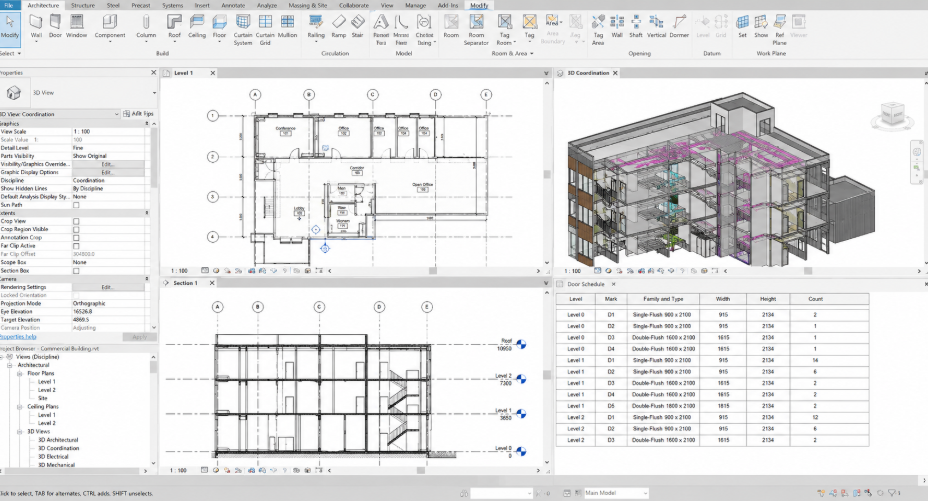
BIM presents a new working method to many architects, which is why they struggle with it. Traditional CAD is about drawing, BIM is about creating intelligent models that automatically produces drawings, schedules and documentation.
It is not always the software that is the challenge, but rather how information can be passed around within a project. In addition to the technical learnings, architects need to master model coordination and documentation standards and how to work effectively as a team.
Several factors contribute to the learning curve:
-
Moving from 2D drafting to model-based design
-
Understanding data-rich project environments
-
Learning interdisciplinary coordination
-
Managing documentation within a BIM model
-
Adapting to new project delivery methods
Those looking for what is best way to learn BIM for beginners focus only on software training. In reality, BIM is not just a technical concept, but also a workflow concept. Understanding the value of BIM in project delivery makes the learning more meaningful and functional.
What Makes BIM Easier to Understand for Architects?
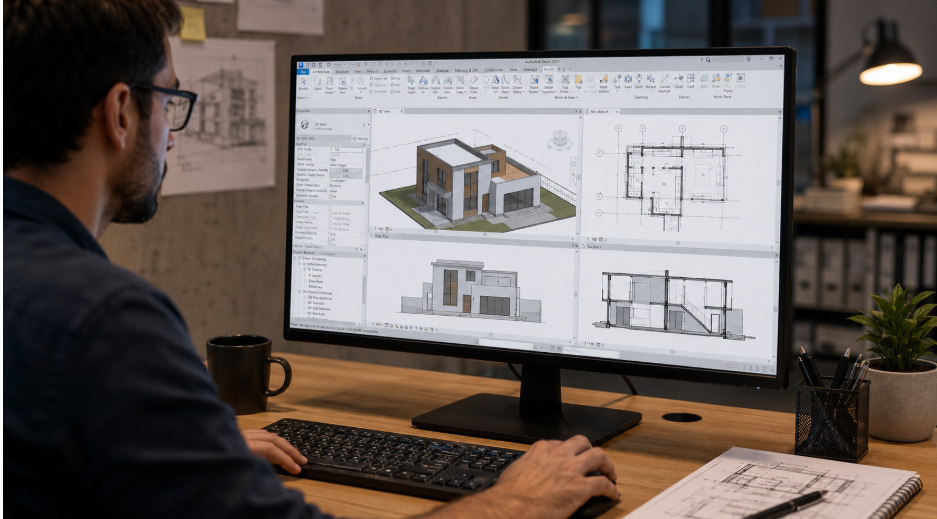
When the architects learn BIM in the context of real project applications, it becomes easier to understand. Learning should focus on how BIM can contribute towards design development, documentation and coordination, not memorising tools.
There are a few practices which can make the learning easier:
-
Begin simple construction projects.
-
Understand model organization
-
Learn documentation workflows
-
Practice creating schedules
-
Explore project coordination scenarios
By using realistic examples, it helps to enhance BIM learning so that the concept can be applied and reinforced easily in real world projects.
How Can Architects Transition From CAD-Based Workflows to BIM?
Architects have already been educated with design and documentation knowledge which can aid them in their BIM journey.
These are a few practices that can help ease the transition:
-
Begin with small projects
-
learn the creation of models before advanced features.
-
Have insight into project setup and organization
-
Practice documentation generation
-
Understand BIM standards and best practices
One big difference between CAD and BIM is that BIM is primarily based on the concept of creating models rather than separate drawings. When the model gets altered, the project data is automatically refreshed.
Learning BIM modelling with direct, real exercises helps solidify this idea. If you make model changes, schedules, drawings and other documentation are updated on their own for architects, so they don’t have to manually revise each sheet one by one.
As you gain more experience practitioners start to see in a more tangible way, how BIM boosts collaboration and makes the design workflow smoother across the whole project lifecycle.
What Tools, Practice Methods, and Learning Strategies Improve BIM Skills Faster?
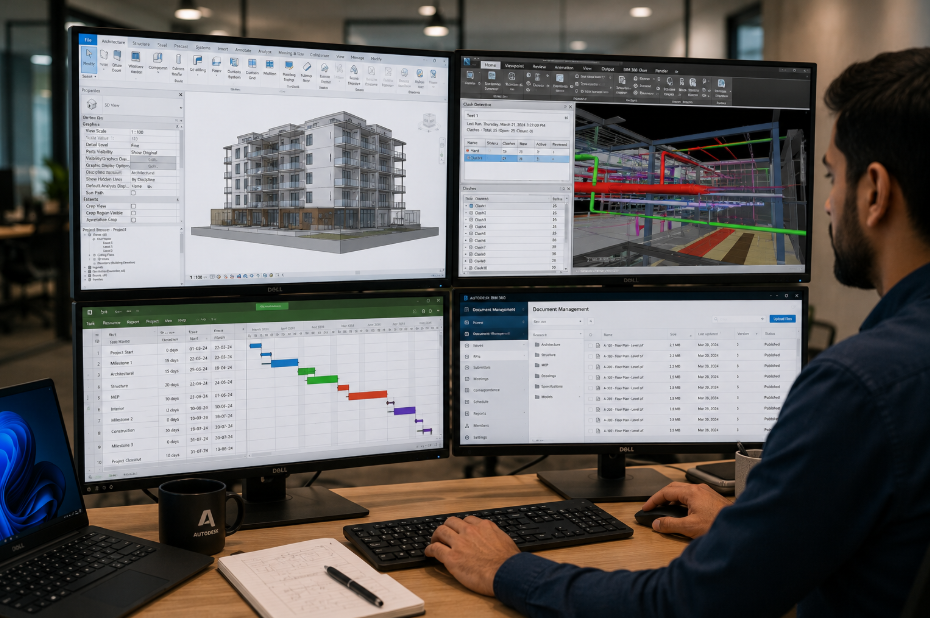
Learning BIM and gaining BIM expertise takes two things; knowledge and experience. The following strategies can help to speed up progress.
|
Area |
Recommended Approach |
Benefit |
|
Software Training |
Learn industry-standard architecture software |
Builds technical proficiency |
|
Project Practice |
Model complete building projects |
Improves practical understanding |
|
Coordination Exercises |
Work with multidisciplinary files |
Enhances collaboration skills |
|
Documentation |
Generate schedules and sheets |
Strengthens delivery knowledge |
|
Mentorship |
Learn from experienced professionals |
Provides industry insights |
|
Portfolio Building |
Create project case studies |
Demonstrates capability |
|
Standards Learning |
Study BIM standards |
Improves workflow understanding |
|
Reviews |
Evaluate completed models |
Identifies improvement areas |
Professionals who look into how architects can learn BIM faster usually end up noticing that actually doing projects works better , than just watching tutorials all day.
Which BIM Courses Help Architects Learn Through Real Projects and Workflows?
Architects note that learning pathways that are structured well with software guidance and genuine handson practice tend to work the best for them.
One option is the BIM Professional Program by Novatr, created for architects and other AEC professionals. It focuses on practical BIM application, and it offers guided training plus real-world project work, not just theory.
Among the program’s notable elements include:
-
More than 40 hands-on projects
-
Live online learning sessions
-
Exposure to BIM coordination and documentation workflows
-
Access to industry experts and mentors
-
Autodesk and Novatr certifications
-
Portfolio and career support
Courses that include practical project experience in the learning process can offer a better grasp of the BIM processes. This enables the learners to transfer the training to their work and gain the operational skills to get ready for their job.
Project-based learning can be a great option for architects looking for structured BIM training, helping to build confidence and understanding of workflows.


.png)
