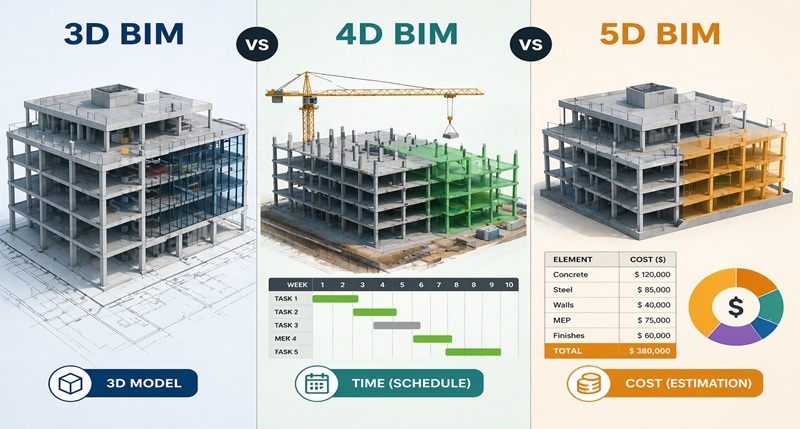




About Surat Diamond Bourse Project:
In today's construction projects, BIM is used to deal with large and complex buildings. It aids teams in minimizing mistakes and boosting coordination in design and execution.
Some important details about the project and context:
- Surat Diamond Bourse is one of the world's largest office buildings
- Which city is known as diamond city? Surat is named the diamond city because of its international trade in diamonds.
- It is a massive project using a BIM approach in construction
- According to industry reports (2024-2025), more than 70% of the leading AEC firms are already implementing BIM workflows
- BIM with its ability to control design complexity across thousands of office units helped manage complexity
This project demonstrates the current need for digital construction methods to develop mega infrastructure.
How BIM Was Used in Design and Planning?

BIM was extensively used for coordination of the planning and design process at an early stage.
Key uses included:
- Making a full 3D digital model prior to construction work
- Test design ideas as early as possible to minimize errors
- Enhancing the relationship between architects and engineers
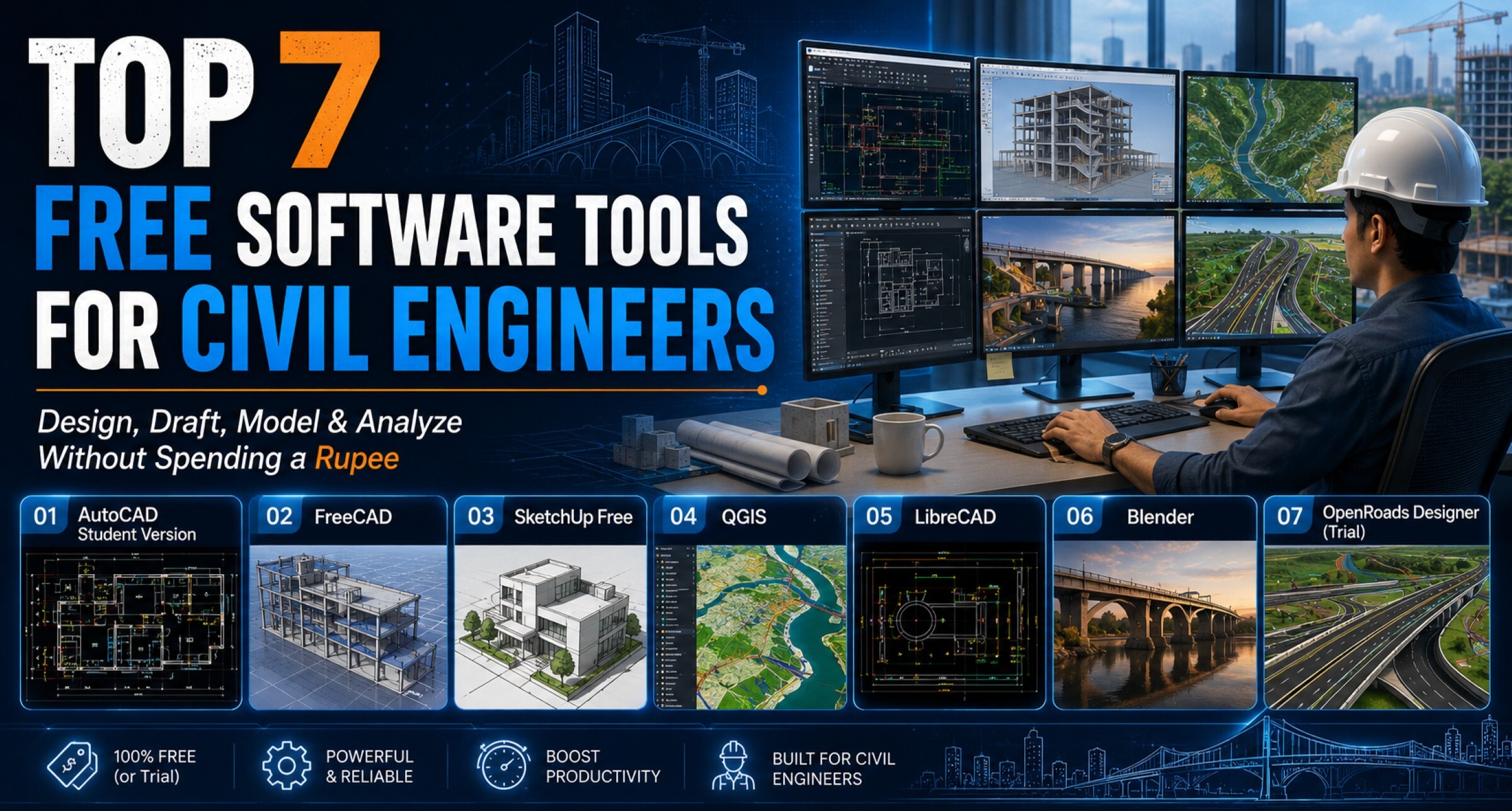
- Using BIM software for civil engineers for accurate modelling
- The identification of design problems prior to site work
- Enhancing documentation's precision and efficiency
Impact on planning:
- The ability to reduce the reliance on manual drawing
- Enhanced clarity of design throughout teams
- Supported faster decision-making
- Responsible for assisting in the coordination of structural, architectural and MEP systems
This is now a fundamental part of the BIM career path development in today's times.
Role of BIM in Managing Large-Scale Buildings
The adoption of BIM in managing large-scale buildings is crucial for projects like Surat Diamond Bourse.
The coordination involved in a project such as Surat Diamond Bourse is of an advanced level.
BIM helped in:
- Centralising all project data in one model
- When dealing with thousands of design elements, it can be tricky to manage them all
- Enhancing control of building systems
- Real-time monitoring of changes
- Minimizing inter-departmental misunderstandings
How BIM was required:
- This scale is too large for traditional methods to deal with effectively
- In complex structures, BIM guarantees greater accuracy
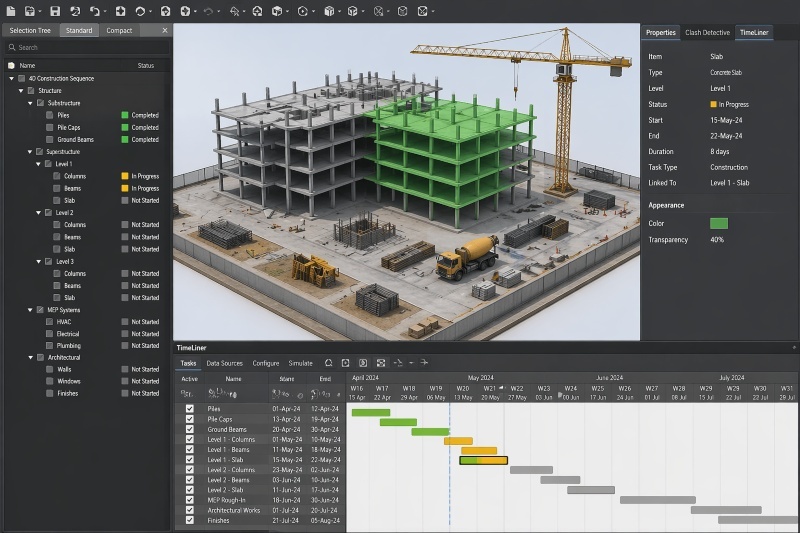
- Assists engineers in digitally tracking progress
- Promotes quicker approvals and updates
That's why many engineers are now asking, is BIM a good career for growth in the future?
Coordination and Execution Using BIM
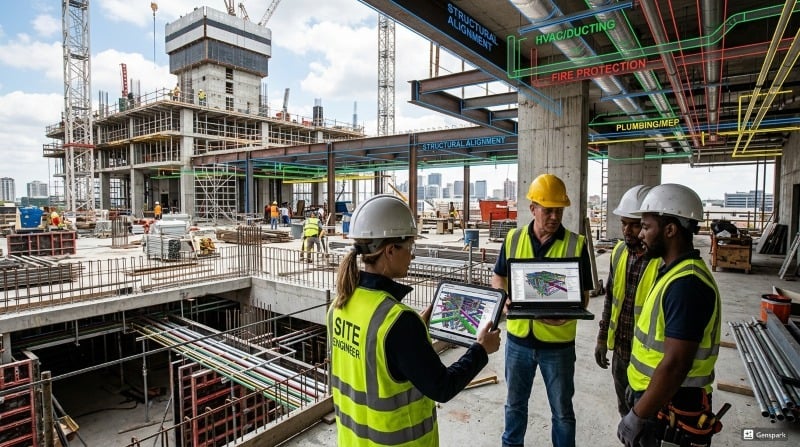
One of the most important stages in big projects is execution.
BIM had a positive impact on coordination as it:
- Allowing all teams to work on a shared model
- Getting the changes to be updated on the fly in departments
- Identifying system conflicts (structure, MEP, etc.)
- Minimizing rework during the construction process
- Improving site-level communication
Execution benefits:
- Faster construction timelines
- Lower material wastage
- Efficient sequence of activities
- Improved quality control
This is where BIM in construction can be extremely useful in actual projects for civil engineers.
Benefits of Using BIM in Commercial Projects
In large-scale commercial projects, such as the Surat Diamond Bourse, BIM facilitates better planning, coordination, and execution by entering all project data into a digital model. It permits several teams to collaborate better, reduce errors, and facilitate quicker decision-making during construction.
|
Benefit Area |
Impact |
|
Coordination |
Increased team communication |
|
Accuracy |
Fewer design and construction blunders |
|
Time |
Faster project delivery |
|
Cost |
Reduce rework and waste |
|
Data |
Centralized project information |
|
Planning |
Improved decision-making |
Additional advantages:
- This program is helping to capitalize large scale infrastructural projects.
- Improves visibility during construction activities.
- Facilitates long-term facility management.
- Strengthens the adoption of BIM in construction industry-wide
Challenges in Large Building Projects
Even when using BIM, there are still issues with large-scale projects:
- Modelling with very large and complex models
- Interagency coordination of several specialised teams
- Ensuring the engineers understand BIM software and processes
- The cost of software and hardware setup is high
- The combination of the traditional construction methods.
- Having a single data system across all teams
Key insight:
- As experience and structured training increases these challenges are diminished
- The need for a robust career in BIM in India is filling this ability gap.
- Automation and digital processes are becoming the norm.
How to Learn BIM for Commercial Projects
To develop BIM expertise, professionals need to comprehend three essential areas, which include modeling techniques, coordination methods, and construction workflow processes. Professionals must learn to use industry tools effectively within real project environments to handle commercial-scale projects.

Take your civil engineering career to the next level with Novatr’s BIM Professional Course for Civil Engineers, a project-based program that prepares you to plan, design, and manage construction projects using 12+ industry software and essential BIM plugins.
Learn how to work with Autodesk Revit, Navisworks, Construction Cloud, and key plugins like DiRoots.One, pyRevit, EF-Tools, ProSheets, Issue and Model Checker for Revit to improve automation, accuracy, and project efficiency.
Here’s what you’ll gain:
- End-to-end understanding of BIM workflows — modeling, estimation, coordination, sequencing, and documentation.
- Hands-on training aligned with ISO 19650 standards and real residential + commercial projects.
- Globally recognized certifications:
- Novatr Course Certificate
- Autodesk User Certification
- NSDC Skill Certificate
- Novatr Specialization Certificate, if opted
After completing the core modules, learners can also choose 2 additional specializations, including:
- Visual Programming with Dynamo – for automation and parametric workflows
- 4D, 5D & 6D with BIM – for time, cost, and facility integration
- Tekla for RCC Modeling – for detailed steel and concrete modeling
- Civil 3D for Infrastructure – for roadways, railways, and utilities
- Project Strategy & Optimization with Plannerly - Plan, structure, and audit BIM execution plans.
This methodical approach enables professionals to develop effective BIM skills and to use them in practical projects.