



What is the Role of Structural Engineers?
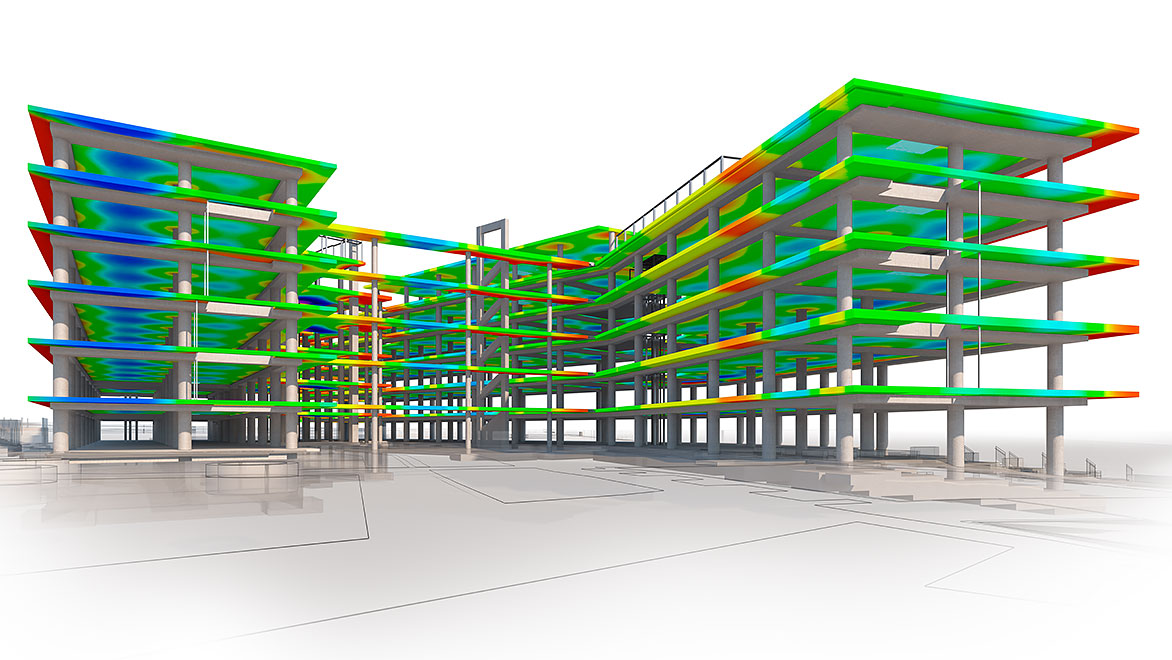
Structural engineers use physics and mathematics to design structures that can support loads and resist forces. They conduct comprehensive analyses using computer simulations to ensure stability in all situations. Engineers consider project requirements and environmental factors when selecting construction materials. They implement measures to prevent hazards and ensure safety. They collaborate with architects and construction managers to integrate structural elements seamlessly and oversee construction to ensure compliance with designs and safety standards. Their expertise is essential in shaping the built environment and ensuring the safety and resilience of civil infrastructure.
Importance of Structural Engineering

Structural engineering is essential because it ensures the safety, stability, and durability of structures, contributes to infrastructure development and economic growth, considers environmental sustainability, and plays a significant role in disaster resilience and the overall well-being of society. Structural engineering is of paramount importance for several reasons:
- Safety: Structural engineers assure the safety of buildings and bridges by designing structures to resist forces like gravity, wind, earthquakes, and temperature changes.
- Stability: Structural engineers ensure the stability of structures by calculating load-bearing capacity and designing for normal and extreme conditions, ensuring long-term functionality.
- Durability: Structural engineers select construction materials and methods to increase the longevity of structures, reducing maintenance costs and assuring the continued functionality of the structures.
- Economic Impact: Well-built structures have a positive economic impact on businesses and investments, contributing to development in both urban and rural areas.
- Environmental Considerations: Structural engineers consider environmental factors to minimise construction's environmental impact using sustainable materials and energy-efficient design.
- Resilience: In areas prone to natural disasters, structural engineering is key to designing resilient structures that can resist and reduce damage and loss of life.
- Quality of Life: Structural engineering helps enhance lives by designing buildings and infrastructure that provide shelter, facilitate transportation, and support societal functions.
Also Check: Benefits of BIM Technology for Structural Engineers
Factors to Consider in Choosing the Right Structural Engineering Course

Choosing the right course is a crucial decision that can significantly impact your education, career, and overall satisfaction with your studies. Ultimately, the right course for you depends on your goals, preferences, and circumstances. Take your time to research and carefully consider these factors to make an informed decision that aligns with your educational and career aspirations. Here are some important factors to consider when selecting the right course:
- Interests and Passions: It is essential to choose a course that aligns with your interests and passions. Picking a program you're genuinely enthusiastic about can make your educational journey more enjoyable and fulfilling.
- Career Goals: Consider your career aspirations and how the course you choose will help you achieve them. Research job opportunities, industries, and earning potential associated with your chosen field.
- Academic Strengths: Reflect on your academic strengths and weaknesses. Choose a course that plays to your strengths and interests while allowing you to address any weaknesses through appropriate coursework.
- Course Content: Review the course curriculum carefully. Ensure that it covers the topics and subjects you want to learn and that the content is up-to-date and relevant to your field of interest.
- Accreditation: Verify that the course and the institution offering it are accredited by relevant accrediting bodies. Accreditation ensures that the program meets certain quality standards and is recognised by employers and other educational institutions.
- Institution Reputation: Research the reputation of the institution offering the course. Consider factors like academic excellence, faculty expertise, research opportunities, and student support services.
- Location: Select whether you want to study locally or internationally. The location of the institution impacts your overall experience, including cost of living, cultural exposure, and networking opportunities.
- Mode of Study: Determine whether you prefer full-time, part-time, or online learning. Choose a mode that fits your schedule, education style, and lifestyle.
- Duration: Consider the length of the course and whether it aligns with your time frame and plans. Some courses may be shorter and more intensive, while others may be longer but offer more flexibility.
- Financial Considerations: Evaluate the cost of tuition, fees, and other expenses associated with the course. Investigate any scholarships, grants, or financial aid opportunities available to you.
- Networking Opportunities: Consider the networking opportunities available through the course and institution. Building a professional network can be invaluable for future career prospects.
- Flexibility: Assess the flexibility of the course in terms of course schedules, prerequisites, and the ability to customise your studies to align with your interests and goals.
- Student Reviews and Alumni Feedback: Seek out student reviews and feedback from alumni who have completed the course. They can provide insights into the quality of education and the overall student experience.
-
Future Trends: Research about current and future trends in your chosen field to ensure that your course of study will equip you with relevant skills and knowledge for the evolving construction industry.
Top Online Structural Engineering Courses in 2026
Below are some of the best online structural engineering courses which help to learn about structural engineering basics and grow in the field.
1. BIM Professional Course for Civil Engineers by Novatr
Mode of Study: Online
Duration: 7 months
Fees: INR 2,75,000
Build a future-ready career in construction with Novatr’s BIM Professional Course for Civil Engineers, a hands-on, industry-aligned program designed to help you master Building Information Modeling (BIM) from design to execution. Learn how top global firms use BIM to plan, coordinate, and deliver smarter, more efficient projects, while gaining the technical confidence to work on large-scale infrastructure and building developments.
Here’s what you’ll learn:
- 5+ industry softwares, including Autodesk Revit, Navisworks, Autodesk Construction Cloud: Docs, Coordination & Collaboration.
- Master essential plugins such as EF-Tools, DiRoots.One, pyRevit, ProSheets, Issue and Model Checker for Revit to automate documentation and improve precision.
- Learn complete BIM workflows, from digital design development, estimation & BOQ, and information modeling to clash detection, sequencing, and multidisciplinary coordination.
- Get hands-on experience working on real commercial and residential projects following ISO 19650 standards, guided by mentors from the global AEC industry.
- Develop professional construction documentation, audits, and deliverables aligned with international BIM practices.
Earn globally recognized certifications:
- Novatr Course Certificate, signed by the Academic Director.
- Autodesk User Certification, validating your command over Autodesk tools.
- NSDC Certificate, officially recognizing your BIM expertise.
- Optional Specialization Certificates, for learners who wish to deepen their skills in niche BIM applications.
2. Master Study in Structural Engineering by Econstruct Design & Build Pvt. ltd.
Mode of Study: Online
Duration: 7-12 months
Fees: INR 1,88,800
Curriculum:
- 3D object-based modelling
- Design concrete floor and foundation systems
- Understand analysis and design
- Create complex models and 3D object-based graphical modelling environment
- Learn structural engineering software like ETABS, StaadPro, SAFE, SAP 2000, CSI Bridge, RCDC, and Prokon
Placements: Companies that offer jobs to structural engineering professionals after completing this online structural engineering course are Larsen & Toubro, Atkins, JW Consultants LLP, Ramboll, TATA Consulting Engineers, and others.
3. BIM, Civil & Structural Design & Analysis of Online Training by IFS Academy
Mode of Study: Self-Study (Video and Text Based)
Duration: 4 months
Fees: INR 56,000
Curriculum:
- Civil engineering design & analysis fundamentals
- AutoCAD Civil
- Autodesk Civil 3D
- Revit Architecture / Revit Structure
- 3DS MAX
- STAAD.Pro
- ETABS
- Building estimation and costing
- MSP with PPM
Placements: Companies that offer jobs to structural engineering professionals after completing this online structural engineering course are IDRIS Automation, Dynamic Realty, TEP India Pvt. Ltd., In-Finite Solutions, Alada Solutions, and others.
4. Civil Structural Design Training by CRBtech
Mode of Study: Online
Duration: 6 months
Fees: INR 95,000
Curriculum:
- BIM and civil fundamentals
- Drafting and detailing-Autocad
- 3-D modelling software- Revit, Google Sketch up & 3ds-max
- Structural analysis & design-STAAD.Pro
- Multi-Story building & foundation design- ETABS SAFE
Placements: Companies that offer jobs to structural engineering professionals after completing this online structural engineering course are CADTECH, Persistent, Larsen &Tourbo, Amdocs, TATA Consultancy Services, Cognizant, and others.
5. Certified Structural Design Engineer by Cloud Campus
Mode of Study: Online
Duration: 2-3 months
Fees: INR 45,900
Curriculum:
- Drafting and modifying drawings using AutoCAD
- Blocks and Attributes, Xref and OLE concepts
- Slab Creation with surface distribution
- RCC detailing of Drawing Preparation
- Bar Bending Schedule
- Concrete, steel and foundation design
- Bridge deck design
- Static and Dynamic analysis
- P-Delta and Buckling analysis
- Creating structure models and plans of structures
- Creating an analytical model of structures
- Work Breakdown structure
- Assembly and validate takeoff data
- Report generation and export
Placements: Companies that offer jobs to structural engineering professionals after completing this online structural engineering course are Jacobs Engineer, Fichtner, Aditya Birla, Larsen & Toubro, HCL, and others.
Also Check: A Comprehensive Guide on Structural Design in Civil Engineering
Careers in Structural Engineering

The field of civil engineering offers a wide range of career opportunities in structural engineering. There are many career paths and online structural engineering courses available in the market that help engineers grow and learn more about structural engineering basics. Individuals interested in designing, analysing, and ensuring the safety and stability of structures in the built environment can find various opportunities in the field.
1. Structural Engineer
Salary Range: ₹ 2.0 Lakhs to ₹ 10.5 LPA
Structural engineers are responsible for designing, analysing, and overseeing the construction of safe and stable buildings, bridges, dams, and other structures that can withstand environmental forces.
Also Read - How to Become A Structural Engineer : Career Guide To Structural Engineering Roles
2. Bridge Engineer
Salary Range: ₹ 2.8 Lakhs to ₹ 15.3 LPA
Bridge engineers are known for their expertise in designing, maintaining, and inspecting bridges and related structures, which include small pedestrian bridges and large highway and railway bridges.
3. Building Designer
Salary Range: ₹4.3 Lakhs to ₹5.5 LPA
The structural aspects of buildings are designed by building designers, also known as architectural engineers, and they collaborate with architects to ensure that they are aesthetically pleasing and functional.
4. Construction Manager
Salary Range: ₹4.2 Lakhs to ₹36.0 LPA
Construction managers are responsible for overseeing the planning, coordination, and execution of construction projects. Their responsibility is to ensure that projects are completed safely, on time, within budget, and as per high-quality standards.
5. Geotechnical Engineer
Salary Range: ₹ 1.8 Lakhs to ₹ 12.2 LPA
Geotechnical engineers examine the behaviour of soil and rock materials to evaluate their impact on construction projects. Their recommendations include foundation design, slope stability, and soil improvement techniques.
Also Read - Career Guide to become a successful Geotechnical engineer
6. Structural Inspector
Salary Range: ₹26 lakhs and ₹30 LPA
Structural inspectors are responsible for assessing the safety and integrity of existing structures. Their job involves conducting inspections, identifying potential issues, and recommending repairs or maintenance to ensure ongoing safety and compliance.
7. Consulting Engineer
Salary Range: 2.1 lakhs to ₹27.6 LPA
Consulting engineers are employed by engineering consulting firms or work independently. Their services include expertise and consulting on structural design, analysis, and project management for clients from diverse industries.
8. Seismic Engineer
Salary Range: 2.1 lakhs to ₹27.6 LPA
The speciality of seismic engineers is designing structures that can withstand earthquakes and seismic forces. Their role is crucial in regions that are prone to seismic activity, as they ensure the safety of buildings and infrastructure.
9. Facade Engineer
Salary Range: ₹2.9 lakhs to ₹9.6 LPA
Facade engineers focus on the design and engineering of building facades, including the selection of materials, insulation, and structural elements. They contribute to the aesthetics, energy efficiency, and functionality of building exteriors.
10. Project Manager
Salary Range: ₹4.2 lakhs and ₹30 LPA
As the backbone of project management, project managers are responsible for ensuring that each project runs smoothly from start to finish. They oversee and coordinate various aspects of structural engineering projects, including budgeting, scheduling, and personnel management, to ensure that the project is delivered on time, within budget, and to the satisfaction of all stakeholders involved.
Conclusion
Structural engineering is a vital field responsible for ensuring the safety, stability, and durability of the built environment. The resilience of structures, the economic growth of communities, and the well-being of society as a whole are all greatly influenced by it. Structural engineers are the unsung heroes who design skyscrapers that reach for the sky and craft bridges that span vast distances. The value of structural engineering cannot be understated. It protects us from natural forces, enhances our quality of life, and contributes to economic prosperity. If you're considering a career in structural engineering or seeking to expand your knowledge in this field, the online structural engineering courses mentioned above can provide valuable opportunities to gain expertise and enter this exciting profession. Structural engineering is a combination of creativity, technical expertise, and a dedication to making our world safer and more resilient. Structural engineering will always dominate in building a better, more secure future for all of us as we continue to push the boundaries of architectural and engineering innovation.
Novatr provides a BIM Professional Course for civil engineers which is an online structural engineering course that is taught by industry specialists with years of real-world experience and will help structural engineers to learn about new technologies inspiring them with creative and streamlined work process. Novatr's Resources page is a valuable source of information on AEC careers and software. Discover, learn, and plan your path to a fulfilling career in structural engineering.
Structural engineering will remain central to how we design safe, durable, and efficient buildings and infrastructure, but the skills needed to succeed are changing fast. Short, targeted online structural engineering courses can help you stay current with design codes, BIM workflows, and advanced software while you continue working or studying.
If you want a structured path, the BIM Professional Course for Civil Engineers by Novatr offers a project-based route to mastering multiple tools, building a strong portfolio, and unlocking better-paying roles in India and abroad. Keep exploring new skills, certifications, and software as the industry evolves so you do not fall behind peers.
Visit our resources page to discover more guides on structural engineering careers, BIM workflows, and AEC software trends that can support your long-term growth.
FAQs
1. What are the top 5 structural engineering certification courses in India?
Some of the top structural engineering certification options in India include programs like Novatr’s BIM Professional Course for Civil Engineers, Econstruct’s Master Study in Structural Engineering, IFS Academy’s BIM, Civil & Structural Design & Analysis course, CRBtech’s Civil Structural Design Training, and the Certified Structural Design Engineer course by Cloud Campus. These online structural engineering courses focus on software, design fundamentals, and practical projects to prepare you for industry roles.
2. How much does a structural engineering certification cost?
The cost of a structural engineering certification in India varies by provider, course depth, and duration. Short online structural engineering courses can start around ₹40,000–₹60,000, while longer, placement-focused programs that teach multiple tools like ETABS, STAAD.Pro, and Revit may range from ₹1.5 lakh to ₹2.5 lakh or more. When comparing fees, also check teaching format, live projects, mentorship quality, and placement or career support services so you truly maximize value.
3. How do I become a certified structural engineer?
To become a certified structural engineer, start with a civil engineering degree, then build strong basics in structural analysis, design codes, and materials. Next, enroll in online structural engineering courses or BIM-focused programs that teach key tools like ETABS, STAAD.Pro, and Revit. Work on live or capstone projects, build a portfolio, and clear any relevant certification exams. Finally, gain site or design office experience and keep upskilling to strengthen your profile.
4. Why upskilling is mandatory for structural engineers in 2026?
Upskilling is critical for structural engineers in 2026 because design tools, codes, and client expectations are changing fast. Firms now expect engineers to use BIM, automation, and advanced analysis software, not just basic CAD. Online structural engineering courses help you learn new tools, understand updated safety and sustainability standards, and stay competitive in the job market. Continuous learning also opens doors to senior roles, global projects, and significantly higher salaries.