
.jpg)

Who are Structural Engineers?

Structural engineers are responsible for the strength and stability of structures. They analyse, modify, and research structural components and work on frameworks that fit designs to ensure the safety of occupants. Some of their roles and responsibilities include:
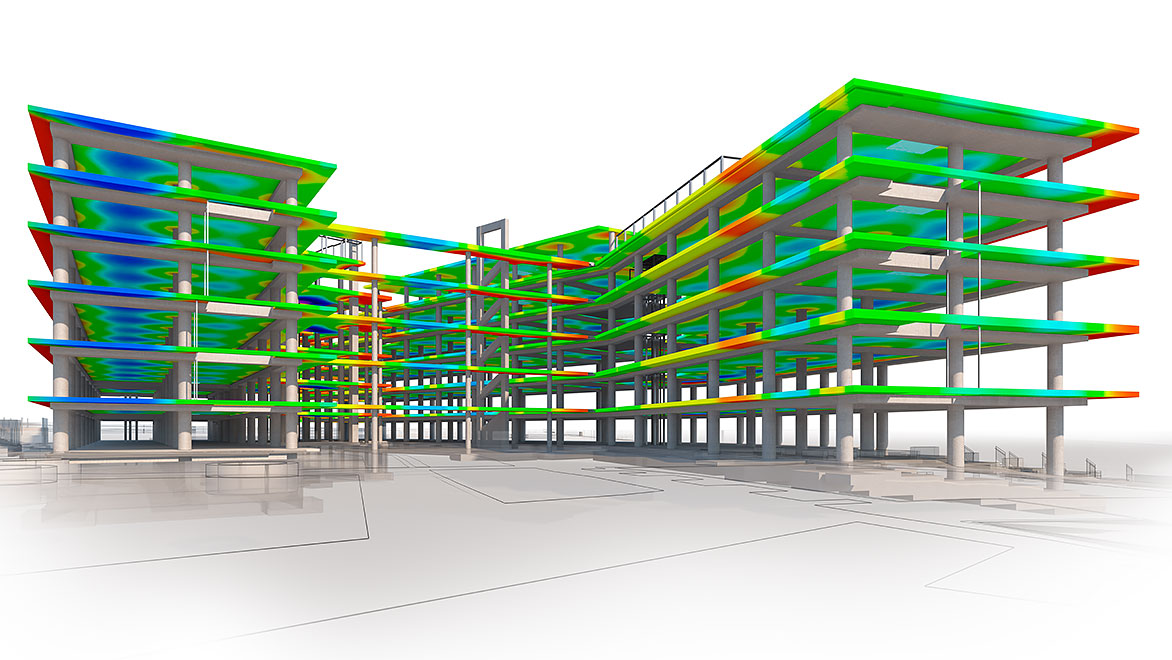
- Conducting comprehensive analysis using simulations
- Calculating the load and stress that structures can handle
- Assessing structures and suggesting modifications for safety and durability
- Considering project requirements and environmental factors before selecting construction materials
- Preparing cost estimates
- Obtaining regulatory permits for the structures
- Overlooking construction and supervising project managers to implement structural elements
- Collaborating with architects, engineers, project managers, and builders
- Managing contracts
Top 5 Online Structural Engineering Software Courses
Explore the top 5 online structural engineering software courses in the table below and choose the one that aligns best with your career goals and technical requirements.
|
Course |
Mode |
Software Covered |
Duration |
|
BIM Professional Course For Civil Engineers by Novatr |
Online |
Revit, Navisworks etc. |
7 months |
|
Civil Structural Design Training by CRBtech |
Online |
Revit, Google Sketch Up etc. |
6 months |
|
Master Study in Structural Engineering by Econstruct Design & Build Pvt. ltd. |
Online |
ETABS Basics & Advanced. Staad Pro etc. |
7 to 12 months |
|
Certified Structural Design Engineer by Cloud Campus |
Online |
AutoCAD, ETABS etc. |
2 to 3 months |
|
BIM, Civil & Structural Design & Analysis of Online Training by IFS Academy |
Self Study |
Autodesk Civil 3D, 3DS MAX etc. |
4 months |
1. BIM Professional Course For Civil Engineers by Novatr
Duration: Seven months
Fee: INR 2,75,000
Mode of Study: Online
Build a future-ready career in construction with Novatr’s BIM Professional Course for Civil Engineers, a hands-on, industry-aligned program designed to help you master Building Information Modeling (BIM) from design to execution. Learn how top global firms use BIM to plan, coordinate, and deliver smarter, more efficient projects, while gaining the technical confidence to work on large-scale infrastructure and building developments.
Here’s what you’ll learn:
- 5+ industry softwares, including Autodesk Revit, Navisworks, Autodesk Construction Cloud: Docs, Coordination & Collaboration.
- Master essential plugins such as EF-Tools, DiRoots.One, pyRevit, ProSheets, Issue and Model Checker for Revit to automate documentation and improve precision.
- Learn complete BIM workflows, from digital design development, estimation & BOQ, and information modeling to clash detection, sequencing, and multidisciplinary coordination.
- Get hands-on experience working on real commercial and residential projects following ISO 19650 standards, guided by mentors from the global AEC industry.
- Develop professional construction documentation, audits, and deliverables aligned with international BIM practices.
Earn globally recognized certifications:
- Novatr Course Certificate, signed by the Academic Director.
- Autodesk User Certification, validating your command over Autodesk tools.
- NSDC Certificate, officially recognizing your BIM expertise.
- Optional Specialization Certificates, for learners who wish to deepen their skills in niche BIM applications.
Placements: Upon completing the online structural engineering software course, individuals become sought-after candidates for leading companies like Techture, DAR, The BIM Engineers, TATA Consulting Engineers, Total Environment, Colliers, and many others, all eager to hire BIM-skilled professionals.
Also Check out: BIM for Structural Engineers: Top Benefits, Significance, and Work Opportunities
2. Civil Structural Design Training by CRBtech
Duration: Six months
Fee: INR 95,000
Mode of Study: Online
Offered by CRBtech, this course curriculum covers a comprehensive understanding of BIM and civil fundamentals for construction projects. Initially, it focuses on fundamental topics like drafting and detailing in AutoCAD, and 3D modelling in Revit, Google Sketch Up, and 3Ds Max. It then moves on to advanced subjects like structural design and analysis in Staad.Pro and multi-story build and foundation design in ETABS and SAFE, led by skilled professionals in the industry.
Placements: Some of the well-known companies that offer jobs to civil engineers after completing this online course are CADTECH, Persistent, Larsen & Toubro, Amdocs, TATA Consultancy Services, and others.
3. Master Study in Structural Engineering by Econstruct Design & Build Pvt. ltd.
Duration: Seven-twelve months
Fee: INR 1,88,800
Mode of Study: Online
This course is an excellent option for individuals who want to learn everything about structural engineering softwares and can afford to commit to a long-term association. The course is designed to provide an engaging learning experience. It covers topics like 3D object-based modelling, teaches how to design concrete floor and foundation systems, design analysis, and helps in creating complex 3D models. The course teaches structural engineering software like ETABS, StaadPro, SAFE, SAP 2000, CSI Bridge, RCDC, and Prokon under the guidance of experts in the AEC industry.
Placements: After completing this structural engineering software course, some of the best companies like Larsen & Toubro, Atkins, JW Consultants LLP, Ramboll, TATA Consulting Engineers, and others offer jobs to civil engineers.
4. Certified Structural Design Engineer by Cloud Campus
Duration: Two-three months
Fee: INR 45,900
Mode of Study: Online
This structural engineering design software can be a good option if you’re looking for an affordable course with a limited time commitment. The curriculum covers drafting and modifying drawings in AutoCAD, blocks and attributes, Xref and OLE concepts, slab creation with surface distribution, RCC detailing, bar bending schedule, and concrete, steel, and foundation design. It also emphasises bridge deck design, static and dynamic analysis, P-Delta and bulking analysis, 3D modelling of structures, analytical model of structures, work breakdown structure, assembly and validation of takeoff data, and report generation and export.
Placements: Renowned companies like Jacobs Engineer, Fichtner, Aditya Birla, Larsen & Toubro, HCL, and many others offer jobs to structural engineering professionals after completing this course.
Also Check out: 6 Best BIM Courses With Placements
5. BIM, Civil & Structural Design & Analysis of Online Training by IFS Academy
Duration: Four months
Fee: INR 56,000
Mode of Study: Self-Study (Video and Text based)
This on-demand course provides a holistic knowledge of the software to conveniently manage and collaborate on construction projects. It teaches the fundamental aspects of design and analysis and structural engineering design software like AutoCAD Civil, Autodesk Civil 3D, Revit Architecture, 3Ds MAX, Staad Pro, ETABs, MSP with PPM, and building estimation and costing.
Placements: After completing this structural engineering software course, some of the leading companies like IDRIS Automation, Dynamic Realty, TEP India Pvt. Ltd., In-finite Solutions, Alada Solutions, and others offer jobs to civil engineers.
Why Should You Enrol for Upskilling as Structural Engineers?

In an ever-evolving and dynamic field like structural engineering, where technology has been making advancements with every passing day, staying ahead requires continuous upskilling. Here are a few compelling reasons to consider upskilling programs:
1. Increased Productivity
New-age software and tools help automate manual work and analysis of designs for structural engineers, which saves them effort and time. This not only increases productivity but creates scope for innovations and meaningful work.
2. Improved Safety and Security
By learning BIM, structural engineers can improve the safety and security of structures by analysing designs under various environmental conditions and calculating the different loads the buildings can take up. They can also identify potential safety issues and develop ways to handle them better.
3. Enhanced Collaboration
Collaboration and real-time coordination among team members, stakeholders, and clients is one of BIM's greatest benefits. The BIM software helps in creating accurate models and keeping every member in the loop for feedback. It also helps identify potential issues and conflicts in the early design phase.
4. Higher Salaries
Engineers with BIM skills earn almost 40% more than the industry average. This is because BIM skills help them meet targets in a shorter span, contribute to a more efficient and collaborative process, and align with the evolving needs of the industry.
5. Access to Global Opportunities
Advancing with the right technology keeps you ahead of many. Allowing you to deliver efficiently, in return opening doors to multiple global opportunities. This leads to higher pay checks and might as well offer better lifestyle options.
6. Competitive Edge
Learning the right software gives you a competitive edge, showcasing your eagerness to learn and to keep up with advancements in the AEC industry. This strengthens your profile in the marketplace.
Also Explore - 30 Top Structural Engineering Firms For Career Opportunities in India & USA
In Conclusion
Structural engineering software offers excellent benefits and career opportunities for engineers. It drives collaboration, innovation, and efficiency within the industry. Hence, civil engineers must upskill and pick up various software and tools. These software enable them to design, analyse, and modify models accurately and precisely and explore complex structures. With the increasing demand for skilled engineers, learning such software can help you remain relevant and future-ready.
You can learn industry-relevant BIM software in one comprehensive course by Novatr under the supervision of industry experts. Check out our Civil Engineer Course for Real-World Application and get started today.
Head to our Resources Page for more information on structural engineering software.
FAQs
1. What is the most used structural engineering software?
The demand and usage of structural software depend on your comfort and needs. However, in terms of industry relevance, the most used structural engineering software includes STAAD.Pro. It is widely used for its intuitive interface and its ability to collaborate with various other tools.
2. How much does structural engineering software cost?
On an average, the cost of structural engineering software ranges from INR 1 to 2 Lakhs. This cost depends on the software, its parent company, its interface and its ability to collaborate with other software. If the software is intuitive enough to collaborate with other tools used in BIM workflow, then it will cost more and vice versa.
3. What is the best structural analysis software to learn for career growth?
For career growth, learning both ETABS and STAAD Pro is highly recommended. ETABS is especially important for high-rise buildings and complex structures, where its advanced capabilities in seismic analysis and multi-story design shine. STAAD Pro, however, is more versatile and widely used for analyzing various structural elements, including bridge design and industrial facilities. Mastering these two programs will equip engineers with the skills needed for diverse projects, enhancing employability and leadership roles.
4. Should structural engineers learn ETABS or STAAD.Pro first?
If you're starting your career in structural engineering, it’s generally advised to learn ETABS first, particularly if you're working on high-rise buildings or complex multi-story structures. ETABS is known for its user-friendly interface, making it easier for beginners to get started. Once you have a strong foundation in ETABS, moving to STAAD Pro will give you the versatility to handle other structural designs, including bridges, dams, and industrial structures. Learning both can significantly boost your skill set and job prospects.
5. Do structural engineers need BIM software training like Revit or Tekla?
Yes, structural engineers should definitely invest in learning BIM software such as Revit or Tekla. Revit is essential for 3D modeling and is widely used for collaborative projects, particularly in architectural and structural design. Tekla, on the other hand, is invaluable for detailed structural modeling of steel and concrete structures. These tools enhance your ability to work seamlessly with architects, contractors, and other professionals, ensuring project efficiency, better communication, and fewer errors, making you a more competitive candidate in the job market.