---
title: "LEED Green Associate Explained: How BIM Supports Sustainable Construction?"
description: Learn what LEED Green Associate certification means and how BIM supports sustainable construction, improves LEED project outcomes, and strengthens career growth.
image: https://blog.novatr.com/hubfs/LEED%20Green%20Associate%20Certificate.jpg
---
[Blogs](https://www.novatr.com/learning-hub)
- [Architecture & Construction](https://www.novatr.com/learning-hub?category=Architecture+%26+Construction)
- [BIM](https://www.novatr.com/learning-hub?category=BIM)
- [Computational Design](https://www.novatr.com/learning-hub?category=Computational+Design)
- [Company News](https://www.novatr.com/learning-hub?category=Company+News)
- [Expert Talks](https://www.novatr.com/learning-hub?category=Expert+Talks)
Explore Courses
[Just Launched  BIM Professional Program v.2026 Take your career to the next level by mastering the real-world application of BIM. Know More](https://www.novatr.com/courses/bim-professional-program)
[ Master Computational Design Course Break into an advanced career by learning to apply the power of computation to the art of design. Know More](https://www.novatr.com/courses/computational-design)
[Blogs](https://www.novatr.com/learning-hub)
Explore Blogs
- [Architecture & Construction](https://www.novatr.com/learning-hub?category=Architecture+%26+Construction)
- [BIM](https://www.novatr.com/learning-hub?category=BIM)
- [Computational Design](https://www.novatr.com/learning-hub?category=Computational+Design)
- [Company News](https://www.novatr.com/learning-hub?category=Company+News)
- [Expert Talks](https://www.novatr.com/learning-hub?category=Expert+Talks)
Courses
- [BIM Professional Program v.2026](https://www.novatr.com/courses/bim-professional-program)
- [Master Computational Design](https://www.novatr.com/courses/computational-design)
- [CIVIL/](https://www.novatr.com/learning-hub?category=BIM)
Featured Article
# LEED Green Associate Explained: How BIM Supports Sustainable Construction?

Deependra Dobriyal
February 24, 2026
6 min read
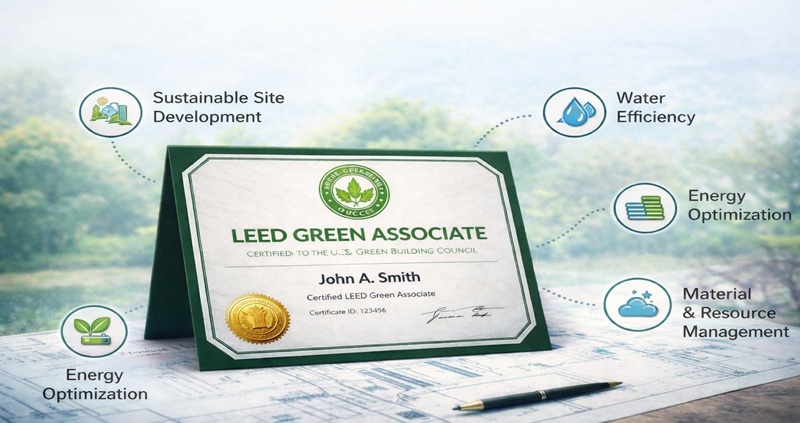

**LEED Green Associate certification** is an entry-level sustainability credential that validates knowledge of green building practices, environmental standards, and sustainable construction principles. However, modern sustainable projects increasingly rely on digital workflows such as Building Information Modeling (BIM) to achieve measurable outcomes.
Sustainable construction is expanding rapidly across the United States. In 2024, the top 10 U.S. states certified [1,437 LEED projects](https://inside.lighting/news/25-01/top-10-us-states-leed-certified-green-building?), representing over 414 million square feet of sustainable building space which is a strong indicator of how widely green building standards are being implemented.
This article explains how LEED certification works, how BIM supports sustainable construction outcomes, and how combining both strengthens career growth in the modern construction industry.
Unlock High-Paying Careers With BIM
Master BIM workflows, software and skills on real projects.
Apply Now
\*Limited seats available
## **What Is LEED Green Associate Certification?**
Understanding **what is leed green associate certification** helps professionals recognize its importance in sustainable construction. The credential, administered by the U.S. Green Building Council (USGBC), validates knowledge of green building principles, environmental performance standards, and sustainable project strategies.
A **leed green associate** demonstrates familiarity with:
- Sustainable site development practices
- Water efficiency strategies
- Energy optimization methods
- Material selection and resource management
- Indoor environmental quality standards
The certification confirms foundational knowledge but does not evaluate advanced implementation skills. Many professionals later pursue LEED professional certification or become a **leed accredited professional** to demonstrate deeper technical expertise.
Candidates often ask **how difficult is the LEED Green associate exam** before applying. The exam requires preparation in [sustainability concepts](https://www.novatr.com/blog/sustainable-architecture-guide), green building standards, and LEED rating systems. Another common question is **how many questions are on the LEED Green Associate exam**, which typically includes multiple-choice questions covering sustainability principles and project applications.
For professionals seeking LEED accreditation, the Green Associate credential acts as the first step toward advanced specialization. It builds awareness of environmental standards but works best when combined with technical workflows that support sustainable outcomes.
Understanding certification provides a strong theoretical base. However, real project performance increasingly depends on digital design coordination and data-driven decision-making, which introduces the [importance of BIM](https://www.novatr.com/blog/bim-for-civil-and-structural-engineers).
## **How BIM Supports Sustainable Construction?**
Sustainable construction requires measurable performance outcomes. Building Information Modeling improves sustainability by enabling accurate analysis, coordinated design, and performance simulation across project stages. This explains the growing importance of the **BIM Role in LEED Projects**.
[BIM enables sustainability](https://www.novatr.com/blog/bim-in-sustainable-city-planning-benefits-and-real-examples) through several integrated capabilities. The following functions demonstrate how digital workflows support environmental performance:
- **Energy Modeling:** [BIM tools](https://www.novatr.com/blog/bim-modeling-software) simulate energy consumption, helping teams optimize building performance.
- **Material Optimization:** Designers evaluate materials based on environmental impact and lifecycle performance.
- **Waste Reduction:** Coordinated models reduce construction errors and minimize material waste.
- **Water Efficiency Analysis:** BIM supports planning for efficient water systems.
- **Daylight Simulation:** Digital models evaluate natural lighting performance.
These capabilities improve decision accuracy and help projects meet sustainability benchmarks required for **LEED accreditation**. BIM provides measurable data rather than assumptions, strengthening environmental performance outcomes.
For example, a design team using BIM can simulate energy use before construction begins. This allows adjustments to building orientation, materials, and systems, improving sustainability performance. Such workflows complement sustainability knowledge gained through **what is LEED Green Associate certification**, turning theory into measurable results.
As sustainable construction grows more complex, BIM acts as the operational layer that supports certification goals.
## **What are BIM’s Role Across LEED Project Stages?**
**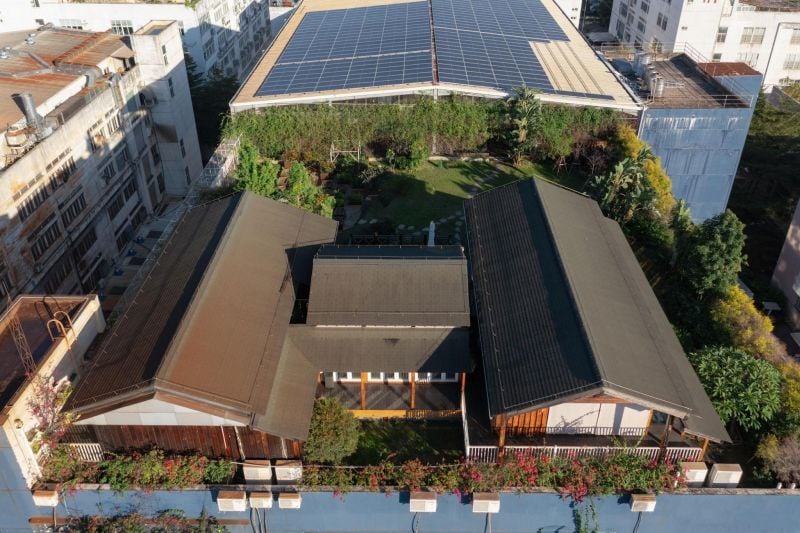**
The **BIM Role in LEED Projects** extends throughout the [building lifecycle](https://www.novatr.com/blog/bim-processes-in-construction-project-lifecycle), from early design to facility management. Each stage benefits from data-driven coordination that supports sustainability targets.
BIM contributes across project phases in the following ways:
### **Design Phase**
- Evaluates energy efficiency and building orientation
- Supports material selection based on environmental impact
- Optimizes building systems for performance
### **Construction Phase**
- Reduces waste through accurate quantity estimation
- Improves coordination between disciplines
- Supports sustainable construction scheduling
### **Operations Phase**
- Provides performance data for building management
- Tracks energy and resource usage
- Supports long-term sustainability monitoring
These capabilities demonstrate how BIM supports environmental standards beyond certification requirements. Professionals with **leed professional certification** increasingly rely on BIM data to verify sustainability performance.
For example, a commercial building project seeking LEED certification may use BIM to analyze energy consumption patterns. The model helps identify improvements that align with sustainability goals while maintaining construction efficiency.
As projects become data-driven, sustainability depends on collaboration between certification knowledge and digital workflows. Integrating BIM strengthens project outcomes and improves compliance with environmental standards.
Understanding this integration prepares professionals to apply sustainability principles effectively in real construction environments.
## **How Can BIM Along With LEED Certification Improve Your Career Prospect?**
Combining sustainability credentials with digital skills strengthens professional opportunities. While **LEED Green Associate certification** validates sustainability knowledge, BIM capabilities enable practical implementation in construction workflows.
Professionals who combine both skill sets benefit from several advantages:
- **Higher Employability:** Firms prioritize candidates who understand sustainability and digital coordination.
- **Improved Project Participation:** BIM enables involvement in design and construction decision-making.
- **Career Advancement Opportunities:** Combined expertise supports leadership roles.
- **Broader Industry Demand:** Infrastructure and commercial projects require integrated sustainability workflows.
Professionals pursuing leed accreditation often complement their knowledge by enrolling in a **BIM course for civil engineers**. These programs teach modeling, coordination, and performance analysis required for sustainable construction projects.
Many regulatory bodies and professional authorities, including the **board of professional engineers**, emphasize continuing professional development to maintain technical competence. Integrating sustainability knowledge with digital capabilities supports long-term professional growth.
For example, an engineer with sustainability knowledge alone may understand environmental standards but struggle with implementation. Adding BIM expertise allows that professional to analyze performance data, coordinate systems, and support project delivery.
Combining certification and digital skills creates stronger career positioning in a competitive construction environment.
## **Where to learn BIM?**
[](https://www.novatr.com/courses/bim-for-civil-engineers/l?utm_source=blog&utm_medium=website_card_after_intro&utm_campaign=bim_civil_course_leads)
Professionals seeking to apply sustainability concepts in real projects often choose structured training programs to learn BIM workflows. Developing digital modeling skills improves design coordination and environmental performance evaluation.
When selecting a learning path, professionals typically look for programs that provide:
- Hands-on project experience
- Industry-standard software training
- Coordination and workflow understanding
- Sustainability-focused modeling techniques
- Infrastructure and construction applications
Many professionals enroll in a [**BIM course for civil**](https://www.novatr.com/blog/why-novatrs-bim-civil-course-is-a-game-changer-for-civil-engineers)**engineers** to develop the technical capabilities required for sustainable construction projects. Such programs teach coordination methods, digital modeling workflows, and performance analysis.
Choosing to learn BIM supports the hands-on application of sustainability knowledge gained through **LEED professional certification**. Digital skills improve collaboration with project teams and enable data-driven decision-making.
For example, engineers working on infrastructure projects use BIM to simulate environmental impact and optimize construction processes. These capabilities improve project performance and support sustainability targets.
Master BIM and Get Hired Faster
Join a community of 8500+ Architects and Engineers.
Explore Now
\*Limited seats available
## **Conclusion**
Understanding **what is leed green associate certification** provides a strong foundation in sustainable building practices. However, sustainable construction increasingly depends on digital workflows that measure performance, coordinate systems, and optimize environmental outcomes.
BIM enables sustainability goals to be implemented effectively across design, construction, and operations. The **BIM Role in LEED Projects** continues to expand as projects require measurable environmental performance and coordinated decision-making.
Professionals who combine sustainability knowledge with digital modeling capabilities gain stronger career opportunities, improved project participation, and long-term professional growth. Learning BIM alongside LEED certification creates a more complete skill set for modern construction practice.
Those seeking to strengthen sustainable construction expertise can explore structured training such as the [BIM professional Course for Civil Engineers](https://www.novatr.com/us/courses/bim-for-civil-engineers) offered by [Novatr](https://www.novatr.com/us).
Visit our[resource page](https://www.novatr.com/learning-hub) to explore learning materials, case studies, and program information that supports long-term professional development.
Was this content helpful to you
Like Yes
Dislike No

TABLE OF CONTENTS
BIM Is The New Standard. Are You Certified?
Get Certified in BIM
SHARE ON YOUR SOCIALS
Link Copied Successfully
Related articles
[ CIVIL LEED Certification Without BIM Skills Is Incomplete - Here’s Why? 24 February 2026 5 min read](https://blog.novatr.com/blog/leed-certification-without-bim-skills-is-incomplete-heres-why) [ CIVIL Why BIM Skills Matter More Than LEED Certificates on Real U.S. Projects 23 February 2026 5 min read](https://blog.novatr.com/blog/why-bim-skills-matter-more-than-leed-certificates-on-real-u.s.-projects) [ How Sustainable MEP Design Contributes to LEED Certification Success 27 May 2025 5 min read](https://blog.novatr.com/blog/role-of-green-mep-design-in-achieving-leed-certification) [ Top MEP Certifications: Comparing LEED, BREEAM, and IGBC 27 October 2025 6 min read](https://blog.novatr.com/blog/comparing-leed-breeam-and-igbc)
Download Syllabus
## BIM Professional Program
Next Cohort
June 2026
Program Duration
7 Months
Premium Program benefits
8 Credentials from Autodesk, NSDC, Novatr
1 program. 10 career paths. Infinite Growth.
40+ ISO 19650 & RIBA real-world projects to practice
1-on-1 guidance. Access 400+ industry experts.
Access the biggest AEC-Tech community on the planet. 8500+ and counting
Curated for you by 100+ global BIM leaders.
Lifelong access to course content
Enter your details to download the program syllabus.
##### BIM Professional Program
June 2026, 7 Months
Your Name Invalid name.
Phone Number Enter a valid phone number
Email Please enter a valid email address.
Select years of experience\* Currently studying 0-1 years 1-2 years 2-4 years 4-8 years 8-10 years 10-12 years 12+ years Invalid selection.
Specialisation Select your background\* Architecture Civil Engineering Mechanical Engineering Electrical Engineering Invalid selection.
Are you professionally trained in interior design?
Yes
No
I agree to the [Terms of Use](https://www.novatr.com/terms-and-conditions) and [Privacy Policy](https://www.novatr.com/privacy-policy), and consent to be contacted by Email, Call, WhatsApp, or SMS.
Submit
Ready to skyrocket your career?
Begin your next chapter in AEC
with Novatr!
We are here to help you take the industry by storm with advanced, tech-first skills.
[Explore Courses](https://www.novatr.com/#courses)
Join our newsletter
Submit
Thank you for signing up.
We’ll send you a nice letter once per week. No spam.

Dare to Disrupt.
Join thousands of people who organise
work and life with Novatr.
Company
- [About Us](https://www.novatr.com/about)
- [BIM Professional Program v.2026](https://www.novatr.com/courses/bim-professional-program)
- [Masters Computational Design](https://www.novatr.com/courses/computational-design)
- [Become a Mentor](https://www.novatr.com/apply-as-mentor)
- [Hiring from Us](https://www.novatr.com/hire-from-us)
- [Careers at Novatr](https://www.novatr.com/career)
Resources
- [Blog](https://www.novatr.com/learning-hub)
- [Media Room](https://www.novatr.com/media-room-home-page)
- [Career Builder](https://www.novatr.com/career-navigator)
- [Events & Webinars](https://www.novatr.com/webinars)
- [FAQs & Support Center](https://www.novatr.com/contact-us)
- [Contact Us](https://www.novatr.com/contact-us)
- [Privacy Policy](https://www.novatr.com/privacy-policy)
- [Terms of Use](https://www.novatr.com/terms-and-conditions)
©2023 Oneistox Network Pvt. Ltd.
All Rights Reserved
```json
{
"@context" : "https://schema.org",
"@type" : "BlogPosting",
"author" : {
"@type" : "Person",
"name" : "Deependra Dobriyal",
"url" : "https://blog.novatr.com/blog/author/deependra-dobriyal"
},
"dateModified" : "2026-02-24T08:25:53.488Z",
"datePublished" : "2026-02-24T08:24:20.000Z",
"headline" : "LEED Green Associate Explained: How BIM Supports Sustainable Construction?",
"image" : [ "https://blog.novatr.com/hubfs/LEED%20Green%20Associate%20Certificate.jpg" ],
"mainEntityOfPage" : {
"@id" : "https://blog.novatr.com/blog/leed-green-associate-explained-how-bim-supports-sustainable-construction",
"@type" : "WebPage"
},
"publisher" : {
"@type" : "Organization",
"logo" : {
"@type" : "ImageObject",
"url" : "https://blog.novatr.com/hubfs/Novatr%20Prev%20OX-2.svg"
}
}
}
```