

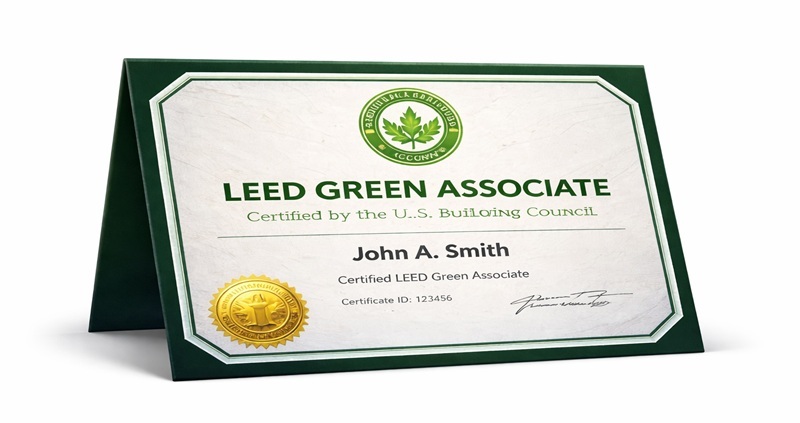

What Is LEED Green Associate Certification?
The LEED Green Associate credential demonstrates foundational knowledge of sustainable design principles, environmental impact reduction, and green building standards. Professionals pursuing sustainability roles often begin by exploring what is LEED Green Associate certification and how it supports environmental practice.
The certification evaluates understanding of core sustainability concepts such as:
- Energy efficiency strategies
- Water conservation approaches
- Sustainable material selection
- Indoor environmental quality
- Environmental impact reduction methods
These topics form the foundation of modern green building practices. The certification confirms that professionals understand sustainability frameworks, rating systems, and environmental terminology used across construction projects.
The certification process involves passing the LEED Green Associate exam, which tests conceptual knowledge of sustainability standards and project evaluation methods. Candidates learn how buildings reduce environmental impact, improve energy performance, and support occupant well-being.
However, sustainable construction has evolved beyond conceptual planning. Today’s projects involve performance tracking, lifecycle analysis, and integrated project delivery. Sustainability strategies must be verified using measurable data rather than theoretical assessment.
Professionals often progress from the associate level to advanced credentials such as leed accredited professional, which involves deeper specialization in sustainable design and project implementation.
How to Get Your LEED Certification?
Many professionals researching sustainability careers want clarity on how to get LEED Green Associate certification and what preparation involves. The certification pathway is structured and accessible, but it requires focused study and familiarity with sustainability standards.
The process typically includes the following steps:
- Registering for the certification examination
- Studying LEED rating systems and sustainability concepts
- Reviewing project case studies and environmental strategies
- Completing preparation resources and practice tests
- Passing the certification exam
Candidates also commonly ask how difficult is the leed green associate exam. The exam evaluates conceptual knowledge rather than software proficiency, but it requires strong understanding of environmental principles, terminology, and certification frameworks.
While certification builds sustainability awareness, industry expectations extend beyond theoretical knowledge. Construction projects require professionals who can evaluate building performance, coordinate data across teams, and support implementation of environmental strategies.
Professionals with sustainability knowledge alone may understand design intent but struggle to apply environmental standards within complex project workflows. Combining certification with digital modeling capabilities allows professionals to connect sustainability goals with measurable outcomes.
Understanding how certification works provides a starting point for sustainable practice, but modern construction environments require additional technical capabilities that support performance-driven design.
What Is BIM’s Role in Sustainable Decision-Making?
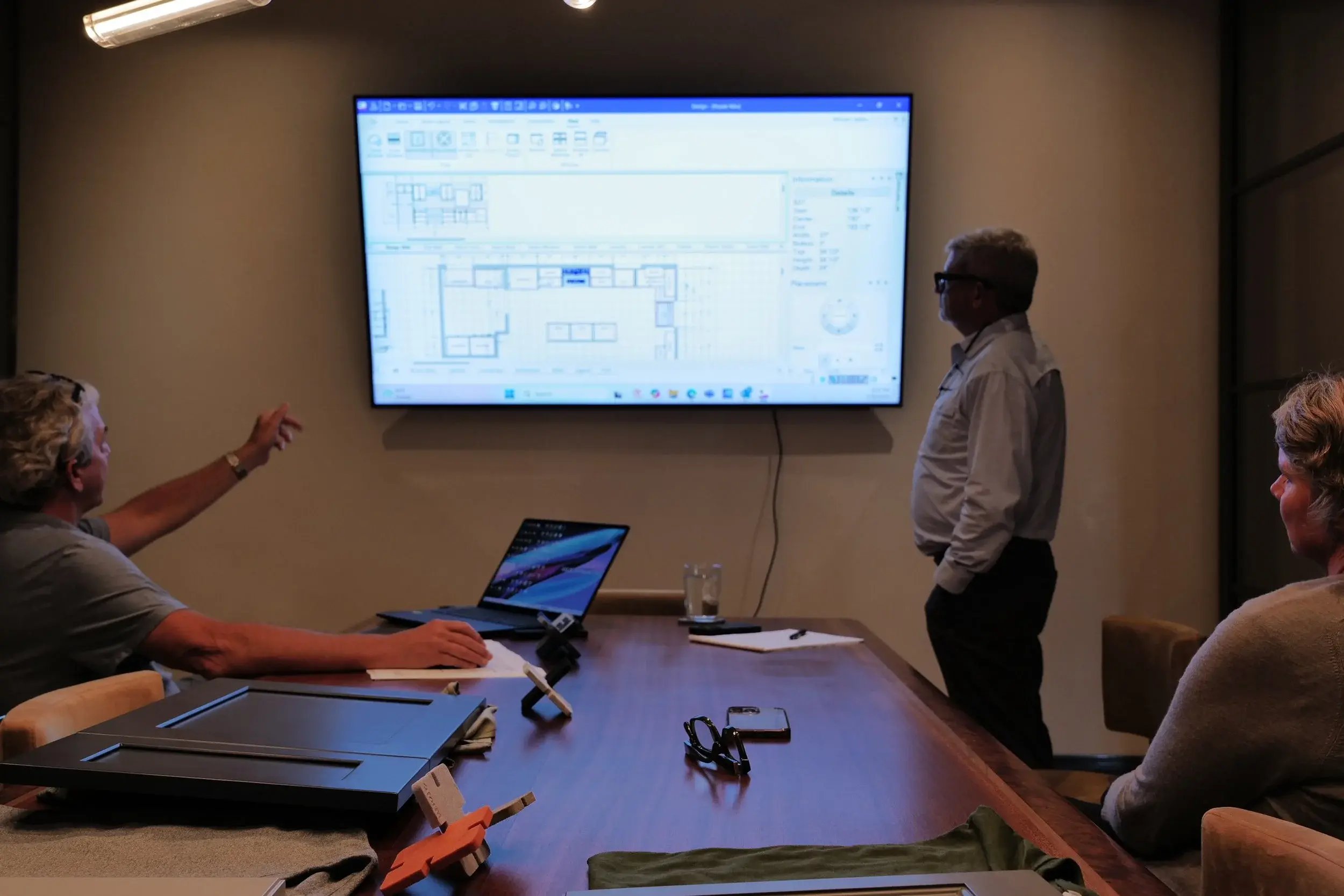
Building Information Modeling plays an important role in sustainable construction by enabling data-driven decision-making. Instead of relying on assumptions, BIM allows project teams to simulate performance, evaluate environmental impact, and optimize building systems before construction begins.
BIM supports sustainability through several main functions:
- Energy consumption simulation and performance analysis
- Material lifecycle tracking and environmental impact evaluation
- Daylight and thermal performance modeling
- Resource planning and waste reduction
- Coordination across multidisciplinary teams
To understand the value of BIM in sustainability, consider energy performance analysis. Digital models allow teams to test building orientation, materials, and system efficiency during early design stages. Design changes can improve performance before physical construction begins.
Professionals increasingly choose to learn BIM because sustainability decisions now depend on measurable building data. Digital modeling connects environmental goals with performance evaluation, enabling accurate planning and verification.
BIM also improves collaboration. Architects, engineers, and sustainability consultants work with shared data environments, reducing inconsistencies and improving coordination. This integrated workflow supports sustainable design implementation across project stages.
Environmental strategies in modern construction require reliable data, coordinated workflows, and continuous performance monitoring. BIM provides the framework that makes these processes possible, strengthening the implementation of sustainability standards.
Where LEED Relies on BIM Data?
Sustainability certification depends on accurate documentation, performance analysis, and verifiable project data. BIM systems generate and manage this information throughout the building lifecycle, supporting certification requirements and environmental evaluation.
Several areas demonstrate how sustainability frameworks rely on digital modeling:
- Energy modeling: Performance simulations evaluate building efficiency.
- Material tracking: Digital models document environmental impact and sourcing.
- Water efficiency evaluation: Models analyze consumption and conservation strategies.
- Indoor environmental quality analysis: Simulation tools assess ventilation and comfort conditions.
- Construction planning: BIM supports resource management and waste reduction.
To introduce how these capabilities operate in real projects, consider how sustainability documentation is produced in large developments. Instead of manual calculations, project teams extract performance data directly from digital models.
A leed accredited professional working on complex projects often collaborates with BIM specialists to evaluate building performance and verify sustainability metrics. This collaboration demonstrates how environmental certification and digital modeling work together.
Digital modeling systems provide the infrastructure required to support these processes, making BIM essential for implementing sustainability strategies effectively.
How to Learn BIM?

Developing BIM expertise strengthens sustainability knowledge and improves professional readiness. Individuals seeking to apply environmental strategies in real projects often pursue structured training that supports digital modeling and project coordination.
A clear learning path typically includes the following steps:
- Understanding modeling fundamentals and project workflows
- Learning digital documentation and data management methods
- Practicing coordination within multidisciplinary teams
- Exploring performance analysis tools
- Enrolling in structured programs such as a BIM civil course
Professionals with sustainability backgrounds often learn BIM to improve their ability to implement environmental strategies. Training programs designed for infrastructure and construction workflows provide practical exposure to modeling tools and collaborative processes.
A structured BIM course for civil engineers introduces modeling techniques, data coordination methods, and performance evaluation practices used across construction projects. These skills help professionals connect sustainability knowledge with measurable project outcomes.
BIM learning also improves communication across project teams. Professionals gain the ability to interpret models, evaluate design changes, and support coordinated project delivery. This capability strengthens both career development and sustainability implementation.
Developing BIM expertise allows professionals to translate sustainability goals into actionable design decisions supported by data and coordinated workflows.