


.png)

What Does BIM Coordination Between Architecture, Structure, and MEP Involve?
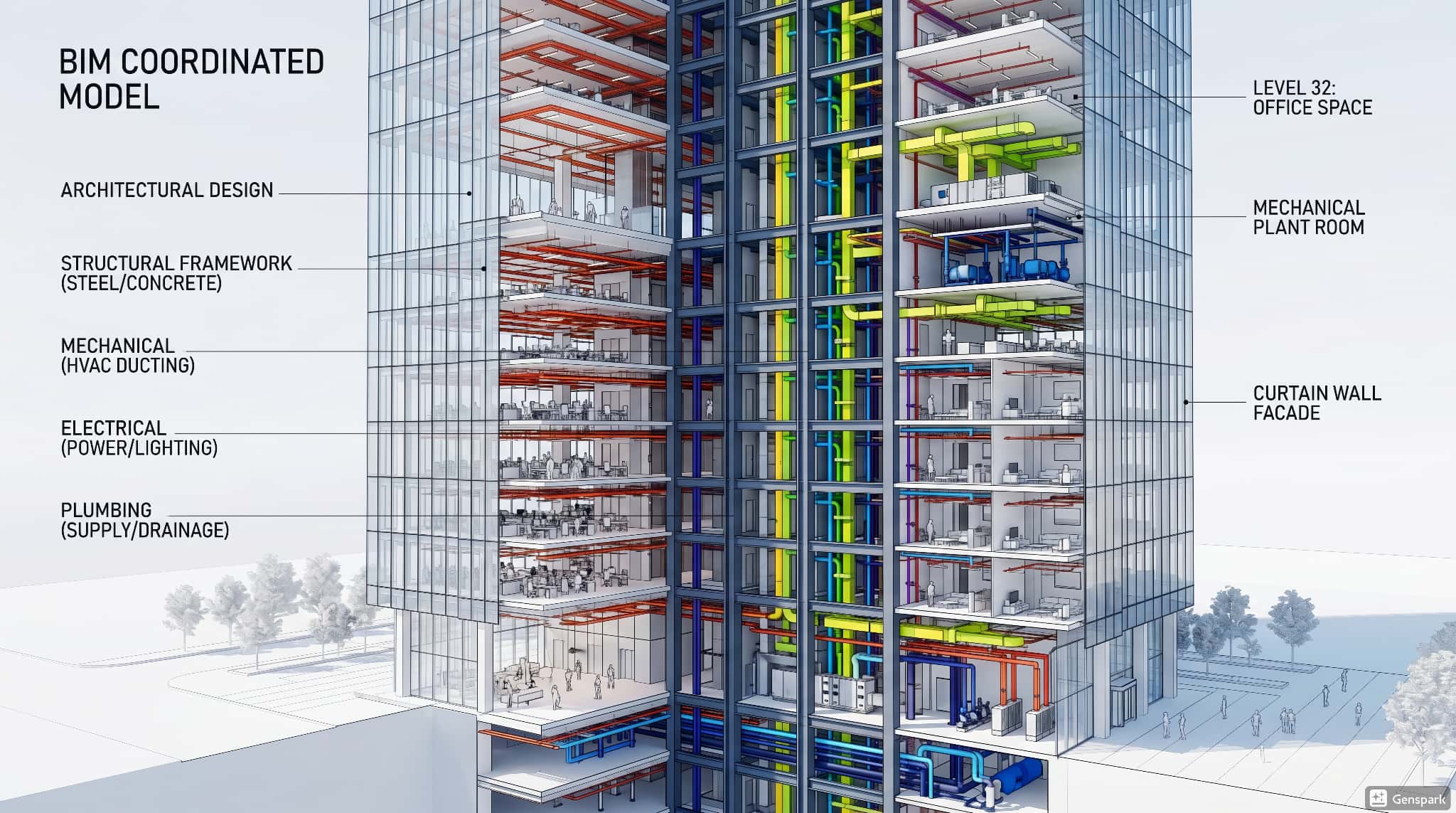
BIM coordination is the activity that involves integrating all building disciplines into a single, connected digital environment. It simply implies that the architects, structural engineers and MEP engineers are using the same model rather than the drawings.
This will help align in:
-
Architecture Design – layout, spaces and building form.
-
Structural Systems – beams, columns, load bearing elements
-
MEP Systems – Mechanical, Electrical and Plumbing systems
Using BIM modelling, each discipline contributes to the shared model. This will lead to an integrated building design using BIM, making it possible to view all parts of the building together. It aids teams to recognize how one system connects to another prior to construction.
The same process improves the coordination in BIM projects as well, which results in better communication and no confusion in design.
This is also a benefit to BIM workflow as all teams are on the same process, and each update is shared in real time to all disciplines without the delay and miscommunication that can aggravate the process.
Why Do Traditional Workflows Create Gaps Between Disciplines?
In the conventional design process of building design, every discipline operates independently. Architects create, after which engineers tweak. It causes time delays and discrepancy.
Some of the common issues include:
-
Delayed sharing of 2D drawings.
-
Poor team communication.
-
There are multiple redesigns as the construction process continues.
-
There are a lot of potential for mistakes and conflicts.
The overlap of systems is not necessarily a concern for teams unless integrated with BIM. For instance, a structural beam could potentially obstruct a ventilation duct or plumbing lines could interfere with electrical configurations. They not only make it difficult to coordinate within the construction process, but often lead to expensive changes in site conditions that can be avoided when BIM is used throughout the construction process.
The highlighted gaps demonstrate the requirement of Building Information Modeling for coordinating work between different disciplines. The system establishes an efficient workflow by eliminating all uncertainties and bringing together all teams to work together from the beginning.
Also Read: Top 50 MEP Interview Questions & Answers
How Does BIM Enable Real-Time Collaboration Across Design Teams?
In BIM in construction, BIM facilitates collaboration by sharing a digital model on a real-time basis. One platform for all teams – with updates in real time. The active design environment improves design coordination because it allows for instant decision-making without needing to use outdated drawings and perform manual file transfers.
This benefits BIM workflow in a number of ways:
-
Architects redesign and engineers are instantly at risk.
-
Structural changes automatically reflect in the model
-
MEP coordination systems respond to changes in space
-
Teams talk using model based comments
That's where the role of how architects engineers collaborate using BIM is revealed. Teams collaborate in real time, rather than waiting for drawings.
It also enhances construction coordination as contractors are able to access the latest design changes prior to construction. This ensures that there is less confusion and a better speed of the projects.
Where Do Conflicts Typically Occur Between Architecture, Structure, and MEP?
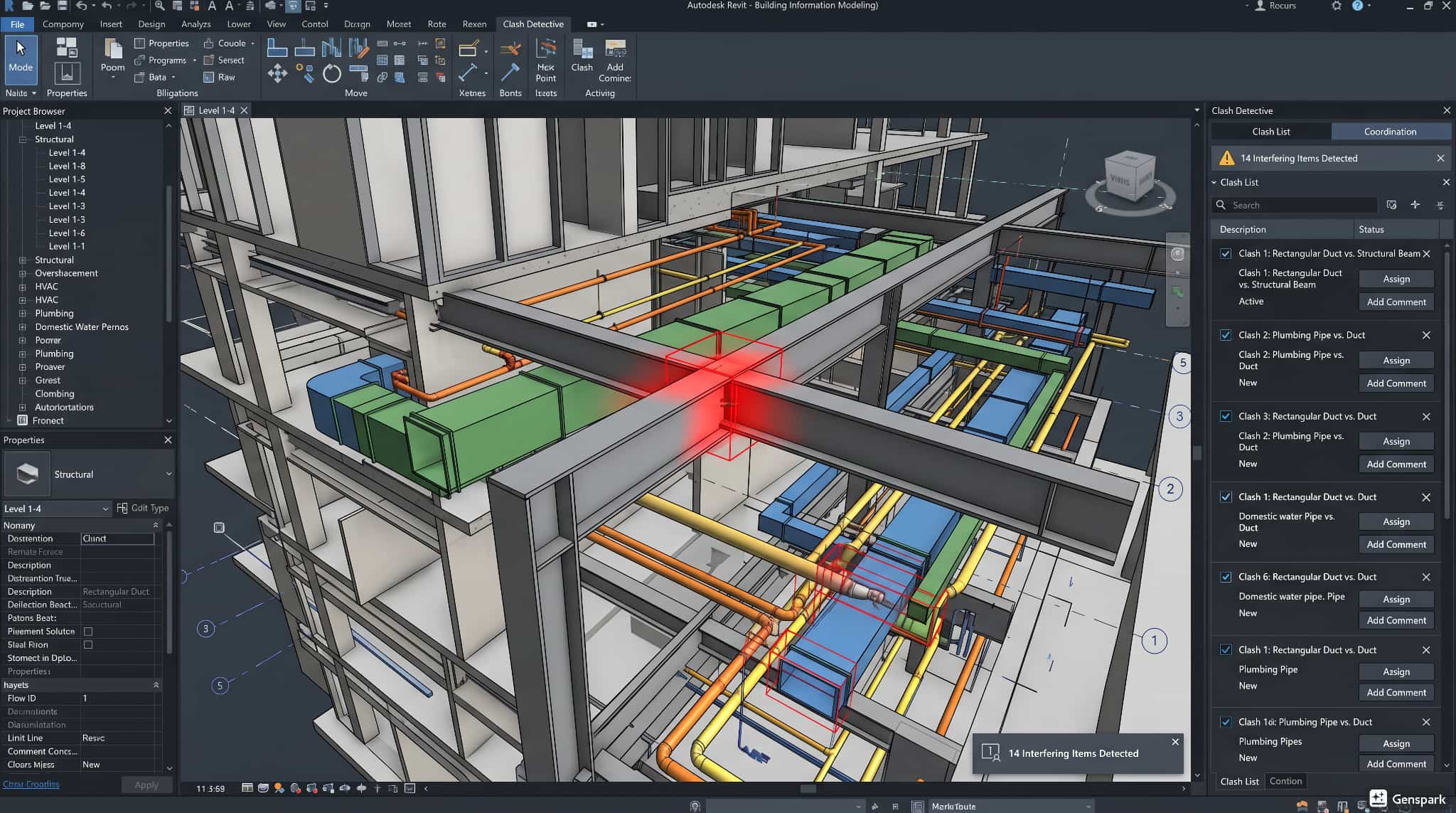
Even in well-planned projects, clashes may occur. Typically happen where systems share the same space.
Typical areas of conflict:
-
Ceiling areas where ducts, pipe and beams connect.
-
Structural columns that obstruct architecture layouts.
-
Plumbing and electrical wiring running in parallel and perpendicular to each other.
-
Systems that go through structural parts.
If all these problems are not addressed in MEP coordination, it is likely to be discovered during construction causing delays and additional expense.
This illustrates the need to coordinate early design coordination and relies on digital tools. These problems will be identified early, preventing re-work on site and time.
Also Read: Who is a MEP Engineer? (Skills, Qualifications, Scope & More)
How Does BIM Resolve Clashes and Improve Cross-Discipline Coordination?
BIM in construction is used to solve coordination problems as a result of clash detection and shared modeling. It helps the teams discover issues prior to the construction work begins.
The following are few of the benefits of BIM for coordination:
-
Clash Detection Works at an Early Stage – Automated.
-
Shared models enhance subject visibility from across the disciplines
-
Changes are made real-time to all teams
-
Surprises on site are minimised with good planning.
It also enhances MEP coordination by providing ongoing checks of mechanical, electrical and plumbing systems to the structural and architectural changes in the same model.
This is how BIM reduces clashes in construction projects, and enhances efficiency.
It also enables BIM integration, as it brings all systems in one model. Teams address problems before they occur on site.
This leads to better project quality, fewer cost overruns and faster project delivery due to better BIM coordination.
.png)
.png)
.png)
.png)
