---
title: Digital Twin for MEP Engineers and BIM Operations 2026
description: Learn how digital twin for MEP engineers improves smart buildings, facility management, BIM models, and building operations in India.
image: https://blog.novatr.com/hubfs/How%20BIM%20Integrates%20with%20Smart%20Building%20Systems%20in%20MEP%20Projects%20(3).png
---
[Blogs](https://www.novatr.com/learning-hub)
- [Architecture & Construction](https://www.novatr.com/learning-hub?category=Architecture+%26+Construction)
- [BIM](https://www.novatr.com/learning-hub?category=BIM)
- [Computational Design](https://www.novatr.com/learning-hub?category=Computational+Design)
- [Company News](https://www.novatr.com/learning-hub?category=Company+News)
- [Expert Talks](https://www.novatr.com/learning-hub?category=Expert+Talks)
Explore Courses
[Just Launched  BIM Professional Program v.2026 Take your career to the next level by mastering the real-world application of BIM. Know More](https://www.novatr.com/courses/bim-professional-program)
[ Master Computational Design Course Break into an advanced career by learning to apply the power of computation to the art of design. Know More](https://www.novatr.com/courses/computational-design)
[Blogs](https://www.novatr.com/learning-hub)
Explore Blogs
- [Architecture & Construction](https://www.novatr.com/learning-hub?category=Architecture+%26+Construction)
- [BIM](https://www.novatr.com/learning-hub?category=BIM)
- [Computational Design](https://www.novatr.com/learning-hub?category=Computational+Design)
- [Company News](https://www.novatr.com/learning-hub?category=Company+News)
- [Expert Talks](https://www.novatr.com/learning-hub?category=Expert+Talks)
Courses
- [BIM Professional Program v.2026](https://www.novatr.com/courses/bim-professional-program)
- [Master Computational Design](https://www.novatr.com/courses/computational-design)
- [MEP/](https://www.novatr.com/learning-hub?category=BIM)
Featured Article
# Digital Twin for MEP Engineers: Extending BIM into Building Operations

Neha Singh
May 14, 2026
6 min read
.png)

MEP systems are no longer managed only through drawings and static BIM models. In many smart buildings, systems continue generating operational data every day after construction is complete. This is where digital twin technology becomes useful. According to the Bureau of Energy Efficiency (BEE), buildings account for nearly [33%](https://www.beeindia.gov.in/) of India’s total electricity consumption. Because of this, building operations and energy efficiency are becoming more important in the Indian AEC industry.
A digital twin combines BIM models and live building data to help MEP engineers track building systems during operations, as well as support facility and asset management activities. It also shows how digital construction workflows now continue beyond construction.
## **Key Takeaways**
- A digital twin connects BIM models with live operational data.
- Digital twins help MEP engineers to monitor building systems during operation.
- Smart buildings depend on IoT systems and sensors for regular updates from the building.
- Digital twins support both facility management and asset management activities.
- BIM MEP workflows are now being used beyond construction for building operations.
Unlock High-Paying Careers With BIM
Master BIM workflows, software and skills on real projects.
Apply Now
\*Limited seats available
## **What Does a Digital Twin Mean for MEP Engineers?**
***.jpg?width=2048&height=1117&name=Smart%20HVAC%20monitoring%20(1).jpg)***
Digital twins are now becoming part of day-to-day building operations in many smart buildings. MEP engineers use them while dealing with HVAC, plumbing, and electrical systems because they provide updated information from the building itself instead of relying only on earlier project data.
Some common uses of digital twins in MEP projects include:
- System checks during operations
- Tracking building energy use
- Early identification of equipment issues
- Maintenance-related work
- Managing asset information
- Facility management support
Engineers also compare present building conditions with the original BIM models to understand what has changed since construction.
In India, digital twins are increasingly being used in airports, hospitals, office spaces, data centers, and metro projects where several building systems operate continuously.
## **How Does BIM Evolve Into an Operational Digital Twin?**
**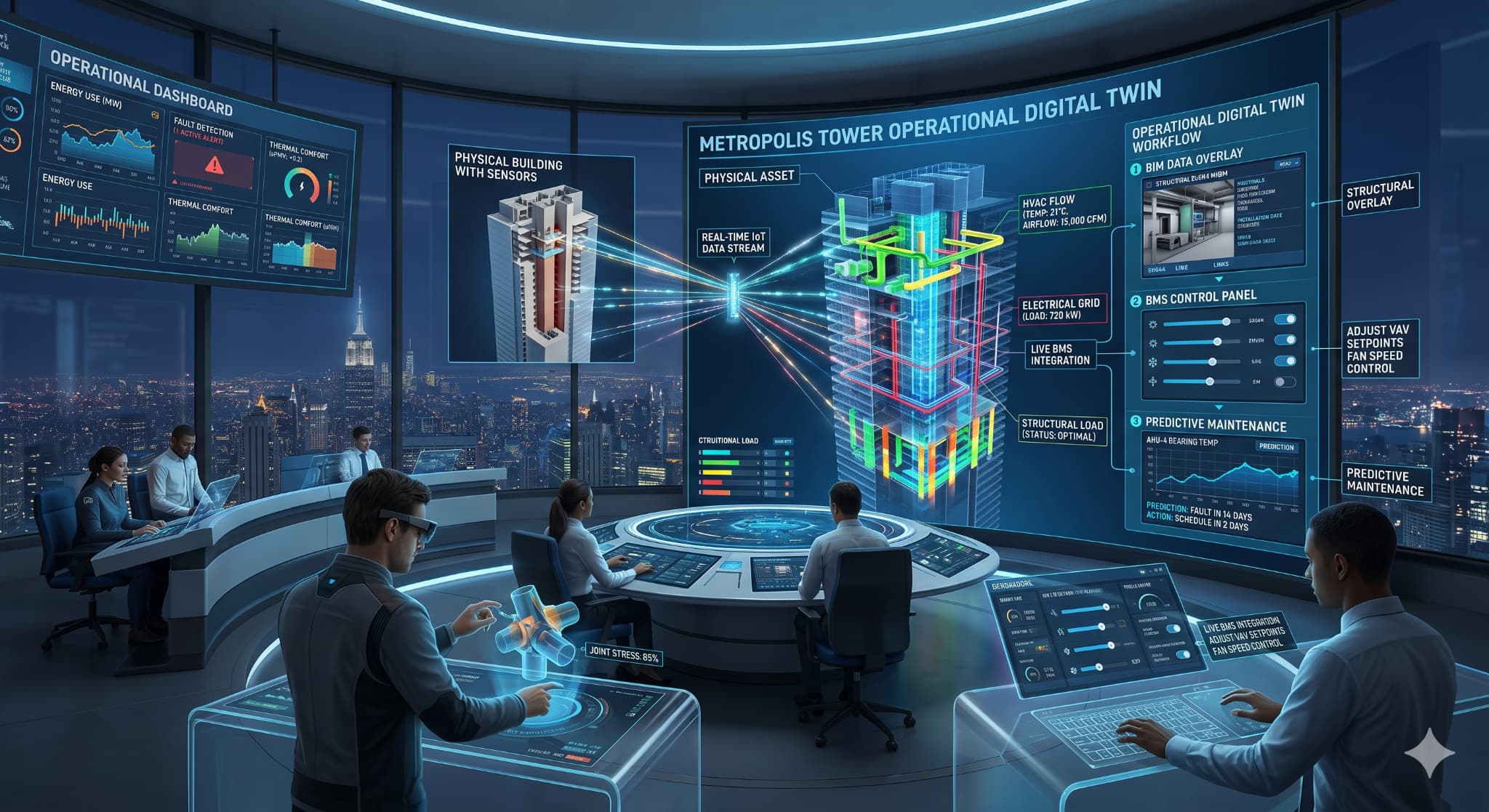**
BIM and digital twin are connected, but they are used at different stages.BIM models are mostly prepared during design and construction work. Digital twins are used later with information coming from the building during operations.
This is one reason BIM MEP workflows no longer stop completely after project handover.
The transition from BIM to digital twin usually includes:
- Preparing BIM MEP models during project development
- Storing equipment and asset information inside the model
- Installing IoT sensors in different parts of the building
- Connecting Building Management Systems with operational tools
- Bringing HVAC, electrical, and energy information into the platform
- Using building information during maintenance activities
After this connection is established, the BIM models begin showing ongoing building conditions instead of only design-related information. Engineers and facility management teams can then follow airflow, equipment behavior, energy use, and other building systems during operations.
Unlike BIM models, digital twins continue changing with operational information from the building. As IoT buildings increase across India, digital twins are becoming more common in long-term building operations.
[Also Read: Top MEP Certifications: Comparing LEED, BREEAM, and IGBC ](https://www.novatr.com/blog/comparing-leed-breeam-and-igbc)
## **Why Is Extending BIM Into Building Operations Important?**
In many projects, BIM models stop being useful after construction is completed. However, the building itself continues operating for decades. Most operational expenses also happen during this phase rather than during construction.
BIM models are no longer being used only for design and construction. In many buildings, the same information continues to be useful during daily operations as well.
This helps with:
- Accessing equipment information
- Locating systems faster
- Keeping maintenance records together
- Identifying operational issues earlier
- Supporting asset management work
- Managing facility management activities
This becomes more useful in smart buildings where HVAC systems, lighting, and automation systems keep producing operational information throughout the day.
Digital twins help bring building information together instead of keeping it spread across different systems. For MEP engineers, this also becomes useful during future BIM MEP workflows because real operational behavior can be studied over time.
In India, many commercial buildings still struggle with slow maintenance response and coordination between operational teams. Digital twins are gradually helping reduce these gaps in building operations.
## **What Data and Systems Power a Functional Digital Twin in MEP?**
Digital twins use information coming from building systems during operations. If operational information stops coming from the building, the digital twin also stops reflecting actual building conditions.
To keep the model updated, digital twins usually connect with:
- IoT sensors
- Building Management Systems (BMS)
- HVAC automation systems
- Smart energy meters
- Fire safety and security systems
- Air quality sensors
- Maintenance and equipment records
In IoT buildings, these systems keep generating information related to airflow, occupancy, cooling demand, and energy use during daily operations. Cloud platforms then help collect and organize this information from different building systems so engineers can follow system conditions more easily.
For MEP engineers, this becomes useful during HVAC optimization, ventilation monitoring, electrical load analysis, and energy management work. This combination is one reason digital twins are becoming increasingly important in modern smart buildings across India.
[Also Read: Top 50 MEP Interview Questions & Answers](https://www.novatr.com/blog/best-mep-engineer-interview-questions)
## **Where Do MEP Engineers Use Digital Twins in Real-World Operations?**
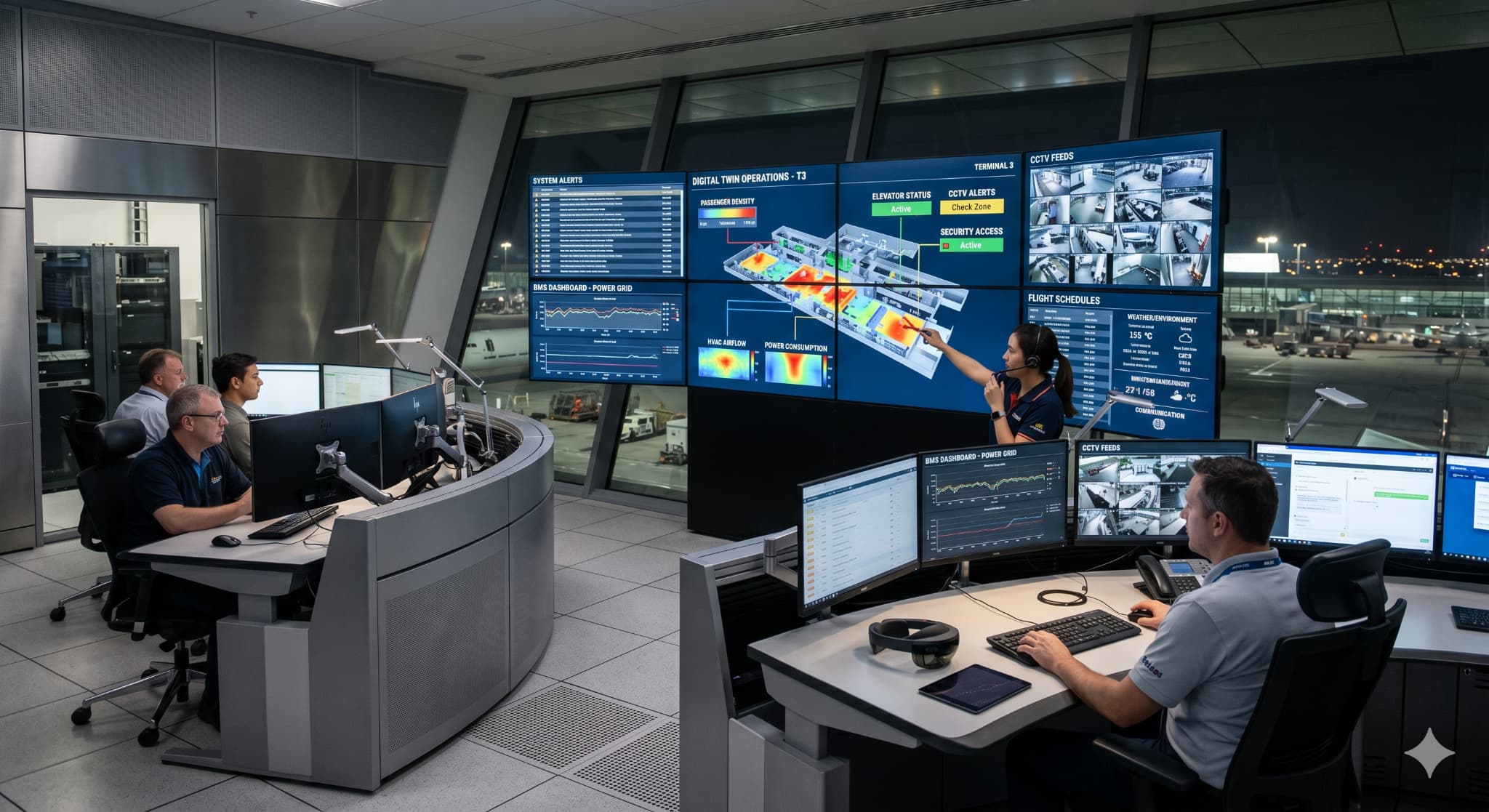
Digital twins are now being used in different types of buildings where systems need regular monitoring during operations. For MEP engineers, one of the biggest advantages is being able to follow building systems more easily during day-to-day work. Digital twins are being used across different types of projects today.
Digital twins are now being used in places like:
- Office buildings with large HVAC and energy systems
- Hospitals with ventilation and critical equipment
- Airports with multiple operational systems
- Data centers with cooling and electrical setups
- Metro projects with asset management activities
- Smart buildings using automation systems every day
People working in these buildings often use digital twins to understand what is happening with different systems during operations. Facility teams also use them to check maintenance information and notice equipment issues earlier.
As more smart buildings and infrastructure projects grow across India, digital twins are becoming more common in building operations. For engineers working in BIM MEP environments, understanding how digital twins are used in building operations is becoming increasingly valuable.
Master BIM and Get Hired Faster
Join a community of 8500+ Architects and Engineers.
Explore Now
\*Limited seats available
## Conclusion
Digital twin for MEP engineers is changing how BIM models are used after construction. Instead of being used only for project documentation, BIM models are now also used during facility management, asset management, and regular building operations. As smart buildings and IoT buildings continue growing in India, digital twins are now being used more often during building operations.
If someone wants to learn how BIM workflows are actually handled in projects, the [BIM Course for MEP Engineers](https://www.novatr.com/courses/bim-for-mep-engineers) by [Novatr](https://www.novatr.com/) can be explored. Their [resources page](https://www.novatr.com/learning-hub) also shares different articles and learning content related to BIM tools and workflows.
## **FAQs**
### 1. What is a digital twin in MEP engineering?
In MEP engineering, a digital twin is connected with building systems using sensor-based information from the building. It is used while handling HVAC, plumbing, and electrical systems during operations.
### 2. How does BIM evolve into a digital twin?
The BIM model starts functioning differently once operational information from IoT sensors and Building Management Systems gets connected with it during building operations.
### 3. What is the difference between BIM and a digital twin?
BIM is mainly prepared for design and construction work, while a digital twin is used later to follow building operations through live building information.
Was this content helpful to you
Like Yes
Dislike No
.png)
TABLE OF CONTENTS
BIM Is The New Standard. Are You Certified?
Get Certified in BIM
SHARE ON YOUR SOCIALS
Link Copied Successfully
Related articles
[.png) MEP Optimizing HVAC System Design Using BIM Models 13 May 2026 4 min read](https://blog.novatr.com/blog/optimizing-hvac-system-design-using-bim-models) [ MEP How BIM Integrates with Smart Building Systems in MEP Projects? 13 May 2026 5 min read](https://blog.novatr.com/blog/bim-integration-with-smart-building-systems-in-mep) [ MEP Challenges of Designing MEP Systems for High-Rise Buildings 16 February 2026 5 min read](https://blog.novatr.com/blog/challenges-of-designing-mep-systems-for-high-rise-buildings) [ Smart MEP Systems: Where IoT Meets Building Efficiency 13 February 2026 5 min read](https://blog.novatr.com/blog/how-smart-mep-systems-enhance-building-efficiency)
Download Syllabus
## BIM Professional Program
Next Cohort
June 2026
Program Duration
7 Months
Premium Program benefits
8 Credentials from Autodesk, NSDC, Novatr
1 program. 10 career paths. Infinite Growth.
40+ ISO 19650 & RIBA real-world projects to practice
1-on-1 guidance. Access 400+ industry experts.
Access the biggest AEC-Tech community on the planet. 8500+ and counting
Curated for you by 100+ global BIM leaders.
Lifelong access to course content
Enter your details to download the program syllabus.
##### BIM Professional Program
June 2026, 7 Months
Your Name Invalid name.
Phone Number Enter a valid phone number
Email Please enter a valid email address.
Select years of experience\* Currently studying 0-1 years 1-2 years 2-4 years 4-8 years 8-10 years 10-12 years 12+ years Invalid selection.
Specialisation Select your background\* Architecture Civil Engineering Mechanical Engineering Electrical Engineering Invalid selection.
Are you professionally trained in interior design?
Yes
No
I agree to the [Terms of Use](https://www.novatr.com/terms-and-conditions) and [Privacy Policy](https://www.novatr.com/privacy-policy), and consent to be contacted by Email, Call, WhatsApp, or SMS.
Submit
Ready to skyrocket your career?
Begin your next chapter in AEC
with Novatr!
We are here to help you take the industry by storm with advanced, tech-first skills.
[Explore Courses](https://www.novatr.com/#courses)
Join our newsletter
Submit
Thank you for signing up.
We’ll send you a nice letter once per week. No spam.

Dare to Disrupt.
Join thousands of people who organise
work and life with Novatr.
Company
- [About Us](https://www.novatr.com/about)
- [BIM Professional Program v.2026](https://www.novatr.com/courses/bim-professional-program)
- [Masters Computational Design](https://www.novatr.com/courses/computational-design)
- [Become a Mentor](https://www.novatr.com/apply-as-mentor)
- [Hiring from Us](https://www.novatr.com/hire-from-us)
- [Careers at Novatr](https://www.novatr.com/career)
Resources
- [Blog](https://www.novatr.com/learning-hub)
- [Media Room](https://www.novatr.com/media-room-home-page)
- [Career Builder](https://www.novatr.com/career-navigator)
- [Events & Webinars](https://www.novatr.com/webinars)
- [FAQs & Support Center](https://www.novatr.com/contact-us)
- [Contact Us](https://www.novatr.com/contact-us)
- [Privacy Policy](https://www.novatr.com/privacy-policy)
- [Terms of Use](https://www.novatr.com/terms-and-conditions)
©2023 Oneistox Network Pvt. Ltd.
All Rights Reserved
```json
{
"@context" : "https://schema.org",
"@type" : "BlogPosting",
"author" : {
"@type" : "Person",
"name" : "Neha Singh",
"url" : "https://blog.novatr.com/blog/author/neha-singh"
},
"dateModified" : "2026-05-14T07:17:47.011Z",
"datePublished" : "2026-05-14T07:12:43.000Z",
"headline" : "Digital Twin for MEP Engineers and BIM Operations {{year}}",
"image" : [ "https://blog.novatr.com/hubfs/How%20BIM%20Integrates%20with%20Smart%20Building%20Systems%20in%20MEP%20Projects%20(3).png" ],
"mainEntityOfPage" : {
"@id" : "https://blog.novatr.com/blog/digital-twin-for-bim-operations",
"@type" : "WebPage"
},
"publisher" : {
"@type" : "Organization",
"logo" : {
"@type" : "ImageObject",
"url" : "https://blog.novatr.com/hubfs/Novatr%20Prev%20OX-2.svg"
}
}
}
```