---
title: BIM MEP Course Gaps & Red Flags to Avoid 2026
description: Learn key gaps in a BIM MEP course, red flags to watch, and how to choose quality BIM training with real skills, projects, and coordination practice.
image: https://blog.novatr.com/hubfs/Blog%20Image%20(24).png
---
[Blogs](https://www.novatr.com/learning-hub)
- [Architecture & Construction](https://www.novatr.com/learning-hub?category=Architecture+%26+Construction)
- [BIM](https://www.novatr.com/learning-hub?category=BIM)
- [Computational Design](https://www.novatr.com/learning-hub?category=Computational+Design)
- [Company News](https://www.novatr.com/learning-hub?category=Company+News)
- [Expert Talks](https://www.novatr.com/learning-hub?category=Expert+Talks)
Explore Courses
[Just Launched  BIM Professional Program v.2026 Take your career to the next level by mastering the real-world application of BIM. Know More](https://www.novatr.com/courses/bim-professional-program)
[ Master Computational Design Course Break into an advanced career by learning to apply the power of computation to the art of design. Know More](https://www.novatr.com/courses/computational-design)
[Blogs](https://www.novatr.com/learning-hub)
Explore Blogs
- [Architecture & Construction](https://www.novatr.com/learning-hub?category=Architecture+%26+Construction)
- [BIM](https://www.novatr.com/learning-hub?category=BIM)
- [Computational Design](https://www.novatr.com/learning-hub?category=Computational+Design)
- [Company News](https://www.novatr.com/learning-hub?category=Company+News)
- [Expert Talks](https://www.novatr.com/learning-hub?category=Expert+Talks)
Courses
- [BIM Professional Program v.2026](https://www.novatr.com/courses/bim-professional-program)
- [Master Computational Design](https://www.novatr.com/courses/computational-design)
- [MEP/](https://www.novatr.com/learning-hub?category=BIM)
Featured Article
# What’s Missing in Most BIM MEP Courses? (Red Flags to Watch Out For)

Neha Singh
May 21, 2026
4 min read
.png)

The need for digital construction skills is increasing rapidly. The industry reports of 2024 reveal that more than [60-70%](https://www.marketreportsworld.com/market-reports/building-information-modeling-bim-market-14722034#:~:text=highlights%20that%20over-,62%25,-of%20AEC%20professionals) of the large AEC firms are using BIM based workflow for design and coordination, however, many fresh graduates are yet to meet the requirements.
The gap is usually associated with inadequate MEP course structures that are not aligned with the needs of real projects. A good BIM course should develop good technical skills and coordination skills; however, many courses fail to develop these skills.
Understanding these gaps is ideal before enrolling in any BIM training, especially if you are looking for job-ready BIM skills in real projects.
## **Key Takeaways**
- Many MEP training programs are software based, rather than actual workflows.
- Students lack exposure to projects, resulting in large learning gaps.
- Low coordination training makes the learning outcomes of BIM learning weak.
- There is significant variation in courses from institution to institution (course comparison is critical)
- It is imperative to understand how to identify a bad BIM MEP course, so that there is no need to waste time on such a course.
Unlock High-Paying Careers With BIM
Master BIM workflows, software and skills on real projects.
Apply Now
\*Limited seats available
## **What Are the Most Common Gaps in BIM MEP Courses Today?**
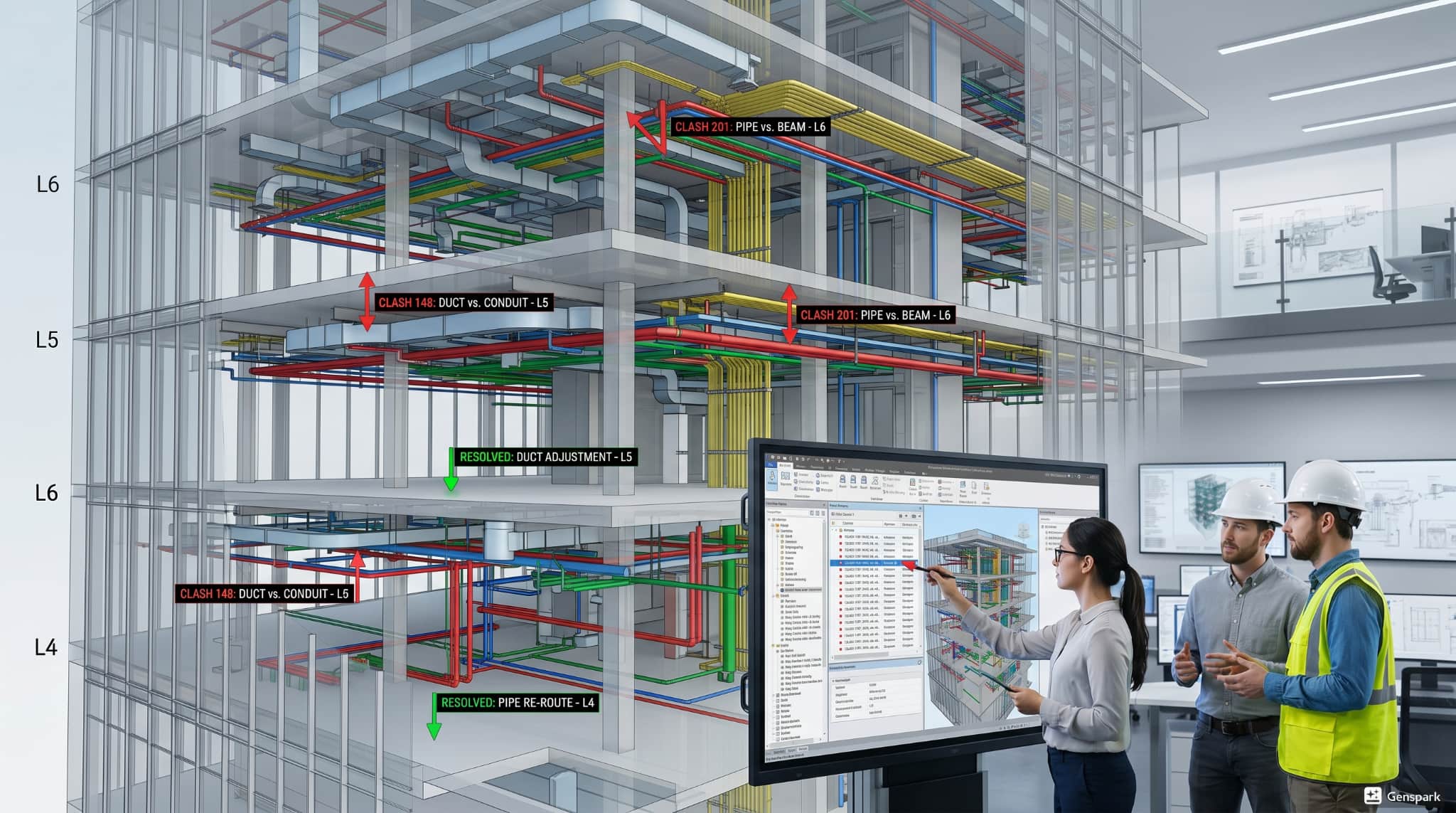
Most students think that all MEP courses will lead to real project work, which is not necessarily the case. The majority of programs emphasize theory and software tools, and neglect fundamental industry practices.
Many students report that their lack of access to real BIM software which companies use hampers their ability to develop BIM competencies. In some cases, MEP training is just limited to specific software features and not project cycles.
This causes problems when students are confronted with authentic coordination activities. A BIM course should not only familiarize with the tools, but develop structured thinking. Without this, BIM learning would be incomplete and not aligned with industry expectation.
Typical gaps in BIM learning are:
- Few real HVAC, plumbing and electrical layouts with limited focus.
- A lack of knowledge about constraints of the site.
- No experience in working with multidisciplinary workflows
- The absence of standards as used in real-life BIM projects
- Very little experience using actual coordination problems
Learners often go through BIM training, but are unable to implement knowledge in work settings. This leaves a disparity between what's being taught in school and expectations for industry. Students often learn BIM learning at a superficial level, with no connection to and awareness of the use of BIM in real construction projects.
This is among the biggest red flags to be taken into account when selecting how to choose the best BIM MEP course.
## **Why Do Many Courses Fail to Provide Real Project Experience?**
One of the biggest challenges of a BIM course is the lack of exposure to real projects. Instead of working on real world or sample projects, students work on samples.
As a result, there are significant skill deficiencies including:
- Lack of knowledge on project deadlines and pressure
- No changes requested by clients on designs
- No coordination with existing architectural and/or structural teams
- Limited problem solving in complex situations
Why practical training is important in BIM MEP becomes apparent when there are no real projects. Students can recognize tools but don't understand how to make decisions in real environments.
Another problem is that many institutes don't bother with more complex cases since they need people who are well-trained and have up-to-date workflows. This reduces the course quality and diminishes job readiness.
These gaps are often only identified during internships or an initial career, and therefore hinder students' progress.
## **Where Does Coordination and Clash Detection Training Fall Short?**
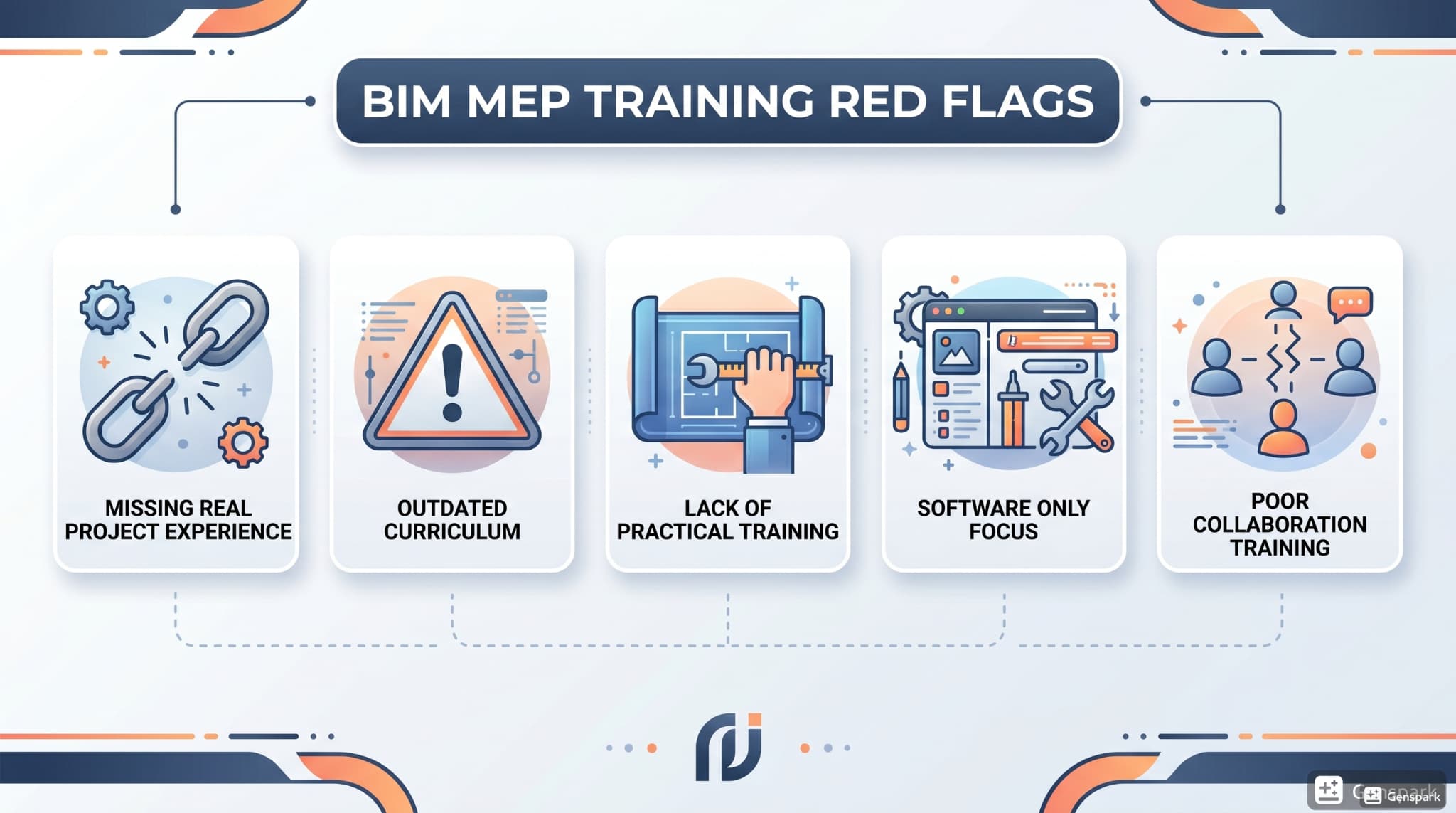
Coordination is certainly one of the most critical components in any MEP course but is also one of the areas where many MEP course go wrong.
BIM training programs should also inculcate within a student's mind the interaction between systems in a real building. Many courses, however, do not display in-depth knowledge of clash detection tools.
Common training issues include:
- Very little experience using models with multiple disciplines
- There is no actual description of the resolution steps in the clashes
- None, No exposure to structural and architectural coordination
- Focus on software buttons rather than workflows
This results in under-developed BIM skills, particularly in co-ordinating activities.
Many students are not taught how to solve actual conflict between HVAC ducts, electrical trays and structural beams. It is an important component of real-world BIM work which tends to be missing.
Also, if the coordination is just lightly touched on, then this reflects what are red flags in BIM training programs.
## **What Should a Complete BIM MEP Course Include for Job-Ready Skills?**
An effective MEP course should not just be a software course but should be aimed at ‘real industry readiness'.
A full course shall consist of:
- Practical real life project based learning with live case studies.
- Advanced exposure to HVAC, plumbing and electrical system design.
- Good coordination of practice in architecture and structure
- Workflows for clash detection and resolution
- The standards in the Industry and the BIM execution plans.
- First-hand exposure to the common tools utilized in firms in 3-D modeling.
It should also emphasize problem-solving skills, rather than software knowledge.
A good BIM course should connect learning to work. This is where students become confident to manage projects in reality.
Programs like [BIM Course for MEP Engineers](https://www.novatr.com/courses/bim-for-mep-engineers) by Novatr are designed around structured learning, real-life projects and industry focused training. Novatr also has a good mentorship, portfolio building and workflow based learning system, which means that learners get hands-on experience rather than theory.
This is evident when doing a course comparison, industry-based training always has better job outcomes.
Master BIM and Get Hired Faster
Join a community of 8500+ Architects and Engineers.
Explore Now
\*Limited seats available
## Conclusion
Selecting the appropriate MEP course isn't limited to the acquisition of software, rather it involves getting real project experience and coordination skills. One of the reasons many of these programs flop is due to lack of practical exposure, adequate BIM workflows and training in clash detection. These training issues have significant consequences for the job readiness of the workforce. A comprehensive BIM training program should be based on practical, real-world examples, collaboration, and industry best practices.
[Novatr's](https://www.novatr.com/) [BIM Course for MEP Engineers](https://www.novatr.com/courses/bim-for-mep-engineers) enables users to acquire practical skills in BIM learning by engaging in structured learning and live projects.
Visit the [resource page](https://www.novatr.com/learning-hub) for additional learning paths and guides.
## **FAQs**
### **1. Do BIM MEP courses include real project experience?**
Not all BIM course programs include real project work. Many just use sample models and have limited exposure to actual construction problems and have less job readiness.
### **2. Why do some BIM MEP courses lack practical training?**
Some programs focus more on software tools than industry workflows. This results in low intensity of MEP training and large learning gaps for the students when entering the labour market.
### **3. Is coordination training included in most BIM MEP courses?**
Most programs offer some level of coordination, but only a few have deep clash resolution and multi-discipline workflows. This is an important component of course quality.
Was this content helpful to you
Like Yes
Dislike No
.png)
TABLE OF CONTENTS
BIM Is The New Standard. Are You Certified?
Get Certified in BIM
SHARE ON YOUR SOCIALS
Link Copied Successfully
Related articles
[.png) MEP What Does a Real BIM MEP Project Look Like? (From Model to Drawings) 21 May 2026 7 min read](https://blog.novatr.com/blog/bim-mep-project) [.png) MEP How Much Practical Exposure Do You Actually Get in a BIM MEP Course? 21 May 2026 4 min read](https://blog.novatr.com/blog/practical-exposure-in-bim-mep-course) [.png) MEP MEP Course Syllabus Breakdown: What You'll Learn Week-by-Week 14 May 2026 7 min read](https://blog.novatr.com/blog/mep-course-syllabus-breakdown) [.png) MEP How BIM Brings Architecture, Structure, and MEP Together? 14 May 2026 4 min read](https://blog.novatr.com/blog/how-bim-brings-architecture-structure-and-mep-together)
Download Syllabus
## BIM Professional Program
Next Cohort
June 2026
Program Duration
7 Months
Premium Program benefits
8 Credentials from Autodesk, NSDC, Novatr
1 program. 10 career paths. Infinite Growth.
40+ ISO 19650 & RIBA real-world projects to practice
1-on-1 guidance. Access 400+ industry experts.
Access the biggest AEC-Tech community on the planet. 8500+ and counting
Curated for you by 100+ global BIM leaders.
Lifelong access to course content
Enter your details to download the program syllabus.
##### BIM Professional Program
June 2026, 7 Months
Your Name Invalid name.
Phone Number Enter a valid phone number
Email Please enter a valid email address.
Select years of experience\* Currently studying 0-1 years 1-2 years 2-4 years 4-8 years 8-10 years 10-12 years 12+ years Invalid selection.
Specialisation Select your background\* Architecture Civil Engineering Mechanical Engineering Electrical Engineering Invalid selection.
Are you professionally trained in interior design?
Yes
No
I agree to the [Terms of Use](https://www.novatr.com/terms-and-conditions) and [Privacy Policy](https://www.novatr.com/privacy-policy), and consent to be contacted by Email, Call, WhatsApp, or SMS.
Submit
Ready to skyrocket your career?
Begin your next chapter in AEC
with Novatr!
We are here to help you take the industry by storm with advanced, tech-first skills.
[Explore Courses](https://www.novatr.com/#courses)
Join our newsletter
Submit
Thank you for signing up.
We’ll send you a nice letter once per week. No spam.

Dare to Disrupt.
Join thousands of people who organise
work and life with Novatr.
Company
- [About Us](https://www.novatr.com/about)
- [BIM Professional Program v.2026](https://www.novatr.com/courses/bim-professional-program)
- [Masters Computational Design](https://www.novatr.com/courses/computational-design)
- [Become a Mentor](https://www.novatr.com/apply-as-mentor)
- [Hiring from Us](https://www.novatr.com/hire-from-us)
- [Careers at Novatr](https://www.novatr.com/career)
Resources
- [Blog](https://www.novatr.com/learning-hub)
- [Media Room](https://www.novatr.com/media-room-home-page)
- [Career Builder](https://www.novatr.com/career-navigator)
- [Events & Webinars](https://www.novatr.com/webinars)
- [FAQs & Support Center](https://www.novatr.com/contact-us)
- [Contact Us](https://www.novatr.com/contact-us)
- [Privacy Policy](https://www.novatr.com/privacy-policy)
- [Terms of Use](https://www.novatr.com/terms-and-conditions)
©2023 Oneistox Network Pvt. Ltd.
All Rights Reserved
```json
{
"@context" : "https://schema.org",
"@type" : "BlogPosting",
"author" : {
"@type" : "Person",
"name" : "Neha Singh",
"url" : "https://blog.novatr.com/blog/author/neha-singh"
},
"dateModified" : "2026-05-21T07:05:29.766Z",
"datePublished" : "2026-05-21T06:47:01.000Z",
"headline" : "BIM MEP Course Gaps & Red Flags to Avoid {{year}}",
"image" : [ "https://blog.novatr.com/hubfs/Blog%20Image%20(24).png" ],
"mainEntityOfPage" : {
"@id" : "https://blog.novatr.com/blog/bim-mep-course-gaps-what-to-avoid",
"@type" : "WebPage"
},
"publisher" : {
"@type" : "Organization",
"logo" : {
"@type" : "ImageObject",
"url" : "https://blog.novatr.com/hubfs/Novatr%20Prev%20OX-2.svg"
}
}
}
```