


.png)

What Does BIM-Driven HVAC Optimization Actually Look Like in Projects?
In real projects, BIM is revolutionizing the planning, designing and coordinating of HVAC systems. All teams collaborate on a shared digital model, rather than on individual drawings.
That's where BIM HVAC becomes ideal. All engineers, architects and contractors use the same model to avoid conflicts.
Key actions include:
-
Making a complete 3D model of building systems.
-
Testing airflow design and temperature zones digitally
-
Checking for clashes prior to construction starting
-
Dynamic layout modification on the fly.
This will lead to better enhanced digital HVAC design workflows and reduced rework during installation. It also assists teams in comprehending the manner in which systems perform within the building prior to physical work beginning.
This process enhances coordination between HVAC design teams and structural engineers as it ensures that HVAC system layouts meet architectural design requirements. This eventually reduces the number of revisions in the process and also facilitates uniform design within the project documentation.
Why Is Duct Routing More Efficient When Designed Through BIM Models?
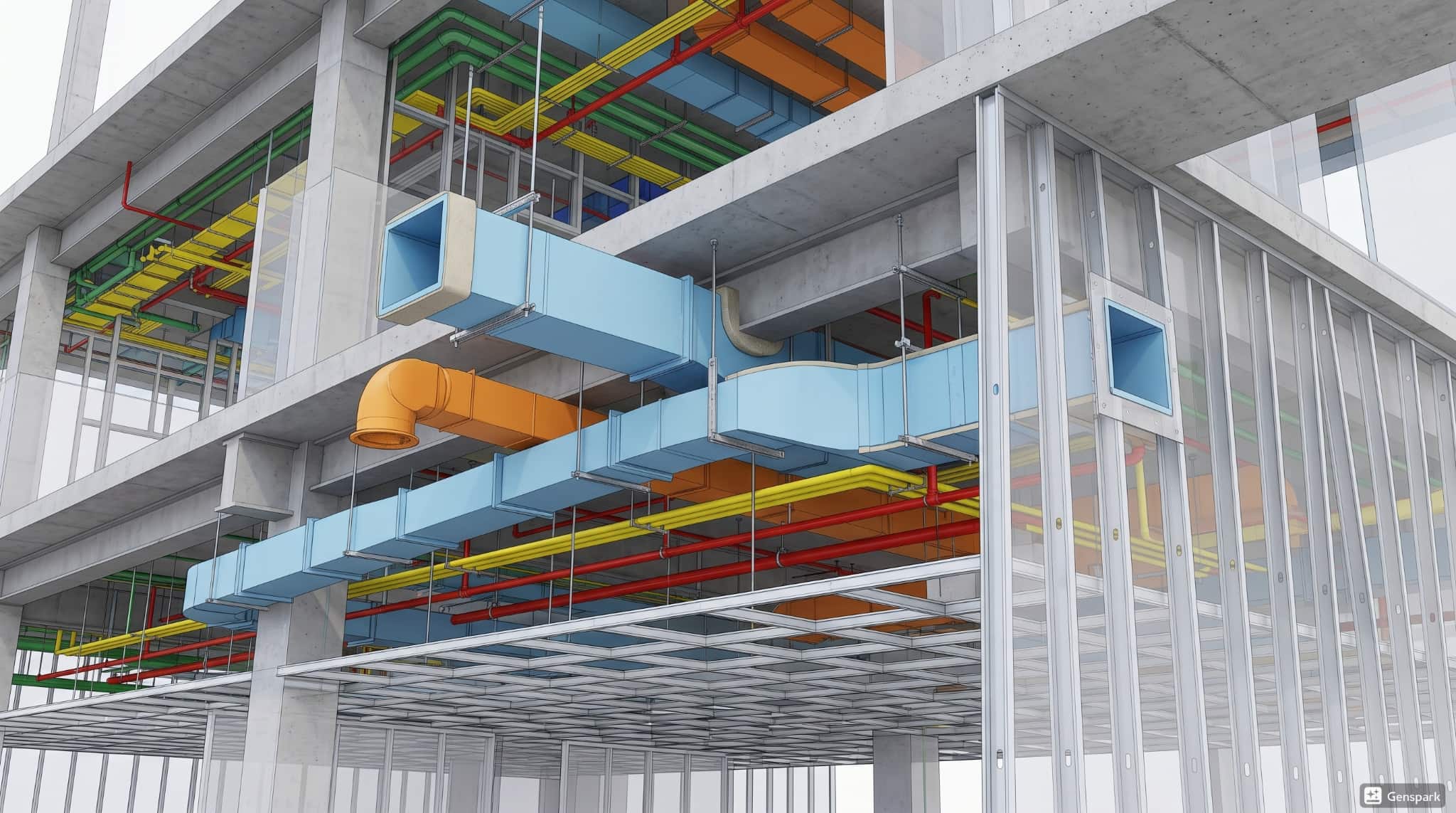
The routing of ducts is quicker and more precise with BIM as it eliminates guesswork in duct design.
One of the most common questions that teams ask in BIM HVAC design is how duct routing is done in BIM HVAC design. The installation process requires ducts to be placed in a three-dimensional space which operators must conduct without creating any system conflicts.
Benefits include:
-
Keeping the distance from pipes and beams for easy maneuvering.
-
Improved ceiling and wall layout.
-
Reduced material waste
-
Shorter job site installation time.
BIM also assists in the obtaining of airflow balance so that ductwork is neither oversized nor under-sized. This helps with the performance and control of HVAC systems, as well as reducing costs.
The system enables better duct design coordination with building systems which leads to more accurate installation processes and fewer required construction changes.
The system improves duct design coordination with building systems which results in better installation forecasting and decreased need for construction modifications.
How Are HVAC Sizing and Load Calculations Improved Using BIM?
One of the most crucial aspects of HVAC design is sizing, and BIM brings in a more accurate dimension to it.
Engineers rely on data-driven models to make estimates of the loads, not performing the calculations manually.
BIM is useful to answer questions such as how to calculate duct sizing in BIM by:
-
The actual geometry of buildings has been used.
-
Occupancy and heat loads should be taken into account.
-
Simulating air distribution
-
Up to date calculations based on design changes.
This helps with HVAC planning because decisions are made based on actual information, rather than on conjecture. It also prevents over-sized which not only saves energy, but also cost.
This also aids in making better decisions during early HVAC design, where multiple system designs can be considered in a rapid manner prior to system layout.
Where Does BIM Create the Biggest Impact on Energy Efficiency?
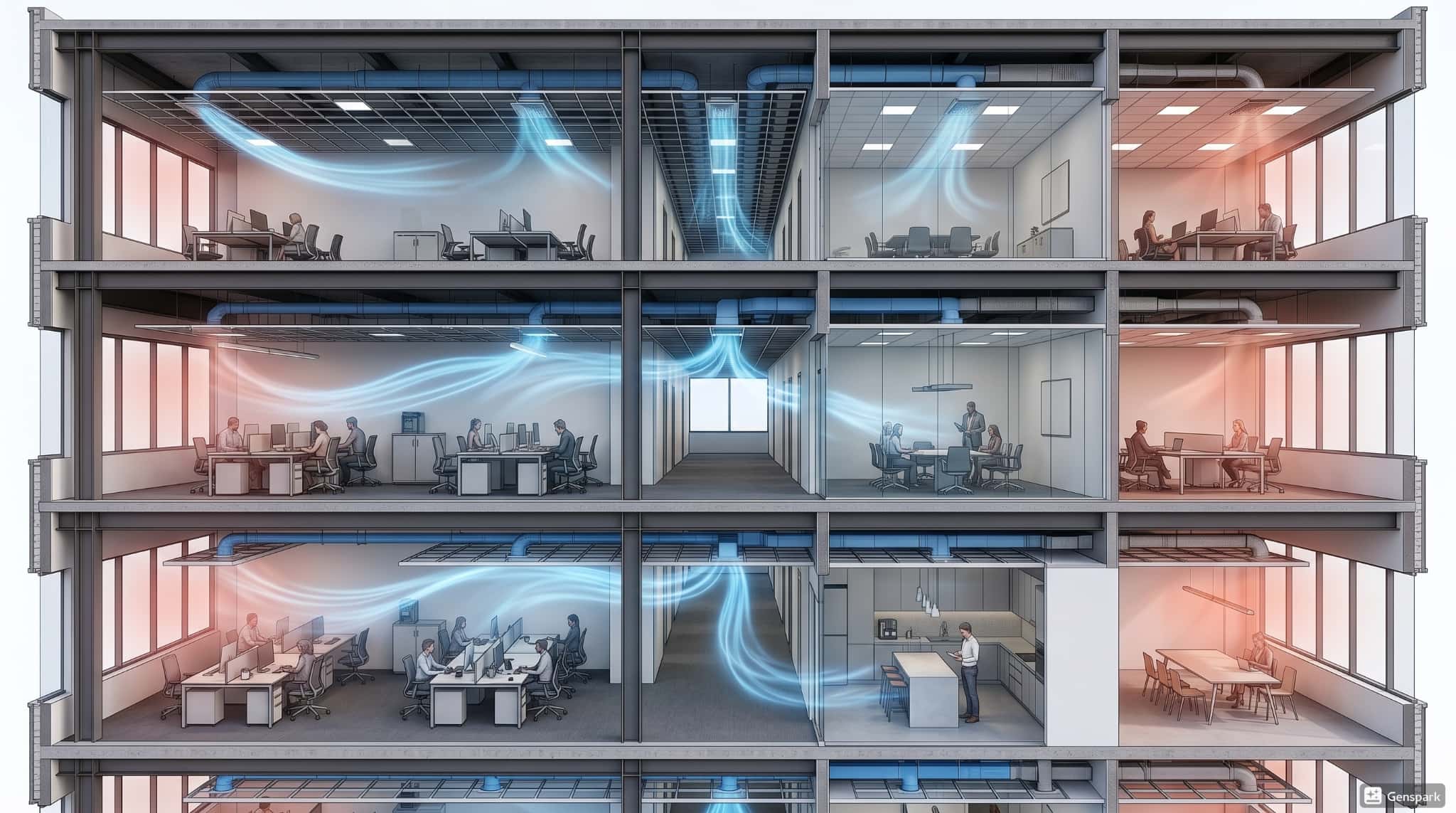
The primary advantage of BIM for construction projects emerges from its ability to design HVAC systems which include energy-saving features. The engineers use simulation tools to model air movement patterns which will occur throughout a building after its completion.
Key impacts include:
-
The balanced temperature control is achieved with better airflow design.
-
Optimisation of ventilation design in the indoor air quality design.Optimisation of ventilation design in the design of IAQ.
-
Less energy loss due to inadequate system layout.
-
Identification of inefficient zones at an early stage
Now, the benefits of how BIM improves HVAC system efficiency is evident. It optimises system performance prior to the building process to minimise the energy intake over the life cycle of building systems.
The system enables ongoing development of HVAC systems through simulation results and performance evaluation which teams use to make design improvements.
What Practical Challenges Do Teams Face While Optimizing HVAC Systems in BIM?
Optimization of HVAC systems in BIM comes with its share of practical challenges.Teams face several practical challenges during HVAC system optimization in BIM.
Although BIM can enhance HVAC systems, there are practical challenges that teams face when implementing BIM.
Common issues include:
-
There is a lack of skilled BIM users for BIM modelling.
-
The lack of coordination between the disciplines
-
Wrong or missing building information
-
Platform interoperability problems with software applications
-
Inability to break out of the status quo of work routines.Reluctance to depart from the traditional way of doing things.
One of the other challenges is to standardize the HVAC design parameters between the teams. Even with the best intention, digital models can have errors.
In response to this, teams must be trained and have standardized digital HVAC design workflows for digital tools.
These challenges can delay project timelines and reduce the effectiveness of digital HVAC design workflows if not addressed early.


.png)
.png)
