


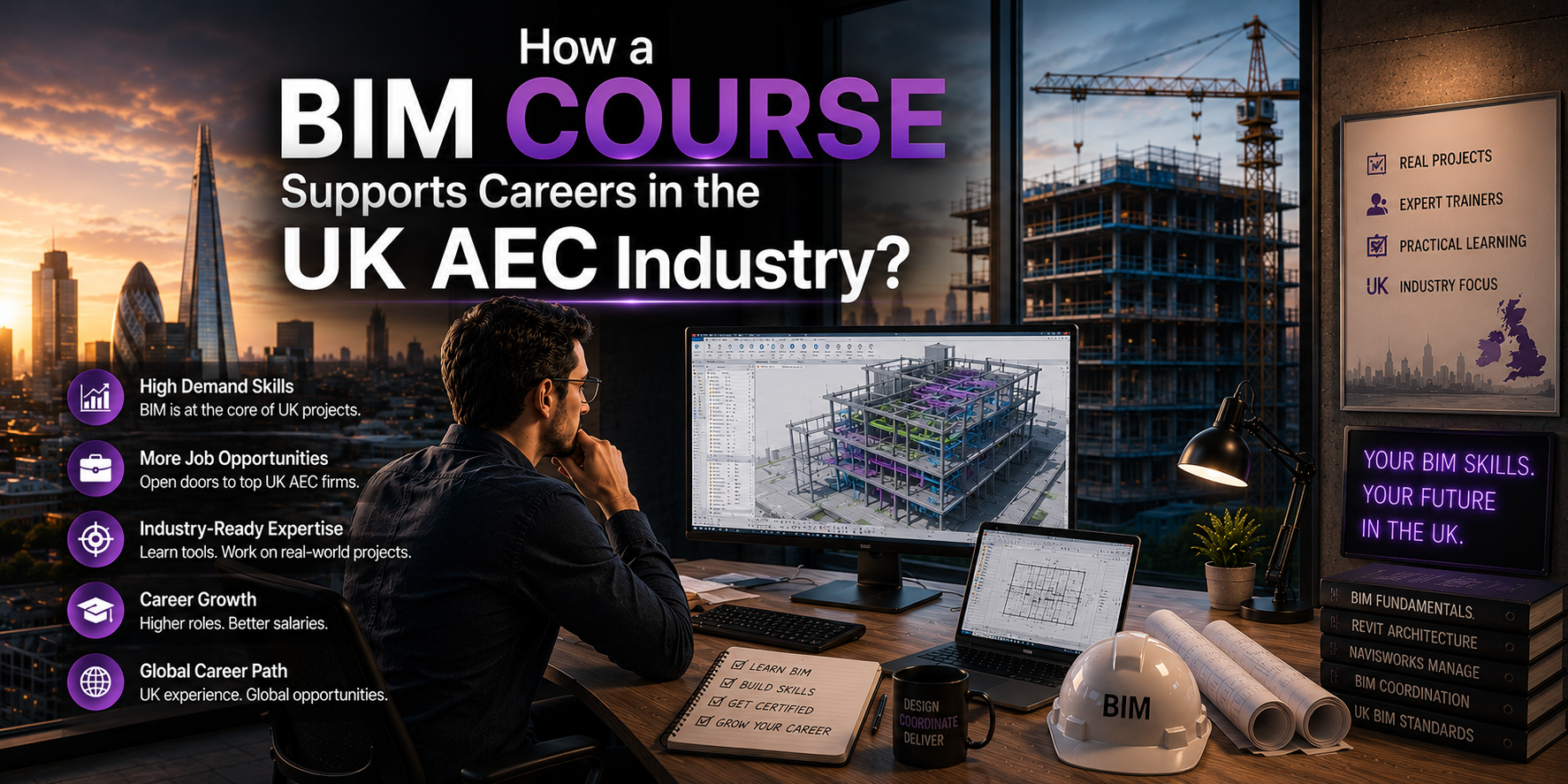

Why Is BIM Important in the UK AEC Industry?
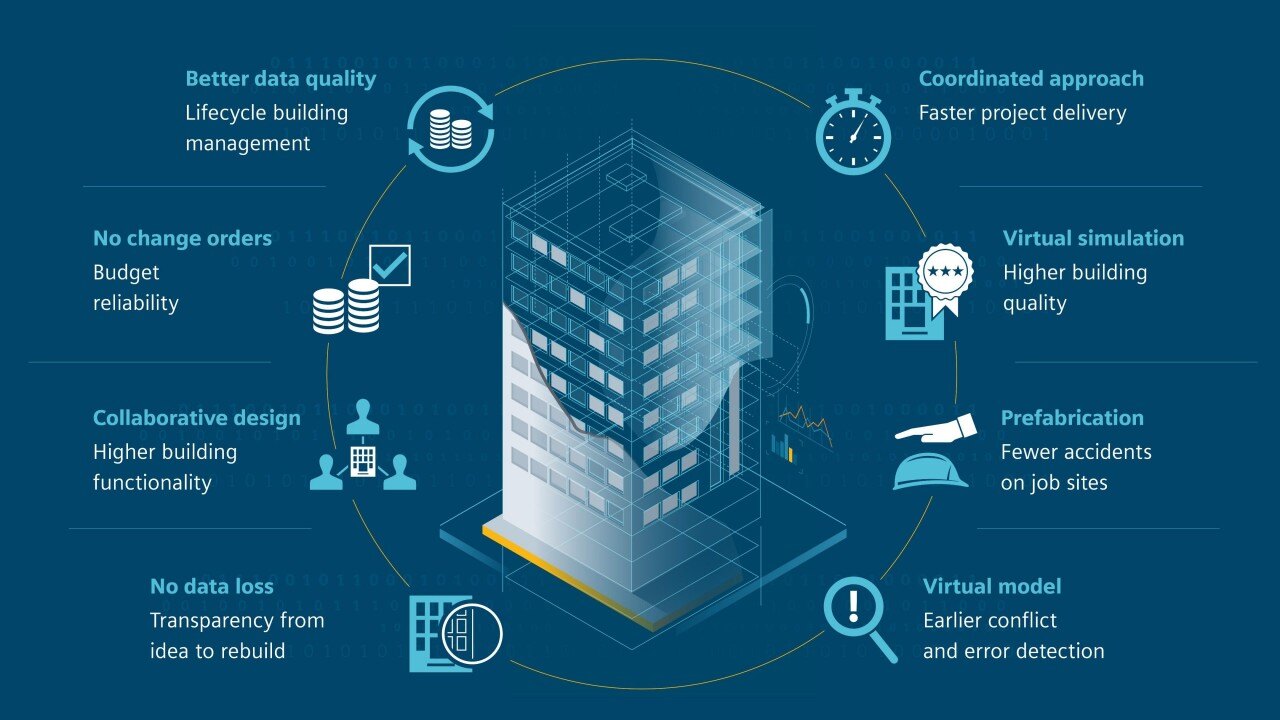
The UK government mandated BIM for public sector projects over a decade ago, establishing it as an industry standard. This wasn't merely a regulatory decision; it reflected the industry's need for more efficient and collaborative project delivery.
Digital construction through BIM reduces costly clashes, eliminates rework, and improves project coordination across teams. What once required weeks of manual checking now takes hours with automated workflows.
For the UK construction industry, this efficiency is now showing tangible competitive advantage. Projects are increasingly being delivered faster, within budget, and with fewer errors. As a result, professionals with BIM skills often command higher salaries, and an increasing number of engineering roles now require BIM expertise.
As construction technology evolves and AEC job profiles demand digital literacy, professionals without BIM certification find themselves at a disadvantage in an industry moving decisively toward data-driven delivery.
How Is BIM Adoption Shaping the UK Construction Market?
BIM has evolved from an optional tool into an industry necessity. What began as a government mandate has become the standard way private firms deliver projects across the UK construction industry as well. The industry now recognises BIM as a collaborative, data-centric process that underpins design coordination and lifecycle management.
Technologies such as BIM, digital twins, and AI are helping firms reduce risk and improve efficiency through smarter, data-driven decision-making. This is why the market shift is accelerating significantly. Construction technology integration through BIM is becoming critical for market participation. Firms and suppliers failing to meet digital expectations are now facing exclusion. BIM and digital twins continue to evolve, enhancing collaboration and enabling real-time asset monitoring.
What Skills Does a BIM Course Develop for the UK Market?
Effective BIM courses combine the core competencies outlined below. Firms hiring for digital construction roles consistently seek candidates who demonstrate strength across all four areas. This balanced skill development is what separates job-ready professionals from those requiring months of on-the-job training.
|
Skill Set |
What's Covered |
Market Relevance |
|
Technical Foundation |
Revit, Navisworks, cloud platforms |
Entry point for engineering jobs in modern firms |
|
Coordination Skills |
Clash detection, model aggregation, constructability reviews |
Essential for project coordination roles daily |
|
Collaboration Expertise |
Communication across disciplines, information management, conflict resolution |
Transforms operators into valuable BIM professionals |
|
Professional Development |
Integrated workflow understanding, real-world project scenarios |
Drives career growth in competitive UK BIM jobs |
How Can a BIM Course Improve Career Opportunities in the UK?
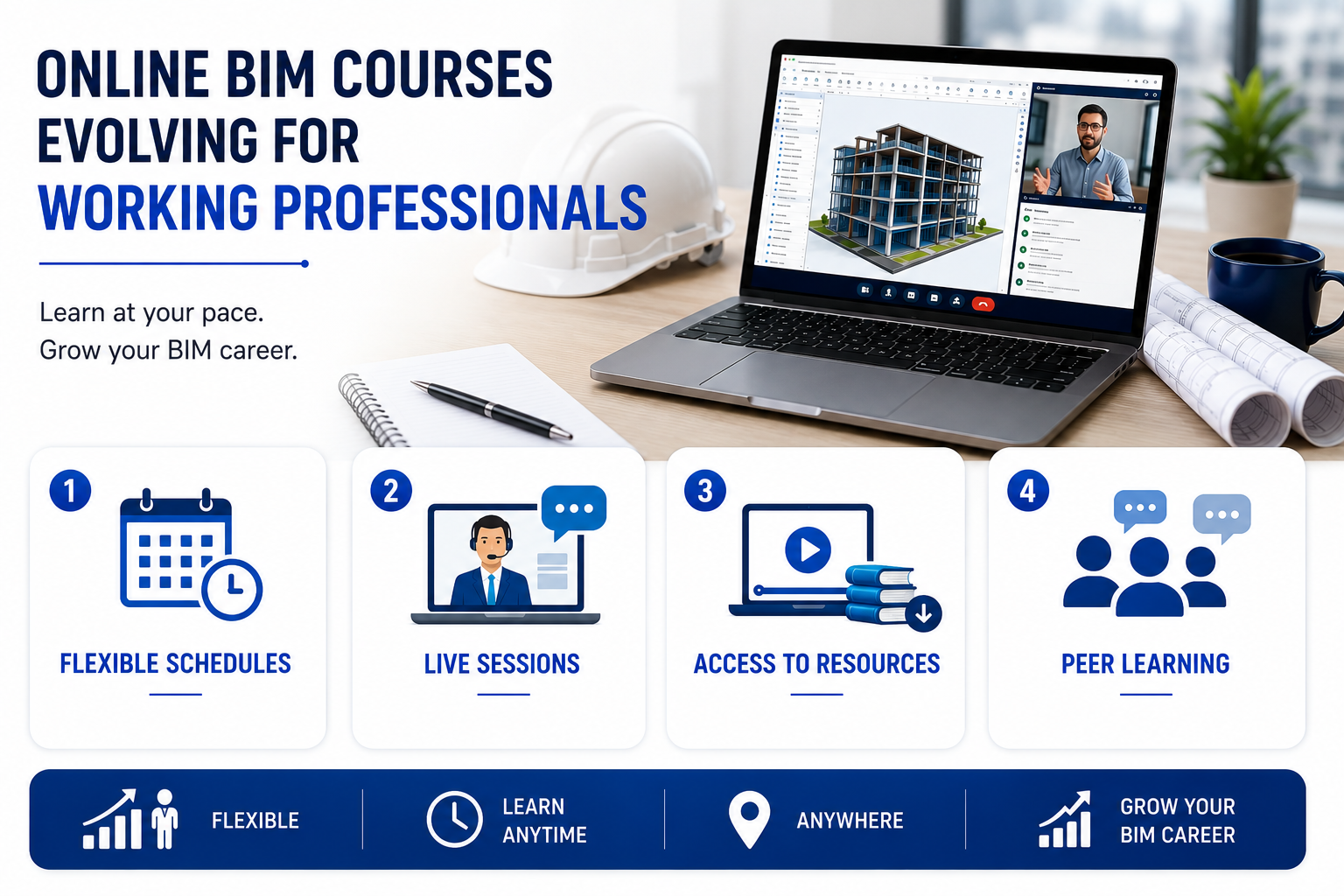
A BIM course opens diverse pathways across the UK construction industry. The roles range from entry-level BIM Coordinators managing model data to BIM Managers overseeing entire digital construction strategies. A few of the emerging opportunities also include BIM Specialists focused on digital fabrication, design coordination, and sustainability performance modeling.
Similarly, employer demand spans multiple sectors. Government agencies, infrastructure projects, commercial real estate, healthcare, and education are all actively hiring BIM professionals. Government mandates and public-sector projects provide consistent job security and drive rapid career progression for qualified professionals.
Salary trends also reflect this growing demand. Experienced BIM managers often earn competitive salaries, reflecting the growing demand for digital construction expertise. Entry-level positions provide solid income potential, while experienced professionals command premium salaries as organizations prioritize BIM skills for project success.
Professional development through formal training accelerates progression into higher-paying roles faster than self-taught alternatives.
What Should You Look for in a BIM Course for UK Career Goals?
Choosing the right BIM course can significantly influence how quickly you become job-ready. So, here’s a breakdown to help you evaluate potential programs carefully against industry standards.
|
Criterion |
What to Look For |
Why It Matters for UK Careers |
|
Curriculum |
ISO 19650 compliant project simulations and RIBA framework alignment |
Ensures content meets UK government standards and employer expectations |
|
Software Training |
Revit, ArchiCAD, Tekla Structures, Civil 3D, and BIM 360 platforms with hands-on instruction |
Multiple software skills increase employability across diverse UK firms |
|
Projects |
Real case studies and structured projects simulating real-life scenarios with portfolio building |
Demonstrates practical competency to UK employers hiring for live projects |
|
Certification |
Recognition from industry bodies like Autodesk, buildingSMART, or RIBA credentials |
Industry-recognised credentials accelerate job applications and salary negotiations |
|
Industry Alignment |
Curriculum developed by global BIM professionals from companies like AECOM |
Content reflects real workflows used in UK AEC companies, not outdated theory |
How Can You Prepare for a BIM Career in the UK?
Preparation for a BIM career in the UK starts with recognising that software skills alone are insufficient. Pursuing a relevant degree in Architecture, Engineering, or Construction Management helps, but that shouldn’t be the end of your learning journey. Complement it with BIM software training and certifications.
Learning Revit first provides a strong foundation before expanding into Navisworks, BIM 360, and other platforms. However, structured learning can significantly accelerate professional development. Effective BIM learning centres provide hands-on training using industry-standard software, hands-on experience working on real-world project simulations, and access to industry expert instructors who share practical insights.
For those ready to commit fully, programs like Novatr's BIM Professional Program deliver exactly this. The program combines comprehensive software training, real-world project scenarios, mentorship from global AEC professionals, and certification aligned with UK industry standards. Structured courses help you learn real project workflows and build practical skills employers actively look for.


.png)