---
title: UPSC ESE Salary, Job Roles & Career Growth Explained
description: Learn about UPSC ESE salary, job roles, career growth, work-life balance, challenges, and alternative career options for civil engineers.
image: https://blog.novatr.com/hubfs/Civil%20Engineers%20Job%20Roles%20after%20UPSC%20ESE.jpg
---
[Blogs](https://www.novatr.com/learning-hub)
- [Architecture & Construction](https://www.novatr.com/learning-hub?category=Architecture+%26+Construction)
- [BIM](https://www.novatr.com/learning-hub?category=BIM)
- [Computational Design](https://www.novatr.com/learning-hub?category=Computational+Design)
- [Company News](https://www.novatr.com/learning-hub?category=Company+News)
- [Expert Talks](https://www.novatr.com/learning-hub?category=Expert+Talks)
Explore Courses
[Just Launched  BIM Professional Program v.2026 Take your career to the next level by mastering the real-world application of BIM. Know More](https://www.novatr.com/courses/bim-professional-program)
[ Master Computational Design Course Break into an advanced career by learning to apply the power of computation to the art of design. Know More](https://www.novatr.com/courses/computational-design)
[Blogs](https://www.novatr.com/learning-hub)
Explore Blogs
- [Architecture & Construction](https://www.novatr.com/learning-hub?category=Architecture+%26+Construction)
- [BIM](https://www.novatr.com/learning-hub?category=BIM)
- [Computational Design](https://www.novatr.com/learning-hub?category=Computational+Design)
- [Company News](https://www.novatr.com/learning-hub?category=Company+News)
- [Expert Talks](https://www.novatr.com/learning-hub?category=Expert+Talks)
Courses
- [BIM Professional Program v.2026](https://www.novatr.com/courses/bim-professional-program)
- [Master Computational Design](https://www.novatr.com/courses/computational-design)
- [CIVIL/](https://www.novatr.com/learning-hub?category=BIM)
Featured Article
# UPSC ESE Salary, Job Roles & Career Growth Explained

Deependra Dobriyal
June 11, 2026
7 min read
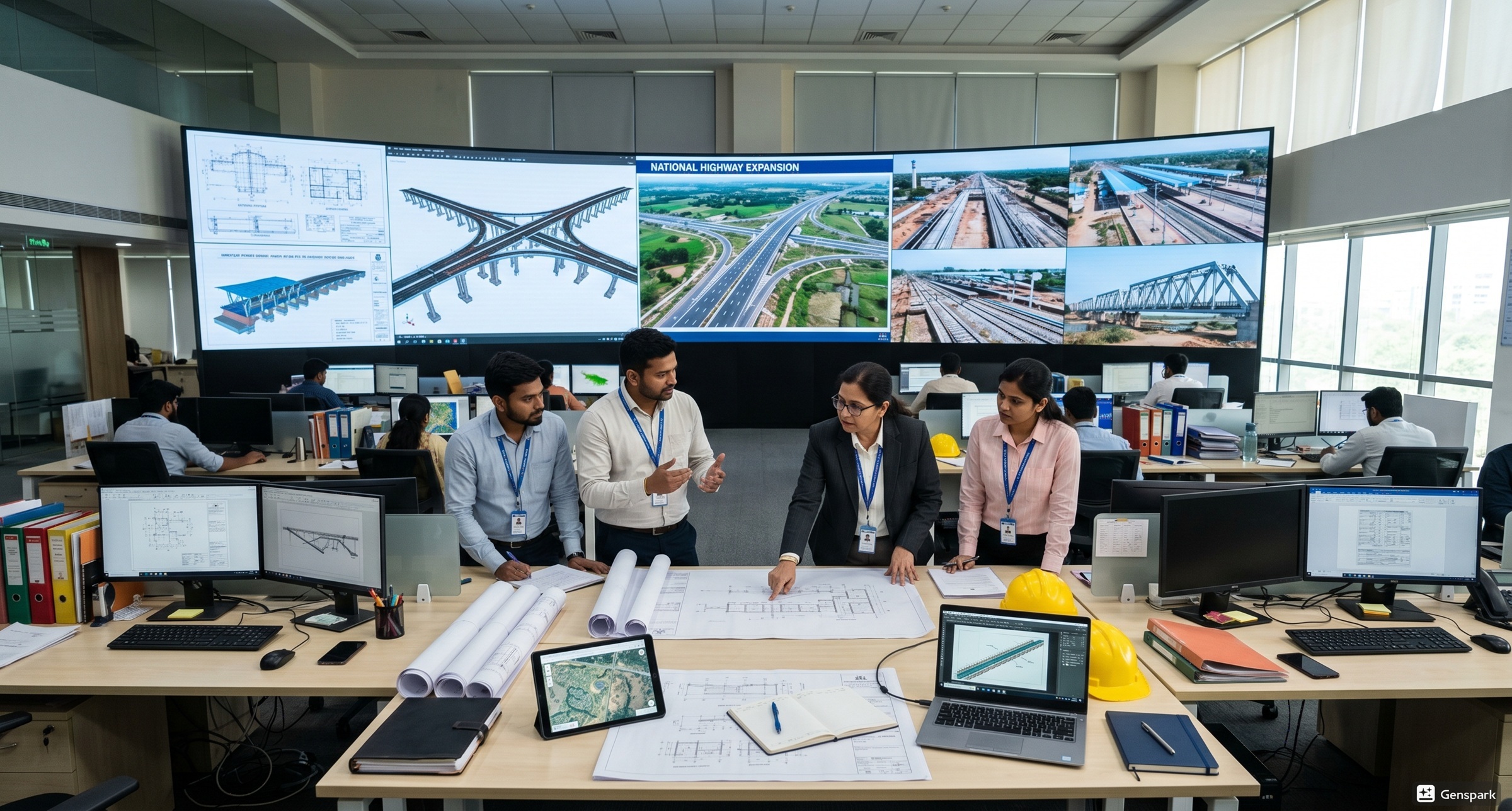

UPSC Engineering Services Examination (ESE) is one of the highly competitive examinations for engineers. It’s a pretty tough career route, too, and out of all the applicants, well under [1%](https://www.pw.live/gate/exams/upsc-ese-success-ratio) manage to secure a final rank each year. Government Engineering jobs are popular with many aspirants due to their clear career progression, stability, and attractive salary packages.
ESE is one of the best choices for those aspiring to go for **civil engineering career options after Btech**. Still, you need to know what the proper occupations are, what the pay is, and the career prospects before you make a choice. This article provides the details about ESE careers, the role of engineers at work and how it compares with other engineering careers available today.
Unlock High-Paying Careers With BIM
Master BIM workflows, software and skills on real projects.
Apply Now
\*Limited seats available
## **UPSC ESE Salary Structure**
The **UPSC ESE Salary** is based on the 7th Pay Commission, and it includes basic pay, allowances, and other benefits. The appointed candidates are typically Assistant Executive Engineers or other positions in the central government departments.
Basic Salary Breakdown:
- Pay is at Level 10 (starting)
- Basic Pay: Around [₹56,000](https://blog.madeeasy.in/ies-officer-salary) per month
- Gross Salary: [₹80,000 - ₹90,000](https://askfilo.com/knowledge/posts/the-ultimate-guide-to-upsc-ese-2026-exam-dates-eligibility-vacancies-how-to-apply) monthly (allowances can be added to this)
Additional Benefits:
- Dearness Allowance (DA)
- House Rent Allowance (HRA)
- Transport Allowance
- Medical benefits
- Pension and job security
The **UPSC ESE Salary** progressively rises on promotion. In time, senior engineers have the opportunity to transition to increasingly senior administrative positions with higher salaries and more responsibilities.
The salary is more or less stable, but may not always be the same as in private industry, particularly in the fast-growing technical fields. This is the main reason why some engineers look around for other **best career options for civil engineers** once they know what the future holds.
## **Job Roles in Different Departments**
***Image:***[*AI Generated*](https://drive.google.com/file/d/1kuPmIgGnam9xBkzI9ajiN2tn3q5bPpnr/view?usp=drive_link)
***Alt Text:*** *UPSC ESE salary growth chart and government engineering pay structure illustration.*
The engineers recruited by ESE are assigned to various departments such as Railways, Central Public Works Department (CPWD), Military Engineering Services (MES), and others. There is a range of job roles across the department.
Common Responsibilities:
- Identifying, designing and planning infrastructure projects.
- Regulating works on site
- Being able to handle budgets and schedules
- Ensuring coordination with contractors and teams
- Ensuring quality and safety standards
Department-wise Roles:
**1. Railways**
- Track design and maintenance
- Construction and maintenance of bridges
- The project's implementation on the railways
**2. CPWD**
- Government building construction
- Involves the upkeep of public facilities
- To complete a project plan and tender
**3. MES**
- The development of infrastructure for defense
- Programs of maintenance for military buildings
- Site supervision for designated areas
**4. Water Resources**
- The design of dams and canals
- Flood control planning
- Irrigation system management
There are technical and administrative skills involved in these jobs. In time, engineers begin to assume managerial roles and decision making roles take precedence over engineering work.
## **Work-Life Balance in ESE Jobs**
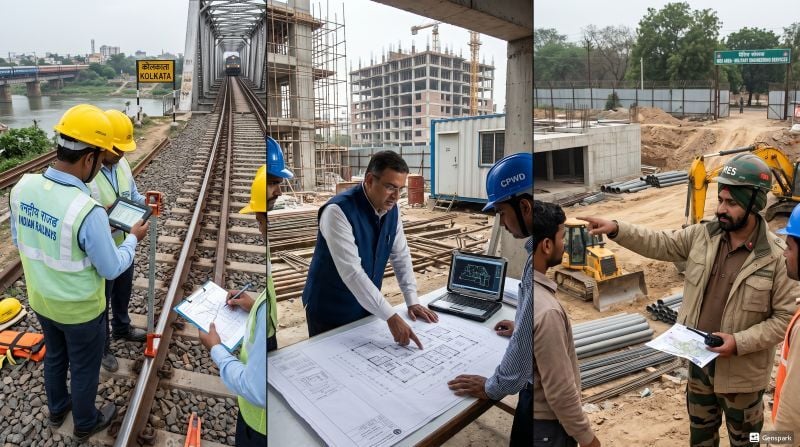
The concept of Work-Life Balance in ESE Jobs. The balance between work and life in ESE is dependent on the department and project phase. Government jobs are considered more stable than jobs in the private sector.
What to Expect:
- In most cases, set up working times
- Less pressure compared to private construction firms
- Transfers according to the requirements of the project
- Visits to the field and site as needed
For office-based jobs, the work schedule can typically be predicted. In a site-based position, however, there are situations that might require engineers to deal with emergencies or delays.
Overall, the job of ESE is balanced, and this is among the reasons why students choose it after they have gone through the **UPSC ESE age limit** and eligibility.
## **Challenges in ESE Careers**
ESE is stable on the other hand, but there are some practical considerations to be keen on.
1. **Competition:** One must prepare regularly with a clear concept to clear the ESE exams which are very competitive.
2. **Reduced Hands-on Engineering Work:** Limited Technical Exposure Over Time as roles shift to admin.
3. **Slow Career Growth:** Unlike the usual pace you see in the private sector, advancement in a public role happens on a rather fixed schedule, with promotions basically coming in set intervals.
4. **Frequent Transfers:** Engineers might end up shifting from one location to another as the project needs change or demand it, even if it is a bit unexpected.
5. **Bureaucratic Work Environment:** Getting decisions through can involve multiple approvals, and that often leads to delays, sometimes very plain delays.
6. **Salary Growth is Steady but Slow:** Salary increases for those in the public sector are steady but not as fast as those in the private sector.
Due to all these reasons, some engineers consider other career paths that are technically more engaging for civil engineers, which can have greater turnover rates.
## **Alternative High Growth Career Options**

Learning practical BIM skills means acquiring industry tools, workflows and experience with project coordination. Training courses that are a bit structured, like Novatr’s BIM course, give engineers some grounding in modelling, automation and how to deliver projects, in practice.
Take your civil engineering career to the next level with Novatr’s [BIM Professional Course for Civil Engineers](https://www.novatr.com/us/courses/bim-for-civil-engineers), a project-based program that prepares you to plan, design, and manage construction projects using 12+ industry software and essential BIM plugins.
Learn how to work with Autodesk Revit, Navisworks, construction cloud and key plugins like DiRoots.One, pyRevit, EF-Tools, ProSheets, Issue and Model Checker for Revit to improve automation, accuracy, and project efficiency.
**Here’s what you’ll gain:**
- End-to-end understanding of BIM workflows — modeling, estimation, coordination, sequencing, and documentation.
- Hands-on training aligned with ISO 19650 standards and real residential + commercial projects.
- **Globally recognized certifications**:
After completing the core modules, learners can also choose 2 additional specializations, including:
- **Visual Programming with Dynamo** – for automation and parametric workflows
- **4D, 5D & 6D with BIM** – for time, cost, and facility integration
- **Tekla for RCC Modeling** – for detailed steel and concrete modeling
- **Civil 3D for Infrastructure** – for roadways, railways, and utilities
- **Project Strategy & Optimization with Plannerly -** Plan, structure, and audit BIM execution plans.
This structured approach really does help professionals to build solid BIM skills, and then use them in actual projects, not just in theory.
Master BIM and Get Hired Faster
Join a community of 8500+ Architects and Engineers.
Explore Now
\*Limited seats available
## Conclusion
For a lot of engineers, the **UPSC ESE Salary** and the career road map feel like a secure and stable choice, with a fairly obvious direction and government perks. Still, it is not a smooth ride, because the growth curve can be slower, and you will need a decent level of patience, plus preparation, in a proper way.
If you are thinking of pursuing a **career in civil engineering after btech**, it really matters to understand the different options that exist in the current age, where technology keeps showing up in the demand for capable professionals around the world.
For those who want something more direct, more practical, courses like the [BIM Professional Course for Civil Engineers](https://www.novatr.com/courses/bim-for-civil-engineers)from [Novatr](https://www.novatr.com/) can be worth checking.
Also, go to our [resource page](https://www.novatr.com/learning-hub) for details on industry trends and the skills that are expected.
Was this content helpful to you
Like Yes
Dislike No

TABLE OF CONTENTS
BIM Is The New Standard. Are You Certified?
Get Certified in BIM
SHARE ON YOUR SOCIALS
Link Copied Successfully
Related articles
[ BIM Civil What If You Don’t Crack ESE? Best Career Options for Engineers 11 June 2026 9 min read](https://blog.novatr.com/blog/what-if-you-dont-crack-ese-best-career-options-for-engineers) [ BIM Civil What is UPSC ESE Exam? & Everything Civil Engineers Need to Know 11 June 2026 6 min read](https://blog.novatr.com/blog/what-is-upsc-ese-exam-everything-civil-engineers-need-to-know) [ BIM Civil UPSC ESE vs GATE vs Private Jobs: Which Career Path is Better? 11 June 2026 9 min read](https://blog.novatr.com/blog/upsc-ese-vs-gate-vs-private-jobs-which-career-path-is-better) [ BIM Civil Future Ready Career Paths for Civil Engineers in 2026 11 June 2026 7 min read](https://blog.novatr.com/blog/future-ready-career-paths-for-civil-engineers)
Download Syllabus
## BIM Professional Program
Next Cohort
June 2026
Program Duration
7 Months
Premium Program benefits
8 Credentials from Autodesk, NSDC, Novatr
1 program. 10 career paths. Infinite Growth.
40+ ISO 19650 & RIBA real-world projects to practice
1-on-1 guidance. Access 400+ industry experts.
Access the biggest AEC-Tech community on the planet. 8500+ and counting
Curated for you by 100+ global BIM leaders.
Lifelong access to course content
Enter your details to download the program syllabus.
##### BIM Professional Program
June 2026, 7 Months
Your Name Invalid name.
Phone Number Enter a valid phone number
Email Please enter a valid email address.
Select years of experience\* Currently studying 0-1 years 1-2 years 2-4 years 4-8 years 8-10 years 10-12 years 12+ years Invalid selection.
Specialisation Select your background\* Architecture Civil Engineering Mechanical Engineering Electrical Engineering Invalid selection.
Are you professionally trained in interior design?
Yes
No
I agree to the [Terms of Use](https://www.novatr.com/terms-and-conditions) and [Privacy Policy](https://www.novatr.com/privacy-policy), and consent to be contacted by Email, Call, WhatsApp, or SMS.
Submit
Ready to skyrocket your career?
Begin your next chapter in AEC
with Novatr!
We are here to help you take the industry by storm with advanced, tech-first skills.
[Explore Courses](https://www.novatr.com/#courses)
Join our newsletter
Submit
Thank you for signing up.
We’ll send you a nice letter once per week. No spam.

Dare to Disrupt.
Join thousands of people who organise
work and life with Novatr.
Company
- [About Us](https://www.novatr.com/about)
- [BIM Professional Program v.2026](https://www.novatr.com/courses/bim-professional-program)
- [Masters Computational Design](https://www.novatr.com/courses/computational-design)
- [Become a Mentor](https://www.novatr.com/apply-as-mentor)
- [Hiring from Us](https://www.novatr.com/hire-from-us)
- [Careers at Novatr](https://www.novatr.com/career)
Resources
- [Blog](https://www.novatr.com/learning-hub)
- [Media Room](https://www.novatr.com/media-room-home-page)
- [Career Builder](https://www.novatr.com/career-navigator)
- [Events & Webinars](https://www.novatr.com/webinars)
- [FAQs & Support Center](https://www.novatr.com/contact-us)
- [Contact Us](https://www.novatr.com/contact-us)
- [Privacy Policy](https://www.novatr.com/privacy-policy)
- [Terms of Use](https://www.novatr.com/terms-and-conditions)
©2023 Oneistox Network Pvt. Ltd.
All Rights Reserved
```json
{
"@context" : "https://schema.org",
"@type" : "BlogPosting",
"author" : {
"@type" : "Person",
"name" : "Deependra Dobriyal",
"url" : "https://blog.novatr.com/blog/author/deependra-dobriyal"
},
"dateModified" : "2026-06-11T08:22:31.261Z",
"datePublished" : "2026-06-11T07:40:04.000Z",
"headline" : "UPSC ESE Salary, Job Roles & Career Growth Explained",
"image" : [ "https://blog.novatr.com/hubfs/Civil%20Engineers%20Job%20Roles%20after%20UPSC%20ESE.jpg" ],
"mainEntityOfPage" : {
"@id" : "https://blog.novatr.com/blog/upsc-ese-salary-job-roles-career-growth-explained",
"@type" : "WebPage"
},
"publisher" : {
"@type" : "Organization",
"logo" : {
"@type" : "ImageObject",
"url" : "https://blog.novatr.com/hubfs/Novatr%20Prev%20OX-2.svg"
}
}
}
```