---
title: "BIM Interoperability: Key to Project Success in 2026"
description: Explore why BIM interoperability is essential for project success, improving efficiency, collaboration, and quality across construction workflows.
image: https://blog.novatr.com/hubfs/Why%20BIM%20Interoperability%20Determines%20Project%20Success_.png
---
[Blogs](https://www.novatr.com/learning-hub)
- [Architecture & Construction](https://www.novatr.com/learning-hub?category=Architecture+%26+Construction)
- [BIM](https://www.novatr.com/learning-hub?category=BIM)
- [Computational Design](https://www.novatr.com/learning-hub?category=Computational+Design)
- [Company News](https://www.novatr.com/learning-hub?category=Company+News)
- [Expert Talks](https://www.novatr.com/learning-hub?category=Expert+Talks)
Explore Courses
[Just Launched  BIM Professional Program v.2026 Take your career to the next level by mastering the real-world application of BIM. Know More](https://www.novatr.com/courses/bim-professional-program)
[ Master Computational Design Course Break into an advanced career by learning to apply the power of computation to the art of design. Know More](https://www.novatr.com/courses/computational-design)
[Blogs](https://www.novatr.com/learning-hub)
Explore Blogs
- [Architecture & Construction](https://www.novatr.com/learning-hub?category=Architecture+%26+Construction)
- [BIM](https://www.novatr.com/learning-hub?category=BIM)
- [Computational Design](https://www.novatr.com/learning-hub?category=Computational+Design)
- [Company News](https://www.novatr.com/learning-hub?category=Company+News)
- [Expert Talks](https://www.novatr.com/learning-hub?category=Expert+Talks)
Courses
- [BIM Professional Program v.2026](https://www.novatr.com/courses/bim-professional-program)
- [Master Computational Design](https://www.novatr.com/courses/computational-design)
- [Archi/](https://www.novatr.com/learning-hub?category=BIM)
Featured Article
# Expert Opinion: Why BIM Interoperability Determines Project Success
Ashdeep Singh
April 7, 2026
5 min read


Ashdeep Singh is a BIM Manager who completed his B.Arch from Amity University. Currently working with Novatr, he has been involved in projects such as the Diriyah Arena in Saudi Arabia and the New Life Arena in Chennai. You can learn more about his work and connect with him on **[LinkedIn](https://www.linkedin.com/in/ashdeepsingh-bim/)****.**
Building Information Modeling (BIM) has transformed project delivery by connecting design, engineering, and construction processes. As multiple software platforms are used across disciplines, interoperability, the ability of these systems to exchange and interpret data seamlessly, has become a critical factor in project efficiency and accuracy. Understanding how different BIM tools communicate ensures that teams can coordinate effectively, reduce errors, and maintain consistent information throughout design and construction phases, supporting overall project outcomes.
Effective BIM interoperability goes beyond simple file sharing between applications. It involves structured data exchange, adherence to standards, and alignment of workflows across teams. Projects that prioritize compatibility experience fewer coordination challenges, faster updates, and clearer communication. Misaligned systems can delay schedules, increase rework, and reduce the quality of deliverables.
By examining how interoperability influences project performance, teams can make informed decisions on software integration, collaboration protocols, and workflow planning for 2026 projects.
Unlock High-Paying Careers With BIM
Master BIM workflows, software and skills on real projects.
Apply Now
\*Limited seats available
## **The SME’s Core Opinion on BIM Interoperability**
Interoperability in BIM has become a central discussion among industry experts as projects grow more complex and involve multiple disciplines. The focus on seamless data exchange reflects the evolving nature of collaborative project delivery, where teams rely on diverse software platforms to share and update information. Understanding interoperability helps set expectations for communication, coordination, and workflow integration, providing a foundation for examining how BIM tools interact and what challenges teams face when systems are not aligned across design and construction stages.
Below are key points outlining the SME’s perspective on BIM interoperability:
- Interoperability is central because it ensures accurate information flows between different BIM platforms, reducing errors and conflicts.
- Consistent tool compatibility supports smoother collaboration between architects, engineers, and contractors on large-scale projects.
- Industry experience shows that mismatched software leads to delays and repeated data correction, highlighting the need for integrated systems.
- Interoperability enables teams to maintain a single source of truth, which improves project transparency and decision-making.
- For someone new to BIM, it allows data created in one application to be usable in another without loss of detail or accuracy.
- Early attention to interoperability can prevent miscommunication, avoid rework, and save both time and resources across project phases.
## **What Most BIM Professionals Misunderstand About Interoperability**

Despite its importance, interoperability is often misunderstood among BIM teams, especially when projects involve multiple software platforms. Misconceptions can arise from assumptions about data transfer, software capabilities, or workflow alignment. These misunderstandings may go unnoticed until coordination or design development reveals inconsistencies, conflicts, or errors. Recognizing common pitfalls helps teams evaluate their processes, identify gaps, and develop a more accurate understanding of what true interoperability requires for consistent, reliable project delivery.
Below are key points highlighting common misunderstandings about BIM interoperability:
- Many teams assume that simply exchanging files guarantees full interoperability between different BIM platforms.
- Professionals often overlook the need for consistent data structures and naming conventions across applications.
- Some believe that exporting and importing models preserves all geometry, attributes, and relationships without verification.
- Misalignment of software versions or updates can create hidden data inconsistencies that affect coordination.
- These misunderstandings typically appear as errors in clash detection, mismatched schedules, or incomplete design updates.
- A lack of awareness about tool-specific limitations can result in redundant work and delays during project development.
## **Insights Drawn from Real BIM Project Experiences**
Examining real-world BIM projects provides a valuable understanding of how interoperability affects design, coordination, and construction. Teams encounter situations where multiple tools are used, and how these tools exchange data can influence project outcomes significantly. Observing patterns across projects helps identify recurring challenges, areas for improvement, and strategies that have proven effective. Learning from these experiences offers a practical lens for evaluating workflows, anticipating problems, and understanding the broader impact of tool compatibility on overall project performance.
Here are key insights from BIM project experiences regarding interoperability:
- In one large commercial project, misaligned BIM tools caused delays in clash detection and required multiple rounds of data correction.
- Recurring issues often include inconsistent object naming, mismatched levels, and missing metadata across different software platforms.
- Teams that implemented standardized data formats and coordinated software versions experienced faster model updates and clearer design communication.
- Early attention to interoperability reduced repeated design changes and minimized errors in construction documentation.
- Projects with proactive coordination between software environments saw improved alignment between architectural, structural, and MEP models.
- Correctly managed interoperability led to measurable gains in schedule adherence, reduced rework, and higher overall project quality.
## **Practical Implications for BIM Teams and Workflows**
**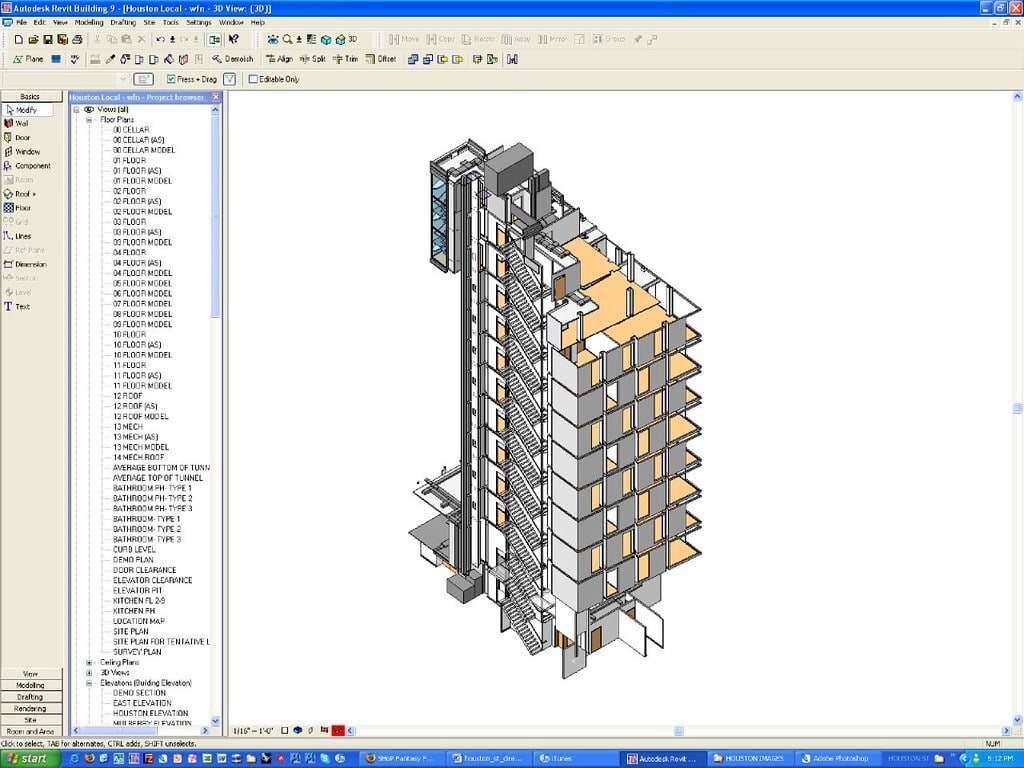**
BIM workflows are becoming increasingly interconnected, requiring teams to evaluate how daily processes impact overall project efficiency. Small adjustments in task coordination, communication methods, and model management can significantly influence how information flows between disciplines.
Observing team practices and identifying patterns in tool usage helps highlight opportunities for improvement. Understanding these implications allows project leaders to anticipate challenges, optimize coordination, and implement procedures that prevent delays or errors, setting the stage for smoother collaboration throughout the project lifecycle.
Below are main points outlining actionable implications for BIM teams and workflows:
- Teams should establish consistent file naming conventions and data organization methods to maintain clarity across all models.
- Regular verification of software versions and updates ensures that models remain compatible throughout the project.
- Implementing standardized exchange formats, such as IFC, consistently improves interoperability between different BIM tools.
- Early project meetings to align workflows and data responsibilities help prevent downstream conflicts between teams.
- Coordinated templates and model structures across disciplines reduce errors during design development and coordination.
- Assigning clear roles for data management ensures accountability and minimizes miscommunication throughout project phases.
## **Future Outlook and SME Recommendations for BIM Interoperability**
As technology advances, BIM interoperability is expected to evolve with more integrated platforms, cloud-based collaboration, and enhanced data standardization. Teams will increasingly operate within connected ecosystems where real-time data sharing and cross-disciplinary coordination become essential. Tracking trends and emerging practices helps organizations anticipate shifts in workflows, software capabilities, and project expectations. Understanding these developments provides a foundation for planning, ensuring teams remain adaptable, and positioning projects to leverage improvements in tool integration and collaborative processes.
Here are key recommendations and future considerations for BIM teams on interoperability:
- Interoperability standards are expected to expand, enabling smoother data exchange across different BIM platforms.
- Cloud-based collaboration will become essential, enabling teams to work on shared models in real time.
- BIM professionals will need to strengthen digital skills and become comfortable navigating multiple software environments.
- Developing a collaborative mindset focused on data consistency and proactive communication will improve project outcomes.
- Teams should adopt new tools and updated standards early to minimize conflicts in multi-platform projects.
- Regular training and structured knowledge sharing will help teams stay aligned with evolving interoperability practices.
Master BIM and Get Hired Faster
Join a community of 8500+ Architects and Engineers.
Explore Now
\*Limited seats available
## **Conclusion**
BIM interoperability plays a key role in project success by ensuring that different tools and teams work together smoothly. When systems can share and interpret data accurately, errors are reduced and design and construction processes stay aligned. Focusing on interoperability from the start helps teams manage updates, coordinate effectively, and keep information consistent across all stages of a project.
Looking ahead, project teams must stay up to date with evolving software standards and connected workflows. Developing skills to work across multiple platforms and maintaining clear communication will help teams navigate integrated BIM environments. Teams that plan for interoperability early will improve coordination, reduce delays, and achieve higher quality outcomes throughout the project lifecycle.
If you wish to join the upskilling route,[**Novatr’s BIM Course for Architects**](https://www.novatr.com/courses/building-information-modelling) can be a good place to start. The BIM certification for architects offers you the opportunity to learn in-depth about BIM processes, tools, and workflows.
Was this content helpful to you
Like Yes
Dislike No

TABLE OF CONTENTS
BIM Is The New Standard. Are You Certified?
Get Certified in BIM
SHARE ON YOUR SOCIALS
Link Copied Successfully
Related articles
[ Lessons from Practice: How Firms Used BIM to Reduce Rework and Improve Efficiency 8 April 2026 5 min read](https://blog.novatr.com/blog/how-bim-reduces-rework-in-construction) [ SME Take: The Future of BIM and AI – How Emerging Tech Will Transform the AEC Industry 7 April 2026 5 min read](https://blog.novatr.com/blog/future-of-bim-and-ai-in-aec-industry) [ Insights from Practice: How BIM Is Changing Collaboration Between Architects, Engineers, & Contractors 25 February 2026 12 min read](https://blog.novatr.com/blog/how-bim-improves-collaboration-in-aec-projects) [ Expert Insight: The ROI of BIM Adoption – Is It Worth the Investment for Firms? 25 February 2026 5 min read](https://blog.novatr.com/blog/roi-of-bim-adoption-for-firms)
Download Syllabus
## BIM Professional Program
Next Cohort
June 2026
Program Duration
7 Months
Premium Program benefits
8 Credentials from Autodesk, NSDC, Novatr
1 program. 10 career paths. Infinite Growth.
40+ ISO 19650 & RIBA real-world projects to practice
1-on-1 guidance. Access 400+ industry experts.
Access the biggest AEC-Tech community on the planet. 8500+ and counting
Curated for you by 100+ global BIM leaders.
Lifelong access to course content
Enter your details to download the program syllabus.
##### BIM Professional Program
June 2026, 7 Months
Your Name Invalid name.
Phone Number Enter a valid phone number
Email Please enter a valid email address.
Select years of experience\* Currently studying 0-1 years 1-2 years 2-4 years 4-8 years 8-10 years 10-12 years 12+ years Invalid selection.
Specialisation Select your background\* Architecture Civil Engineering Mechanical Engineering Electrical Engineering Invalid selection.
Are you professionally trained in interior design?
Yes
No
I agree to the [Terms of Use](https://www.novatr.com/terms-and-conditions) and [Privacy Policy](https://www.novatr.com/privacy-policy), and consent to be contacted by Email, Call, WhatsApp, or SMS.
Submit
Ready to skyrocket your career?
Begin your next chapter in AEC
with Novatr!
We are here to help you take the industry by storm with advanced, tech-first skills.
[Explore Courses](https://www.novatr.com/#courses)
Join our newsletter
Submit
Thank you for signing up.
We’ll send you a nice letter once per week. No spam.

Dare to Disrupt.
Join thousands of people who organise
work and life with Novatr.
Company
- [About Us](https://www.novatr.com/about)
- [BIM Professional Program v.2026](https://www.novatr.com/courses/bim-professional-program)
- [Masters Computational Design](https://www.novatr.com/courses/computational-design)
- [Become a Mentor](https://www.novatr.com/apply-as-mentor)
- [Hiring from Us](https://www.novatr.com/hire-from-us)
- [Careers at Novatr](https://www.novatr.com/career)
Resources
- [Blog](https://www.novatr.com/learning-hub)
- [Media Room](https://www.novatr.com/media-room-home-page)
- [Career Builder](https://www.novatr.com/career-navigator)
- [Events & Webinars](https://www.novatr.com/webinars)
- [FAQs & Support Center](https://www.novatr.com/contact-us)
- [Contact Us](https://www.novatr.com/contact-us)
- [Privacy Policy](https://www.novatr.com/privacy-policy)
- [Terms of Use](https://www.novatr.com/terms-and-conditions)
©2023 Oneistox Network Pvt. Ltd.
All Rights Reserved
```json
{
"@context" : "https://schema.org",
"@type" : "BlogPosting",
"author" : {
"@type" : "Person",
"name" : "Ashdeep Singh",
"url" : "https://blog.novatr.com/blog/author/ashdeep-singh"
},
"dateModified" : "2026-04-07T10:56:44.107Z",
"datePublished" : "2026-04-07T10:53:25.000Z",
"headline" : "BIM Interoperability: Key to Project Success in {{year}}",
"image" : [ "https://blog.novatr.com/hubfs/Why%20BIM%20Interoperability%20Determines%20Project%20Success_.png" ],
"mainEntityOfPage" : {
"@id" : "https://blog.novatr.com/blog/why-bim-interoperability-determines-project-success",
"@type" : "WebPage"
},
"publisher" : {
"@type" : "Organization",
"logo" : {
"@type" : "ImageObject",
"url" : "https://blog.novatr.com/hubfs/Novatr%20Prev%20OX-2.svg"
}
}
}
```