---
title: "Lessons from Practice: How BIM Reduces Rework in Construction 2026"
description: Learn how BIM helps reduce rework, improve efficiency, and streamline construction workflows through real-world insights and practices.
image: https://blog.novatr.com/hubfs/How%20Firms%20Used%20BIM%20to%20Reduce%20Rework%20and%20Improve%20Efficiency.png
---
[Blogs](https://www.novatr.com/learning-hub)
- [Architecture & Construction](https://www.novatr.com/learning-hub?category=Architecture+%26+Construction)
- [BIM](https://www.novatr.com/learning-hub?category=BIM)
- [Computational Design](https://www.novatr.com/learning-hub?category=Computational+Design)
- [Company News](https://www.novatr.com/learning-hub?category=Company+News)
- [Expert Talks](https://www.novatr.com/learning-hub?category=Expert+Talks)
Explore Courses
[Just Launched  BIM Professional Program v.2026 Take your career to the next level by mastering the real-world application of BIM. Know More](https://www.novatr.com/courses/bim-professional-program)
[ Master Computational Design Course Break into an advanced career by learning to apply the power of computation to the art of design. Know More](https://www.novatr.com/courses/computational-design)
[Blogs](https://www.novatr.com/learning-hub)
Explore Blogs
- [Architecture & Construction](https://www.novatr.com/learning-hub?category=Architecture+%26+Construction)
- [BIM](https://www.novatr.com/learning-hub?category=BIM)
- [Computational Design](https://www.novatr.com/learning-hub?category=Computational+Design)
- [Company News](https://www.novatr.com/learning-hub?category=Company+News)
- [Expert Talks](https://www.novatr.com/learning-hub?category=Expert+Talks)
Courses
- [BIM Professional Program v.2026](https://www.novatr.com/courses/bim-professional-program)
- [Master Computational Design](https://www.novatr.com/courses/computational-design)
- [Archi/](https://www.novatr.com/learning-hub?category=BIM)
Featured Article
# Lessons from Practice: How Firms Used BIM to Reduce Rework and Improve Efficiency
Ashdeep Singh
April 8, 2026
5 min read


Ashdeep Singh is a BIM Manager who completed his B.Arch from Amity University. Currently working with Novatr, he has been involved in projects such as the Diriyah Arena in Saudi Arabia and the New Life Arena in Chennai. You can learn more about his work and connect with him on **[LinkedIn](https://www.linkedin.com/in/ashdeepsingh-bim/)****.**
BIM reduces rework and improves efficiency by identifying errors early, improving coordination, and enabling better decision-making across project teams. It shifts problem-solving from the construction site to the design stage. Studies show that BIM can reduce unbudgeted construction changes by up to [40%](https://www.building.govt.nz/assets/Uploads/projects-and-consents/building-information-modelling/nz-bim-productivity-benefits.pdf) and improve project efficiency through early conflict detection.
As projects become more complex, traditional workflows often struggle to maintain accuracy and alignment across disciplines. BIM addresses these challenges by creating a shared digital environment where teams can collaborate, detect issues early, and execute projects more efficiently. This shift is especially valuable in large, multi-disciplinary projects where coordination is important.
Unlock High-Paying Careers With BIM
Master BIM workflows, software and skills on real projects.
Apply Now
\*Limited seats available
## **Why Rework Happens in Traditional Project Workflows**
Rework in traditional construction workflows is often caused by fragmented communication, limited coordination, and delayed error detection. These issues increase costs and reduce overall project efficiency.
Common causes of rework in non-BIM projects include:
- Lack of coordination between disciplines
- Inconsistent or outdated project information
- Manual errors in drawings and documentation
These challenges arise because teams often work in silos, with limited visibility into how their work impacts others. This lack of integration increases the likelihood of conflicts going unnoticed until later stages.
Coordination gaps between disciplines typically lead to inefficiencies in the following ways:
- Design conflicts between structural, architectural, and MEP systems
- Misalignment in project timelines and sequencing
- Delays caused by unclear communication and approvals
These gaps often become more pronounced in large-scale projects where multiple stakeholders are involved, making coordination more complex and time-sensitive.
Rework usually becomes the most expensive during the construction phase. At this stage, changes require additional labor, materials, and time, which can significantly impact project budgets.
For example, relocating installed systems due to design conflicts can lead to both direct costs and delays. These inefficiencies highlight the limitations of traditional workflows.
Understanding these causes is essential for recognizing how BIM can address and reduce rework.
## **How BIM Identifies and Prevents Errors Before Construction**
**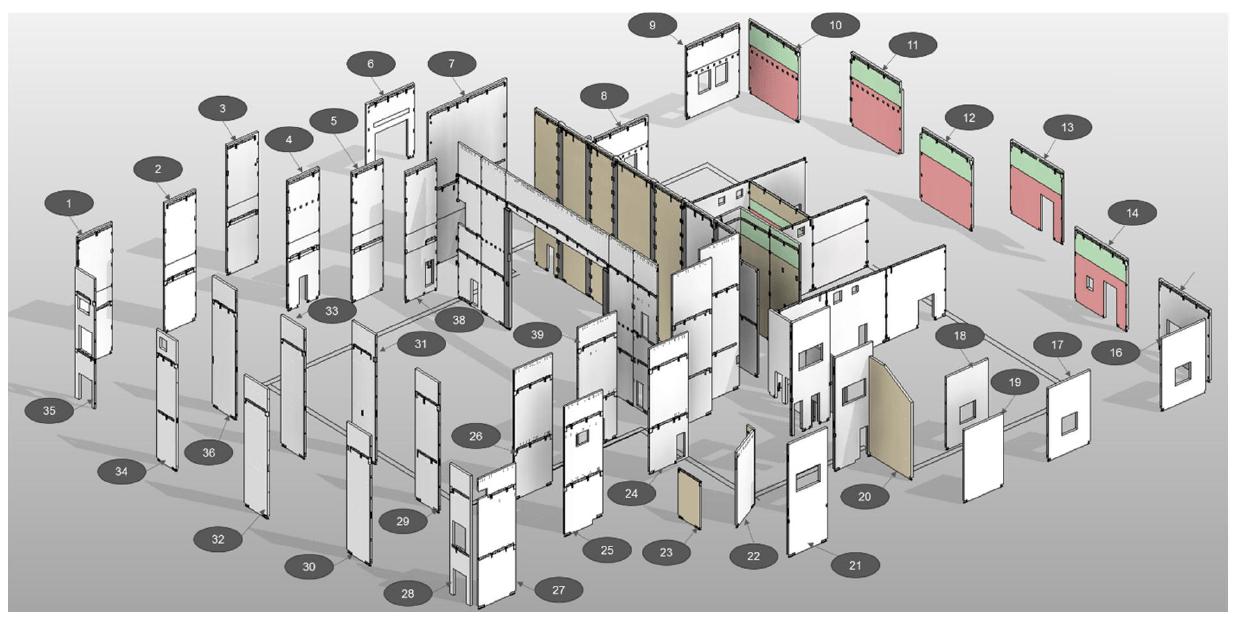**
BIM identifies and prevents errors by enabling early-stage coordination, model validation, and shared visibility across teams. This approach allows issues to be resolved before they impact construction.
Clash detection changes the way teams approach coordination by making conflicts visible during the design phase. Instead of identifying issues on-site, teams can resolve them within the digital model, reducing uncertainty and risk.
Key early-stage modeling practices that significantly reduce on-site corrections include:
- Developing coordinated multi-disciplinary models
- Performing regular model reviews and validation checks
- Using standardized modeling guidelines across teams
These practices ensure that designs are accurate and aligned before construction begins, reducing the likelihood of errors and improving confidence in project execution.
Shared model visibility improves decision-making accuracy in several ways:
- Provides a single source of truth for all stakeholders
- Enables real-time collaboration and updates
- Improves understanding of design intent and constraints
This transparency allows teams to make informed decisions quickly and avoid misunderstandings that could lead to rework.
For instance, when all disciplines work within a shared BIM model, conflicts can be resolved collaboratively, reducing delays and improving efficiency.
By shifting error detection to earlier stages, BIM helps prevent costly corrections and improves project outcomes.
## **Real Project Experiences: Efficiency Gains Through BIM**
Real project experiences show how BIM can directly reduce rework and improve efficiency when applied effectively. These examples demonstrate the benefits of BIM in real-world scenarios.
One widely referenced example is the Sutter Medical Center Castro Valley project in California, where BIM was used to coordinate complex building systems. The project team used BIM for clash detection and integrated planning, which significantly reduced field conflicts and rework.
The use of BIM in this project improved coordination between disciplines, allowing teams to resolve issues before construction began. This approach reduced delays and improved overall efficiency across multiple project stages.
Efficiency improvements observed in such projects include:
- Reduced number of on-site conflicts and corrections
- Improved project timelines and scheduling accuracy
- Better coordination between design and construction teams
BIM also influenced timelines by enabling faster decision-making and reducing the need for revisions during construction. Compared to traditional workflows, BIM-based projects often experience fewer disruptions and smoother execution.
In addition, teams were able to rely more on prefabrication due to improved accuracy in BIM models, which further enhanced efficiency and reduced material waste.
These improvements also contributed to better resource utilization, allowing teams to allocate labor and materials more effectively.
These experiences highlight how BIM contributes to both immediate efficiency gains and long-term project success.
## **Process Improvements That Sustain Long-Term Efficiency**
Sustaining efficiency through BIM requires consistent processes, training, and leadership support. Without these elements, the benefits of BIM may not be fully realized.
Internal standards and protocols that strengthen BIM-driven efficiency include:
- Defined modeling standards and workflows
- Regular coordination meetings and reviews
- Clear documentation and data management practices
These structured processes ensure consistency across projects and help teams maintain a high level of accuracy throughout the project lifecycle.
Training plays an important role in ensuring long-term reduction in errors. Teams that understand BIM tools and workflows are better equipped to use them effectively.
Effective training approaches include:
- Hands-on learning through real projects
- Continuous skill development programs
- Cross-disciplinary training to improve collaboration
Leadership also plays an important role in maintaining disciplined BIM workflows. Strong leadership ensures that teams follow established processes and prioritize coordination.
Leadership contributions to BIM efficiency include:
- Setting clear expectations for BIM usage
- Supporting training and development initiatives
- Encouraging collaboration across teams
For example, firms with strong BIM leadership often achieve more consistent results because teams are aligned in their approach and goals.
These process improvements help organizations sustain efficiency and maximize the benefits of BIM.
## **SME Recommendations: Making Efficiency a BIM-Driven Outcome**
Achieving efficiency through BIM requires a strategic approach that focuses on implementation, measurement, and continuous improvement.
Here are the first steps firms should take to reduce rework using BIM:
- Adopt standardized BIM workflows across projects
- Invest in training and skill development
- Implement coordination and validation processes early
Metrics that teams should track to measure efficiency improvements include:
- Number of clashes detected and resolved before construction
- Reduction in rework and change orders
- Improvement in project timelines and delivery speed
Tracking these metrics consistently allows organizations to identify trends and refine their processes for better outcomes.
Common adoption mistakes that lead to limited efficiency gains include:
- Using BIM only for visualization instead of coordination
- Lack of consistent processes across teams
- Insufficient investment in training and tools
Additionally, failing to integrate BIM into overall project strategy can limit its impact. Organizations must treat BIM as a main workflow rather than an optional tool.
For example, firms that track performance metrics and refine their processes over time are more likely to achieve sustained efficiency improvements.
By focusing on these steps and avoiding common mistakes, organizations can make efficiency a consistent outcome of BIM adoption.
Master BIM and Get Hired Faster
Join a community of 8500+ Architects and Engineers.
Explore Now
\*Limited seats available
## **Conclusion**
BIM has proven its ability to reduce rework and improve efficiency by enabling early error detection, better coordination, and more accurate decision-making. Its impact extends across all project stages, from design to construction and beyond.
As the industry continues to evolve, professionals who develop BIM expertise will play an important role in driving efficient project delivery. Building skills in BIM workflows, exploring roles such as BIM Coordinator or BIM Manager, and committing to continuous upskilling will be essential for long-term success in a digitally driven construction environment.
If you wish to join the upskilling route,[**Novatr’s BIM Course for Architects**](https://www.novatr.com/courses/building-information-modelling) can be a good place to start. The BIM certification for architects offers you the opportunity to learn in-depth about BIM processes, tools, and workflows.
Was this content helpful to you
Like Yes
Dislike No

TABLE OF CONTENTS
BIM Is The New Standard. Are You Certified?
Get Certified in BIM
SHARE ON YOUR SOCIALS
Link Copied Successfully
Related articles
[.png) MEP MEP Modelling in Revit: Faster and Smarter System Design 12 May 2026 5 min read](https://blog.novatr.com/blog/mep-modelling-in-revit-for-faster-system-design) [ Expert Insight: Revit vs Archicad vs Tekla - Which BIM Tool Should You Start With? 8 April 2026 5 min read](https://blog.novatr.com/blog/revit-vs-archicad-vs-tekla-which-bim-tool-to-start-with) [ SME Take: The Future of BIM and AI – How Emerging Tech Will Transform the AEC Industry 7 April 2026 5 min read](https://blog.novatr.com/blog/future-of-bim-and-ai-in-aec-industry) [.png) Using Dynamo Scripts to Automate MEP Workflows in Revit 23 June 2025 5 min read](https://blog.novatr.com/blog/dynamo-scripts-to-automate-mep-workflows-in-revit)
Download Syllabus
## BIM Professional Program
Next Cohort
June 2026
Program Duration
7 Months
Premium Program benefits
8 Credentials from Autodesk, NSDC, Novatr
1 program. 10 career paths. Infinite Growth.
40+ ISO 19650 & RIBA real-world projects to practice
1-on-1 guidance. Access 400+ industry experts.
Access the biggest AEC-Tech community on the planet. 8500+ and counting
Curated for you by 100+ global BIM leaders.
Lifelong access to course content
Enter your details to download the program syllabus.
##### BIM Professional Program
June 2026, 7 Months
Your Name Invalid name.
Phone Number Enter a valid phone number
Email Please enter a valid email address.
Select years of experience\* Currently studying 0-1 years 1-2 years 2-4 years 4-8 years 8-10 years 10-12 years 12+ years Invalid selection.
Specialisation Select your background\* Architecture Civil Engineering Mechanical Engineering Electrical Engineering Invalid selection.
Are you professionally trained in interior design?
Yes
No
I agree to the [Terms of Use](https://www.novatr.com/terms-and-conditions) and [Privacy Policy](https://www.novatr.com/privacy-policy), and consent to be contacted by Email, Call, WhatsApp, or SMS.
Submit
Ready to skyrocket your career?
Begin your next chapter in AEC
with Novatr!
We are here to help you take the industry by storm with advanced, tech-first skills.
[Explore Courses](https://www.novatr.com/#courses)
Join our newsletter
Submit
Thank you for signing up.
We’ll send you a nice letter once per week. No spam.

Dare to Disrupt.
Join thousands of people who organise
work and life with Novatr.
Company
- [About Us](https://www.novatr.com/about)
- [BIM Professional Program v.2026](https://www.novatr.com/courses/bim-professional-program)
- [Masters Computational Design](https://www.novatr.com/courses/computational-design)
- [Become a Mentor](https://www.novatr.com/apply-as-mentor)
- [Hiring from Us](https://www.novatr.com/hire-from-us)
- [Careers at Novatr](https://www.novatr.com/career)
Resources
- [Blog](https://www.novatr.com/learning-hub)
- [Media Room](https://www.novatr.com/media-room-home-page)
- [Career Builder](https://www.novatr.com/career-navigator)
- [Events & Webinars](https://www.novatr.com/webinars)
- [FAQs & Support Center](https://www.novatr.com/contact-us)
- [Contact Us](https://www.novatr.com/contact-us)
- [Privacy Policy](https://www.novatr.com/privacy-policy)
- [Terms of Use](https://www.novatr.com/terms-and-conditions)
©2023 Oneistox Network Pvt. Ltd.
All Rights Reserved
```json
{
"@context" : "https://schema.org",
"@type" : "BlogPosting",
"author" : {
"@type" : "Person",
"name" : "Ashdeep Singh",
"url" : "https://blog.novatr.com/blog/author/ashdeep-singh"
},
"dateModified" : "2026-04-08T08:50:37.367Z",
"datePublished" : "2026-04-08T08:47:11.000Z",
"headline" : "Lessons from Practice: How BIM Reduces Rework in Construction {{year}}",
"image" : [ "https://blog.novatr.com/hubfs/How%20Firms%20Used%20BIM%20to%20Reduce%20Rework%20and%20Improve%20Efficiency.png" ],
"mainEntityOfPage" : {
"@id" : "https://blog.novatr.com/blog/how-bim-reduces-rework-in-construction",
"@type" : "WebPage"
},
"publisher" : {
"@type" : "Organization",
"logo" : {
"@type" : "ImageObject",
"url" : "https://blog.novatr.com/hubfs/Novatr%20Prev%20OX-2.svg"
}
}
}
```