---
title: "SME Take: The Future of BIM and AI in AEC Industry 2026"
description: Explore how BIM and AI are transforming AEC workflows, roles, and decision-making, and what professionals need to stay competitive.
image: https://blog.novatr.com/hubfs/The%20Future%20of%20BIM%20and%20AI_%20How%20Emerging%20Tech%20Will%20Transform%20the%20AEC%20Industry.png
---
[Blogs](https://www.novatr.com/learning-hub)
- [Architecture & Construction](https://www.novatr.com/learning-hub?category=Architecture+%26+Construction)
- [BIM](https://www.novatr.com/learning-hub?category=BIM)
- [Computational Design](https://www.novatr.com/learning-hub?category=Computational+Design)
- [Company News](https://www.novatr.com/learning-hub?category=Company+News)
- [Expert Talks](https://www.novatr.com/learning-hub?category=Expert+Talks)
Explore Courses
[Just Launched  BIM Professional Program v.2026 Take your career to the next level by mastering the real-world application of BIM. Know More](https://www.novatr.com/courses/bim-professional-program)
[ Master Computational Design Course Break into an advanced career by learning to apply the power of computation to the art of design. Know More](https://www.novatr.com/courses/computational-design)
[Blogs](https://www.novatr.com/learning-hub)
Explore Blogs
- [Architecture & Construction](https://www.novatr.com/learning-hub?category=Architecture+%26+Construction)
- [BIM](https://www.novatr.com/learning-hub?category=BIM)
- [Computational Design](https://www.novatr.com/learning-hub?category=Computational+Design)
- [Company News](https://www.novatr.com/learning-hub?category=Company+News)
- [Expert Talks](https://www.novatr.com/learning-hub?category=Expert+Talks)
Courses
- [BIM Professional Program v.2026](https://www.novatr.com/courses/bim-professional-program)
- [Master Computational Design](https://www.novatr.com/courses/computational-design)
- [Archi/](https://www.novatr.com/learning-hub?category=BIM)
Featured Article
# SME Take: The Future of BIM and AI – How Emerging Tech Will Transform the AEC Industry
Ashdeep Singh
April 7, 2026
5 min read

Ashdeep Singh is a BIM Manager who completed his B.Arch from Amity University. Currently working with Novatr, he has been involved in projects such as the Diriyah Arena in Saudi Arabia and the New Life Arena in Chennai. You can learn more about his work and connect with him on **[LinkedIn](https://www.linkedin.com/in/ashdeepsingh-bim/)****.**
BIM and AI are transforming the AEC industry by shifting workflows from manual coordination to data-driven decision-making. AI enhances BIM by automating tasks, improving accuracy, and enabling predictive insights across project stages. The U.S. National Institute of Standards and Technology states that inadequate interoperability in construction results in an estimated [$15.8 billion](https://www.nist.gov/publications/inadequate-interoperability-closer-look-costs) in annual costs due to inefficient data management and poor information exchange.
As digital adoption increases, BIM and AI are becoming central to improving project efficiency, reducing risks, and supporting better planning. This evolution is not only changing how projects are executed but also redefining roles, skills, and expectations across architecture, engineering, and construction teams.
Unlock High-Paying Careers With BIM
Master BIM workflows, software and skills on real projects.
Apply Now
\*Limited seats available
## **How AI Is Expanding the Capabilities of BIM Beyond Modeling**
AI is expanding BIM by moving it beyond static modeling into dynamic, data-driven workflows. It enhances how information is processed, analyzed, and used for decision-making throughout a project lifecycle.
AI is enhancing traditional BIM workflows in the following ways:
- **Automated Clash Detection:** AI can identify conflicts faster and more accurately than manual checks, especially in large, multi-disciplinary models.
- **Design Optimization:** Algorithms analyze multiple design options to recommend efficient solutions based on cost, performance, and sustainability factors.
- **Data Analysis:** AI processes large datasets to provide insights on cost, materials, and performance across different project stages.
The repetitive or data-heavy tasks most likely to be automated first include:
- Quantity takeoffs and cost estimation
- Model validation and compliance checks
- Scheduling and progress tracking
AI shifts BIM from documentation to decision-support by enabling predictive and real-time insights. Instead of using BIM only to create models and drawings, teams can use it to evaluate risks, forecast outcomes, and optimize project performance with greater precision.
For example, AI can analyze past project data to predict delays or cost overruns, allowing teams to take preventive action and adjust plans early. This transition makes BIM a more valuable tool for planning and execution.
As AI continues to evolve, its integration with BIM will strengthen the role of digital workflows in construction.
## **From Automation to Intelligence: The Next Phase of Digital Construction**
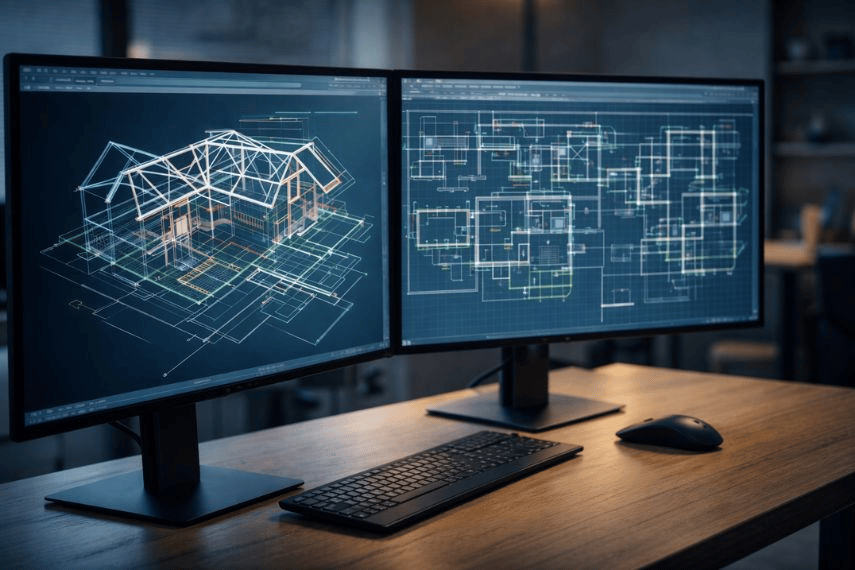
The next phase of digital construction involves moving from automation to intelligence. While automation focuses on performing tasks efficiently, AI-driven intelligence enables systems to learn, adapt, and make recommendations based on real-time and historical data.
The difference between automation within BIM and true AI-driven intelligence can be understood as follows:
- **Automation:** Executes predefined tasks such as clash detection or scheduling using set rules.
- **AI-Driven Intelligence:** Learns from data, predicts outcomes, and suggests improvements dynamically over time.
Predictive analytics will influence design and construction planning by enabling teams to anticipate challenges before they occur. For example, AI can forecast material shortages, labor constraints, or design inefficiencies based on historical and real-time data inputs.
Early signs of AI-led transformation already visible in AEC projects include:
- Smart scheduling tools that adjust timelines dynamically based on site conditions
- AI-assisted design platforms that generate optimized layouts using performance criteria
- Digital twins that simulate building performance in real time for better decision-making
These advancements demonstrate how AI is moving beyond task automation to support strategic decision-making. This shift allows teams to improve efficiency, reduce risks, and deliver better project outcomes across complex environments.
As AI-driven intelligence becomes more common, it will redefine how construction projects are planned and managed at both strategic and operational levels.
## **How Roles and Skill Expectations Will Evolve in an AI-Driven BIM Ecosystem**
AI integration is reshaping roles and skill expectations in the AEC industry. Professionals will need to combine technical expertise with data-driven thinking to remain relevant in evolving project environments.
The new skills architects and engineers will need in an AI-integrated BIM environment include:
- Data interpretation and analytics to understand AI-generated insights
- Understanding AI-driven tools and workflows used in BIM platforms
- Collaboration across digital platforms and integrated project environments
Traditional roles may change as AI takes over repetitive tasks. For example, manual drafting and basic coordination roles may decline, while positions focused on data analysis, model validation, and digital strategy will grow.
Roles that may evolve or become less prominent include:
- Manual CAD drafting roles
- Basic model coordination positions
- Routine quantity estimation tasks
To stay relevant, professionals should focus on continuous learning and skill development. This includes gaining experience with AI-enabled tools, understanding data workflows, and applying insights to real-world project challenges.
For instance, an architect who can interpret AI-generated design recommendations and integrate them into BIM workflows will have a significant advantage in complex projects. This combination of skills will be essential for future roles.
As AI adoption accelerates, the demand for hybrid skills will continue to increase across the industry, shaping new career pathways.
## **Risks, Ethics, and Challenges of Integrating AI with BIM**
Integrating AI with BIM offers significant benefits, but it also introduces risks and challenges that firms must address carefully.
The risks firms should consider when relying on AI-driven insights include:
- **Data Accuracy Issues:** Incorrect data can lead to flawed recommendations.
- **Over-Reliance on Automation:** Excessive dependence on AI may reduce human oversight.
- **Integration Challenges:** Combining AI tools with existing systems can be complex.
Maintaining accountability and quality control in AI-assisted workflows requires structured processes. Teams should validate AI outputs and ensure that decisions are reviewed by experienced professionals.
Approaches that help maintain accountability and quality include:
- Regular audits of AI-generated outputs
- Clear responsibility for decision-making
- Defined quality standards for models and data
Ethical concerns may also emerge as AI takes on more responsibilities. These include questions about data privacy, transparency, and the role of human judgment in design decisions.
Key ethical considerations include:
- Ensuring transparency in AI decision-making
- Protecting sensitive project data
- Maintaining human oversight in critical decisions
For example, if AI recommends a design change, architects must evaluate whether it aligns with project goals and safety requirements. This balance between automation and human judgment is essential.
## **SME Recommendations: Preparing for the Next Decade of BIM and AI**
Preparing for the future of BIM and AI requires a proactive approach that focuses on technology, skills, and strategy.
The immediate steps firms should take to stay ahead include:
- Investing in AI-enabled BIM tools
- Training teams on digital workflows and data analysis
- Developing clear strategies for AI integration
The technologies and learning paths professionals should prioritize include:
- AI-driven design and analysis tools
- Data analytics and visualization platforms
- Automation tools that enhance BIM workflows
The AEC industry over the next 5-10 years is expected to evolve in several ways:
- Increased adoption of digital twins and real-time data systems
- Greater reliance on predictive analytics for decision-making
- Expansion of roles focused on digital construction and data strategy
For example, firms that adopt AI and BIM early will be better positioned to handle complex projects and deliver efficient outcomes. Professionals who build expertise in these areas will have stronger career opportunities.
By focusing on both technology and skills, the industry can prepare for a future where BIM and AI work together to drive innovation.
Master BIM and Get Hired Faster
Join a community of 8500+ Architects and Engineers.
Explore Now
\*Limited seats available
## **Conclusion**
BIM and AI are reshaping the AEC industry by improving efficiency, enabling smarter decisions, and transforming workflows. Their integration is moving construction toward a more data-driven and collaborative approach.
As this transformation continues, professionals who develop digital skills such as BIM and AI will be better positioned for future roles. Exploring careers such as BIM Manager, Digital Construction Specialist, or AI-integrated design professional, along with continuous upskilling, will be essential for long-term success.
If you wish to join the upskilling route,[**Novatr’s BIM Course for Architects**](https://www.novatr.com/courses/building-information-modelling) can be a good place to start. The BIM certification for architects offers you the opportunity to learn in-depth about BIM processes, tools, and workflows.
Was this content helpful to you
Like Yes
Dislike No

TABLE OF CONTENTS
BIM Is The New Standard. Are You Certified?
Get Certified in BIM
SHARE ON YOUR SOCIALS
Link Copied Successfully
Related articles
[ Expert Opinion: Why BIM Interoperability Determines Project Success 7 April 2026 5 min read](https://blog.novatr.com/blog/why-bim-interoperability-determines-project-success) [ SME Insight: What BIM Tool Investments Give the Best ROI for Firms? 25 February 2026 4 min read](https://blog.novatr.com/blog/bim-tool-investments-best-roi-for-firms) [ Lessons from Practice: How Firms Used BIM to Reduce Rework and Improve Efficiency 8 April 2026 5 min read](https://blog.novatr.com/blog/how-bim-reduces-rework-in-construction) [ SME Perspective: Will BIM Become a Global Standard or Stay Region-Specific? 7 April 2026 5 min read](https://blog.novatr.com/blog/will-bim-become-a-global-standard)
Download Syllabus
## BIM Professional Program
Next Cohort
June 2026
Program Duration
7 Months
Premium Program benefits
8 Credentials from Autodesk, NSDC, Novatr
1 program. 10 career paths. Infinite Growth.
40+ ISO 19650 & RIBA real-world projects to practice
1-on-1 guidance. Access 400+ industry experts.
Access the biggest AEC-Tech community on the planet. 8500+ and counting
Curated for you by 100+ global BIM leaders.
Lifelong access to course content
Enter your details to download the program syllabus.
##### BIM Professional Program
June 2026, 7 Months
Your Name Invalid name.
Phone Number Enter a valid phone number
Email Please enter a valid email address.
Select years of experience\* Currently studying 0-1 years 1-2 years 2-4 years 4-8 years 8-10 years 10-12 years 12+ years Invalid selection.
Specialisation Select your background\* Architecture Civil Engineering Mechanical Engineering Electrical Engineering Invalid selection.
Are you professionally trained in interior design?
Yes
No
I agree to the [Terms of Use](https://www.novatr.com/terms-and-conditions) and [Privacy Policy](https://www.novatr.com/privacy-policy), and consent to be contacted by Email, Call, WhatsApp, or SMS.
Submit
Ready to skyrocket your career?
Begin your next chapter in AEC
with Novatr!
We are here to help you take the industry by storm with advanced, tech-first skills.
[Explore Courses](https://www.novatr.com/#courses)
Join our newsletter
Submit
Thank you for signing up.
We’ll send you a nice letter once per week. No spam.

Dare to Disrupt.
Join thousands of people who organise
work and life with Novatr.
Company
- [About Us](https://www.novatr.com/about)
- [BIM Professional Program v.2026](https://www.novatr.com/courses/bim-professional-program)
- [Masters Computational Design](https://www.novatr.com/courses/computational-design)
- [Become a Mentor](https://www.novatr.com/apply-as-mentor)
- [Hiring from Us](https://www.novatr.com/hire-from-us)
- [Careers at Novatr](https://www.novatr.com/career)
Resources
- [Blog](https://www.novatr.com/learning-hub)
- [Media Room](https://www.novatr.com/media-room-home-page)
- [Career Builder](https://www.novatr.com/career-navigator)
- [Events & Webinars](https://www.novatr.com/webinars)
- [FAQs & Support Center](https://www.novatr.com/contact-us)
- [Contact Us](https://www.novatr.com/contact-us)
- [Privacy Policy](https://www.novatr.com/privacy-policy)
- [Terms of Use](https://www.novatr.com/terms-and-conditions)
©2023 Oneistox Network Pvt. Ltd.
All Rights Reserved
```json
{
"@context" : "https://schema.org",
"@type" : "BlogPosting",
"author" : {
"@type" : "Person",
"name" : "Ashdeep Singh",
"url" : "https://blog.novatr.com/blog/author/ashdeep-singh"
},
"dateModified" : "2026-04-07T11:58:15.575Z",
"datePublished" : "2026-04-07T11:53:30.000Z",
"headline" : "SME Take: The Future of BIM and AI in AEC Industry {{year}}",
"image" : [ "https://blog.novatr.com/hubfs/The%20Future%20of%20BIM%20and%20AI_%20How%20Emerging%20Tech%20Will%20Transform%20the%20AEC%20Industry.png" ],
"mainEntityOfPage" : {
"@id" : "https://blog.novatr.com/blog/future-of-bim-and-ai-in-aec-industry",
"@type" : "WebPage"
},
"publisher" : {
"@type" : "Organization",
"logo" : {
"@type" : "ImageObject",
"url" : "https://blog.novatr.com/hubfs/Novatr%20Prev%20OX-2.svg"
}
}
}
```