


Why Do Many BIM Learners Still Struggle in Real Projects?
Limiting BIM upskilling to its theoretical concepts can result in a lack of confidence. Here are the key challenges such professionals face during career development.
Difficulty Applying Knowledge: Understanding BIM tools is different from using them in real projects. Professionals often struggle to translate theoretical concepts into practical modelling, coordination, and documentation tasks.
Limited Collaboration Experience: BIM is a collaborative process that involves architects, engineers, contractors, and consultants. Without the experience of working in multidisciplinary teams, learners find it challenging to communicate.
Lack of Workflow Understanding: Real-world projects follow structured BIM execution plans (BEPs), modelling standards, naming conventions, and approval workflows. Professionals with only theoretical training may not be familiar with these industry practices.
Low Confidence During Coordination: Activities such as clash detection, model reviews, and design coordination require both technical and managerial skills. Without practice, professionals may hesitate to identify issues or suggest solutions.
Difficulty Meeting Project Timelines: Live projects involve strict deadlines and frequent design revisions, which can be fulfilled with appropriate BIM skills. Individuals who have only worked on isolated exercises struggle to manage changing project requirements.
Slow Career Progression: Employers increasingly look for professionals who can contribute from the beginning of a project. Those without practical BIM experience may require additional training, which can delay career growth and reduce opportunities to work on complex projects.
What BIM Skills Do AEC Companies Expect Beyond Software Knowledge?
BIM is not just software. It’s a process that involves designing, executing, and managing AEC projects using software as a tool. Let’s explore all the subjects and skills one needs to secure BIM jobs.
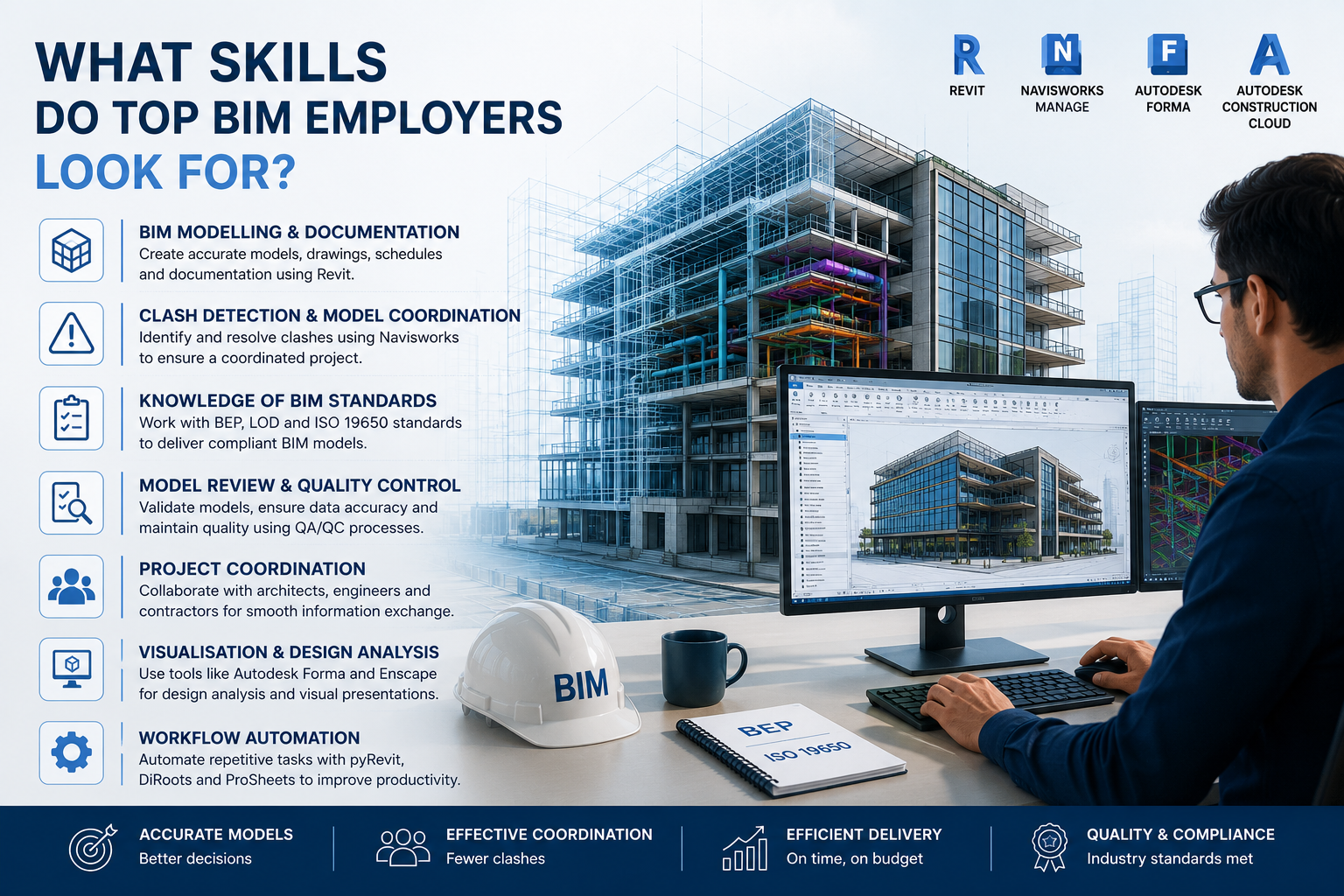
BIM Coordination: Professionals should be able to coordinate architectural, structural, and MEP models to ensure every discipline works with accurate real-time information. Effective coordination is one of the essential BIM skills that keeps projects moving smoothly.
Clash Detection: Identifying and resolving clashes before construction is one of BIM's biggest advantages. Using software like Navisworks, professionals should know how to detect clashes, evaluate their impact, and coordinate with teams to resolve them efficiently.
BIM Execution Planning: A BEP defines how BIM will be implemented throughout a project. Understanding BEPs helps professionals follow project goals, assign responsibilities, maintain consistent workflows, and meet client requirements.
ISO 19650 Standards: Many organisations now follow ISO 19650 for information management throughout a project's lifecycle. Familiarity with these standards helps professionals organise project data, maintain consistent documentation, and collaborate effectively across teams.
Model Validation: Creating a model is only part of the process. Professionals must also verify that it complies with project standards, modelling guidelines, naming conventions, and client requirements to improve the quality and reliability of project deliverables.
Multidisciplinary Collaboration: BIM projects involve architects, engineers, contractors, and project managers working together. Strong communication, coordination, and issue-resolution skills are key BIM skills ensuring seamless collaboration.
Autodesk Construction Cloud: BIM projects rely on cloud-based collaboration platforms such as Autodesk Construction Cloud (ACC). Such platforms manage models, documents, reviews, RFIs, and issue tracking. Understanding these workflows enables professionals to collaborate in real time and maintain version control throughout the project lifecycle.
Why Is Project-Based Learning More Effective Than Traditional BIM Training?
Practical BIM learning ensures job readiness. It develops technical proficiency alongside critical thinking, collaboration, and decision-making skills that employers value. Here’s how this gives you an edge in the job market:
-
Rather than practising independent software exercises, project-based learning teaches you to apply BIM throughout the entire design and construction workflows.
-
Instead of focusing only on modelling, professionals gain experience with coordination, documentation, clash detection, and multidisciplinary collaboration.
-
Real-world projects expose learners to industry standards, BIM execution plans (BEPs), and quality control processes followed by leading AEC companies.
-
Working with realistic project scenarios strengthens BIM skills such as problem-solving, critical thinking, and decision-making that are difficult to develop through theory alone.
-
Industry-based projects help build a professional portfolio that demonstrates practical BIM expertise, making candidates more competitive during job interviews.
-
By simulating workplace environments, project-based learning enables professionals to become productive faster and transition more confidently into BIM roles.
How Do High-Performing BIM Programs Bridge the Industry Skill Gap?

The best BIM programs prepare students for real project environments by integrating software tools with practical problem-solving, collaboration, and professional skills. Let’s explore how:
Industry-Led Mentorship: Learning from experienced BIM professionals provides insights into real project challenges and industry best practices followed by leading AEC firms.
Real-World Processes: High-quality programs expose learners to BIM workflow, model review practices, coordination, clash detection, documentation, and project delivery.
Portfolio Development: Working on industry-relevant projects helps learners build a portfolio that shows practical BIM skills. This makes it easier for employers to assess their capabilities.
Collaborative Learning: Group projects simulate multidisciplinary project environments where learners coordinate with architects, engineers, and consultants while developing communication and teamwork skills.
Exposure to Industry Standards: The best programs familiarise learners with BEPs, ISO 19650, modelling standards, and quality assurance practices used in professional projects.
Career Readiness: Resume making, interview preparation, industry networking, and placement support help learners transition confidently from training to full-time BIM roles.
How Can You Identify a BIM Program That Prepares You for Real-World Projects?
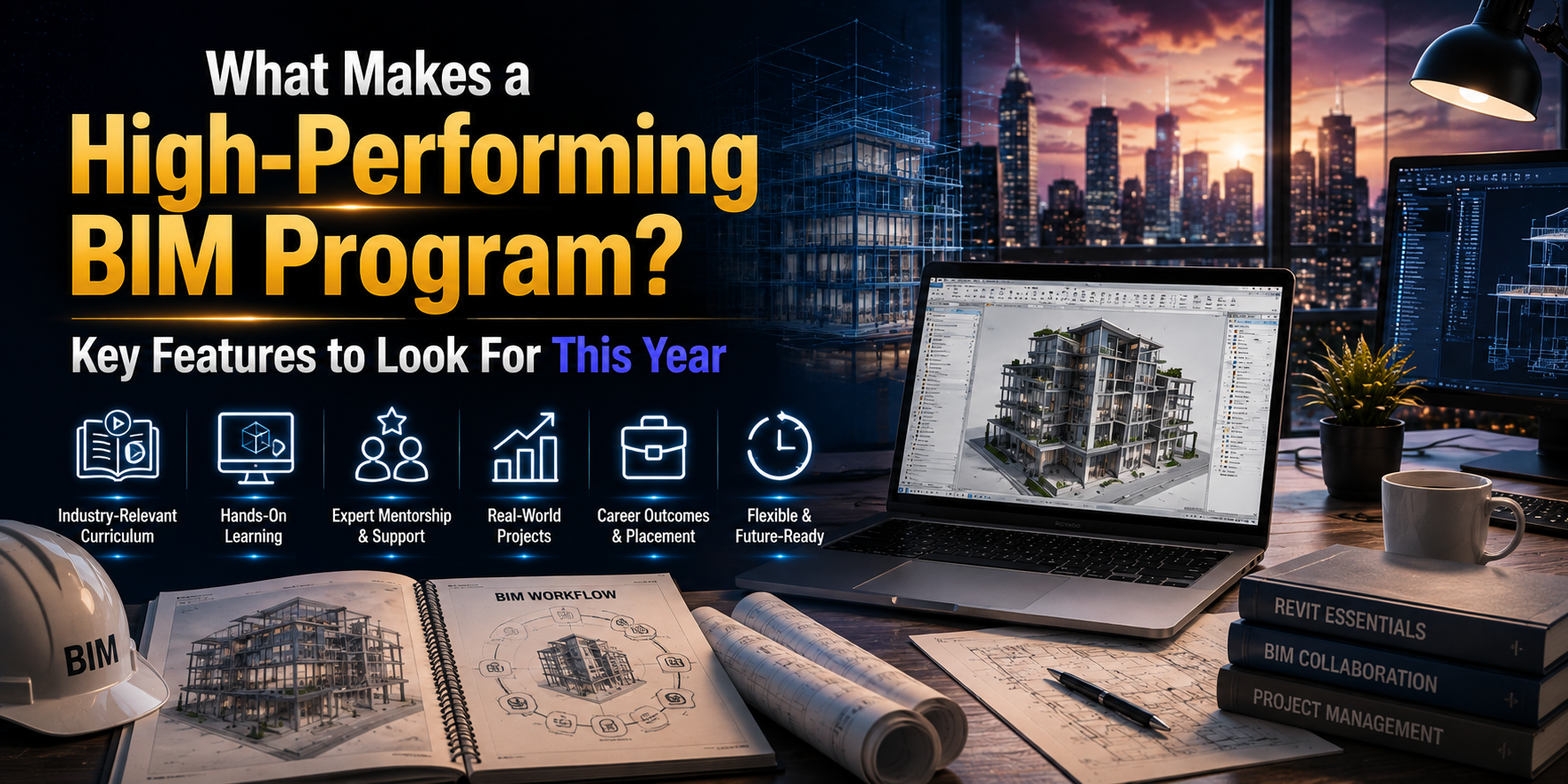
Choosing the right BIM program can have a lasting impact on your engineering and architecture careers. Beyond software supremacy, it should prepare you to work diligently on real projects. Below is a list of the key features:
-
A curriculum that introduces complete BIM skills, from modelling and coordination to documentation and project delivery.
-
Mentorship from industry professionals who can provide practical insights beyond classroom learning.
-
Project exposure that replicates real AEC workflows and strengthens problem-solving skills.
-
Software expertise used across BIM projects from design to execution. This includes Revit, Navisworks, Tekla Structures, and Civil 3D.
-
Learning aligned with recognised industry standards and best practices for information management and model quality.
-
Career guidance that helps learners build their portfolios, prepare for interviews, and connect with potential employers.
How Can You Become an Industry-Ready BIM Professional?

BIM is a design and construction technology that combines technical expertise with new-age collaborative workflows. This makes continuous learning essential for career success. Let’s explore the key ways you can do so:
-
Build a strong understanding of BIM principles before moving on to advanced workflows, coordination, and project delivery.
-
Develop proficiency across multiple BIM tools to understand how they support different stages of a project's lifecycle.
-
Stay updated with emerging technologies, industry standards, and digital construction practices shaping the AEC sector.
-
Seek opportunities to work on diverse projects that expose you to various building types, workflows, and project challenges.
-
Regularly upgrade your BIM skills through certifications, workshops, and industry-led BIM training such as the one offered by Novatr.
You can look for courses that not only teach BIM software but also offer insights about detailed BIM workflows. Also, check if the program includes mentorship from practising professionals to ensure real-world learning. Conclusively, the training should also provide placement assistance and support to help you get a well-paying job.