---
title: What Is the Nemetschek Software and Why It Matters in the Global AEC Landscape?
description: Understand what Nemetschek Software is, how it differs from other BIM providers like Autodesk, and why it plays a key role across global AEC projects.
image: https://blog.novatr.com/hubfs/What%20Is%20the%20Nemetschek%20Software%20and%20Why%20It%20Matters%20in%20the%20Global%20AEC%20Landscape.webp
---
[Blogs](https://www.novatr.com/learning-hub)
- [Architecture & Construction](https://www.novatr.com/learning-hub?category=Architecture+%26+Construction)
- [BIM](https://www.novatr.com/learning-hub?category=BIM)
- [Computational Design](https://www.novatr.com/learning-hub?category=Computational+Design)
- [Company News](https://www.novatr.com/learning-hub?category=Company+News)
- [Expert Talks](https://www.novatr.com/learning-hub?category=Expert+Talks)
Explore Courses
[Just Launched  BIM Professional Program v.2026 Take your career to the next level by mastering the real-world application of BIM. Know More](https://www.novatr.com/courses/bim-professional-program)
[ Master Computational Design Course Break into an advanced career by learning to apply the power of computation to the art of design. Know More](https://www.novatr.com/courses/computational-design)
[Blogs](https://www.novatr.com/learning-hub)
Explore Blogs
- [Architecture & Construction](https://www.novatr.com/learning-hub?category=Architecture+%26+Construction)
- [BIM](https://www.novatr.com/learning-hub?category=BIM)
- [Computational Design](https://www.novatr.com/learning-hub?category=Computational+Design)
- [Company News](https://www.novatr.com/learning-hub?category=Company+News)
- [Expert Talks](https://www.novatr.com/learning-hub?category=Expert+Talks)
Courses
- [BIM Professional Program v.2026](https://www.novatr.com/courses/bim-professional-program)
- [Master Computational Design](https://www.novatr.com/courses/computational-design)
- [CIVIL/](https://www.novatr.com/learning-hub?category=BIM)
Featured Article
# What Is the Nemetschek Software and Why It Matters in the Global AEC Landscape?

Deependra Dobriyal
February 19, 2026
4 min read
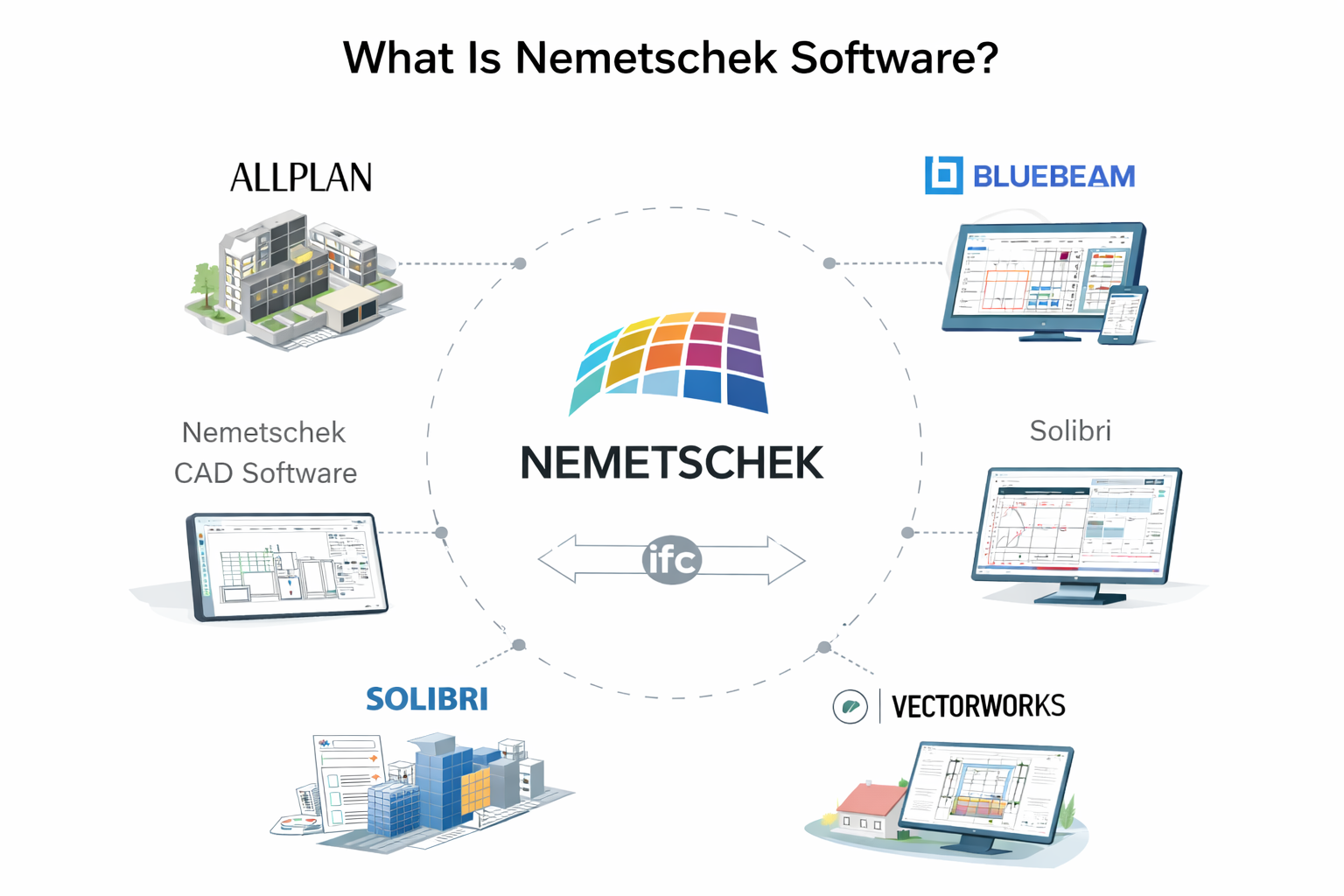

**What is Nemetschek software** can be answered simply as it is a global group of construction and BIM technology platforms that support planning, design, construction, and asset management across the AEC industry. Rather than offering a single, closed system, Nemetschek provides specialized tools that work together through open standards.
According to the [**NIBS**](https://www.nibs.org/what-we-do/nbims), open and standardized BIM workflows improve coordination, reduce rework, and support consistent information exchange across public and private construction projects in the United States. These principles directly align with Nemetschek’s long-standing focus on OpenBIM and interoperability.
This article explains what Nemetschek Software is, how it differs from other BIM providers, which tools AEC professionals use most, and why the ecosystem matters across global building and infrastructure projects.
Unlock High-Paying Careers With BIM
Master BIM workflows, software and skills on real projects.
Apply Now
\*Limited seats available
## **What Is Nemetschek Software?**
To understand **what Nemetschek software is**, it is important to view it as an ecosystem rather than a single product. [Nemetschek Group](https://www.nemetschek.com/en) develops and owns multiple software brands, each focused on a specific phase of the building lifecycle, such as design authoring, model checking, construction documentation, and collaboration.
Unlike traditional monolithic BIM platforms, **Nemetschek BIM software** is built around OpenBIM principles. This means models and data can be exchanged using open standards such as IFC, allowing teams to work in different tools without losing information integrity. This approach is especially useful on projects where consultants, contractors, and owners rely on different software environments.
From an operational perspective, Nemetschek tools are used across architecture, engineering, construction, and facility management. This makes **nemetschek construction software** relevant not only for designers but also for construction managers and asset owners who depend on accurate digital information over long project timelines.
Another standout advantage is long-term data usability. Since Nemetschek tools are built on open standards rather than proprietary systems, project data remains accessible long after construction is complete. This future-ready approach ensures information continues to support renovations, retrofits, and facility management throughout the building’s lifecycle.
By supporting flexibility and data continuity, Nemetschek Software enables teams to adapt workflows to project requirements rather than forcing all stakeholders into a single platform.
## **What Makes Nemetschek Different From Other BIM Software Providers?**
Nemetschek’s primary distinction lies in its modular and open approach. While many BIM providers emphasize all-in-one solutions, Nemetschek allows professionals to select tools that match their specific responsibilities and project roles.
One key difference is interoperability. Instead of locking users into proprietary formats, Nemetschek promotes data exchange through IFC and other open standards. This reduces dependency on a single vendor and supports collaboration across multidisciplinary teams, especially on large projects involving multiple consultants.
Another differentiator is specialization. Each Nemetschek tool focuses deeply on its intended function. Modeling, validation, documentation, and collaboration are handled by separate applications, each optimized for accuracy and performance rather than broad feature coverage.
This structure also supports independent quality control. For example, validation and checking tools operate separately from authoring platforms, which improves objectivity during reviews and audits.
From a global perspective, this strategy has positioned Nemetschek among the **largest construction software companies nemetschek** competes with. Its tools are widely adopted in regions where public agencies and large asset owners require transparency, traceability, and long-term data access.
By prioritizing openness over consolidation, Nemetschek supports scalable workflows across diverse project types and regulatory environments.
## **List of Top Nemetschek Software for AEC Professionals**
Rather than relying on a single platform, AEC professionals typically work with multiple Nemetschek tools depending on their discipline and responsibilities. The following applications are among the most widely used across the industry.
### **1. Allplan Software:**
Allplan software is used for BIM-based modeling and detailing in architecture, civil engineering, and structural design. Firms such as ARUP and Hochtief use Allplan on complex infrastructure and building projects where precision, reinforcement detailing, and coordination are important.
### **2. Allplan CAD-Software by Nemetschek:**
As an evolution of traditional CAD, Allplan CAD-Software by Nemetschek combines geometric accuracy with BIM intelligence. It is commonly used by European engineering consultancies and infrastructure designers working on bridges, tunnels, and transportation corridors.
### **3. Bluebeam Software by Nemetschek:**
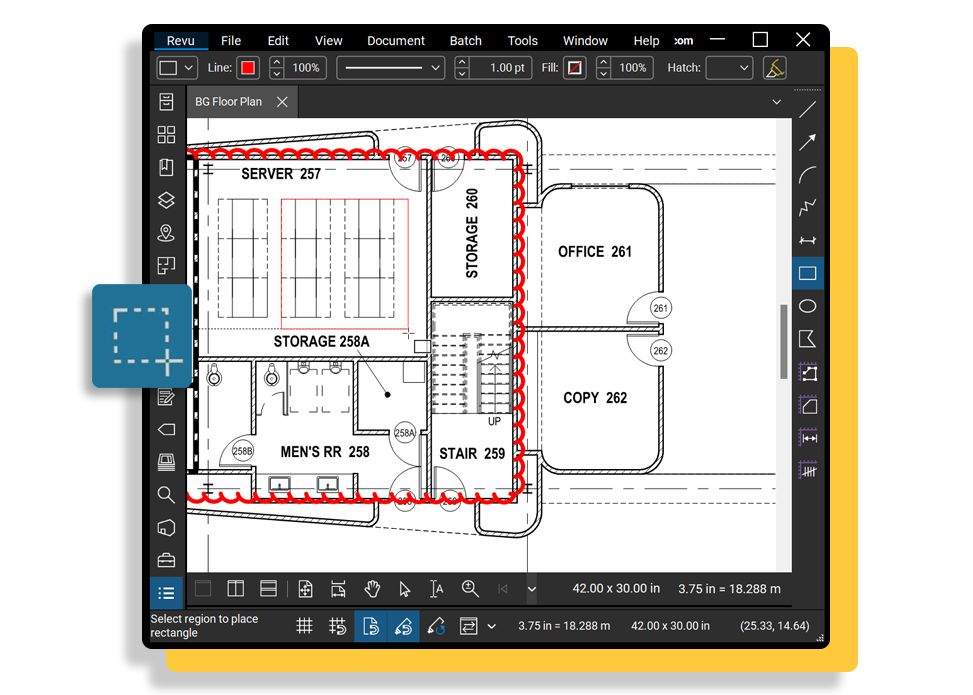
[Bluebeam software](https://www.novatr.com/blog/5-best-bluebeam-training-courses-in-usa) by Nemetschek supports document review, markup, and construction communication. Contractors such as Skanska and Turner Construction rely on Bluebeam for drawing coordination, RFIs, and site-level collaboration.
### **4. Solibri:**
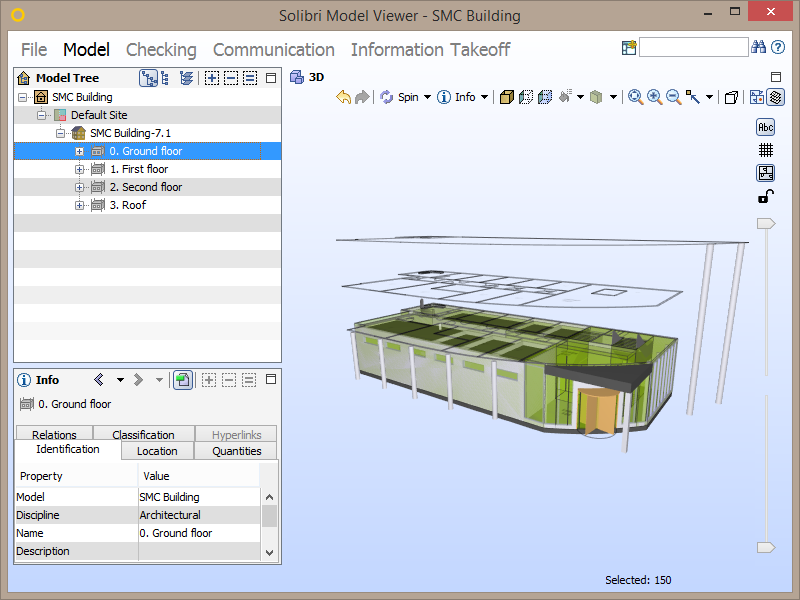
[Solibri](https://www.novatr.com/blog/how-solibri-is-used-by-bim-coordinators-and-engineers-for-model-checking) is used for BIM model checking, validation, and coordination. Engineering consultants and BIM management firms use it to perform independent quality reviews and ensure compliance before construction.
### **5. Vectorworks:**
Vectorworks is used primarily by architectural and landscape design firms, including HDR and HOK on select projects, where flexible design and OpenBIM compatibility are priorities.
## **What Is Nemetschek’s Role Across the Building Lifecycle?**
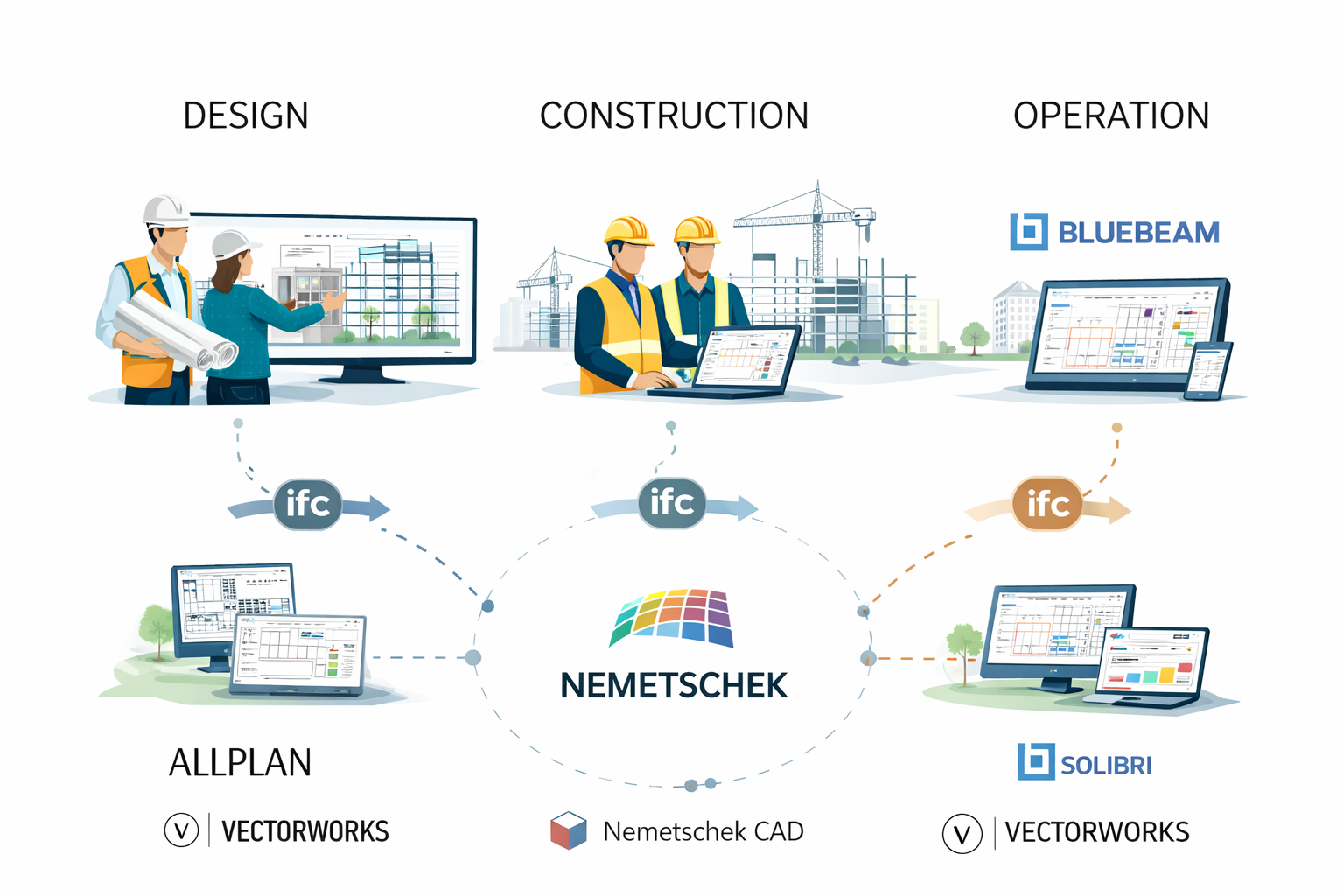
Nemetschek Software supports the full building lifecycle, from early planning through operation and maintenance. Each phase is addressed by tools designed for specific responsibilities rather than generic use.
During design, applications such as **Allplan software** enable engineers and architects to develop coordinated BIM models with embedded data. This improves accuracy during early decision-making and supports smoother downstream coordination.
In the validation phase, Solibri ensures models meet project standards, regulatory requirements, and coordination rules. This reduces the likelihood of design conflicts progressing into construction.
During construction, **Bluebeam software by Nemetschek** plays an important role in translating BIM outputs into practical site documentation. Construction teams rely on annotated drawings and clear communication rather than complex models.
Across the lifecycle, **Nemetschek CAD software** and BIM platforms help maintain structured project data that can be reused for facility management, renovations, and future upgrades.
By aligning tools with lifecycle stages, Nemetschek enables structured decision-making from concept through long-term asset operation.
Master BIM and Get Hired Faster
Join a community of 8500+ Architects and Engineers.
Explore Now
\*Limited seats available
## **Conclusion**
Nemetschek Software represents a flexible and open approach to digital delivery in the AEC industry. By focusing on interoperability, specialization, and lifecycle support, the ecosystem addresses many of the coordination and data challenges faced on modern projects. From BIM modeling and validation to construction documentation, **Nemetschek Construction Software** plays a meaningful role across global building and infrastructure workflows.
For professionals aiming to build practical BIM expertise aligned with industry expectations, structured learning is essential. The [BIM professional Course for Civil Engineers](https://www.novatr.com/us/courses/bim-for-civil-engineers) offered by [Novatr](https://www.novatr.com/us) focuses on applied BIM workflows, coordination principles, and real-world project scenarios relevant to civil, structural, and construction roles.
Visit our [resource page](https://www.novatr.com/learning-hub) to explore more learning paths and insights designed to support long-term growth in BIM AEC careers.
## **FAQs**
### **1. Is Nemetschek better than Autodesk?**
Nemetschek and Autodesk follow different approaches. Nemetschek emphasizes OpenBIM and modular tools, while Autodesk focuses on integrated platforms. The better choice depends on project requirements and long-term collaboration needs.
### **2. Is Nemetschek used outside Europe?**
Nemetschek Software is widely used in North America, Asia, and the Middle East, particularly on large commercial and infrastructure projects with complex coordination requirements.
### **3. Do I need to learn Nemetschek to work on global projects?**
Learning Nemetschek tools can be valuable on projects that require OpenBIM workflows and independent validation across multidisciplinary international teams.
### **4. Is Nemetschek relevant for civil and structural engineers?**
Nemetschek tools are commonly used by civil and structural engineers for modeling, coordination, and quality control on BIM-driven engineering projects.
### **5. Can Nemetschek tools work with Revit?**
Nemetschek tools work with Revit through IFC-based data exchange, enabling coordinated workflows without direct dependency between different authoring platforms.
Was this content helpful to you
Like Yes
Dislike No

TABLE OF CONTENTS
BIM Is The New Standard. Are You Certified?
Get Certified in BIM
SHARE ON YOUR SOCIALS
Link Copied Successfully
Related articles
[ CIVIL Why Passing the FE Civil Exam Alone Won’t Make You Job-Ready in 2026? 23 February 2026 6 min read](https://blog.novatr.com/blog/why-passing-the-fe-civil-exam-alone-wont-make-you-job-ready) [ CIVIL FE Civil Exam Explained: What It Is and How It Fits into a Modern BIM Career 23 February 2026 5 min read](https://blog.novatr.com/blog/fe-civil-exam-explained) [ CIVIL What does a Quantity Surveyor do? Job Roles, Key Skills & Software! 19 June 2025 5 min read](https://blog.novatr.com/blog/what-does-a-quantity-surveyor-do) [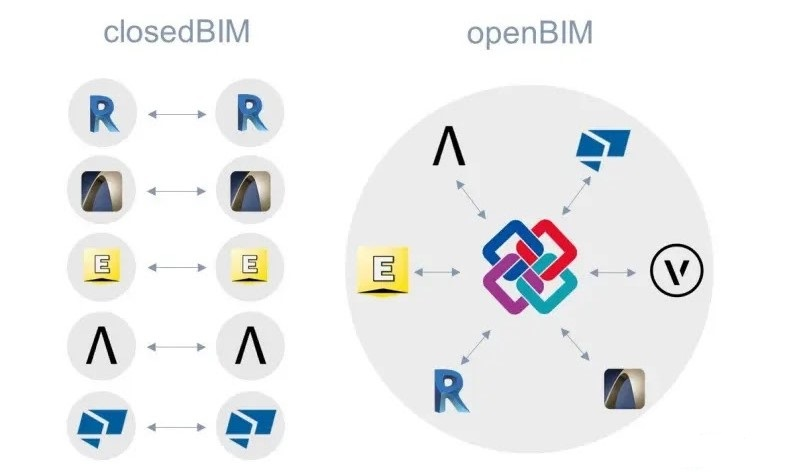 CIVIL OpenBIM Explained: Why Nemetschek Bet Against Closed BIM Ecosystems 19 February 2026 7 min read](https://blog.novatr.com/blog/openbim-explained-why-nemetschek-bet-against-closed-bim-ecosystems)
Download Syllabus
## BIM Professional Program
Next Cohort
June 2026
Program Duration
7 Months
Premium Program benefits
8 Credentials from Autodesk, NSDC, Novatr
1 program. 10 career paths. Infinite Growth.
40+ ISO 19650 & RIBA real-world projects to practice
1-on-1 guidance. Access 400+ industry experts.
Access the biggest AEC-Tech community on the planet. 8500+ and counting
Curated for you by 100+ global BIM leaders.
Lifelong access to course content
Enter your details to download the program syllabus.
##### BIM Professional Program
June 2026, 7 Months
Your Name Invalid name.
Phone Number Enter a valid phone number
Email Please enter a valid email address.
Select years of experience\* Currently studying 0-1 years 1-2 years 2-4 years 4-8 years 8-10 years 10-12 years 12+ years Invalid selection.
Specialisation Select your background\* Architecture Civil Engineering Mechanical Engineering Electrical Engineering Invalid selection.
Are you professionally trained in interior design?
Yes
No
I agree to the [Terms of Use](https://www.novatr.com/terms-and-conditions) and [Privacy Policy](https://www.novatr.com/privacy-policy), and consent to be contacted by Email, Call, WhatsApp, or SMS.
Submit
Ready to skyrocket your career?
Begin your next chapter in AEC
with Novatr!
We are here to help you take the industry by storm with advanced, tech-first skills.
[Explore Courses](https://www.novatr.com/#courses)
Join our newsletter
Submit
Thank you for signing up.
We’ll send you a nice letter once per week. No spam.

Dare to Disrupt.
Join thousands of people who organise
work and life with Novatr.
Company
- [About Us](https://www.novatr.com/about)
- [BIM Professional Program v.2026](https://www.novatr.com/courses/bim-professional-program)
- [Masters Computational Design](https://www.novatr.com/courses/computational-design)
- [Become a Mentor](https://www.novatr.com/apply-as-mentor)
- [Hiring from Us](https://www.novatr.com/hire-from-us)
- [Careers at Novatr](https://www.novatr.com/career)
Resources
- [Blog](https://www.novatr.com/learning-hub)
- [Media Room](https://www.novatr.com/media-room-home-page)
- [Career Builder](https://www.novatr.com/career-navigator)
- [Events & Webinars](https://www.novatr.com/webinars)
- [FAQs & Support Center](https://www.novatr.com/contact-us)
- [Contact Us](https://www.novatr.com/contact-us)
- [Privacy Policy](https://www.novatr.com/privacy-policy)
- [Terms of Use](https://www.novatr.com/terms-and-conditions)
©2023 Oneistox Network Pvt. Ltd.
All Rights Reserved
```json
{
"@context" : "https://schema.org",
"@type" : "BlogPosting",
"author" : {
"@type" : "Person",
"name" : "Deependra Dobriyal",
"url" : "https://blog.novatr.com/blog/author/deependra-dobriyal"
},
"dateModified" : "2026-04-01T09:29:23.167Z",
"datePublished" : "2026-02-19T09:23:04.000Z",
"headline" : "What Is the Nemetschek Software and Why It Matters in the Global AEC Landscape?",
"image" : [ "https://blog.novatr.com/hubfs/What%20Is%20the%20Nemetschek%20Software%20and%20Why%20It%20Matters%20in%20the%20Global%20AEC%20Landscape.webp" ],
"mainEntityOfPage" : {
"@id" : "https://blog.novatr.com/blog/what-is-the-nemetschek-software-and-why-it-matters-in-the-global-aec-landscape",
"@type" : "WebPage"
},
"publisher" : {
"@type" : "Organization",
"logo" : {
"@type" : "ImageObject",
"url" : "https://blog.novatr.com/hubfs/Novatr%20Prev%20OX-2.svg"
}
}
}
```