



What Employers Expect From Entry-Level Civil Engineers?

Entry-level hiring standards have shifted significantly. Employers now look beyond academic achievement to assess whether candidates can contribute to real projects from the beginning. The focus is on tools, coordination, and workflow understanding.
Companies expect graduates to demonstrate the following capabilities.
Software And Digital Tool Proficiency
Modern infrastructure projects rely heavily on digital modeling and project management platforms. Employers expect familiarity with:
- Design software such as AutoCAD and Civil 3D
- Digital modeling environments used in BIM for civil engineers
- Quantity estimation and documentation tools
- Project collaboration platforms
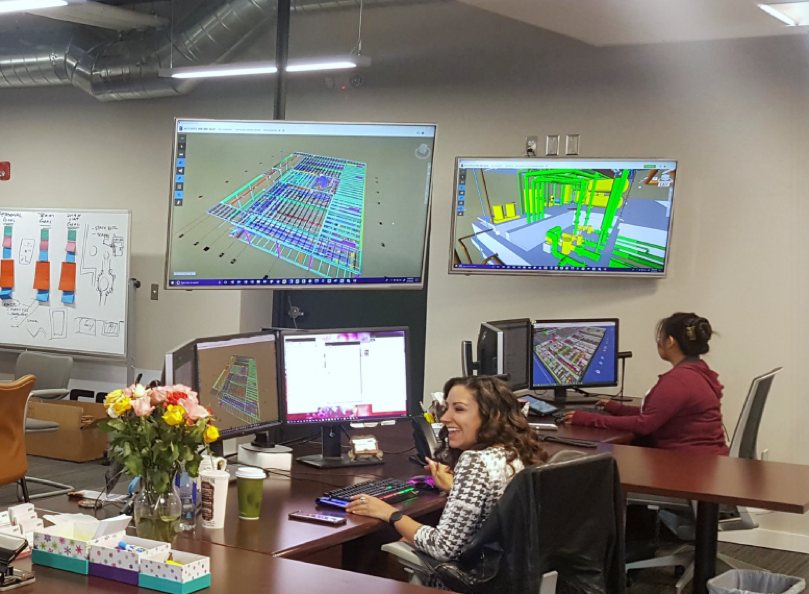
Understanding BIM in civil engineering is particularly valuable because it enables engineers to visualize projects, manage data, and coordinate across teams. Many organizations now require hands-on exposure to digital workflows rather than theoretical familiarity.
Beyond technical familiarity, employers also assess how efficiently candidates use these tools to solve real design problems.
Project Coordination And Workflow Awareness
Civil engineering projects involve multiple stakeholders including architects, structural engineers, contractors, and consultants. Entry-level engineers must understand:
- Drawing interpretation and coordination
- Construction documentation processes
- Interdisciplinary communication workflows
- Issue tracking and design revision procedures
These competencies are rarely covered in academic examinations but are essential in professional practice. Engineers who understand coordination workflows can identify conflicts early, support decision-making, and improve project efficiency.
Problem-Solving Skills
Employers also evaluate whether candidates can apply engineering knowledge in real scenarios such as:
- Identifying design conflicts
- Understanding site constraints
- Reviewing technical documentation
- Supporting project delivery timelines
Tips to pass FE civil exams include following a structured study schedule, practicing sample problems regularly, reviewing core engineering fundamentals, using official NCEES materials, and managing time during mock tests. However, candidates may still struggle if they lack exposure to real project environments. Such experience improves judgment, strengthens communication with project teams, and helps engineers respond to unexpected technical issues.
Overall, the industry prioritizes job readiness. The FE credential demonstrates technical understanding, but professional readiness requires the ability to operate within modern engineering environments.
What Fundamentals of Engineering Exam Covers and What Not?

Understanding the scope of the FE exam helps explain why passing it alone does not guarantee employment readiness.
The FE exam civil engineering track primarily evaluates academic concepts taught in undergraduate programs. It measures theoretical competence rather than workplace performance.
What The Exam Covers
The exam assesses foundational engineering subjects, including:
- Mathematics and statistics
- Engineering economics
- Statics and dynamics
- Structural analysis
- Geotechnical engineering
- Transportation engineering
- Environmental engineering
- Fluid mechanics
These topics validate core technical knowledge and support the professional licensing pathway. The exam structure ensures that candidates possess a strong theoretical base required for advanced engineering responsibilities and future licensure progression.
Students researching how to prepare for fe civil exam typically focus on mastering formulas, practice problems, and exam strategies that reinforce academic learning. Preparation often involves solving standardized questions rather than working through open-ended engineering scenarios.
What The Exam Does Not Cover
Despite its importance, the exam does not evaluate many skills required in real engineering roles. These include:
- Project coordination workflows
- Construction documentation processes
- Digital collaboration environments
- Real-world design revisions
- Industry software application
- Data-driven modeling systems such as BIM for civil engineers
The exam also does not test communication with project teams, stakeholder coordination, or decision-making under project constraints. These competencies develop through hands-on experience rather than theoretical testing.
This gap explains why candidates who perform well academically may still need additional training to meet employer expectations.
How Fresh Engineers Can Become Job-Ready Faster?

Bridging the gap between theoretical knowledge and industry expectations requires focused skill development. Graduates can accelerate job readiness by developing functional competencies alongside exam preparation.
A structured approach helps fresh engineers transition from academic learning to professional application.
Develop Hands-on Software Skills
Learning industry tools significantly improves employability. Engineers should gain hands-on experience with:
- Digital modeling platforms
- Construction documentation workflows
- Data coordination environments
- Infrastructure modeling systems
Hands-on training through a BIM professional course for civil engineers allows engineers to understand real project execution and multidisciplinary coordination. These programs often include case-based exercises that simulate real infrastructure challenges, enabling engineers to apply theoretical knowledge in active scenarios.
Understand Real Project Workflows
Exposure to project workflows helps engineers understand how design decisions move from concept to construction. This includes:
- Model-based coordination
- Design review processes
- Documentation management
- Construction planning support
Programs offering a BIM course for civil engineers typically simulate real project environments, enabling faster professional adaptation. Understanding how information flows between teams improves accuracy, reduces errors, and supports efficient project delivery.
Build Industry-Relevant Digital Skills
The industry increasingly values professionals who understand data-driven design and project integration. Training in BIM in civil engineering supports:
- Clash detection and coordination
- Project visualization
- Data management
- Collaborative design environments
For engineers exploring career advancement, structured learning platforms such as Novatr’s provide targeted upskilling opportunities. Their programs focus on hands-on application, enabling graduates to apply engineering knowledge in real project scenarios while developing essential digital competencies.
Combine Exam Preparation With Skill Development
Balancing theoretical preparation with applied learning improves long-term career outcomes. Students preparing for the FE exam should simultaneously develop industry skills rather than treating exam success as the final goal.
Understanding how to prepare for fe civil exam alongside functional training ensures a stronger transition into professional roles. Engineers who combine academic knowledge with industry exposure typically adapt faster, contribute more effectively, and progress quickly in their careers.