---
title: What does a Quantity Surveyor do? Job Roles, Key Skills & Software!
description: Discover what a Quantity Surveyor does, including key job roles, required skills, and the top software used in 2026 for cost and project management.
image: https://blog.novatr.com/hubfs/Quantity%20Surveyor%20Interview%20Questions%20with%20Answers.avif
---
[Blogs](https://www.novatr.com/learning-hub)
- [Architecture & Construction](https://www.novatr.com/learning-hub?category=Architecture+%26+Construction)
- [BIM](https://www.novatr.com/learning-hub?category=BIM)
- [Computational Design](https://www.novatr.com/learning-hub?category=Computational+Design)
- [Company News](https://www.novatr.com/learning-hub?category=Company+News)
- [Expert Talks](https://www.novatr.com/learning-hub?category=Expert+Talks)
Explore Courses
[Just Launched  BIM Professional Program v.2026 Take your career to the next level by mastering the real-world application of BIM. Know More](https://www.novatr.com/courses/bim-professional-program)
[ Master Computational Design Course Break into an advanced career by learning to apply the power of computation to the art of design. Know More](https://www.novatr.com/courses/computational-design)
[Blogs](https://www.novatr.com/learning-hub)
Explore Blogs
- [Architecture & Construction](https://www.novatr.com/learning-hub?category=Architecture+%26+Construction)
- [BIM](https://www.novatr.com/learning-hub?category=BIM)
- [Computational Design](https://www.novatr.com/learning-hub?category=Computational+Design)
- [Company News](https://www.novatr.com/learning-hub?category=Company+News)
- [Expert Talks](https://www.novatr.com/learning-hub?category=Expert+Talks)
Courses
- [BIM Professional Program v.2026](https://www.novatr.com/courses/bim-professional-program)
- [Master Computational Design](https://www.novatr.com/courses/computational-design)
- [CIVIL/](https://www.novatr.com/learning-hub?category=BIM)
Featured Article
# What does a Quantity Surveyor do? Job Roles, Key Skills & Software!
.jpg)
Tanmay Gadade
June 19, 2025
5 min read


As the U.S. construction industry rebounds from pandemic slowdowns and ramps up infrastructure investment, the demand for Quantity Surveyors is steadily rising. The U.S. construction industry was valued at [$1.36 trillion](https://www.ssaltd.com/news-resources/quantity-surveyor-jobs-in-the-usa-demand-skills-and-salary/) in 2026 and is projected to grow at [3%](https://www.ssaltd.com/news-resources/quantity-surveyor-jobs-in-the-usa-demand-skills-and-salary/) annually through 2026, creating sustained opportunities for skilled professionals.
While Quantity Surveying is often compared to cost estimating or construction management, the role itself is far more specialized. Quantity Surveyors (QS) play a distinct and increasingly vital part in cost planning, contract management, and financial oversight across building projects.
Quantity Surveyor roles are expected to grow by [2%](https://www.ssaltd.com/news-resources/quantity-surveyor-jobs-in-the-usa-demand-skills-and-salary/) per year, with around [4,000](https://www.ssaltd.com/news-resources/quantity-surveyor-jobs-in-the-usa-demand-skills-and-salary/) new job openings annually through 2030. Moreover, states like New Jersey, North Dakota, and Maine currently offer some of the best opportunities in terms of salary levels and job availability, making the profession even more attractive for early-career professionals and skilled workers seeking long-term prospects.
Unlock High-Paying Careers With BIM
Master BIM workflows, software and skills on real projects.
Apply Now
\*Limited seats available
## What Is a Quantity Surveyor?

A [Quantity Surveyor](https://www.novatr.com/blog/how-to-become-a-successful-quantity-surveyor-known-skills-salaries-and-job-opportunities) is a construction cost expert responsible for managing and forecasting the financial aspects of a building project. Often involved from the earliest conceptual phases through project completion, QS professionals prepare detailed cost estimates, analyze project feasibility, manage tendering, and ensure regulatory compliance.
The role profile for quantity surveyors is expanding quickly to meet the needs of both traditional construction and modern, tech-driven practices like modular building and design-build contracts.
## What Does a Quantity Surveyor Do?
Understanding what the job of a quantity surveyor means recognizing the many responsibilities they juggle throughout the construction lifecycle.
### Pre-Construction Responsibilities
- **Cost Estimation & Budget Planning**
The QS professionals prepare cost plans early through architectural drawings, construction methodologies, and materials
- **Feasibility Analysis**
Provide detailed cost-benefit reports so that the clients can determine a project's financial and technical feasibility before proceeding.
- **Procurement Strategy & Tendering**
Develop complex bid packages, evaluate contractor bids, and formulate legally binding contracts to facilitate hitch-free project commencement..
### During Construction
- **Cost Monitoring**
Monitor budgets to real expenditures, give remedial measures, and implement on-budget delivery.
- **Contract Administration**
Handle terms and conditions, manage scope changes, and settle discrepancies in real-time.
- **Progress Valuation & Payments**
Evaluate work done to release contractor payments under milestones or performance.
### Post-Construction
- **Final Account Settlement**
Approval of project costs and finalization may be able to reconcile project costs and flag variances; it can prepare detailed construction close-out reports to be reviewed and signed by stakeholders.
- **Dispute Resolution & Legal Support**
Share expertise during claims and disputes about cost overruns or contract violations.
Simply put, quantity surveyor job roles and responsibilities span every phase of the project and ensure that construction remains financially sustainable, legally compliant, and contractually sound.
## Key Skills Required to Become a Quantity Surveyor
So, what are the skills needed to be a quantity surveyor in the U.S. market? In an increasingly digitized and sustainability-focused industry, Quantity Surveyors must master both technical expertise and strategic communication.
### Technical Skills

1. **Cost Engineering & Quantity Takeoff:** The capacity to translate architectural and engineering drawings to construct proper cost estimates..
2. **Understanding of U.S. Contract Law:** Knowledge of AIA contracts, DBIA models, and government regulations.
3. **Procurement & Tendering Expertise:** Practice in bid package preparation, supplier terms negotiation, and RFP management.
4. **BIM Software for Quantity Surveyors:** Familiarity with Revit, Navisworks, and model-based cost-tracking programs. Also understand, what is [BIM for quantity surveyors](https://www.novatr.com/blog/bim-for-quantity-surveyors-uses-benefits-software-and-career-path)!
5. **Cost Planning Software for Quantity Surveyors:** Expert use of Excel, Bluebeam Revu, and PlanSwift in budgeting and analysis.
### Soft Skills
1. **Communication & Negotiation:** Collaborate with clients, contractors, and architects to align costs with expectations.
2. **Analytical Thinking:** Analyze options and advise on cost-saving construction processes
3. **Detail Orientation:** It is necessary to be accurate in cost tracking and the interpretation of contracts.
4. **Time & Resource Management:** Manage concurrent tasks, site visits, and project deadlines efficiently.
These skills required for quantity surveyor roles ensures professionals are not only technical experts but also effective leaders and communicators on site.
Suggested Read - [Top 10 Quantity Surveyor Interview Questions with Answers](https://www.novatr.com/blog/quantity-surveyor-interview-questions-with-answers)
## Most Used Quantity Surveyor Software
With the current development of construction technology, modern-day Quantity Surveyors should be competent in dealing with an array of old-school equipment and BIM systems. The following are the 5 best quantity surveyor software that are available in U.S.-based firms:
### 1. Revit (Autodesk)

Revit, one of the best BIM software for quantity surveyors, enables estimation based on a 3D model and a real-time update of quantities during an update in design updates. It is crucial for the QS professionals who deal with integrated project delivery models.
It is excellent in integrated project delivery models and provides accuracy in managing materials, time behavior, and coordination of multi-disciplines.
[Learn Revit](https://www.novatr.com/blog/revit-courses-and-tutorials) Today!
### 2. Navisworks
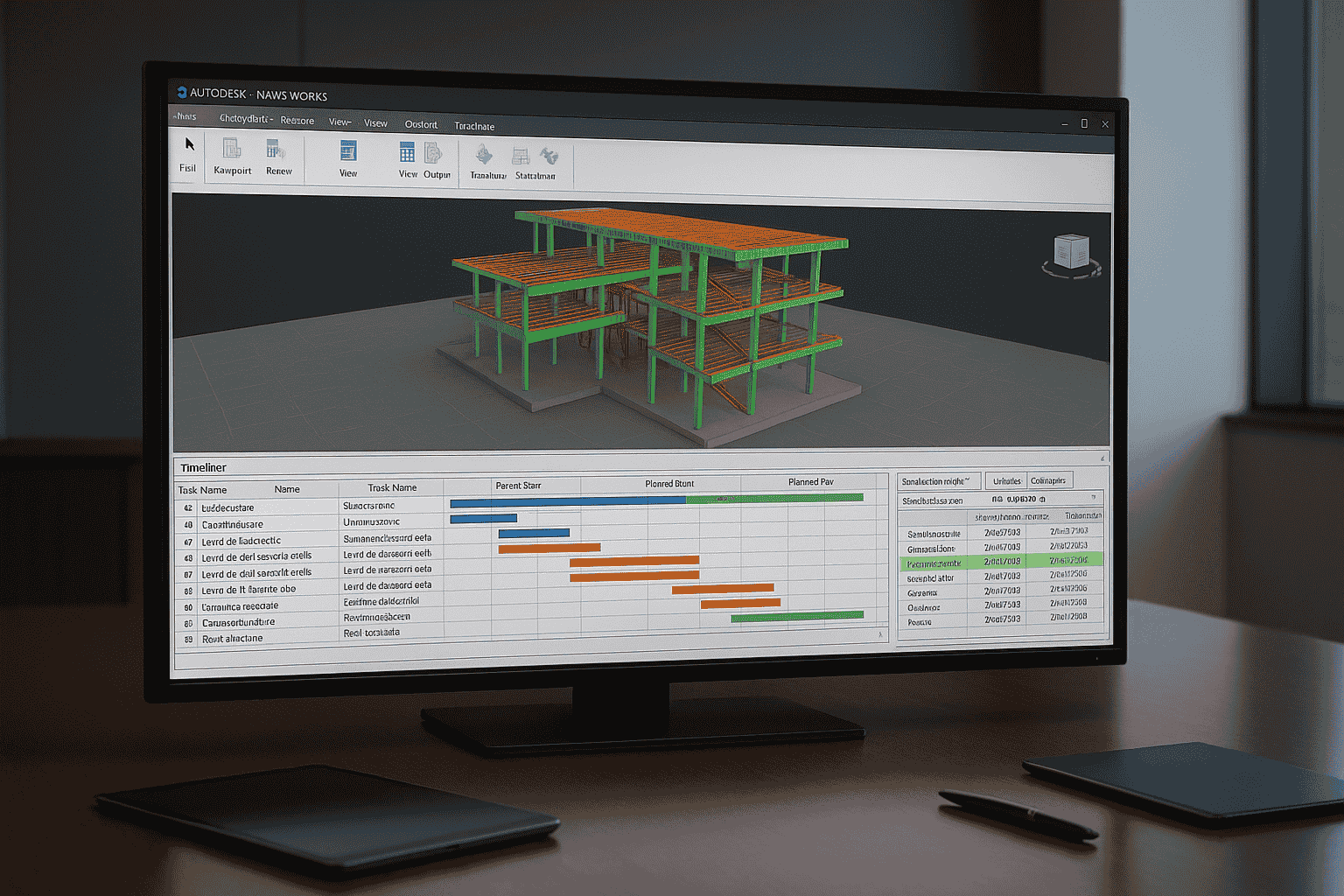
This coordination software allows clash checking, scheduling, and costing in a BIM environment. It contributes to model-based cost estimations and is significant in huge infrastructure projects.
Navisworks is particularly important for large-scale infrastructural work as it provides visual simulations and comprehensive project lifecycle cost management.
### 3. Microsoft Excel

Still a standard for many QS tasks including budgeting, BOQ creation, and financial reporting. Custom templates and formulas make Excel a go-to cost planning software for quantity surveyors.
It is easy to manipulate data, and because it is compatible with other software applications, it is also a sure bet to make quick calculations and monitor costs.
### 4. PlanSwift
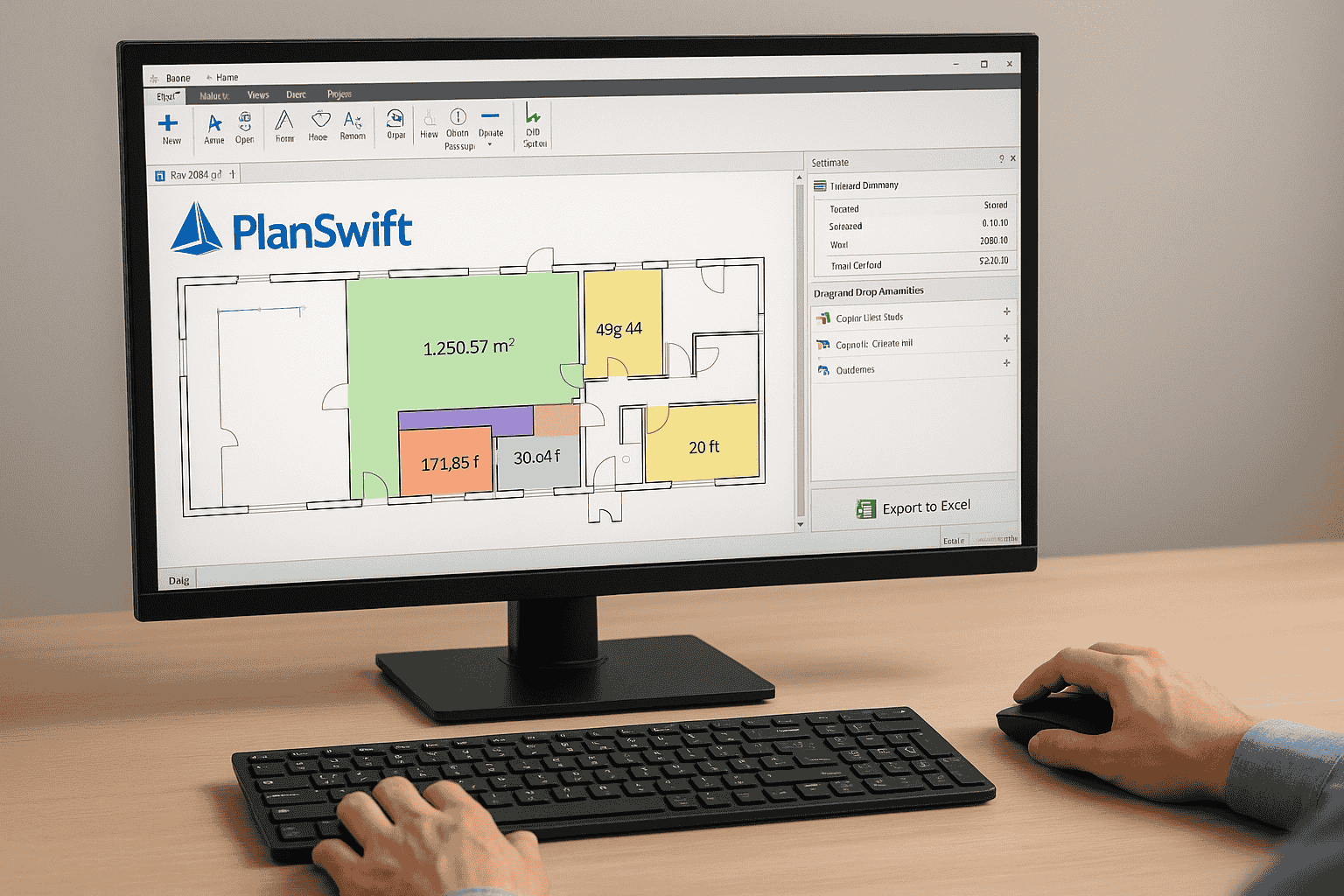
PlanSwift is one of the most effective digital takeoff tools, which enables Quantity Surveyors to click and drag the measurements out of PDFs or CAD files. It saves time manually doing hours on it since it is accurate and fast.
It saves hours of doing things manually and increases the accuracy, particularly in the initial stage estimates of the cost.
### 5. Bluebeam Revu

Construction companies use [Bluebeam](https://www.novatr.com/blog/what-is-bluebeam-revu-a-guide-for-civil-engineers) in the U.S. to make PDF markups, document comparisons, and real-time collaboration in cost estimating, which is necessary to enhance accuracy and coordination with team members in the development of projects.
This utility improves precision in estimating and nurtures the smooth synchronization of the involved parties.
Training and exposure to software used by quantity surveyor professionals have become a fundamental prerequisite in the U.S. job market, particularly in positions in integrated design/build firms or government infrastructure vendors.
Also Checkout: [10 Best Online Courses & Certification To Upkill As a Quantity Surveyor in USA](https://www.novatr.com/blog/7-best-online-courses-certifications-to-upskill-as-a-quantity-surveyor-in-the-usa)
Master BIM and Get Hired Faster
Join a community of 8500+ Architects and Engineers.
Explore Now
\*Limited seats available
## In Conclusion
After considering **what does a quantity surveyor do**, it is evident that the job is focused on cost management, legal obligations, and construction prosperity. In each phase, from estimation to closeout, quantity surveyors play a significant role in the industry, particularly in the performance-driven modern construction industry.
As the use of **BIM software for quantity surveyors** increases, sustainability and compliance requirements, professionals need to be on the edge as they use Revit, Navisworks, and PlanSwift. [Novatr’s BIM Professional Course for Civil Engineers](https://www.novatr.com/us/courses/bim-for-civil-engineers) provides trainees with professional skills and expertise in industry software and project-based learning.
When deciding on this career, you should emphasize the skills required to become a quantity surveyor, known the best quantity surveyor software, and the U.S. codes and standards. Go to the [resource page](https://www.novatr.com/learning-hub) for information and advice from experts, toolkits, and guides.
[Novatr](https://www.novatr.com/us) can guide you to achieve a future-ready job role as a quantity surveyor, regardless of whether you are a student or a professional.
Was this content helpful to you
Like Yes
Dislike No

TABLE OF CONTENTS
BIM Is The New Standard. Are You Certified?
Get Certified in BIM
SHARE ON YOUR SOCIALS
Link Copied Successfully
Related articles
[ CIVIL Top 10 Quantity Surveyor Interview Questions with Answers to Land Your Dream Job 19 June 2025 5 min read](https://blog.novatr.com/blog/quantity-surveyor-interview-questions-with-answers) [ CIVIL 15 Top Quantity Surveying Firms in USA (To Work For) 25 June 2025 11 min read](https://blog.novatr.com/blog/15-best-quantity-surveying-firms-in-usa) [ CIVIL Is BIM Training Useful For Quantity Surveyors? 23 March 2026 6 min read](https://blog.novatr.com/blog/is-bim-training-useful-for-quantity-surveyors) [ CIVIL 10 Essential Software Tools for Quantity Surveyors in 2026 20 June 2025 9 min read](https://blog.novatr.com/blog/10-essential-software-tools-for-quantity-surveyors)
Download Syllabus
## BIM Professional Program
Next Cohort
June 2026
Program Duration
7 Months
Premium Program benefits
8 Credentials from Autodesk, NSDC, Novatr
1 program. 10 career paths. Infinite Growth.
40+ ISO 19650 & RIBA real-world projects to practice
1-on-1 guidance. Access 400+ industry experts.
Access the biggest AEC-Tech community on the planet. 8500+ and counting
Curated for you by 100+ global BIM leaders.
Lifelong access to course content
Enter your details to download the program syllabus.
##### BIM Professional Program
June 2026, 7 Months
Your Name Invalid name.
Phone Number Enter a valid phone number
Email Please enter a valid email address.
Select years of experience\* Currently studying 0-1 years 1-2 years 2-4 years 4-8 years 8-10 years 10-12 years 12+ years Invalid selection.
Specialisation Select your background\* Architecture Civil Engineering Mechanical Engineering Electrical Engineering Invalid selection.
Are you professionally trained in interior design?
Yes
No
I agree to the [Terms of Use](https://www.novatr.com/terms-and-conditions) and [Privacy Policy](https://www.novatr.com/privacy-policy), and consent to be contacted by Email, Call, WhatsApp, or SMS.
Submit
Ready to skyrocket your career?
Begin your next chapter in AEC
with Novatr!
We are here to help you take the industry by storm with advanced, tech-first skills.
[Explore Courses](https://www.novatr.com/#courses)
Join our newsletter
Submit
Thank you for signing up.
We’ll send you a nice letter once per week. No spam.

Dare to Disrupt.
Join thousands of people who organise
work and life with Novatr.
Company
- [About Us](https://www.novatr.com/about)
- [BIM Professional Program v.2026](https://www.novatr.com/courses/bim-professional-program)
- [Masters Computational Design](https://www.novatr.com/courses/computational-design)
- [Become a Mentor](https://www.novatr.com/apply-as-mentor)
- [Hiring from Us](https://www.novatr.com/hire-from-us)
- [Careers at Novatr](https://www.novatr.com/career)
Resources
- [Blog](https://www.novatr.com/learning-hub)
- [Media Room](https://www.novatr.com/media-room-home-page)
- [Career Builder](https://www.novatr.com/career-navigator)
- [Events & Webinars](https://www.novatr.com/webinars)
- [FAQs & Support Center](https://www.novatr.com/contact-us)
- [Contact Us](https://www.novatr.com/contact-us)
- [Privacy Policy](https://www.novatr.com/privacy-policy)
- [Terms of Use](https://www.novatr.com/terms-and-conditions)
©2023 Oneistox Network Pvt. Ltd.
All Rights Reserved
```json
{
"@context" : "https://schema.org",
"@type" : "BlogPosting",
"author" : {
"@type" : "Person",
"name" : "Tanmay Gadade",
"url" : "https://blog.novatr.com/blog/author/tanmay"
},
"dateModified" : "2025-07-23T12:07:19.157Z",
"datePublished" : "2025-06-19T12:43:07.000Z",
"headline" : "What does a Quantity Surveyor do? Job Roles, Key Skills & Software!",
"image" : [ "https://blog.novatr.com/hubfs/Quantity%20Surveyor%20Interview%20Questions%20with%20Answers.avif" ],
"mainEntityOfPage" : {
"@id" : "https://blog.novatr.com/blog/what-does-a-quantity-surveyor-do",
"@type" : "WebPage"
},
"publisher" : {
"@type" : "Organization",
"logo" : {
"@type" : "ImageObject",
"url" : "https://blog.novatr.com/hubfs/Novatr%20Prev%20OX-2.svg"
}
}
}
```