



Which BIM Skills Create the Fastest Career Acceleration?
BIM career growth increasingly depends on how well professionals can connect modelling skills with coordination, quality control and project information. The strongest skill sets go beyond software proficiency to improve how teams deliver projects.
|
BIM skill |
What it involves |
Why it accelerates careers |
|
Advanced BIM Modelling |
Creating accurate, information-rich models, developing complex families, managing LOD and producing coordinated documentation. |
Builds strong technical expertise and prepares professionals for senior modelling and discipline-specific roles. |
|
Project Coordination |
Federating architectural, structural and MEP models, reviewing design interfaces and coordinating changes across disciplines. |
Moves professionals beyond model production into roles where they influence project decisions and workflows. |
|
Clash Detection |
Running clash tests, identifying genuine conflicts, prioritising issues and supporting their resolution. |
Develops problem-solving skills that directly affect constructability and reduce coordination issues before construction. |
|
Model QA/QC |
Checking model accuracy, naming, parameters, geometry, standards and deliverables before information is issued. |
Demonstrates the ability to maintain reliable project data and take responsibility for model quality. |
|
BIM Standards |
Applying BIM Execution Plans, naming conventions, modelling rules and project-specific requirements. |
Helps professionals work consistently across projects and take on greater responsibility for BIM processes. |
|
Information Management |
Organising, exchanging and controlling project information through structured workflows and Common Data Environments. |
Opens pathways towards information management and BIM management roles. |
|
BIM Automation |
Using tools such as Dynamo, Python and APIs to automate repetitive modelling, checking and data-management tasks. |
Adds a high-value technical layer that can improve productivity and enable professionals to solve problems at scale. |
How Do BIM Skills Evolve as Professionals Move Into Senior Roles?
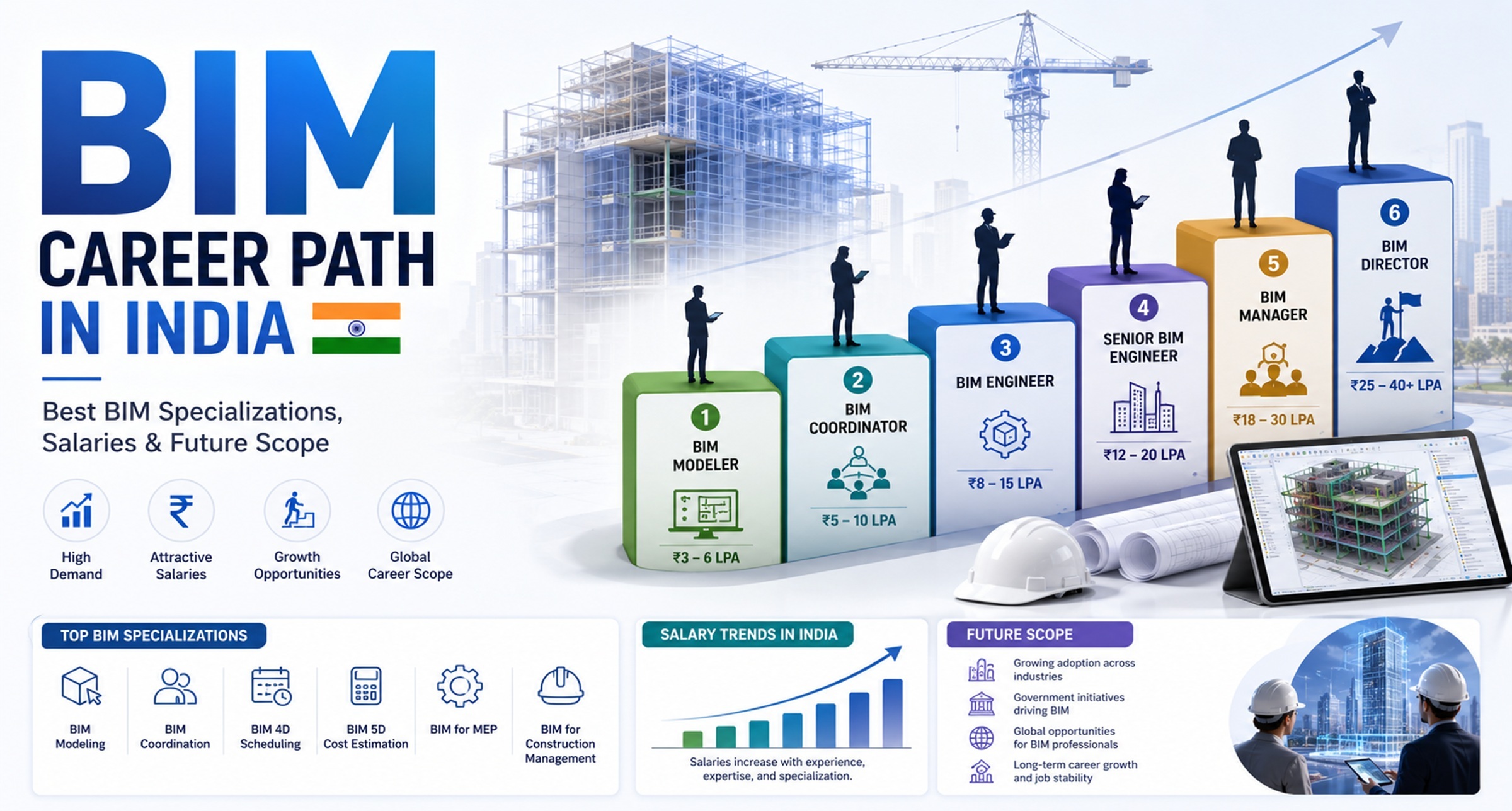
As professionals progress in construction technology and digital construction, their BIM responsibilities shift from producing models to managing information, processes and people. This progression requires a broader understanding of standards, collaboration and project delivery.
|
Career stage |
Key BIM skills and responsibilities |
|
Focuses on accurate BIM modelling, drawing production and documentation. Professionals develop proficiency in authoring tools, modelling standards, families, parameters and discipline-specific workflows. |
|
|
BIM Manager / BIM Leader |
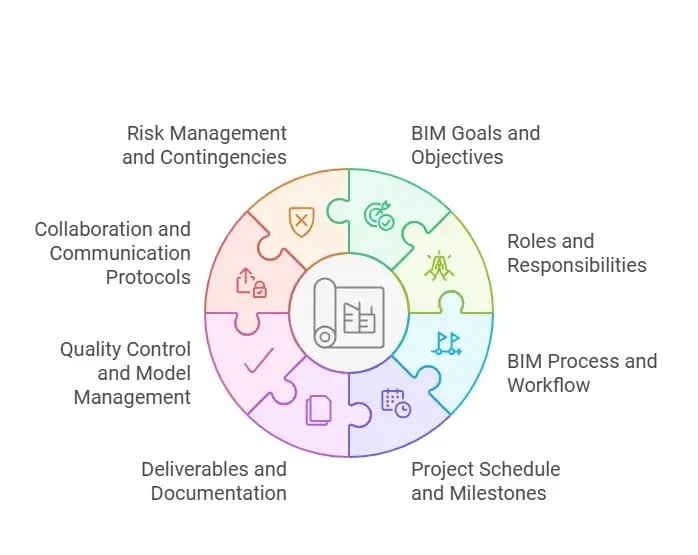
Senior professionals oversee BIM implementation, establish project standards, support BEP development, manage information processes and align teams with client requirements. The role also involves guiding teams, improving workflows and connecting BIM with wider business and project objectives. |
|
BIM Lead / Specialist |
Takes greater ownership of BIM standards, workflows and project requirements. Knowledge of ISO 19650, BIM Execution Plans (BEPs), model delivery requirements and coordination procedures becomes important. |
|
Moves beyond individual models to project coordination. Responsibilities include federating models, reviewing clashes, coordinating design changes and maintaining model quality across disciplines. |
|
|
Information Manager |
Focus shifts from models to structured project information. Professionals manage information requirements, approvals, versioning, exchanges and CDE workflows. ISO 19650 provides a framework for managing and organising information throughout the asset lifecycle. |
How Can Automation and Data Skills Give BIM Professionals a Career Advantage?
As BIM workflows become more connected and data-driven, professionals who can automate routine work and manage model information effectively can take on more complex responsibilities. These capabilities can strengthen technical skills while creating opportunities for career advancement within the AEC industry.
Together, these skills can help BIM professionals move beyond routine modelling towards roles involving BIM coordination, automation, information management and digital delivery.
-
Dynamo
An open-source visual programming platform, which can automate repetitive Revit tasks without requiring professionals to edit every element manually. It can support model updates, element placement, parameter changes, data extraction and routine checks. Developing this capability helps BIM professionals streamline workflows, reduce manual effort and manage larger projects more efficiently while improving consistency across deliverables.
-
APIs
Software interfaces allow BIM professionals to connect applications, access model information and automate tasks that may not be possible through standard tools. Revit and Autodesk Platform Services APIs can be used to create, extract and modify model data, automate documentation and connect BIM workflows with other project systems for more efficient information exchange.
-
Python
Programming knowledge can extend visual scripting workflows when built-in nodes are not sufficient for complex tasks. It gives professionals greater control over data processing, automation and customised workflows. When combined with the Revit API, it can help automate repetitive operations, analyse model information and develop solutions tailored to specific project requirements.
-
Parameter Management
Consistent parameter structures help maintain accurate and usable information across BIM models. Professionals can use parameters to organise project data, standardise information and improve model quality. Effective parameter management also supports reporting, scheduling and automation, making it easier for project teams to access reliable information throughout different stages of project delivery.
-
Model Automation
Repetitive modelling, checking and documentation activities can be handled through automated workflows, reducing manual effort and improving consistency. This approach can minimise errors and improve project efficiency while allowing BIM professionals to spend more time on design decisions, coordination and problem-solving rather than repetitive model-editing tasks.
-
Data-Driven Workflows
Extracting, organising and analysing model information can turn BIM data into useful insights for project decisions. Data-driven workflows can support reporting, quality checks, quantity reviews and performance tracking. For example, Autodesk’s AEC Data Model API provides access to detailed design data and parameters, enabling professionals to build more connected and information-focused BIM workflows.
How Can You Build the BIM Skills That Accelerate Your Career?
Building career-ready BIM skills takes more than learning AEC software commands. Professionals need to understand workflows, practise on real-life projects and develop the ability to coordinate information across multiple stakeholders. A structured learning path can make this process more focused, particularly for those working towards a recognised BIM certification.
For professionals looking to develop these capabilities, Novatr’s BIM Professional Program combines structured learning with practical exposure. The programme offers:
-
Five phases covering BIM fundamentals, modelling, documentation, coordination and project delivery.
-
Project-based assignments that help learners apply concepts to realistic BIM workflows.
-
Exposure to industry-relevant tools and cross-disciplinary project requirements.
-
Guidance and feedback to help learners improve their technical work.
-
Advanced career paths covering AI, automation, project management, sustainability and other BIM-related areas.
-
Career preparation through portfolio, CV, LinkedIn, mock interview and technical assessment support.