---
title: Top Benefits of 4D BIM in Large-Scale Construction Projects
description: Discover benefits of 4D BIM in large projects, including planning accuracy, cost control, risk reduction, and improved construction workflows.
image: https://blog.novatr.com/hubfs/BIM%20Engineer%20reviewing%20Large%20Scale%204D%20BIM%20model..jpg
---
[Blogs](https://www.novatr.com/learning-hub)
- [Architecture & Construction](https://www.novatr.com/learning-hub?category=Architecture+%26+Construction)
- [BIM](https://www.novatr.com/learning-hub?category=BIM)
- [Computational Design](https://www.novatr.com/learning-hub?category=Computational+Design)
- [Company News](https://www.novatr.com/learning-hub?category=Company+News)
- [Expert Talks](https://www.novatr.com/learning-hub?category=Expert+Talks)
Explore Courses
[Just Launched  BIM Professional Program v.2026 Take your career to the next level by mastering the real-world application of BIM. Know More](https://www.novatr.com/courses/bim-professional-program)
[ Master Computational Design Course Break into an advanced career by learning to apply the power of computation to the art of design. Know More](https://www.novatr.com/courses/computational-design)
[Blogs](https://www.novatr.com/learning-hub)
Explore Blogs
- [Architecture & Construction](https://www.novatr.com/learning-hub?category=Architecture+%26+Construction)
- [BIM](https://www.novatr.com/learning-hub?category=BIM)
- [Computational Design](https://www.novatr.com/learning-hub?category=Computational+Design)
- [Company News](https://www.novatr.com/learning-hub?category=Company+News)
- [Expert Talks](https://www.novatr.com/learning-hub?category=Expert+Talks)
Courses
- [BIM Professional Program v.2026](https://www.novatr.com/courses/bim-professional-program)
- [Master Computational Design](https://www.novatr.com/courses/computational-design)
- [CIVIL/](https://www.novatr.com/learning-hub?category=BIM)
Featured Article
# Top Benefits of 4D BIM in Large-Scale Construction Projects

Deependra Dobriyal
April 30, 2026
6 min read
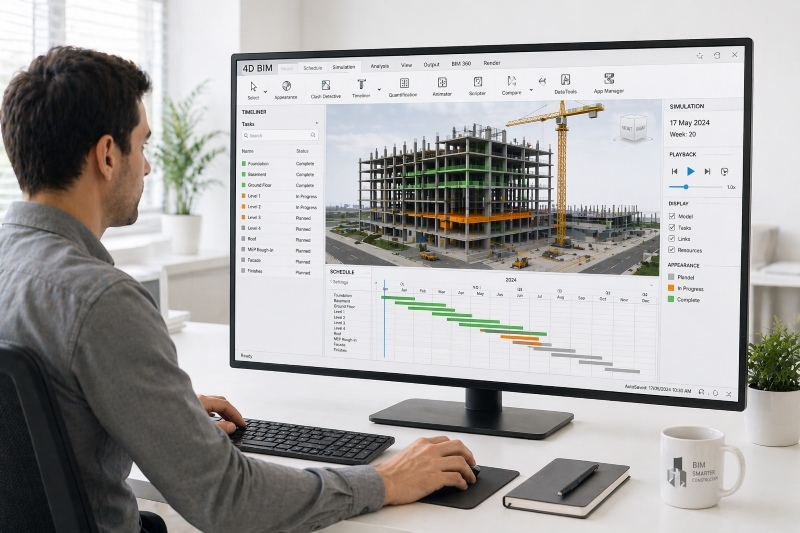

The **benefits of 4D BIM** are most visible in large-scale construction projects where coordination, timelines, and resources are complex. 4D BIM connects 3D models with schedules to simulate construction sequences and improve planning accuracy.
According to the UK Government Construction Strategy, digital construction methods such as BIM can reduce project costs by up to [**33%**](https://www.beama.org.uk/static/f2970236-6c98-4c22-99b5633b5be4a14e/BIM-Handbook-for-EU-Public-Sector.pdf?) and improve delivery efficiency.
As infrastructure and commercial developments grow in scale, traditional planning methods struggle to manage dependencies and risks. 4D BIM enables teams to visualize workflows, improve coordination, and ensure better decision-making across the project lifecycle.
Unlock High-Paying Careers With BIM
Master BIM workflows, software and skills on real projects.
Apply Now
\*Limited seats available
## **What is 4D BIM?**
Understanding the benefits of 4D BIM begins with a clear definition. [4D BIM](https://www.novatr.com/blog/what-is-4d-bim-a-complete-guide-to-construction-planning-using-bim) is an extension of Building Information Modeling where time is added as the fourth dimension to a 3D model. This allows teams to simulate construction activities over time.
In this method, each model element is linked to a specific schedule activity. This creates a dynamic representation of how the project will be built. Through BIM 4d modelling, teams can visualize sequences, identify issues early, and improve coordination across complex project environments.
This process is central to [4d BIM planning, where design and scheduling](https://www.novatr.com/blog/4d-bim-vs-traditional-scheduling-which-method-is-better-for-modern-construction) work together instead of functioning separately. It ensures that all stakeholders have a clear understanding of project timelines and workflows, reducing gaps between planning and execution.
## **Why Large Projects Need Advanced Planning**
Large construction projects involve multiple stakeholders, complex systems, and tight deadlines. These factors increase the need for structured planning and coordination.
The use of BIM for large projects helps manage these complexities by integrating data across disciplines. Traditional methods often rely on separate schedules and drawings, which can lead to misalignment and delays during execution.
Advanced planning using 4D BIM allows teams to simulate construction sequences before execution. This improves coordination and reduces uncertainties by identifying dependencies early in the planning stage.
For example, in large infrastructure projects, multiple systems such as structure, MEP, and finishing works must be carefully sequenced. Without proper planning, conflicts can lead to delays and increased costs, affecting overall project performance.
## **Key Benefits of 4D BIM in Large Projects**
**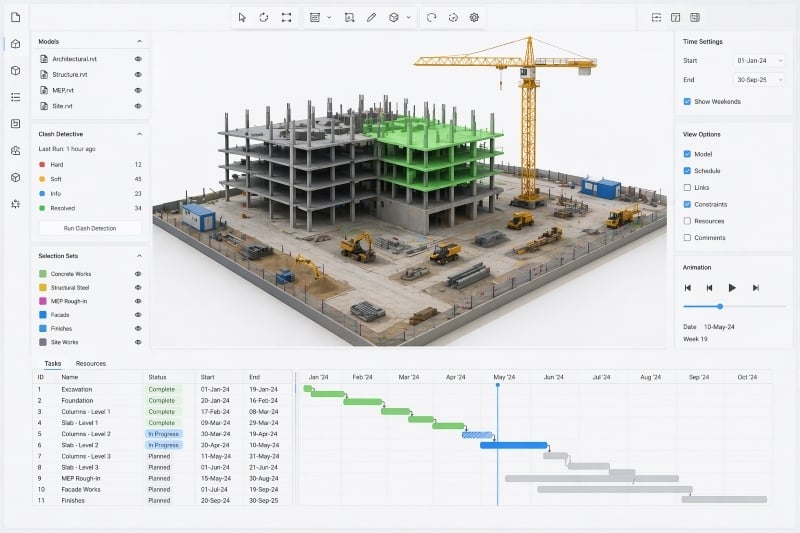**
The **benefits of 4D BIM** are particularly significant in large-scale projects where coordination and efficiency are important.
The benefits include:
- **Improved Project Visualization**Teams can simulate construction sequences and understand workflows before execution. This improves clarity and reduces uncertainty.
- **Enhanced Coordination Across Disciplines**Integrated models ensure that all systems work together without conflicts.
- **Better Planning Accuracy**Using 4d BIM planning, teams can align schedules with design elements, improving reliability.
- **Reduced Delays**Early identification of sequencing issues supports construction delay reduction BIM, minimizing disruptions.
- **Improved Safety Planning**4d BIM for construction safety planning allows teams to identify risks and plan safer workflows.
- **Efficient Resource Management**Teams can allocate labor and materials based on accurate schedules.
- **Data-Driven Decision-Making**Visual simulations provide insights that support better planning decisions.
These benefits show how 4D BIM improves both efficiency and coordination in large projects.
## **Impact on Time, Cost, and Risk Management**
The **benefits of 4D BIM** extend to important aspects such as time, cost, and risk management. These factors directly influence project success and overall performance.
In terms of time management, 4D BIM enables accurate scheduling and sequencing. This reduces delays and ensures that construction activities follow a structured timeline aligned with project goals.
Cost management improves through better planning and reduced rework. By identifying issues early, teams can avoid expensive changes during construction. These are key BIM project benefits that contribute to [cost efficiency](https://www.novatr.com/blog/what-is-the-role-of-4d-bim-in-construction-project-planning).
Risk management also becomes more effective. Visual simulations allow teams to anticipate challenges and plan solutions in advance. This reduces uncertainties and improves project outcomes.
## **Challenges Without 4D BIM**
Without 4D BIM, construction projects face several challenges that impact efficiency and coordination. Understanding these issues highlights the importance of adopting advanced planning methods.
Key challenges include:
- **Limited Visualization:** Traditional schedules do not provide a clear view of construction sequences.
- **Poor Coordination:** Separate workflows lead to misalignment between teams.
- **Higher Risk of Delays:** Issues are often identified during construction rather than planning.
- **Inefficient Resource Allocation:** Without accurate schedules, resources may not be used effectively.
- **Increased Rework:** Errors and conflicts lead to additional costs and time.
These challenges show why relying only on traditional methods can limit project performance.
## **Real-World Applications of 4D BIM**
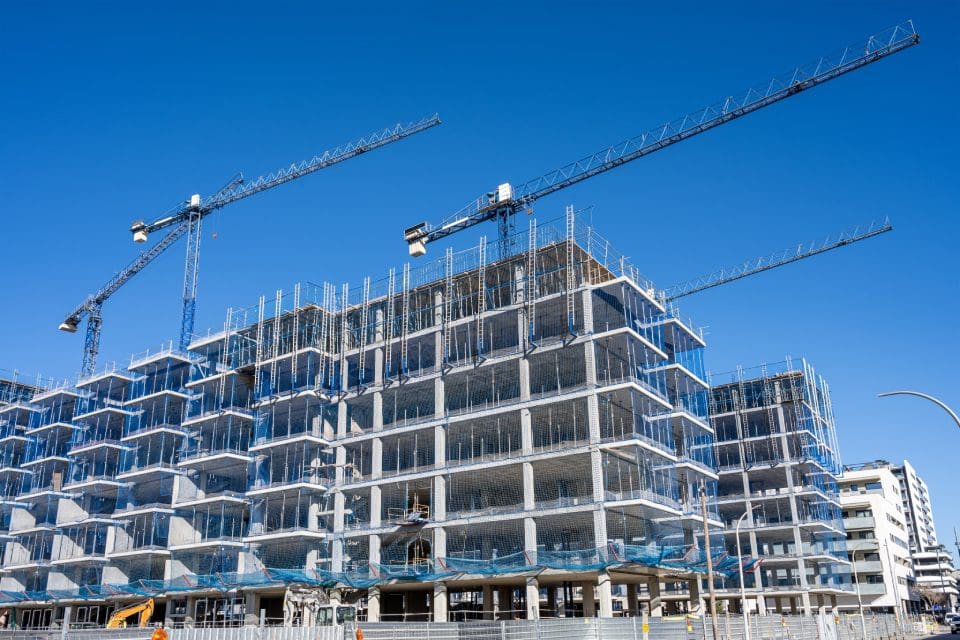
4D BIM is widely used across different types of construction projects where planning and coordination are important. Its applications demonstrate the real impact of digital workflows in large-scale environments.
Common applications include:
- **Infrastructure Projects** In roads, railways, and bridges, 4D BIM is used to plan phased construction activities such as earthwork, structural work, and finishing. It helps teams manage long project timelines and coordinate multiple contractors working simultaneously.
- **Commercial Buildings** Large commercial developments involve complex systems such as HVAC, electrical, and structural elements. 4D BIM ensures that these systems are installed in the correct sequence, reducing clashes and improving coordination.
- **Industrial Projects** Industrial facilities often involve heavy equipment installation and strict sequencing requirements. 4D BIM allows teams to simulate installation processes, ensuring that space and time constraints are properly managed.
- **Residential Developments** In large housing projects, 4D BIM supports planning across multiple units and phases. It helps developers manage timelines, coordinate resources, and maintain consistency across construction stages.
In these applications, leading 4d BIM tools for project sequencing play a key role. Tools such as Navisworks and Synchro are part of a broader 4d BIM software list used to manage scheduling, simulation, and coordination effectively.
## **How to Learn 4D BIM Skills**
Developing expertise in 4D BIM requires structured learning and hands-on exposure to real-world workflows. Professionals need to understand how to integrate modeling, scheduling, and coordination into a unified process.
Take your civil engineering career to the next level with Novatr’s BIM Professional Course for Civil Engineers, a project-based program that prepares you to plan, design, and manage construction projects using 12+ industry software and essential BIM plugins.
Learn how to work with Autodesk Revit, Navisworks, construction cloud and key plugins like DiRoots.One, pyRevit, EF-Tools, ProSheets, Issue and Model Checker for Revit to improve automation, accuracy, and project efficiency.
Here’s what you’ll gain:
- End-to-end understanding of BIM workflows - modeling, estimation, coordination, sequencing, and documentation.
- Hands-on training aligned with ISO 19650 standards and real residential + commercial projects.
- Globally recognized certifications:
o Novatr Course Certificate
o Autodesk User Certification
o NSDC Skill Certificate
o Novatr Specialization Certificate, if opted
After completing the core modules, learners can also choose 2 additional specializations, including:
- Visual Programming with Dynamo
- 4D, 5D & 6D with BIM
- Tekla for RCC Modeling
- Civil 3D for Infrastructure
- Project Strategy & Optimization with Plannerly
This structured approach helps professionals build strong capabilities in 4D BIM and prepare for industry roles.
Master BIM and Get Hired Faster
Join a community of 8500+ Architects and Engineers.
Explore Now
\*Limited seats available
## Conclusion
The **benefits of 4D BIM** make it an essential tool for managing large-scale construction projects. By integrating time with design, it improves planning accuracy, reduces risks, and enhances coordination across teams.
As projects continue to grow in complexity, adopting 4D BIM becomes important for achieving efficient and reliable outcomes. Developing expertise in this area supports both project success and career growth.
For anyone looking to build expertise in 4D BIM workflows, structured programs such as the [BIM Professional course for Civil Engineers](https://www.novatr.com/courses/bim-for-civil-engineers) offered by [Novatr](https://www.novatr.com/) provide a strong foundation in industry practices and real project applications.
Visit our [resource page](https://www.novatr.com/learning-hub) for more insights from industry experts.
Was this content helpful to you
Like Yes
Dislike No

TABLE OF CONTENTS
BIM Is The New Standard. Are You Certified?
Get Certified in BIM
SHARE ON YOUR SOCIALS
Link Copied Successfully
Related articles
[ BIM Civil What is the Role of 4D BIM in Construction Project Planning? 30 April 2026 6 min read](https://blog.novatr.com/blog/what-is-the-role-of-4d-bim-in-construction-project-planning) [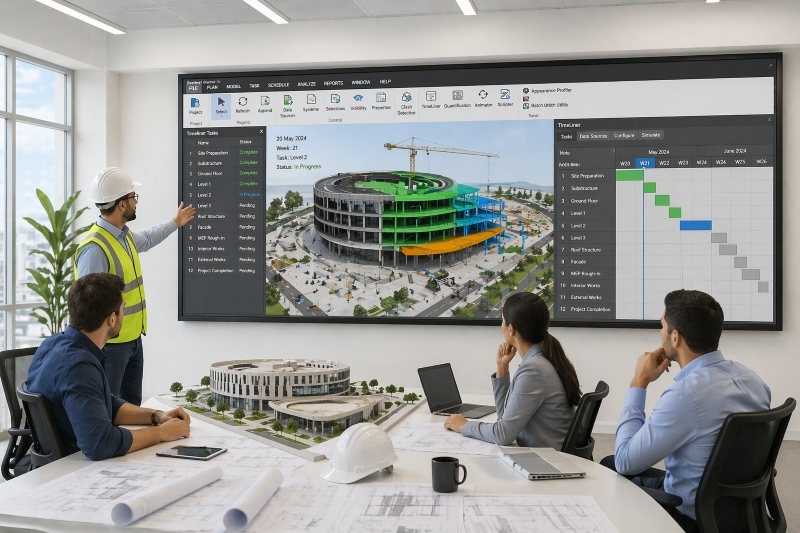 BIM Civil 10 Top 4D BIM Tools for Construction Planning 30 April 2026 6 min read](https://blog.novatr.com/blog/10-top-4d-bim-tools-for-construction-planning) [ BIM Civil What is 4D BIM? A Complete Guide to Construction Planning Using BIM 30 April 2026 6 min read](https://blog.novatr.com/blog/what-is-4d-bim-a-complete-guide-to-construction-planning-using-bim) [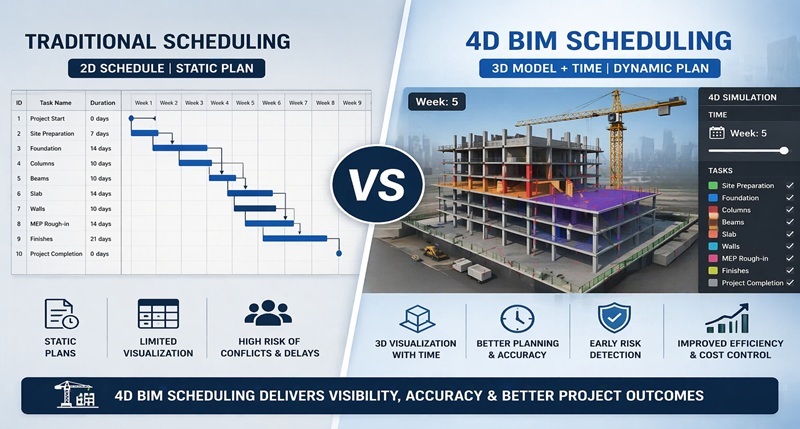 BIM Civil 4D BIM vs Traditional Scheduling: Which Method is Better for Modern Construction? 30 April 2026 5 min read](https://blog.novatr.com/blog/4d-bim-vs-traditional-scheduling-which-method-is-better-for-modern-construction)
Download Syllabus
## BIM Professional Program
Next Cohort
June 2026
Program Duration
7 Months
Premium Program benefits
8 Credentials from Autodesk, NSDC, Novatr
1 program. 10 career paths. Infinite Growth.
40+ ISO 19650 & RIBA real-world projects to practice
1-on-1 guidance. Access 400+ industry experts.
Access the biggest AEC-Tech community on the planet. 8500+ and counting
Curated for you by 100+ global BIM leaders.
Lifelong access to course content
Enter your details to download the program syllabus.
##### BIM Professional Program
June 2026, 7 Months
Your Name Invalid name.
Phone Number Enter a valid phone number
Email Please enter a valid email address.
Select years of experience\* Currently studying 0-1 years 1-2 years 2-4 years 4-8 years 8-10 years 10-12 years 12+ years Invalid selection.
Specialisation Select your background\* Architecture Civil Engineering Mechanical Engineering Electrical Engineering Invalid selection.
Are you professionally trained in interior design?
Yes
No
I agree to the [Terms of Use](https://www.novatr.com/terms-and-conditions) and [Privacy Policy](https://www.novatr.com/privacy-policy), and consent to be contacted by Email, Call, WhatsApp, or SMS.
Submit
Ready to skyrocket your career?
Begin your next chapter in AEC
with Novatr!
We are here to help you take the industry by storm with advanced, tech-first skills.
[Explore Courses](https://www.novatr.com/#courses)
Join our newsletter
Submit
Thank you for signing up.
We’ll send you a nice letter once per week. No spam.

Dare to Disrupt.
Join thousands of people who organise
work and life with Novatr.
Company
- [About Us](https://www.novatr.com/about)
- [BIM Professional Program v.2026](https://www.novatr.com/courses/bim-professional-program)
- [Masters Computational Design](https://www.novatr.com/courses/computational-design)
- [Become a Mentor](https://www.novatr.com/apply-as-mentor)
- [Hiring from Us](https://www.novatr.com/hire-from-us)
- [Careers at Novatr](https://www.novatr.com/career)
Resources
- [Blog](https://www.novatr.com/learning-hub)
- [Media Room](https://www.novatr.com/media-room-home-page)
- [Career Builder](https://www.novatr.com/career-navigator)
- [Events & Webinars](https://www.novatr.com/webinars)
- [FAQs & Support Center](https://www.novatr.com/contact-us)
- [Contact Us](https://www.novatr.com/contact-us)
- [Privacy Policy](https://www.novatr.com/privacy-policy)
- [Terms of Use](https://www.novatr.com/terms-and-conditions)
©2023 Oneistox Network Pvt. Ltd.
All Rights Reserved
```json
{
"@context" : "https://schema.org",
"@type" : "BlogPosting",
"author" : {
"@type" : "Person",
"name" : "Deependra Dobriyal",
"url" : "https://blog.novatr.com/blog/author/deependra-dobriyal"
},
"dateModified" : "2026-04-30T12:15:04.579Z",
"datePublished" : "2026-04-30T12:12:42.000Z",
"headline" : "Top Benefits of 4D BIM in Large-Scale Construction Projects",
"image" : [ "https://blog.novatr.com/hubfs/BIM%20Engineer%20reviewing%20Large%20Scale%204D%20BIM%20model..jpg" ],
"mainEntityOfPage" : {
"@id" : "https://blog.novatr.com/blog/top-benefits-of-4d-bim-in-large-scale-construction-projects",
"@type" : "WebPage"
},
"publisher" : {
"@type" : "Organization",
"logo" : {
"@type" : "ImageObject",
"url" : "https://blog.novatr.com/hubfs/Novatr%20Prev%20OX-2.svg"
}
}
}
```