



Why is There a Gap Between AEC Education and Industry Expectations
The gap between classroom learning and professional practice can be difficult to bridge when learners have limited opportunities to work on realistic AEC challenges. BIM education needs to develop not only technical knowledge but also the BIM skills required to work, communicate and solve problems in project environments.
-
Beyond Software Proficiency: Knowing BIM tools like Revit or Navisworks is only a starting point; BIM professionals also need coordination, problem-solving and information management skills.
-
Limited Project Exposure: Academic exercises may not reflect real project requirements such as multidisciplinary coordination, design changes, clash resolution and documentation.
-
Evolving Industry Workflows: BIM practices continue to develop with cloud collaboration, automation and information management, making industry-relevant learning increasingly important.
-
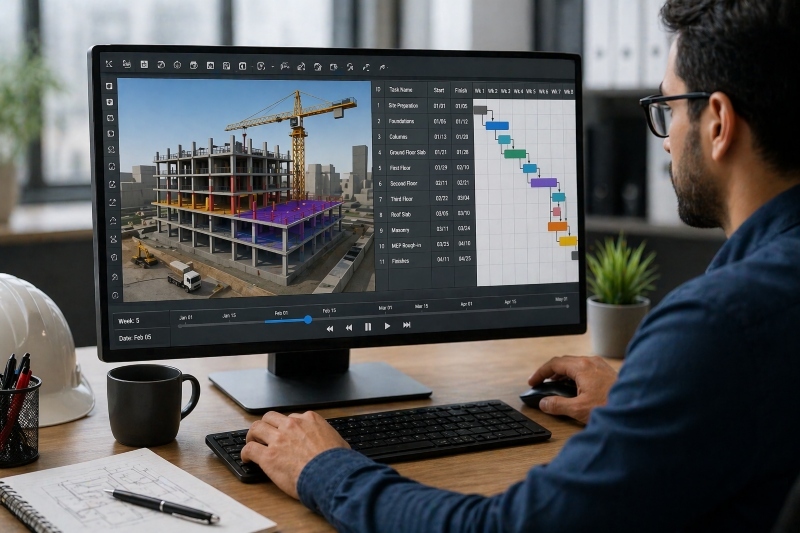
Applying Skills in Practice: Project-based education allows learners to work through realistic modelling, coordination and documentation tasks, helping them understand how BIM is applied across the project lifecycle.
What is Project-Based Learning in AEC Education?
Project-based learning in AEC education focuses on learning by working through realistic design and construction challenges rather than relying only on theory. In the AEC industry, learners can use hands-on learning to develop models, coordinate disciplines, review project information and solve practical problems.
This approach helps connect classroom concepts with the way professionals work on actual projects. By applying knowledge to project tasks, learners can build technical confidence, improve collaboration and understand how decisions made during design and planning can affect construction outcomes.

How Does Project-Based Learning Build Job-ready AEC Skills?
Project-based learning helps bridge the gap between classroom knowledge and workplace expectations by giving learners opportunities to practise tasks they may experience on real AEC projects. It strengthens employability skills while making professional training more realistic and relevant.
|
Skill Developed |
How project-based learning builds it |
|
BIM Modelling |
Learners create and develop discipline-specific models, helping them understand modelling standards, accuracy and project requirements. |
|
Coordination |
Working with different project elements teaches learners how architectural, structural and MEP models need to align within a coordinated workflow. |
|
Clash Detection |
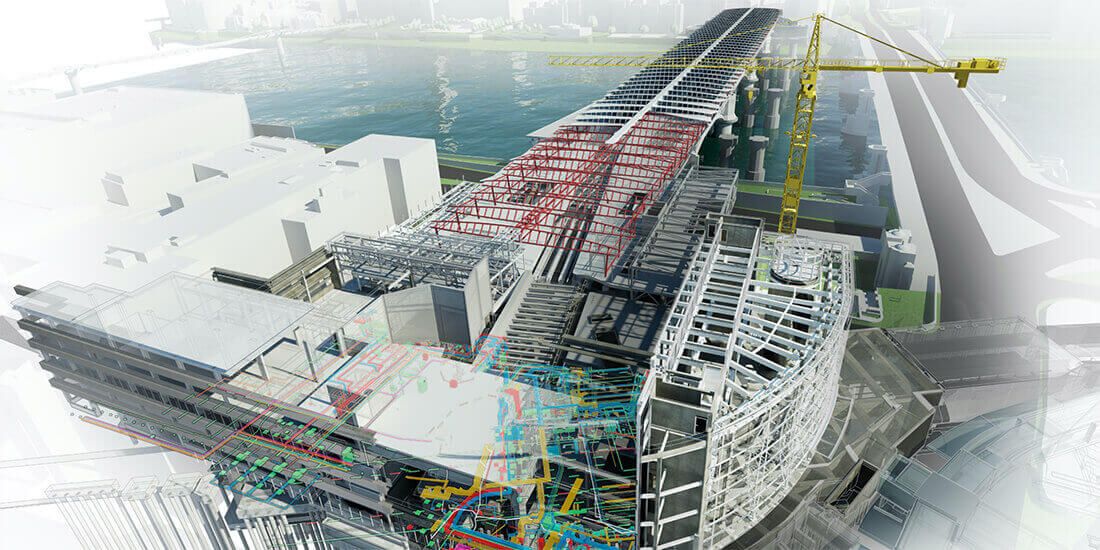
Learners identify conflicts between building systems and explore practical ways to resolve them before they affect construction. |
|
Documentation |
Creating drawings, schedules and model-based deliverables helps learners understand how Building Information Modeling information supports project documentation and communication. |
|
Problem-Solving |
Project tasks require learners to assess issues, consider possible solutions and make informed decisions rather than simply follow instructions. |
|
Multidisciplinary Collaboration |
Working across disciplines develops communication, coordination and teamwork skills that are essential across the AEC industry. |
|
Workplace Readiness |
Completing realistic project tasks helps learners understand professional workflows and apply their technical knowledge with greater confidence. |
Why Do Real-World AEC Projects Improve BIM Learning?
Real-world AEC projects make construction education more meaningful by showing learners how BIM knowledge is used beyond individual tools or classroom exercises. They also help learners understand the practical expectations of BIM jobs.
-
Understand Complete Project Workflows
Working through a project helps learners see how information moves from initial design and modelling to coordination, documentation and construction. This gives them a clearer understanding of how different BIM tasks connect.
-
Apply Industry Standards
Realistic architectural projects introduce learners to standards, naming conventions, information requirements and documentation practices used to maintain consistency across professional BIM workflows.
-
Connect Design with Construction
Project-based tasks can show how design decisions affect coordination, quantities, sequencing and construction. This helps learners understand the link between a digital model and what happens on site.
-
Develop Practical Decision-Making
Real projects rarely follow a perfect path. Learners may need to identify clashes, review design changes or choose suitable solutions, helping them develop judgement alongside technical skills.
-
Experience Multidisciplinary Coordination
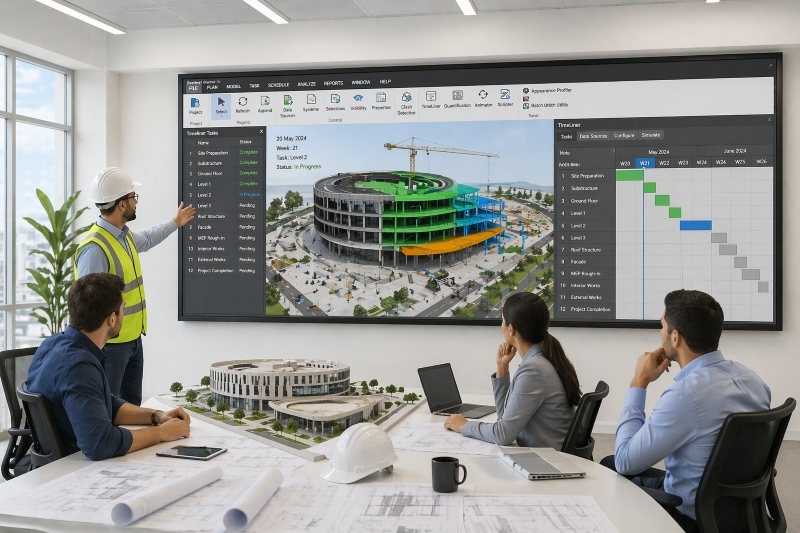
AEC projects involve architects, engineers, contractors and other specialists. Working with different disciplines helps learners understand how information is shared and why coordination matters.
-
Prepare for Workplace Expectations
Applying BIM skills to realistic deliverables gives learners experience with the type of tasks, collaboration and problem-solving they may encounter in professional roles. This can make the transition from construction education to BIM employment more confident and practical.
How Does Project-Based Learning Strengthen AEC Portfolios and Employability?
Project-based learning can make an AEC portfolio more meaningful by showing not just what a learner has studied, but how they can apply their knowledge to realistic project situations. Here are the key ways it can strengthen career development and BIM learning:
-
Build Relevant Project Work: Working on realistic AEC assignments allows learners to create project samples that reflect actual industry workflows, requirements and expected deliverables.
-
Show Practical BIM Skills: Models, drawings, schedules and coordinated outputs can demonstrate how well learners understand BIM tools and apply them to different stages of project development.
-
Demonstrate Problem-Solving: Project-based tasks encourage learners to identify design or coordination issues, assess possible solutions and make decisions based on project requirements.
-
Strengthen Portfolio Quality: An architectural portfolio supported by well-developed projects gives employers a clearer view of a learner’s technical skills, attention to detail and ability to complete practical tasks.
-
Support Career Opportunities: Relevant project evidence can help candidates communicate their capabilities more confidently during job applications, interviews and discussions with potential employers.
What Makes an Effective Project-Based AEC Learning Experience?
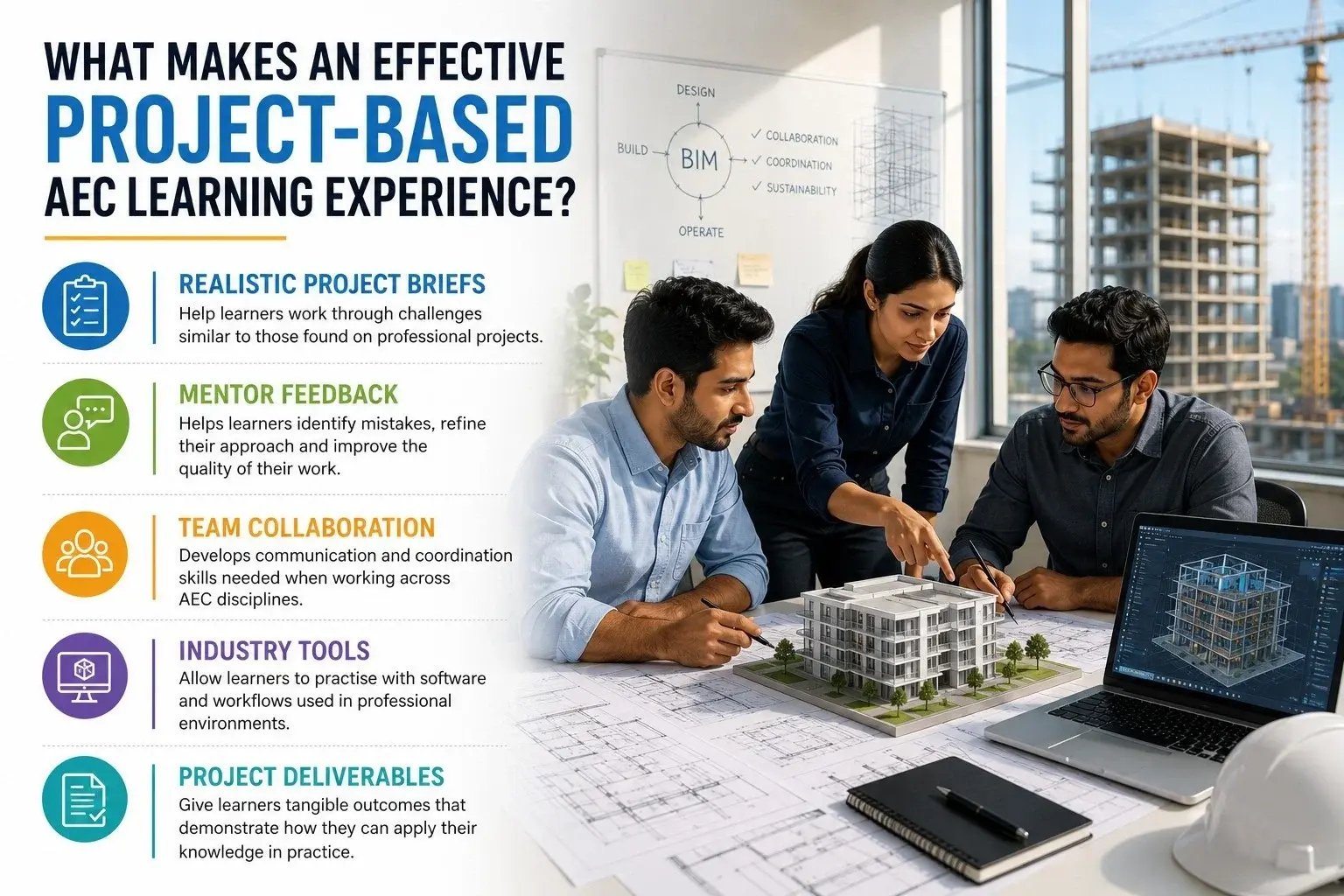
An effective project-based learning experience should reflect how work is actually carried out across the AEC industry. Instead of focusing only on theory, it should give learners opportunities to use construction technology, make decisions and respond to project requirements. Here are some crucial factors that makes project-based learning effective:
-
Realistic project briefs help learners work through challenges similar to those found on professional AEC projects.
-
Mentor feedback helps learners identify mistakes, refine their approach and improve the quality of their work.
-
Team collaboration develops communication, problem-solving, and coordination skills needed when working across AEC disciplines.
-
Industry tools allow learners to practise with BIM software and workflows used in professional environments.
-
Project deliverables give learners tangible outcomes that demonstrate how they can apply their knowledge in practice.
How Can Project-Based Learning Prepare You for a BIM Career?
Building a BIM career requires more than learning software; professionals also need opportunities to practise workflows, solve project challenges and understand how BIM is used across the AEC industry.
For learners who want to turn BIM knowledge into practical workplace skills, Novatr’s BIM Professional Program offers a structured BIM course that connects learning with real AEC project requirements:
-
The seven-month online program covers BIM fundamentals, modelling, documentation, coordination and project delivery through five practical phases.
-
Learners work on project-based learning that helps them apply BIM concepts to realistic project scenarios and develop workplace-ready skills.
-
The program supports different career directions, including AI, automation, project management, sustainability, infrastructure and structural analysis.
-
Learners receive career-focused support through portfolio development, CV and LinkedIn guidance, mock interviews and company-specific assessments.
-
The program is designed for Architects and Civil, Structural, Mechanical and Electrical Engineers, helping them build relevant BIM capabilities for evolving AEC roles.