


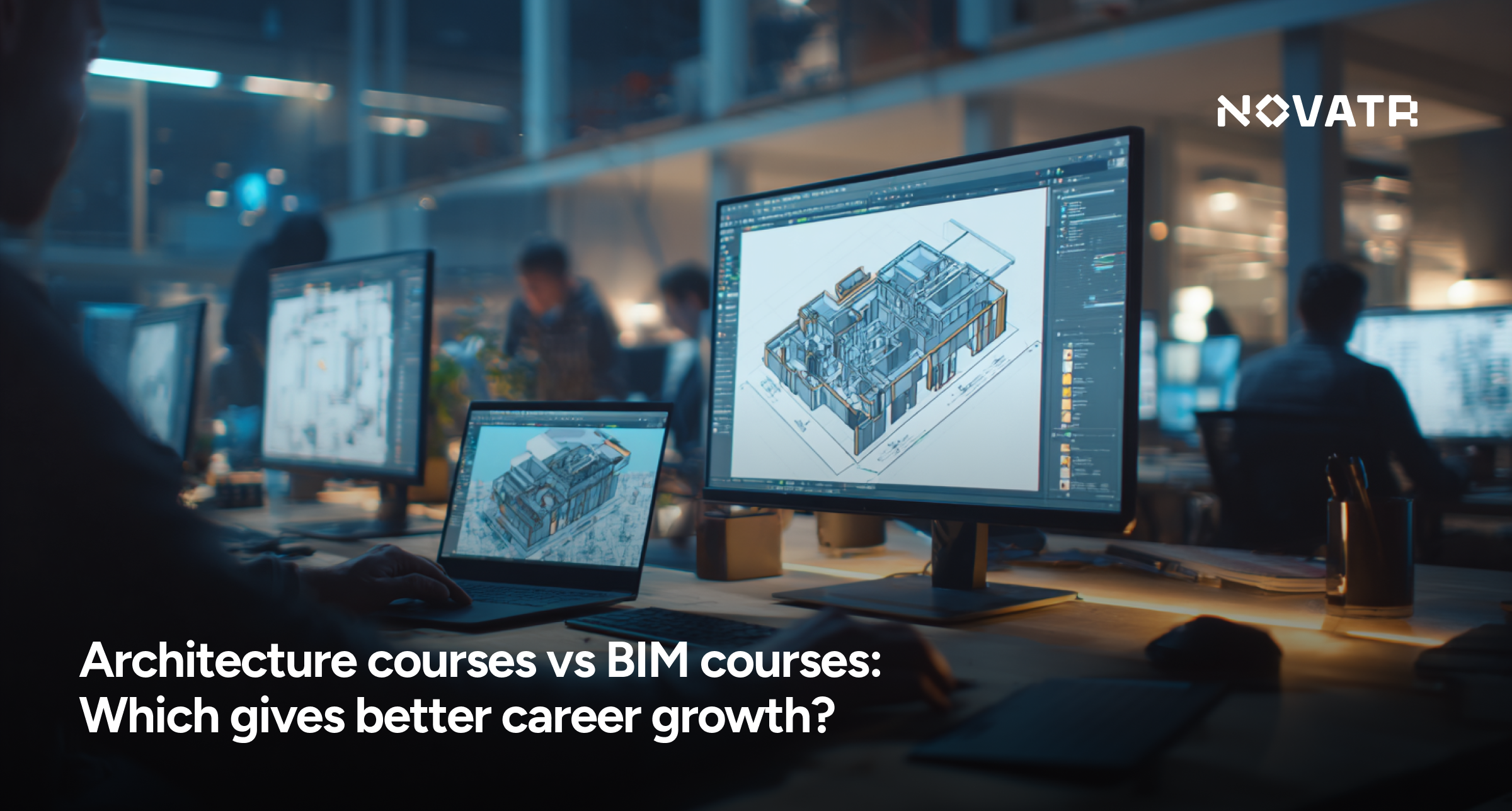

What Is the Difference Between Architecture Courses and BIM Courses?
The major difference lies in the purpose, format and results.
Key differences include:
-
The learning is focused on Design vs technical workflows.
-
Time: Long and short-term degrees/certifications
-
Input: Conceptual designs, data-driven models
-
Do not: provide job ready skills training. Approach: Theory
Why Are BIM Courses Becoming Popular Among Architecture Students?
With the development of digital construction, the need for BIM skills is growing. Many students have a new question in their minds, should I study BIM to become competitive as an architecture student?
The increased popularity of BIM is due to the following reasons:
-
There is Growing Demand: Companies are looking for candidates with BIM skills.
-
Quicker Access to Employment: BIM courses offer hands-on experience in practical work that is relevant to real projects.
-
Better cooperation: The Building Information Modeling system will enable architects and engineers and contractors to work together more effectively.
-
Less errors and delays: Building Information Modeling projects show better operational results.
-
Better employment opportunities: The program enables students to obtain their first job through its quick employment system.
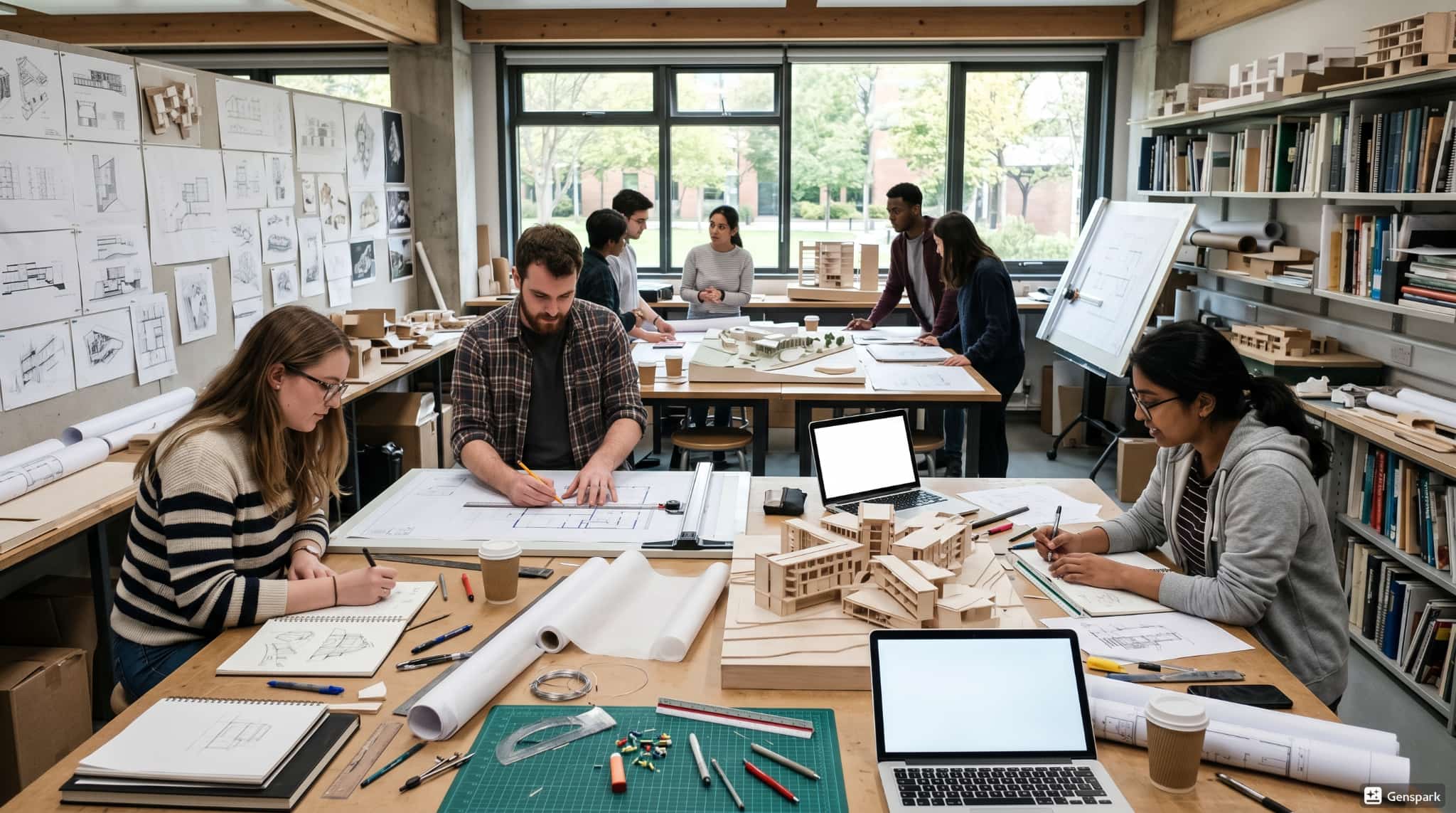
What Skills Do You Gain From Architecture Courses vs BIM Courses?
Both are useful, but they are different and used differently.
Skills from Architecture Courses
-
Design thinking and creativity
-
Space planning and visualization
-
Understands materials and structures
-
Students must have a good understanding of building codes. Building codes must be understood.
-
The development and presentation of concepts
These skills become essential to have while pursuing an architecture career.
Skills from BIM Courses
-
Using 3D models and digital processes
-
Collaborating and coordinating between projects
-
Data management and analysis
-
Software skills (Revit, Navisworks, etc.)
-
The detection of clashes and the resolution of issues
These are good indicators of skill based learning benefits and emphasize job ready skills training.
Which Career Opportunities Are Available After Architecture vs BIM Courses?
There are different career possibilities for different paths.
After Architecture Courses
-
Architect
-
Urban planner
-
Interior designer
-
Landscape designer
-
Design consultant
After BIM Courses
-
BIM modeler
-
BIM coordinator
-
BIM manager
-
Project coordinator
-
Digital construction specialist
How Do Salary and Career Growth Compare Between Architecture and BIM?
The traditional path in architecture can be a slow grower. It often takes years of experience to reach senior positions. The higher the number of jobs in your portfolio, the more you earn.
A BIM career, on the other hand, can provide quicker advancement. As BIM skills are niche, people will be able to get into better jobs more quickly.
Key comparison points:
-
Average salary: The average salary in the BIM industry is higher than in other professions
-
In BIM: Growth speed is faster because of demand
-
Challenges: Greater need for BIM users worldwide
-
BIM is applicable to a variety of industries
This has made many wonder which course gives better salary BIM or architecture. While in most instances, BIM can create more immediate monetary gains, architecture can bring creative fulfillment over the long haul.

Which Course Is Better for Future Industry Demand in AEC?
The AEC industry is on a path towards digitalization. BIM is beginning to be a universal necessity in many projects around the world.
This change would be the response to the common query, is BIM a better career than architecture.
BIM is the way forward now and in the future because it:
-
The number of people engaging in digital construction is increasing.
-
There are government regulations for BIM in a variety of countries.
-
The need for decision-making based on data is growing.
-
The integration of AI and automation features.
The use of platforms like Novatr is helping students to cope with this change by giving them industry specific training.
Their programs provide:
-
Real-world project exposure
-
Commodore's lessons will equip students to complete courses with industry professionals.
-
Globally recognized certifications
-
Focus on training for job ready skills
-
A strong placement support
What Should Students Consider Before Choosing Between Architecture and BIM?
Here are some points to take into account:
-
Career Goals: Design or Technical Career
-
Would they be better off spending their time in a long course of study or a short course for a qualification?
-
The Students' Learning Style: theoretical vs practical
-
Industry Demand: BIM in demand in the industry today.
-
The expected rate of salary growth, BIM is better.
.png)
.png)
.png)

