


The Evolution of Smart MEP Systems: From Drafting Boards to Digital Intelligence

MEP design once relied on hand drawings and separate calculations, making coordination slow and error-prone. As projects became more complex, teams needed better ways to connect systems and share information. This change defines the evolution of smart MEP systems from drafting to digital intelligence, where connected models replaced isolated drawings and improved coordination across design stages.

Today, software platforms link design, analysis, and real performance data into one workflow. This approach, known as digital MEP engineering, supports automation, monitoring, and informed decisions over a system’s lifespan. In the United States, professionals in this field earn about $101,752 per year, reflecting the technical depth required to manage intelligent, data-driven MEP environments.

BIM Professional course for MEP Engineers

Learn Revit and 12+ BIM software with industry workflows in just 7 months.

Apply now

*Limited seats available

How Have MEP Systems Evolved From Manual Drafting to Digital Intelligence?

Early workflows depended on static drawings and isolated calculations, which limited coordination as systems grew more complex. Gradual adoption of integrated software improved visibility across disciplines and enabled predictive analysis. Over time, AI in MEP design strengthened accuracy by identifying conflicts earlier and supporting informed decisions throughout the design and delivery process.

This evolution can be understood through the following key shifts:

  • Hand-drafted drawings were replaced by coordinated digital models shared across teams.

  • System interactions became visible earlier, reducing late-stage design conflicts.

  • Automation improved consistency in calculations and documentation outputs.

  • Real-time feedback enabled performance evaluation before construction began.

  • Sensors and connectivity introduced IoT in building systems for ongoing monitoring.

  • Operational insights now rely on data-driven MEP engineering to support long-term efficiency.

What Key Technologies Transformed Traditional MEP Workflows Into Smart Systems?
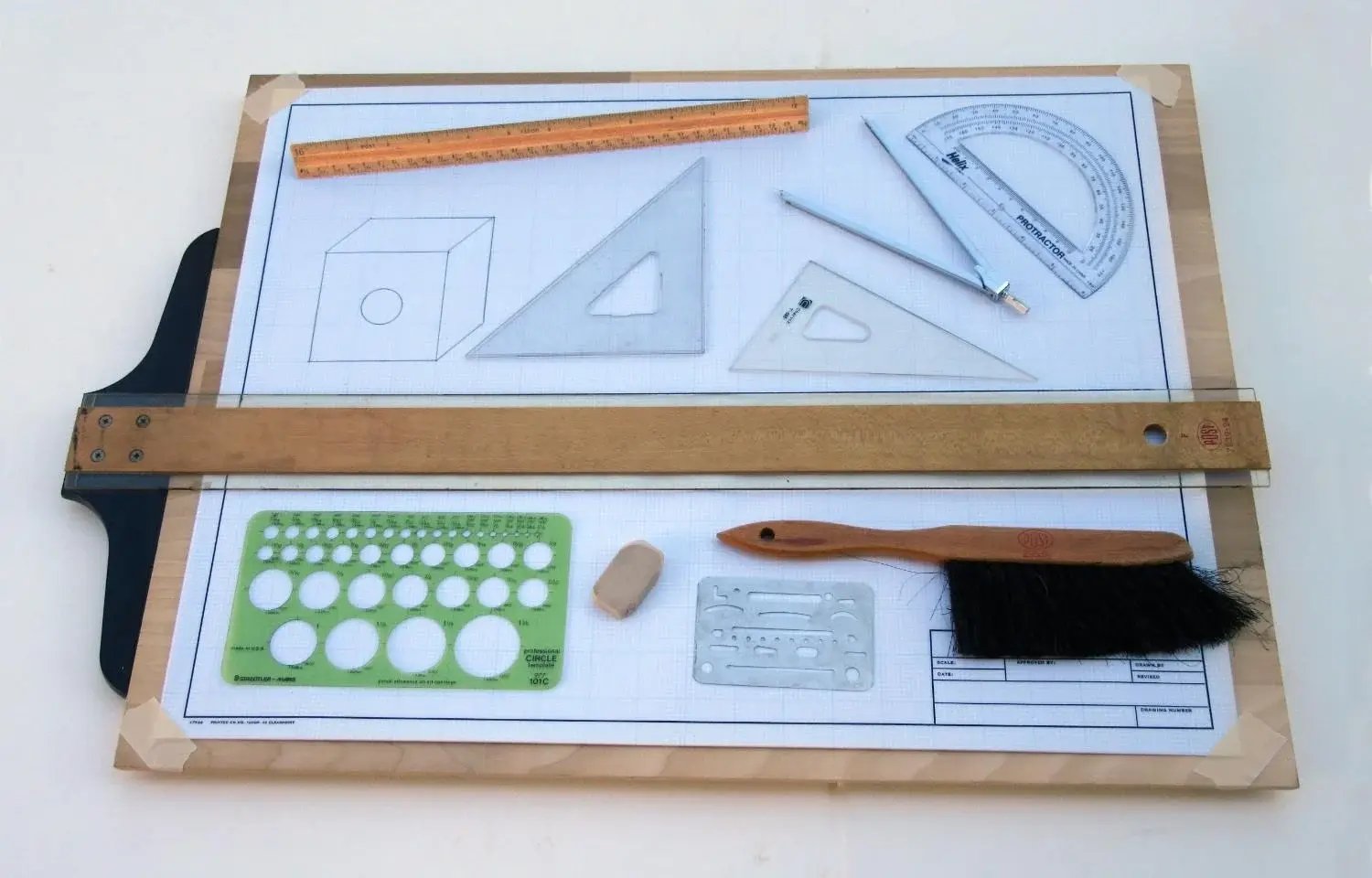
Drafting board with technical drawing instruments.

As project demands increased, MEP teams adopted connected methods that linked design information, coordination, and performance review into a single process. Data no longer remained limited to drawings and instead became reusable across project stages. This shift shows how MEP engineering shifted from manual drafting to digital workflows, improving accuracy while keeping processes clear and controlled.

Here are the key technologies transforming traditional MEP workflows:

  • Building Information Modeling (BIM) brought design information into one shared model, improving coordination between systems.

  • Cloud collaboration platforms kept project data accessible, updated, and consistent for all teams.

  • Design automation reduced manual calculations and helped maintain consistent technical outputs.

  • Smart sensors and connected systems enabled continuous monitoring that supports sustainable building systems.

  • Advanced analytics turned system data into data-driven insights for improving MEP operations.

  • Digital twin technology created virtual system copies to support testing, monitoring, and ongoing performance review.

How Did BIM, Automation, and IoT Reshape Design, Coordination, and Performance?

As these technologies become part of MEP workflows, design actions, coordination steps, and performance checks align more closely across project stages. Information moves in a structured way, reducing gaps between planning and execution. In this shift, BIM for MEP supports consistent decision-making without repeating work or creating coordination delays.

These technologies reshape design, coordination, and performance in the following ways:

  • Digital models create a shared design reference, reducing misunderstandings between disciplines.

  • Automation handles repetitive tasks, improving speed and consistency in coordination activities.

  • Connected systems provide ongoing performance data instead of relying only on design estimates.

  • Integrated tools clarify the impact of BIM, automation, and IoT on MEP design decisions.

  • Sensor feedback strengthens decision-making by using IoT on MEP design to inform system adjustments.

  • Combined workflows support the transition from traditional to smart MEP engineering.

Did You Know?

By 2026, the global MEP software market is projected to reach USD 2,011.59 million, showing rapid adoption of digital tools that improve design accuracy and coordination in smart MEP systems.

What Role Do AI and Data-Driven Insights Play in Modern Smart MEP Systems?
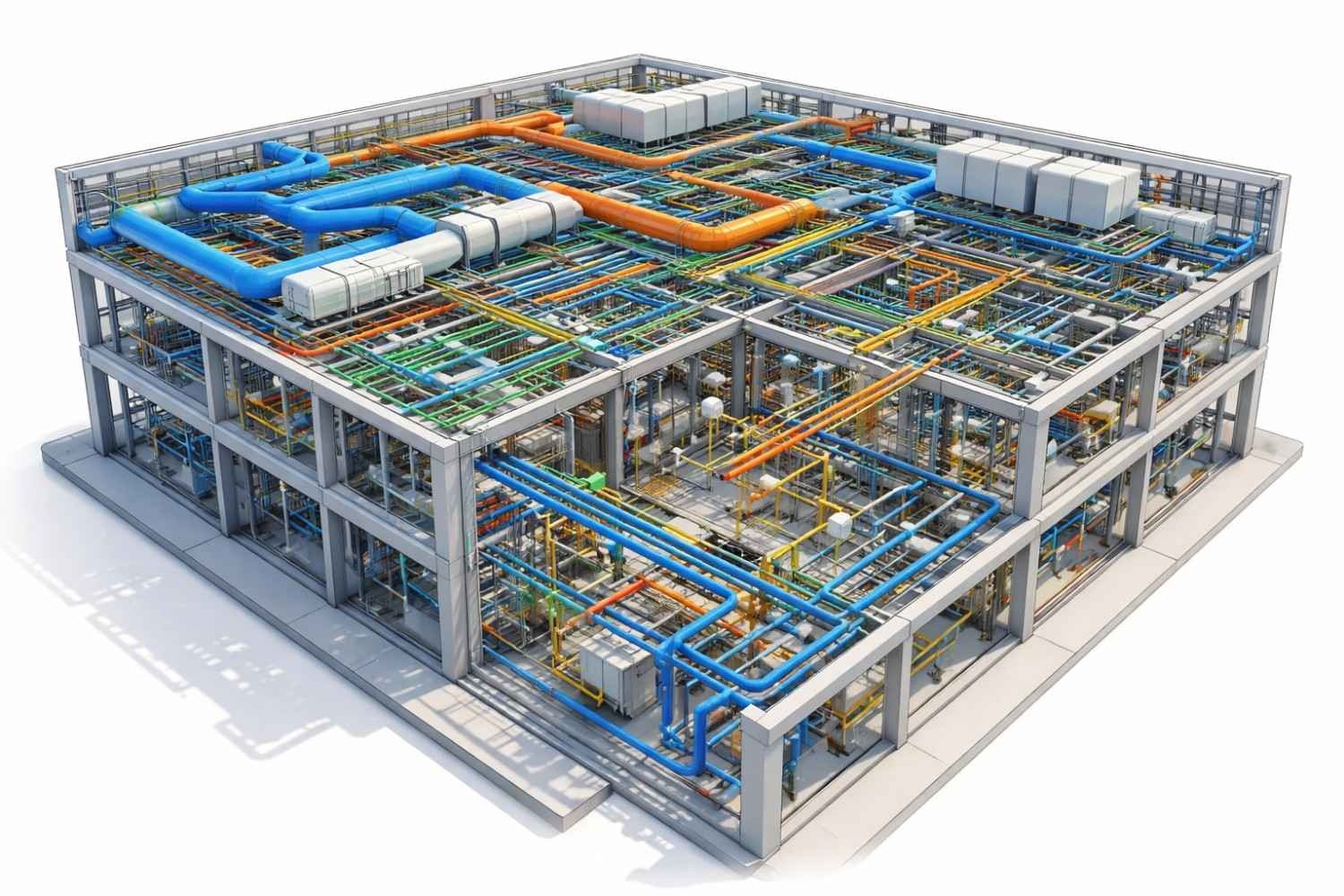
3D BIM model showing integrated MEP systems.

Modern MEP environments increasingly rely on systems that interpret data rather than simply display it. Design, coordination, and operation now benefit from predictive patterns and continuous feedback. Within this shift, the role of AI and analytics in smart MEP systems becomes central to improving accuracy, responsiveness, and informed technical decisions.

Their role in modern smart MEP systems can be seen through the following contributions:

  • AI models review system behavior to flag risks before performance is affected.

  • Historical and live data guide design refinements during coordination stages.

  • Intelligent recommendations within MEP software support faster, more consistent technical choices.

  • Data analysis improves energy demand and load prediction accuracy.

  • Ongoing insights support planned maintenance rather than reactive fixes.

  • These results demonstrate the benefits of adopting digital and intelligent MEP systems across design and operation.

How Is the Shift Toward Digital MEP Systems Improving Accuracy, Efficiency, and Sustainability?

Engineer monitoring smart building MEP control dashboards.

Digital MEP workflows make system information more consistent and easier to manage across all project stages. Coordination improves as teams use verified data rather than assumptions, reducing errors and delays. This shift demonstrates how smart MEP enhances building efficiency and sustainability through precise, data-driven decisions without adding complexity.

This shift improves accuracy, efficiency, and sustainability in the following ways:

  • Centralized models reduce errors by keeping system information consistent across disciplines.

  • Automated checks improve accuracy by identifying issues earlier in the design process.

  • Digital workflows shorten coordination cycles and reduce manual rework.

  • Integrated analysis supports energy and resource optimization during design decisions.

  • Real-time updates through MEP coordination tools improve communication and alignment.

Learn Revit and 12+ BIM software with industry ISO 19650 complaint project simulations in just 7 months.

Apply now

Conclusion

MEP workflows have shifted from manual drafting to intelligent, connected systems, improving coordination, accuracy, and decision-making across projects. Modern digital environments make information easier to manage, reduce errors, and support better planning. This transformation demonstrates how digital tools improved MEP coordination and performance, enabling teams to work more efficiently across design, construction, and operational stages.

For engineers looking to enhance their expertise, the BIM Course for MEP Engineers, offered by Novatr, provides structured learning in digital modeling and coordination techniques. Adoption of MEP automation helps streamline repetitive tasks, minimize delays, and increase project efficiency. Visit our resource page to access guides, case studies, and additional materials for applied learning and reference.

FAQs

1. How have MEP systems evolved from manual drafting to digital workflows?

MEP systems transitioned from hand-drawn plans and separate calculations to integrated digital models that connect multiple disciplines. Digital workflows now allow real-time updates, better coordination, and more accurate designs. This evolution has reduced errors and improved project efficiency across all stages.

2. What technologies paved the way for modern smart MEP systems?

Technologies like Building Information Modeling (BIM), automation tools, IoT sensors, and digital twin simulations have transformed traditional MEP practices. These tools enable better design visualization, performance monitoring, and collaboration across teams. Their integration has created smarter, more responsive MEP systems.

3. How did the shift from CAD to BIM transform MEP design?

Moving from CAD to BIM allowed MEP engineers to work with 3D, data-rich models instead of static 2D drawings. BIM improves coordination between disciplines, identifies design conflicts earlier, and links design intent with real-world performance. This shift has made projects more precise, efficient, and easier to manage.

4. What benefits do smart MEP systems bring to modern construction projects?

Smart MEP systems improve project accuracy, reduce rework, and streamline coordination between teams. They provide real-time performance data, support energy efficiency, and enable predictive maintenance. These benefits help ensure projects are completed on time, within budget, and with higher operational consistency.

Was this content helpful to you

Dislike No

TABLE OF CONTENTS

Download Syllabus
BIM Professional Course for Civil Engineers

course benefits

40+ live & bonus sessions

1 RIBA-structured capstone project

Learn 8+ BIM software

Autodesk & NSDC certifications

6 guided career sessions

Lifelong access to course content & community

Career counselling & interview preparation

Enter your details to download the course syllabus.

Download Syllabus
BIM Professional Course for Architects V2.0

course benefits

70+ live sessions

3+ RIBA and ISO 19650 structured capstone projects

18+ BIM software access

10+ guided career sessions

Certificates from Autodesk and NSDC

Lifelong access to course content & community

Career counselling & interview preparation

Enter your details to download the course syllabus.

Download Syllabus
Master Computational Design Course for Real-World Application

course benefits

80+ live sessions

50+ assignments

5+ softwares, 15+ plugins

Career counselling and interview prep

Lifelong access to to course content & community

Enter your details to download the course syllabus.

Download Syllabus
Advanced Interior Design with AI

course benefits

Simulated project based learning

Career counselling and interview prep

Lifelong access to course content

Learn 8+ software

3 Certificates of Achievement

Enter your details to download the course syllabus.

Download Syllabus
BIM Professional course for MEP Engineers

course benefits

Autodesk and NSDC Professional Certificates

12+ BIM softwares and plug-ins

80+ hours of live classes

Create 10+ toolkits to kickstart your MEP BIM project.

Dedicated Program Manager and Industry Guide Support

1:1 Career Mentoring

Networking with AEC Industry Professionals

Top 10% learners get exclusive Innovation bootcamp access.

ISO 19650 for BIM workflows

Enter your details to download the course syllabus.

Ready to skyrocket your career?

Begin your next chapter in AEC

with Novatr!

We are here to help you take the industry by storm with advanced, tech-first skills.