


How Was the Delhi-Mumbai Expressway Managed Across 6 States?
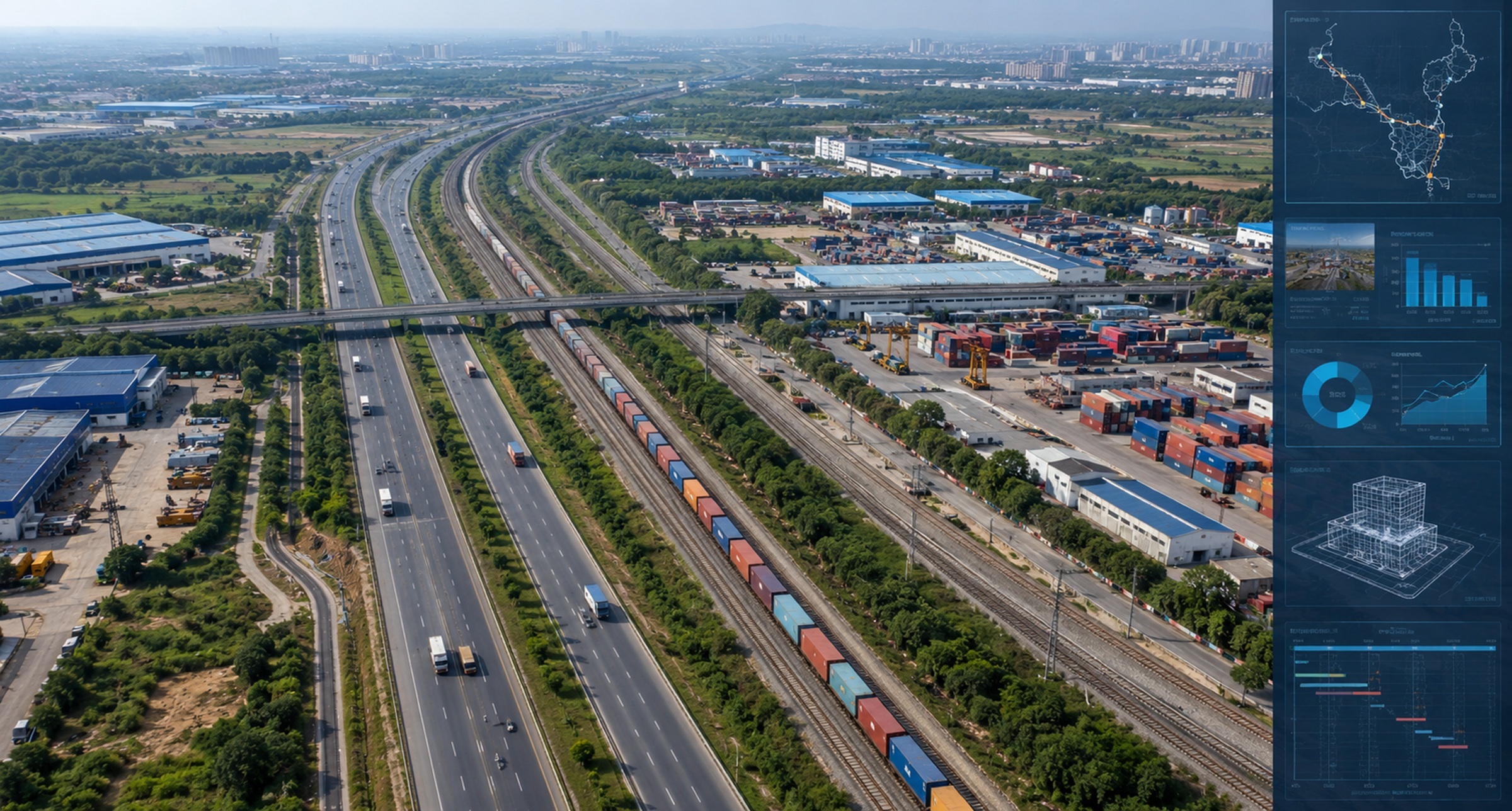
Managing a project of this scale across six states was a significant challenge. The Delhi-Mumbai Expressway passes through multiple regions, each with different terrain conditions, regulatory requirements, contractors, and project timelines. Seamless execution required robust project management and continuous coordination among stakeholders.
The project involved central and state authorities, consultants, engineers, contractors, and suppliers working simultaneously across hundreds of kilometres. Without a structured approach, delays, communication gaps, and design conflicts could have impacted progress.
To address these challenges, teams relied on detailed construction planning, standardised workflows, and digital collaboration processes. Real-time information sharing helped stakeholders track progress, monitor milestones, and respond quickly to issues on site.
Projects of this scale also require close coordination between design and construction teams. Digital tools enabled faster decision-making and improved visibility across different work packages. This helped ensure that design updates, construction schedules, and on-site activities remained aligned throughout the project lifecycle.
The success of the expressway highlights how effective project management, combined with modern digital engineering practices, can help deliver complex transportation infrastructure projects more efficiently across multiple locations.
What Role Did BIM and Digital Construction Play in the Project?
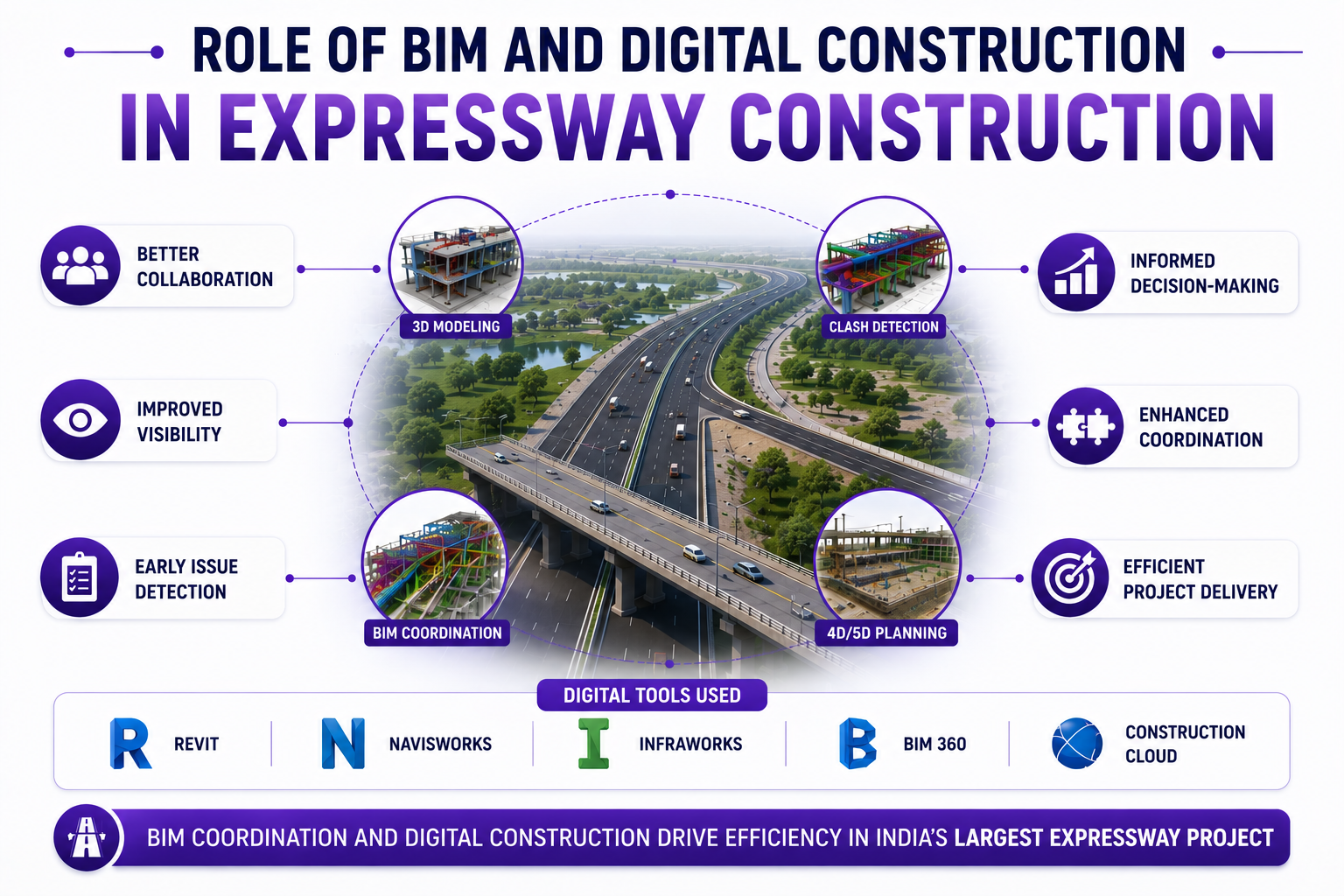
The scale and complexity of the Delhi-Mumbai Expressway made digital collaboration essential. With multiple teams working across different locations, BIM coordination and digital construction processes helped improve communication, reduce errors, and streamline project delivery.
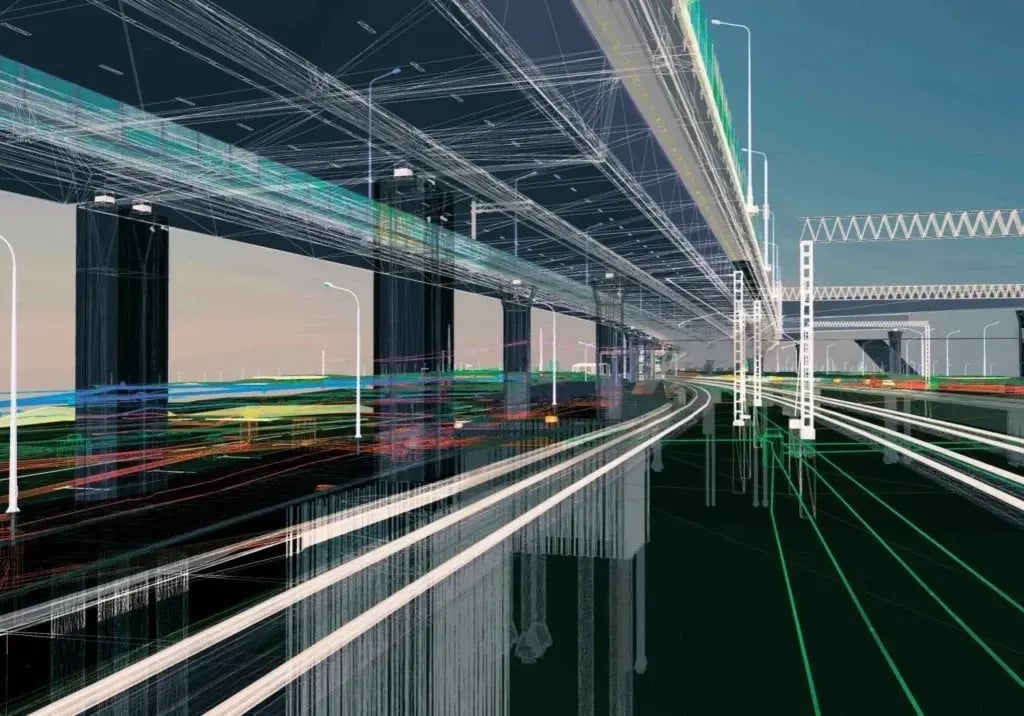
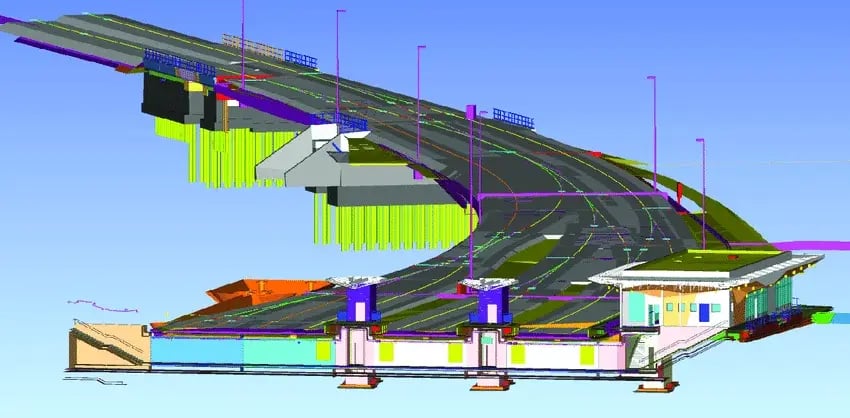
Using BIM-enabled workflows, project stakeholders could create and manage digital representations of project components before construction began. This improved design visibility and helped teams identify potential issues early, reducing costly rework during execution.
Digital engineering also supported informed decision-making by providing accurate project information to designers, engineers, contractors, and project managers. As designs evolved, updates could be shared more efficiently, ensuring all teams worked with the latest information.
In large engineering projects, coordination between different disciplines is critical. BIM coordination helped align design, construction, and operational requirements, improving overall project coordination and reducing clashes between systems.
Combined with modern construction technologies, these digital workflows enhanced efficiency, improved planning accuracy, and supported the successful delivery of one of India's largest expressway construction and transportation infrastructure projects. To answer what digital tools are commonly used in highway infrastructure projects, it would be BIM coordination and digital construction.
How Were Coordination and Large-Scale Planning Handled Digitally?
Delivering the Delhi-Mumbai Expressway required detailed construction planning and seamless coordination across thousands of workers, multiple contractors, and several project packages. Traditional coordination methods would have made it difficult to manage information consistently at such a large scale. So, how did technology improve coordination in Delhi Mumbai Expressway?
Digital platforms enabled teams to centralise information, track progress, and improve communication. This created a more connected environment where design teams, site engineers, consultants, and contractors could access updated information when needed.
Through digital engineering and digital construction workflows, project teams were able to monitor schedules, review design changes, and identify potential issues before they affected construction activities. This improved decision-making and reduced delays across different project sections.
The use of BIM coordination further strengthened collaboration by helping teams visualise project elements, manage design information, and maintain alignment between various disciplines. As a result, stakeholders could execute complex infrastructure projects with greater accuracy and efficiency.
This digital-first approach demonstrated how modern construction technology can support large-scale infrastructure development, enabling smoother delivery of complex highway and transportation projects.
What Challenges Did Technology Help Solve During Execution?
Executing a mega expressway construction project across six states brought several challenges. Teams had to manage vast amounts of data, coordinate multiple stakeholders, track progress across different locations, and respond quickly to design or site-related issues.
Through digital engineering and digital construction workflows, project teams gained better visibility into ongoing activities. This helped reduce communication gaps, improve decision-making, and keep work aligned with project schedules.
BIM coordination helped identify design conflicts before construction, reducing rework and minimising delays. Advanced construction technology also supported more accurate construction planning and stronger project coordination across teams.
By improving collaboration and information management, technology helped deliver complex highway infrastructure and transportation infrastructure works more efficiently.
What Does This Project Mean for India’s Infrastructure Future?
The Delhi-Mumbai Expressway demonstrates how digital engineering, BIM, and construction technology can transform the delivery of large-scale infrastructure projects. It highlights a shift from traditional execution methods to more connected and data-driven approaches.
As India continues investing in highway infrastructure, rail corridors, airports, and other transportation infrastructure, the need for efficient project management and digital collaboration will continue to grow. Technologies such as BIM coordination and digital construction can help improve productivity, reduce risks, and support better decision-making throughout the project lifecycle.
The success of the Delhi-Mumbai Expressway sets a strong example for future smart infrastructure initiatives and large-scale infrastructure projects, showing how digital workflows can help deliver complex developments faster, more efficiently, and at a national scale.