


Why Are Architects Transitioning to Computational Design?
Traditional architectural workflows were built around lines on paper and manual iteration. They assume a certain stability in design intent and a linear process from concept to construction. Modern projects rarely behave that way, especially when performance, energy, environmental and regulatory data are involved from the earliest phases.
My shift to computational design didn’t happen suddenly. It stemmed from frustration. I kept revising drawings due to changes upstream, client requests, regulations, or engineering issues. The design intent stayed the same, but the drawings kept breaking.
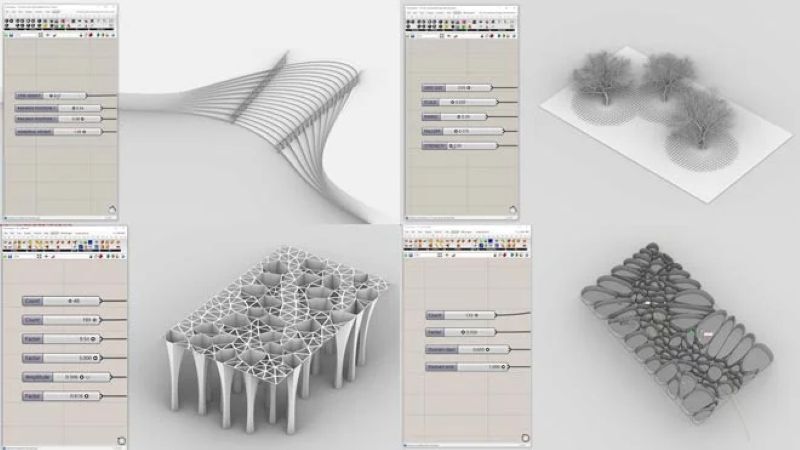
Computational design offered efficiency, accuracy, and creative freedom. Instead of drawing outcomes, I encoded relationships, allowing designs to adapt to changes rather than collapse. This shift fundamentally changed my approach.
As projects became more complex, computational design became essential. It gave data-driven insights, replacing intuition with clear performance metrics. Iteration became exploration, fostering curiosity rather than defensiveness.
Computational design also bridged the gap between drawing and making, especially in projects involving CNC or prefabrication. It made precision and accountability central to the process, reshaping how architects engage with the design ecosystem.
What Skills Do You Need to Become a Computational Designer?
Transitioning to computational design requires a blend of thinking patterns more than specific software knowledge. Tools are important, but they are extensions of deeper ways of working rather than starting points.
1. Fundamental Geometry and the Ability to Think Geometrically
At its core, computational design is about geometry. Every algorithm, no matter how complex, manipulates points, vectors, curves, and surfaces. A solid understanding of geometry is essential for creating reliable systems. Strong computational designers can mentally deconstruct form into geometric primitives, such as grids and reference planes. This spatial thinking makes workflows more deliberate and less trial-and-error-based.
2. Computational Thinking — Breaking Design into Logic
Computational thinking is about breaking design problems into steps, rules, and relationships. Rather than focusing on final form, it’s about thinking in processes. Once you define the relationships and rules, the design can scale without needing to redesign each iteration. Many architects struggle with computational tools because they’re uncomfortable thinking procedurally. Once this mindset shifts, the tools become intuitive.
3. Systems Thinking — Understanding Relationships Over Objects
Design elements are not isolated objects. A facade panel, for example, is connected to structure, daylight, fabrication, and cost. Computational design is about understanding these interdependencies and designing for change. Systems thinking allows you to design in a way that accommodates evolving conditions and new challenges.
4. Comfort with Logic — Cause, Effect, and Conditions
Once systems are established, logic ties everything together. You need to be comfortable with cause and effect, conditions, and sequential operations. Clear logic makes systems robust and dependable, while weak logic leads to fragility. Over time, good computational designers learn to design logic just as carefully as the geometry itself.
5. Tool Literacy
Once the foundational thinking is in place, tools like Rhino, Grasshopper, and Python become essential for managing complexity, but the most effective designers use them to simplify rather than complicate. The best computational designers use tools to clarify their thinking, not just to create more complexity.
What is the step-by-step process to transition from an Architect to a Computational Designer?

Most architects transition into computational design when traditional workflows feel fragile. A small change can break drawings everywhere, leading to frustration. For me, it started when I stopped drawing outcomes and began defining processes. If I could explain how a design worked, what depended on what, what could change, and what had to stay fixed, I could build it computationally. Geometry became central, not complex math, but understanding how points, vectors, distances, and transformations fit together.
1. Learn the tool
Start small with parametric workflows, testing simple rules, and protecting design intent early. Once you see how a change updates the entire system, manual redraws feel inefficient. Tools like Rhino and Grasshopper build the foundation for computational design, helping you become comfortable with the process.
2. Lead with purpose backed by logic
Once proficient, performance-based metrics become part of your workflow. Testing assumptions about daylight, efficiency, and feasibility early transforms design discussions, making architects integral to managing complexity. Computational thinking changes how you approach problem-solving and design.
The transition is uncomfortable, with messy scripts and logic errors, but it’s temporary. Tools don’t replace judgment. Architects still decide what matters, making the shift a way to work with complexity instead of against it.
How I Applied Computational Thinking in My First Architectural Project
My first use of computational thinking wasn't a fancy parametric facade but a simple design problem, repeating units with slight variations. Traditionally, each instance would require manual adjustments.
Instead, I described the logic: what stayed constant across all units, what changed, and which dimensions were dependent. Using a basic parametric setup, I created relationships that allowed geometry to respond automatically. This was the moment it clicked for me.
What struck me was the clarity. I could trace design decisions back to rules instead of guessing which drawing was wrong. Feedback became a process of testing alternatives rather than redoing work. This small shift changed how I approached design permanently.
Common Challenges Architects Face When Transitioning

The biggest challenge architects face is focusing too much on outcomes, complex forms or facades, without understanding the underlying processes. Computational design is about defining relationships and systems, not just producing impressive visuals. When architects focus solely on form, tools like Grasshopper seem intimidating.
Learning to think procedurally is where most architects struggle. Once you embrace this mindset, tools become much easier to understand and use. The real barrier isn’t the software; it’s comfort with breaking problems into manageable steps.
Where to Learn Computational Design?
Learning computational design requires structured guidance and real-world practice. The Master Computational Design Course offered by Novatr is an excellent starting point, offering a project-based approach to help architects build the skills needed for computational design.
Key course features:
- An architecture-first approach to computational thinking
- A clear progression from geometry to systems design
- Hands-on training on industry-relevant tools such as Rhino, Grasshopper, Flux.ai, ComfyUI, and D5 Render.
- Use of commonly adopted plugins such as Paneling Tools, DeCoding Spaces, Anemone, Galapagos, Wallacei, and OpenNest to build efficient workflows
- Mentorship from experienced computational designers