


What Is OpenBIM?
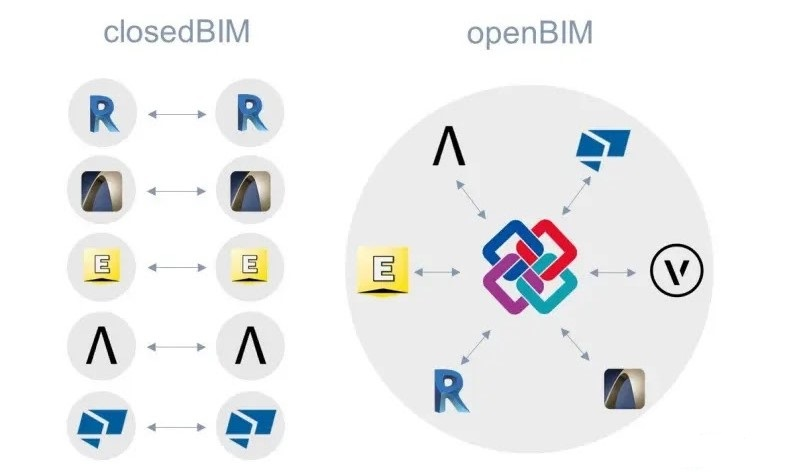
To clearly explain what is openbim, it refers to a vendor-neutral BIM methodology built on open data exchange rather than proprietary file control. OpenBIM enables information created in one software platform to be accessed, reviewed, and validated in another without loss of intelligence or context.
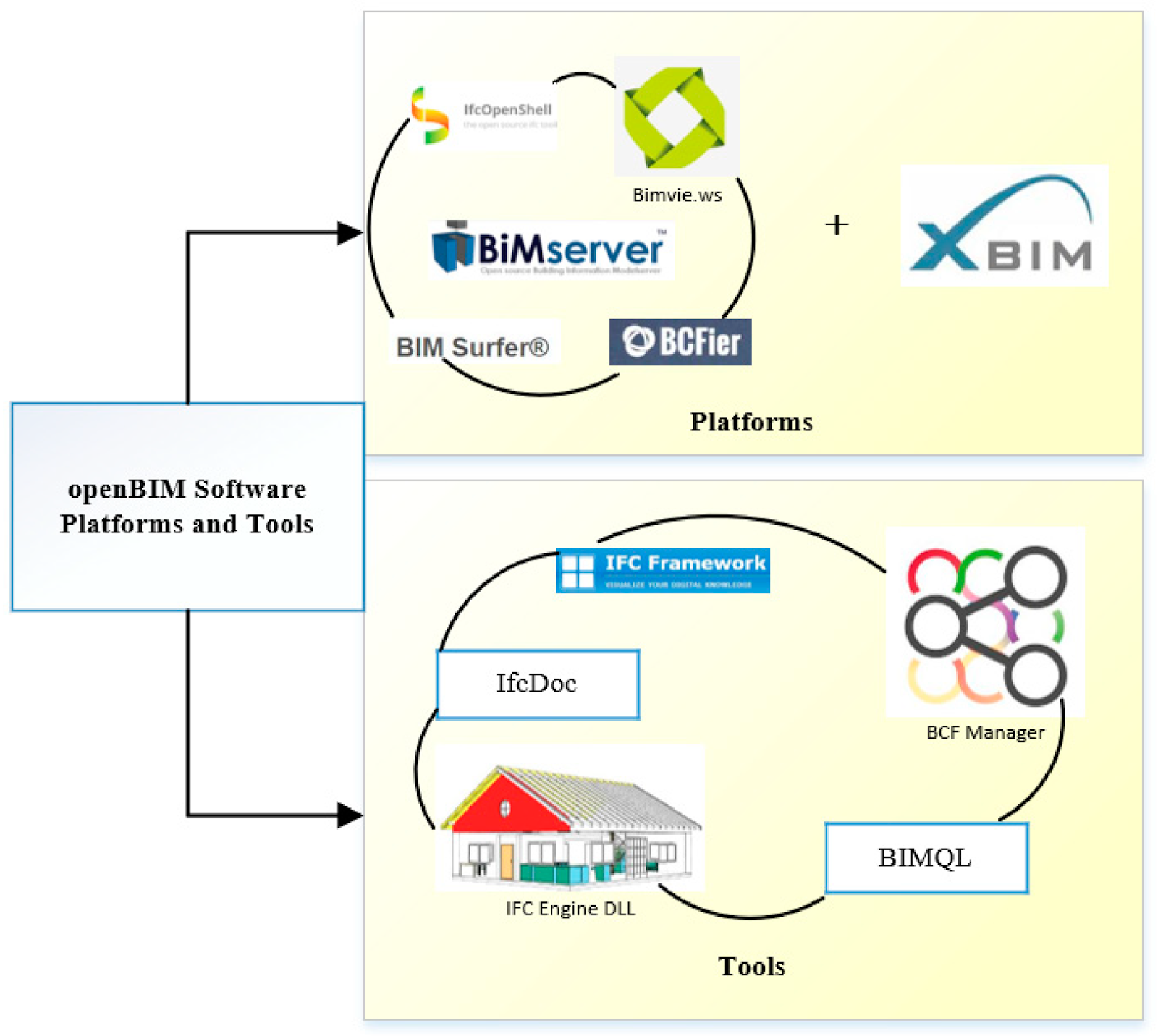
At the core of OpenBIM are open BIM standards such as IFC and BCF. IFC ensures that geometry, properties, and relationships remain intact across platforms, while BCF supports issue tracking and communication without altering original models. Together, these standards enable reliable collaboration across multidisciplinary teams.
From a workflow perspective, open BIM software allows engineers and designers to select tools that match their responsibilities. Structural engineers may focus on analysis accuracy, architects on spatial design, and BIM coordinators on validation, all while contributing to a shared information environment.
OpenBIM also supports independent review processes. Because models are not locked into authoring tools, they can be checked objectively using neutral platforms. This improves transparency, reduces coordination bias, and strengthens overall model quality across project stages.
Beyond technical interoperability, OpenBIM also supports governance and accountability on complex projects. When data exchange relies on open BIM standards, each stakeholder can trace decisions back to specific model versions, rule sets, and issue logs. This traceability is especially important on projects with regulatory oversight, third-party audits, or phased approvals.
What Are Closed BIM Ecosystems?

To understand what is closed bim, it refers to BIM workflows where data exchange is limited to proprietary formats controlled by a single software vendor. In these ecosystems, optimal collaboration often requires all project participants to use the same platform and toolset.
Closed BIM environments typically prioritize deep integration within one software family. While this can be efficient for internal teams, it introduces challenges on projects involving external consultants, regulators, or independent reviewers.
One limitation of closed BIM is restricted interoperability. When models are shared outside the ecosystem, data may be simplified, converted, or partially lost. This affects downstream coordination, especially when independent model validation or long-term data reuse is required.
Another challenge with closed BIM environments is scalability across organizations. When consultants, subcontractors, or review authorities operate outside the same ecosystem, coordination often depends on file exports that strip models of intelligence. This creates gaps between design intent and reviewed information, increasing the risk of misinterpretation.
Closed BIM can also create lifecycle risks. Owners may need to retain software licenses long after construction to access or update asset data. Over time, this dependency can increase operational costs and reduce flexibility in facility management decisions.
Why Nemetschek Rejected Closed BIM?
The Nemetscheck Group rejected closed BIM ecosystems because they do not reflect how global AEC projects are delivered. Large projects involve multiple firms, jurisdictions, and regulatory requirements that rarely align with a single proprietary platform.
Instead of building one all-encompassing system, Nemetscheck BIM Software follows a modular approach. Each application focuses on a specific role such as modeling, analysis, coordination, or documentation, while remaining interoperable through open standards.
This structure supports discipline-specific depth without sacrificing collaboration. Engineers can work in tools optimized for accuracy and performance, while BIM coordinators and reviewers operate in neutral environments.
Another reason for this decision is long-term data value. Nemetschek tools are designed to preserve information beyond project completion, supporting renovation, expansion, and asset management use cases. Closed BIM systems often struggle to deliver this continuity without vendor dependency.
Nemetschek’s strategy also reflects how responsibilities are distributed across modern AEC projects. Design, analysis, coordination, and construction documentation are often handled by separate teams using different tools. Forcing these roles into a single platform can reduce efficiency rather than improve it.
By rejecting closed BIM early, Nemetschek aligned its ecosystem with public-sector expectations, infrastructure workflows, and global project delivery models.
How OpenBIM Works in Real Projects?
OpenBIM works by separating information exchange from software dependency. Models are authored in discipline-specific tools and shared using IFC OpenBIM formats that preserve both geometry and data intelligence.
Once shared, models are reviewed in neutral environments for coordination and compliance. Issues are communicated using a BIM collaboration format, which allows stakeholders to exchange comments, viewpoints, and resolutions without modifying original models.
This approach supports staged approvals and independent validation. Engineers can review models for constructability, safety, and compliance without interfering with design ownership.
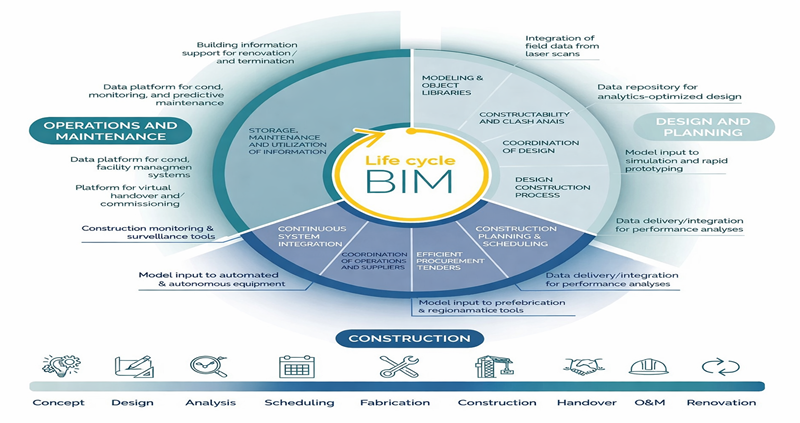
OpenBIM also supports phased project delivery. As models evolve from design to construction, information remains structured and reusable. This continuity improves coordination efficiency and reduces the risk of late-stage rework.
On large projects, OpenBIM enables parallel workflows across regions and disciplines, making it particularly suitable for infrastructure, healthcare, and public-sector developments.
OpenBIM vs Closed BIM. What Engineers Should Care About?
When evaluating openBIM Vs closed BIM, engineers should focus on collaboration quality, data longevity, and flexibility across the project lifecycle.
Below is a comparison showing the key differences:
|
Aspect |
OpenBIM |
Closed BIM |
|
Data exchange |
Uses open standards like IFC and BCF |
Relies on proprietary formats |
|
Software flexibility |
Allows multiple authoring and review tools |
Requires a single vendor ecosystem |
|
Model validation |
Supports independent checking |
Often tied to authoring tools |
|
Lifecycle usability |
Data remains accessible long term |
Data access depends on the vendor |
|
Collaboration |
Easier multidisciplinary coordination |
Best within the same organization |
|
Public-sector alignment |
Commonly required |
Often restricted |
OpenBIM benefits for engineers include freedom of tool choice, improved coordination transparency, and better alignment with public and infrastructure project requirements. Closed BIM systems may offer convenience in controlled environments but often limit flexibility on complex or long-term projects.
Engineers working on global or regulated projects increasingly encounter OpenBIM requirements. Understanding these differences helps professionals select workflows that support both project performance and career adaptability.


.jpg)