---
title: What Jobs Can You Get After Mastering BIM 360 Software? 2026
description: Explore why getting expertise in BIM 360 is important to build a rewarding career, which roles and industries value it the most, and more.
image: https://blog.novatr.com/hubfs/What%20Jobs%20Can%20You%20Get%20After%20Mastering%20BIM%20360%20Software.png
---
[Blogs](https://www.novatr.com/learning-hub)
- [Architecture & Construction](https://www.novatr.com/learning-hub?category=Architecture+%26+Construction)
- [BIM](https://www.novatr.com/learning-hub?category=BIM)
- [Computational Design](https://www.novatr.com/learning-hub?category=Computational+Design)
- [Company News](https://www.novatr.com/learning-hub?category=Company+News)
- [Expert Talks](https://www.novatr.com/learning-hub?category=Expert+Talks)
Explore Courses
[Just Launched  BIM Professional Program v.2026 Take your career to the next level by mastering the real-world application of BIM. Know More](https://www.novatr.com/courses/bim-professional-program)
[ Master Computational Design Course Break into an advanced career by learning to apply the power of computation to the art of design. Know More](https://www.novatr.com/courses/computational-design)
[Blogs](https://www.novatr.com/learning-hub)
Explore Blogs
- [Architecture & Construction](https://www.novatr.com/learning-hub?category=Architecture+%26+Construction)
- [BIM](https://www.novatr.com/learning-hub?category=BIM)
- [Computational Design](https://www.novatr.com/learning-hub?category=Computational+Design)
- [Company News](https://www.novatr.com/learning-hub?category=Company+News)
- [Expert Talks](https://www.novatr.com/learning-hub?category=Expert+Talks)
Courses
- [BIM Professional Program v.2026](https://www.novatr.com/courses/bim-professional-program)
- [Master Computational Design](https://www.novatr.com/courses/computational-design)
- [Archi/](https://www.novatr.com/learning-hub?category=BIM)
Featured Article
# What Jobs Can You Get After Mastering BIM 360 Software?

Harshita Chaudhary
March 25, 2026
7 min read


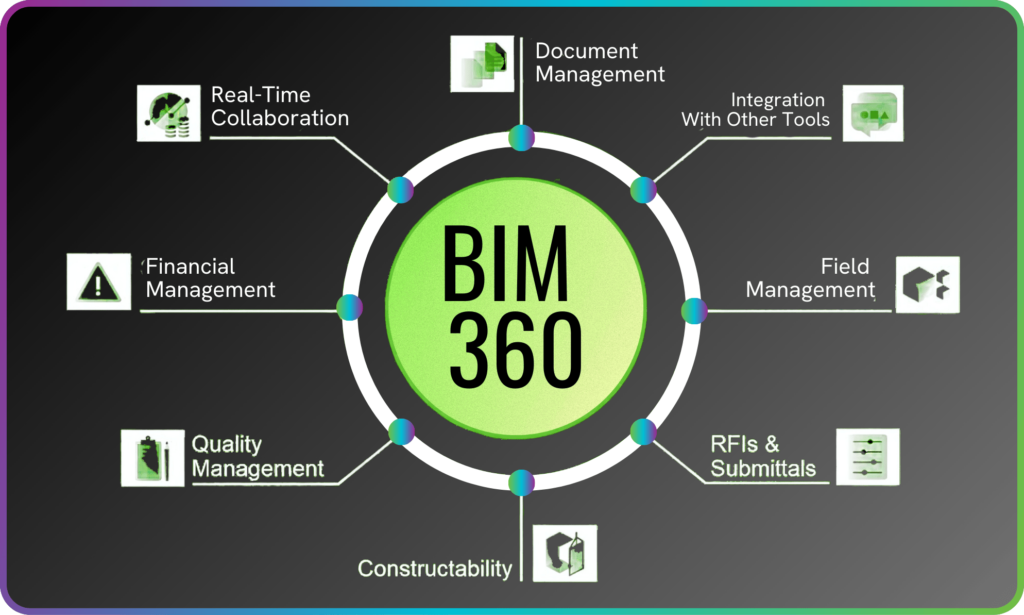
BIM 360 has resulted in a significant transformation in the AEC industry. Now part of the Autodesk Construction Cloud, BIM 360 is a core aspect of it. This cloud-based platform integrates design, project management, quality control, and field operations into a single database, providing teams with real-time access to models, documents, RFIs, submittals, and safety data throughout every phase of a project.
As federal agencies, state departments of transportation, and private developers increasingly mandate BIM on major projects, employers across the USA are actively seeking professionals who can work on BIM 360 fluently in construction projects. Understanding what BIM 360 is and how its tools, modules, and workflows function in practice is now non-negotiable.
So, whether you're an engineer, architect, project manager, or site supervisor, gaining expertise in BIM 360 is quickly becoming a baseline expectation for better job roles and higher salaries.
This is why we’ve created a comprehensive article that covers understanding what is BIM 360, every major BIM 360 job and career opportunity after mastering BIM 360, from entry-level coordination roles to senior leadership positions.
Unlock High-Paying Careers With BIM
Master BIM workflows, software and skills on real projects.
Apply Now
\*Limited seats available
## What career opportunities open up after mastering BIM 360?
Architecture technology is no longer just about designing and drafting; it is also an information management discipline. With this shift, BIM 360 sits at the centre, and professionals who understand its BIM 360 features and workflows are better positioned for roles that require design knowledge, while being able to deliver on digital projects.
Hence, the most common roles in architecture and design firms that directly value BIM 360 expertise include:
**1. BIM Coordinator**: Manages federated models from the architectural team and all engineering consultants, runs clash detection, and maintains the integrity of the project's design data throughout all phases.
**2. BIM Manager**: Sets and enforces BIM standards and protocols across the firm, manages the Common Data Environment, and leads digital delivery strategy for multiple projects simultaneously.
**3. Project Architect (BIM-Enabled)**: Leads the design and documentation of a project while managing the BIM 360 project environment, consultant coordination, and RFI responses during construction administration.
**4. Design Technology Manager**: Oversees the firm's software ecosystem, trains staff on BIM 360 and related tools, and drives innovation in how the firm uses technology to deliver better architecture.
**5. Construction Administration Manager**: Uses BIM 360's RFI (request for information), Submittal, and issue tracking tools to manage the architect's responsibilities during the construction phase with accuracy and a clear audit trail.
## How does BIM 360 expertise support roles in BIM coordination and management?
Within architecture firms, BIM 360 coordination and management are increasingly recognised as distinct career tracks that require dedicated expertise, not just something a senior designer picks up on the side. Mastering BIM 360 is central to both.
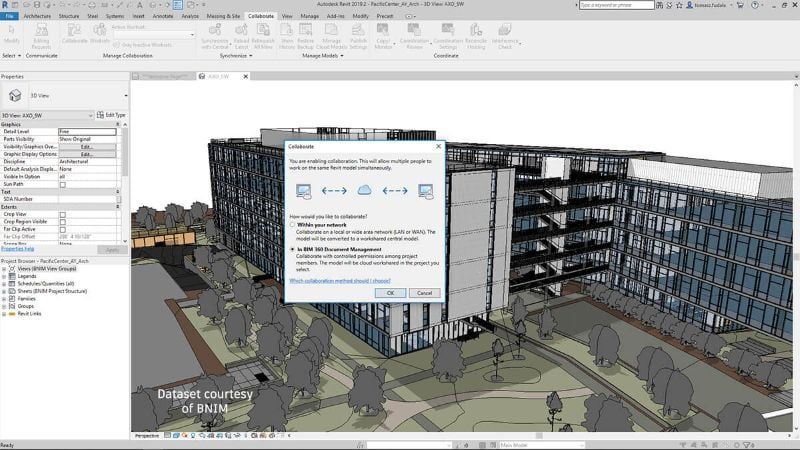
**BIM Coordinators in architecture** are responsible for managing the federated model environment, bringing together the architectural Revit model with structural, mechanical, electrical, plumbing, and civil models from consultant teams, running clash detection, assigning issues, and tracking resolution through to close-out. On large or complex projects, this is a full-time role that demands both technical precision and strong communication with consultant project managers.
**BIM Managers in architecture firms** set the rules by which every project runs. They create and maintain the firm's BIM Execution Plan (BEP) templates, configure BIM 360 project environments for each commission, define folder structures and permission hierarchies, and ensure that design teams are issuing information correctly at every stage. Increasingly, this role involves helping the firm comply with owner-specified BIM requirements, which vary widely across healthcare, federal, and institutional clients in the USA.
Specific skills that U.S. architecture employers look for in these roles include:
- Configuring BIM 360 software for projects from initial setup through close-out
- Building and managing document folder structures, naming conventions, and access permissions
- Setting up and running model coordination spaces and automated clash detection cycles
- Coordinating issue assignment and resolution workflows across design disciplines
- Producing model health reports and coordination meeting documentation for project leads
- Maintaining alignment between the BIM 360 workflows and the project's contractual information requirements
## Which site-based and project management roles value BIM 360 skills?
Architects do not disappear when a project moves into construction. Construction administration is a core part of architectural practice, and BIM 360 has fundamentally changed how architects manage it. Professionals who understand the platform's project delivery tools are significantly more effective during this phase than those who rely on email and paper-based processes.
**Project Architects managing construction administration** use BIM 360's RFI and Submittal workflows to track every design query and product approval with a complete, time-stamped audit trail. On a large commercial or institutional project with hundreds of concurrent RFIs, managing this through BIM 360 is no longer optional; clients and contractors expect it. Architects who can run this process efficiently reduce risk for their firm and build stronger relationships with the construction team.
**Construction Administration Managers** at larger firms oversee the CA process across multiple projects simultaneously, using BIM 360 to monitor RFI response times, flag overdue submittals, and ensure that design intent is being correctly interpreted and documented in the field. This is a high-value role that requires both architectural knowledge and genuine platform fluency.
**Project Managers at architecture firms** use BIM 360 to manage consultant deliverables, track drawing issue schedules, and maintain clear records of design decisions across the full project lifecycle. Firms working on large institutional or public sector commissions increasingly expect their PMs to manage these workflows inside BIM 360 rather than through separate spreadsheets or email chains.
For architects working with design-build contractors or in integrated project delivery environments, BIM 360 becomes the shared workspace for the entire project team. Architects in these settings who can navigate the platform confidently, contributing to and reviewing the contractor's model coordination process, are far more valuable team members than those who treat BIM 360 as the contractor's tool alone.
## How can BIM 360 proficiency boost careers in MEP and construction teams?
While MEP coordination is primarily led by engineering consultants and speciality contractors, architects play a critical role in it, and those who understand BIM 360's coordination are better equipped to fulfil that role effectively.
**Architect-side BIM Coordinators**: Responsible for issuing the architectural model in a format and to a standard that allows MEP and structural engineers to coordinate against it accurately. Architects who understand how BIM 360 model coordination works and how clash tests are made, what tolerance rules apply, and how issue workflows are managed can prepare and issue their models in a way that significantly reduces coordination back and forth across the entire team.
On design-build projects and large mixed-use or healthcare commissions, the architect's BIM Coordinator often sits in regular coordination meetings with the MEP subcontractors' BIM teams, reviewing clash reports, resolving spatial conflicts, and making design decisions that affect MEP routing. Architects who can participate in these meetings with genuine platform knowledge, rather than deferring entirely to the MEP teams, hold a much stronger position in the project hierarchy.
**Design Technology Specialists at architecture firms** increasingly support MEP coordination by developing Revit model standards, setting up BIM 360 coordination tools, and creating automation tools that improve the firm's coordination output. This is a growing niche within architectural technology teams, particularly at firms working on healthcare, laboratory, and data center projects where MEP complexity is extremely high.
## What industries and project types actively hire BIM 360 professionals?
Within the architecture market in the USA, the demand for BIM 360 jobs is strongest in the sectors where the complexity of the projects and digital delivery requirements are highest. Some of the industries and projects that actively hire professionals who are experts at BIM 360 are as follows:
- **Healthcare Architecture:** This is one of the most active hiring sectors for professionals who know BIM 360. Hospital and clinical facility projects are among the most complex building types to design and coordinate, and major healthcare systems, including Kaiser Permanente, HCA Healthcare, and the VA, routinely mandate BIM and expect architects to manage the project's information environment using platforms like BIM 360. Architects with healthcare experience and BIM 360 proficiency are in strong demand at firms like HDR, Perkins & Will, and AECOM.
- **Higher Education and Institutional**: These projects are similarly BIM-intensive, with universities and public institutions increasingly issuing BIM requirements as part of their design contracts. Architects working on campus master plans, science buildings, and student life facilities are expected to manage complex, multi-phase BIM environments, often coordinating with campus facility management teams who will inherit the model at project close-out.
- **Federal and Government Architecture**: This includes work for the GSA, Department of Defense, and Veterans Affairs, and increasingly includes BIM requirements tied to the National BIM Standard (NBIMS-US). Architects working in the federal market need to understand both the platform and the information requirements that govern government commissions.
- **Transportation and Civic Infrastructure**: This mainly covers airports, transit stations, courthouses, and public facilities. It represents a growing area for BIM 360 adoption, with agencies such as the Port Authority of New York & New Jersey and major transit authorities specifying BIM on capital programs.
## How can certifications and practical experience improve job prospects?
In the architecture job market, portfolio and project experience consistently outweigh credentials, but the right certifications can help you move ahead of your competition. Which is why we’ve pulled some of the reputable certifications you can consider:
- **Autodesk Certifications** are the most directly relevant qualifications for BIM 360 roles within architecture firms. The Autodesk Certified Professional (ACP) in Revit is widely recognized across the AEC industry, and pairing it with ACC/BIM 360-specific training demonstrates both design modeling and project delivery proficiency. Learning portal offers structured paths covering BIM 360 modules, BIM 360 workflows, and BIM 360 software configuration in depth.
- **LEED Accreditation** is commonly paired with BIM 360 proficiency at firms working on sustainable or certification-focused commissions, where the overlap between design data management and sustainability documentation is significant.
- **PMP (Project Management Professional)** from PMI adds value for architects pursuing project management or digital delivery leadership roles, particularly at larger firms or program management consultancies where managing multiple projects through BIM 360 is a core expectation.
- **Novatr** provides one of the leading [BIM Professional Courses for Architects](https://www.novatr.com/courses/building-information-modelling) in the industry. It has been created in collaboration with 200+ industry experts, covers 10+ software and plugins, gives you the exposure of testing out your skills with a capstone project, and has you backed with industry guides teaching you who are dedicated to your success.
Master BIM and Get Hired Faster
Join a community of 8500+ Architects and Engineers.
Explore Now
\*Limited seats available
## **Conclusion**
For architects working in the USA, learning and becoming an expert at BIM 360 is one of the most practical investments you can make in your career. It strengthens your value in areas such as design coordination, construction administration, and project management. The range of BIM 360 jobs available to skilled professionals spans design coordination, BIM 360 project management, construction administration, and digital delivery leadership.
As the expectations of firm owners rise, federal mandates expand, and firms compete on the delivery of projects, which is why architects who combine design expertise with BIM 360 fluency stand apart in a competitive market.
The future of architectural practice is data-informed and digitally connected, and if this is something that piques your interest, we highly recommend checking out [Novatr’s](https://www.novatr.com/learning-hub) [BIM Professional Course for Architects](https://www.novatr.com/courses/building-information-modelling).
## FAQs
### 1. What career opportunities open up after learning BIM 360?
Becoming an expert at BIM 360 opens up a wide range of jobs, including BIM Coordinator, BIM Manager, Project Architect, and Construction Administration Manager. Career opportunities after mastering BIM 360 are strongest in healthcare, federal, and institutional projects, where BIM 360 project management and digital delivery are standard requirements
### 2. Can mastering BIM 360 help land a BIM Coordinator role?
BIM Coordinators work directly inside BIM 360 tools and collaboration workflows daily, such as managing models, running clash detection, and handling document management. The BIM 360 coordinator salaries are one of the most accessible and well-paying entry points into a workflow-focused career.
### 3. Is BIM 360 knowledge required for BIM Manager positions?
Increasingly, yes. BIM Managers are responsible for BIM 360 management across entire firms, configuring project environments, overseeing document management, and handling project admin responsibilities. As clients in healthcare and federal sectors mandate BIM 360 software, firms expect full fluency in its features and workflows
Was this content helpful to you
Like Yes
Dislike No

TABLE OF CONTENTS
BIM Is The New Standard. Are You Certified?
Get Certified in BIM
SHARE ON YOUR SOCIALS
Link Copied Successfully
Related articles
[ Direct vs Parametric Modelling: Which Is the Better Choice for Designers - Know from an Expert! 30 March 2026 3 min read](https://blog.novatr.com/blog/direct-vs-parametric-modelling-which-is-the-better-choice-for-designers-know-from-an-expert) [ BIM’s Role in Streamlining Electrical Load Calculations 29 September 2025 9 min read](https://blog.novatr.com/blog/how-bim-streamlines-electrical-load-calculations) [ Top Interview Questions for BIM Mechanical Modeller 26 May 2025 8 min read](https://blog.novatr.com/blog/top-bim-mechanical-modeller-interview-questions) [ BIM Civil What is the Role of 4D BIM in Construction Project Planning? 30 April 2026 6 min read](https://blog.novatr.com/blog/what-is-the-role-of-4d-bim-in-construction-project-planning)
Download Syllabus
## BIM Professional Program
Next Cohort
June 2026
Program Duration
7 Months
Premium Program benefits
8 Credentials from Autodesk, NSDC, Novatr
1 program. 10 career paths. Infinite Growth.
40+ ISO 19650 & RIBA real-world projects to practice
1-on-1 guidance. Access 400+ industry experts.
Access the biggest AEC-Tech community on the planet. 8500+ and counting
Curated for you by 100+ global BIM leaders.
Lifelong access to course content
Enter your details to download the program syllabus.
##### BIM Professional Program
June 2026, 7 Months
Your Name Invalid name.
Phone Number Enter a valid phone number
Email Please enter a valid email address.
Select years of experience\* Currently studying 0-1 years 1-2 years 2-4 years 4-8 years 8-10 years 10-12 years 12+ years Invalid selection.
Specialisation Select your background\* Architecture Civil Engineering Mechanical Engineering Electrical Engineering Invalid selection.
Are you professionally trained in interior design?
Yes
No
I agree to the [Terms of Use](https://www.novatr.com/terms-and-conditions) and [Privacy Policy](https://www.novatr.com/privacy-policy), and consent to be contacted by Email, Call, WhatsApp, or SMS.
Submit
Ready to skyrocket your career?
Begin your next chapter in AEC
with Novatr!
We are here to help you take the industry by storm with advanced, tech-first skills.
[Explore Courses](https://www.novatr.com/#courses)
Join our newsletter
Submit
Thank you for signing up.
We’ll send you a nice letter once per week. No spam.

Dare to Disrupt.
Join thousands of people who organise
work and life with Novatr.
Company
- [About Us](https://www.novatr.com/about)
- [BIM Professional Program v.2026](https://www.novatr.com/courses/bim-professional-program)
- [Masters Computational Design](https://www.novatr.com/courses/computational-design)
- [Become a Mentor](https://www.novatr.com/apply-as-mentor)
- [Hiring from Us](https://www.novatr.com/hire-from-us)
- [Careers at Novatr](https://www.novatr.com/career)
Resources
- [Blog](https://www.novatr.com/learning-hub)
- [Media Room](https://www.novatr.com/media-room-home-page)
- [Career Builder](https://www.novatr.com/career-navigator)
- [Events & Webinars](https://www.novatr.com/webinars)
- [FAQs & Support Center](https://www.novatr.com/contact-us)
- [Contact Us](https://www.novatr.com/contact-us)
- [Privacy Policy](https://www.novatr.com/privacy-policy)
- [Terms of Use](https://www.novatr.com/terms-and-conditions)
©2023 Oneistox Network Pvt. Ltd.
All Rights Reserved
```json
{
"@context" : "https://schema.org",
"@type" : "BlogPosting",
"author" : {
"@type" : "Person",
"name" : "Harshita Chaudhary",
"url" : "https://blog.novatr.com/blog/author/harshita-chaudhary"
},
"dateModified" : "2026-03-25T12:55:25.585Z",
"datePublished" : "2026-03-25T09:59:20.000Z",
"headline" : "What Jobs Can You Get After Mastering BIM 360 Software? {{year}}",
"image" : [ "https://blog.novatr.com/hubfs/What%20Jobs%20Can%20You%20Get%20After%20Mastering%20BIM%20360%20Software.png" ],
"mainEntityOfPage" : {
"@id" : "https://blog.novatr.com/blog/jobs-after-mastering-bim-360",
"@type" : "WebPage"
},
"publisher" : {
"@type" : "Organization",
"logo" : {
"@type" : "ImageObject",
"url" : "https://blog.novatr.com/hubfs/Novatr%20Prev%20OX-2.svg"
}
}
}
```