---
title: "High Speed Rail Corridor in India: 7 New Routes & Engineering Impact"
description: Explore high speed rail corridor in India, new routes, BIM role, and career opportunities for civil engineers in railway infrastructure.
image: https://blog.novatr.com/hubfs/7%20High%20Speed%20Rail%20Corridors%20in%20India.jpg
---
[Blogs](https://www.novatr.com/learning-hub)
- [Architecture & Construction](https://www.novatr.com/learning-hub?category=Architecture+%26+Construction)
- [BIM](https://www.novatr.com/learning-hub?category=BIM)
- [Computational Design](https://www.novatr.com/learning-hub?category=Computational+Design)
- [Company News](https://www.novatr.com/learning-hub?category=Company+News)
- [Expert Talks](https://www.novatr.com/learning-hub?category=Expert+Talks)
Explore Courses
[Just Launched  BIM Professional Program v.2026 Take your career to the next level by mastering the real-world application of BIM. Know More](https://www.novatr.com/courses/bim-professional-program)
[ Master Computational Design Course Break into an advanced career by learning to apply the power of computation to the art of design. Know More](https://www.novatr.com/courses/computational-design)
[Blogs](https://www.novatr.com/learning-hub)
Explore Blogs
- [Architecture & Construction](https://www.novatr.com/learning-hub?category=Architecture+%26+Construction)
- [BIM](https://www.novatr.com/learning-hub?category=BIM)
- [Computational Design](https://www.novatr.com/learning-hub?category=Computational+Design)
- [Company News](https://www.novatr.com/learning-hub?category=Company+News)
- [Expert Talks](https://www.novatr.com/learning-hub?category=Expert+Talks)
Courses
- [BIM Professional Program v.2026](https://www.novatr.com/courses/bim-professional-program)
- [Master Computational Design](https://www.novatr.com/courses/computational-design)
- [CIVIL/](https://www.novatr.com/learning-hub?category=BIM)
Featured Article
# 7 High-Speed Rail Corridors Announced in the Union Budget: What It Means for Civil Engineers?

Deependra Dobriyal
March 27, 2026
5 min read
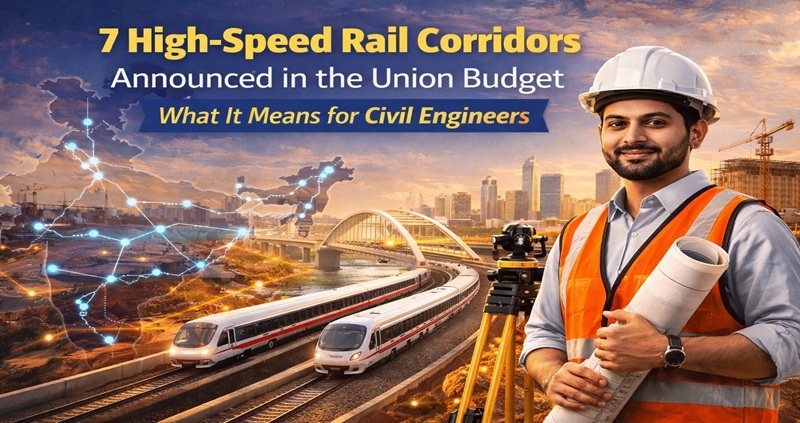

The expansion of the **high speed rail corridor in India** marks a major shift in how transportation infrastructure is being planned and executed. With the government continuing its focus on rail modernization, high-speed and semi-high-speed projects are gaining momentum. According to [official government releases](https://www.pib.gov.in/PressNoteDetails.aspx?ModuleId=3&NoteId=157295&lang=1®=3), ongoing investments in railway infrastructure and bullet train projects, including the Mumbai Ahmedabad High-Speed Rail Corridor, reflect a long-term push toward faster and more efficient connectivity.
These developments are not limited to passenger mobility. They also influence engineering practices, project execution, and digital adoption across infrastructure projects. As more routes are announced, civil engineers are expected to play a central role in planning, designing, and delivering these complex systems.
Unlock High-Paying Careers With BIM
Master BIM workflows, software and skills on real projects.
Apply Now
\*Limited seats available
## **List of 7 High Speed Rail Corridors in India**

The expansion of the **high speed rail corridor in India** includes several new routes designed to improve connectivity between major economic and urban centers. These corridors are planned to reduce travel time, improve efficiency, and support regional development.
The following corridors highlight the scale and direction of development:
### **1. Mumbai – Pune High-Speed Rail Corridor**
The Mumbai–Pune corridor is expected to significantly reduce travel time between two major economic hubs. This route is likely to complement the existing **Mumbai ahmedabad high speed rail corridor**, strengthening western India’s transport network.
The project requires advanced tunneling, bridge construction, and alignment planning due to the region’s terrain. Engineers working on this corridor must manage complex geological conditions and ensure structural stability.
This corridor also supports business travel and regional connectivity, making it a critical part of infrastructure planning.
### **2. Pune – Hyderabad High-Speed Rail Corridor**
The Pune–Hyderabad corridor aims to connect two growing technology and industrial centers. This route is expected to support economic integration and reduce travel time between cities.
From an engineering perspective, this project involves large-scale track alignment, station design, and integration with existing rail systems. It also requires coordination between multiple states and agencies.
This corridor reflects the broader expansion of **semi high speed rail corridors in India**, which aim to improve connectivity without the full cost of bullet train systems.
### **3. Hyderabad – Bengaluru High-Speed Rail Corridor**
The Hyderabad–Bengaluru corridor connects two major IT hubs, supporting both business and commuter travel. This route is expected to see high passenger demand due to strong economic activity in both cities.
Engineers working on this corridor must focus on efficient route planning, minimizing land acquisition challenges, and ensuring smooth integration with urban transport systems.
This project also demonstrates how the **high speed rail corridor in India** is evolving to meet modern urban mobility needs.
### **4. Hyderabad – Chennai High-Speed Rail Corridor**
The Hyderabad–Chennai corridor strengthens connectivity between southern cities and supports industrial and port-linked development.
This route involves coastal and inland engineering challenges, requiring careful planning for environmental conditions and structural durability.
The corridor also supports freight movement in certain segments, aligning with broader infrastructure goals.
### **5. Chennai – Bengaluru High-Speed Rail Corridor**
The Chennai–Bengaluru corridor is one of the most anticipated routes, connecting two major economic centers. This project is expected to significantly reduce travel time and improve business connectivity.
Engineers must address challenges such as dense urban environments, land constraints, and integration with metro and road networks.
This corridor also complements other proposed routes, including the **Delhi Mumbai high speed rail corridor**, creating a more connected national network.
### **6. Delhi – Varanasi High-Speed Rail Corridor**
The Delhi–Varanasi corridor connects the national capital with a key cultural and economic center. This route is expected to handle high passenger volumes and support regional tourism.
Engineering challenges include long-distance alignment, station planning, and integration with existing rail infrastructure.
This corridor also aligns with broader plans such as the **Delhi Kolkata high speed rail corridor**, which aims to extend connectivity across eastern India.
### **7. Varanasi – Siliguri High-Speed Rail Corridor**
The Varanasi–Siliguri corridor focuses on improving connectivity in eastern and northeastern regions. This route is expected to support regional development and improve access to remote areas.
Engineers working on this corridor must address terrain challenges, including river crossings and varying soil conditions.
This project highlights the government’s effort to expand the **high speed rail corridor in India** beyond major urban centers.
These corridors collectively demonstrate how rail infrastructure is evolving to support faster, more efficient, and better-connected transportation systems.
## **Role of BIM in Railway Infrastructure**
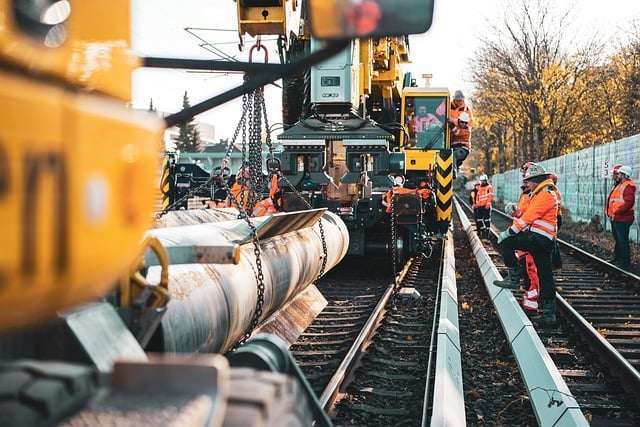
As railway projects become more complex, BIM is playing a critical role in improving project efficiency and coordination. The use of digital tools helps engineers manage design, construction, and maintenance more effectively.
Here is how BIM contributes to railway infrastructure:
1. **Improved Design Accuracy**[BIM](https://www.novatr.com/blog/bim-for-railway-infrastructure) enables engineers to create detailed 3D models, ensuring precise alignment and reducing design errors before construction begins.
2. **Better Coordination Across Teams**Multiple teams, including civil, structural, and MEP engineers, can work on a shared model, improving collaboration and reducing conflicts.
3. **Efficient Project Planning**BIM supports scheduling and sequencing, helping teams manage timelines and resources effectively.
4. **Cost Estimation and Control**Accurate models allow for better cost estimation, reducing budget overruns and improving financial planning.
5. **Lifecycle Management**BIM supports maintenance and operations by providing data on infrastructure performance over time.
For example, in high-speed rail projects, BIM helps simulate track alignment and identify potential issues early, reducing delays and rework.
As projects such as the **Kerala high speed rail corridor** and other national initiatives progress, BIM adoption is expected to increase significantly.
The use of digital tools is becoming essential for managing large-scale infrastructure projects efficiently.
## **Career Opportunities for Engineers**

The expansion of the **high speed rail corridor in India** is creating new opportunities for civil engineers across multiple domains. These projects require specialized skills and expertise, increasing demand for trained professionals.
Key roles emerging in this sector include:
- [BIM Engineers](https://www.novatr.com/blog/guide-to-become-bim-engineer) and [BIM Managers](https://www.novatr.com/blog/guide-to-become-bim-manager)
- Infrastructure Design Engineers
- Project Planning and Coordination Specialists
- Railway Construction Engineers
For example, a high-speed rail project requires coordination between multiple teams, making BIM professionals essential for ensuring smooth execution.
To meet these demands, engineers need to develop hands-on skills in digital tools and project workflows. Take your civil engineering career to the next level with Novatr’s [BIM Professional Course for Civil Engineers](https://www.novatr.com/us/courses/bim-for-civil-engineers) — a project-based program that prepares you to plan, design, and manage construction projects using 12+ industry software and essential BIM plugins.
Learn how to work with Autodesk Revit, Navisworks, construction cloud and key plugins like DiRoots.One, pyRevit, EF-Tools, ProSheets, Issue and Model Checker for Revit to improve automation, accuracy, and project efficiency.
This program helps engineers build industry-relevant skills aligned with modern infrastructure projects and global standards.
As infrastructure projects continue to expand, engineers with BIM expertise will have a clear advantage in securing high-value roles.
Master BIM and Get Hired Faster
Join a community of 8500+ Architects and Engineers.
Explore Now
\*Limited seats available
## In Conclusion
The development of the **high speed rail corridor in India** reflects a strong focus on modernizing transportation infrastructure and improving connectivity across regions. These corridors are not only transforming travel but also redefining how infrastructure projects are planned and executed.
As engineering practices evolve, the role of digital tools and advanced skills continues to grow. Professionals who invest in learning BIM and related technologies will be better positioned to work on large-scale infrastructure projects.
Take the next step in your career with the [BIM professional Course for Civil Engineers](https://www.novatr.com/us/courses/bim-for-civil-engineers) offered by [Novatr](https://www.novatr.com/us) and gain hands-on experience with real-world workflows and industry tools. Visit our [resource page](https://www.novatr.com/learning-hub) to explore more insights on infrastructure trends and career growth.
Was this content helpful to you
Like Yes
Dislike No

TABLE OF CONTENTS
BIM Is The New Standard. Are You Certified?
Get Certified in BIM
SHARE ON YOUR SOCIALS
Link Copied Successfully
Related articles
[ Building Information Modelling Chenab Railway Bridge - BIM made it Possible! 12 June 2025 4 min read](https://blog.novatr.com/blog/chenab-railway-bridge) [ BIM Western Dedicated Freight Corridor - How BIM Is Revolutionising Rail Logistics in India? 1 July 2026 3 min read](https://blog.novatr.com/blog/how-bim-transformed-the-western-freight-corridor-in-india) [ CIVIL How the Union Budget 2026–27 Will Transform India’s Infrastructure Sector? 27 March 2026 6 min read](https://blog.novatr.com/blog/infrastructure-investment-in-india-2026-budget-impact-digital-transformation) [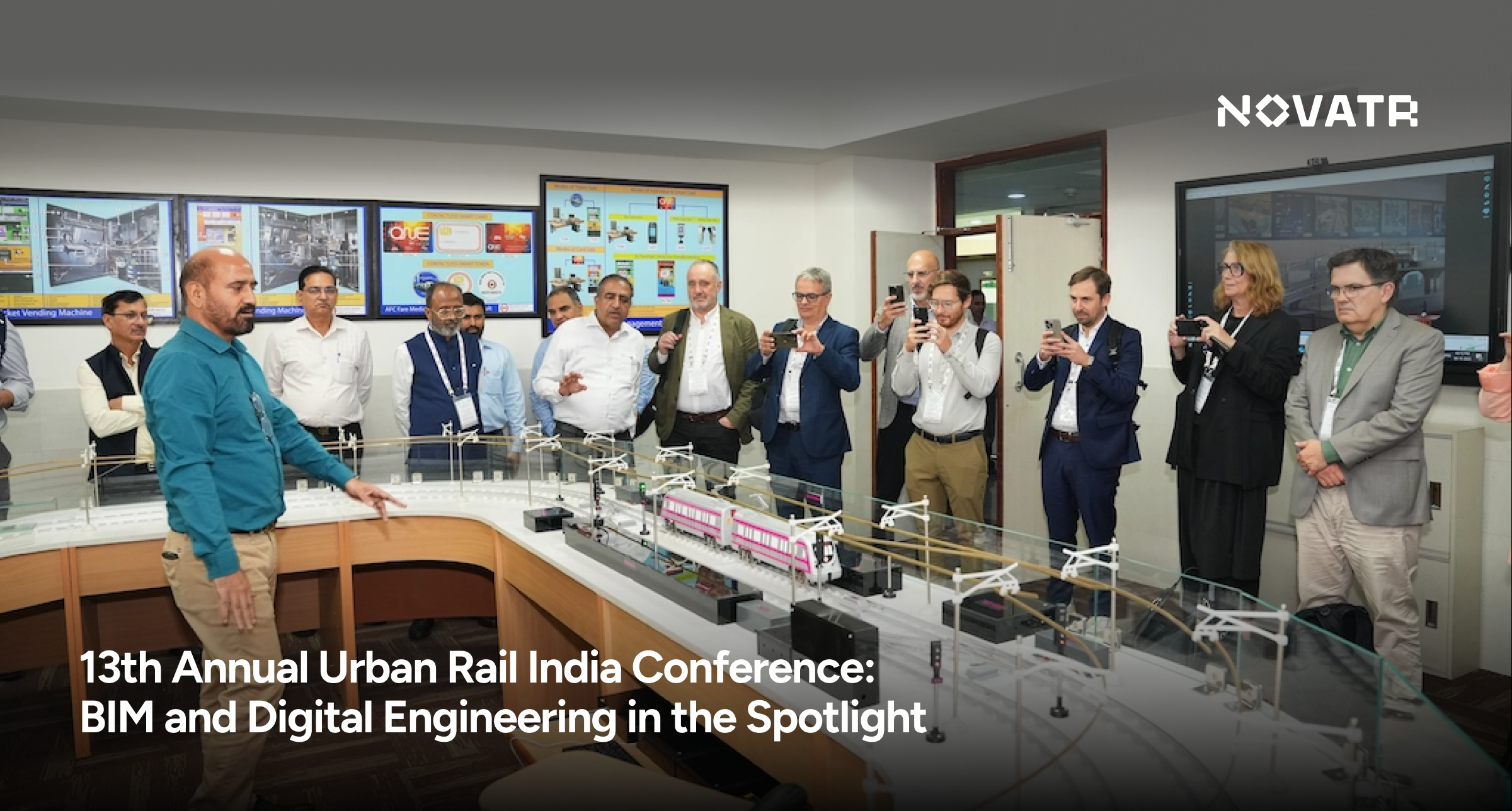 BIM Archi 13th Annual Urban Rail India Conference - BIM and Digital Engineering in the Spotlight 12 May 2026 3 min read](https://blog.novatr.com/blog/13th-annual-urban-rail-india-conference)
Download Syllabus
## BIM Professional Program
Next Cohort
June 2026
Program Duration
7 Months
Premium Program benefits
8 Credentials from Autodesk, NSDC, Novatr
1 program. 10 career paths. Infinite Growth.
40+ ISO 19650 & RIBA real-world projects to practice
1-on-1 guidance. Access 400+ industry experts.
Access the biggest AEC-Tech community on the planet. 8500+ and counting
Curated for you by 100+ global BIM leaders.
Lifelong access to course content
Enter your details to download the program syllabus.
##### BIM Professional Program
June 2026, 7 Months
Your Name Invalid name.
Phone Number Enter a valid phone number
Email Please enter a valid email address.
Select years of experience\* Currently studying 0-1 years 1-2 years 2-4 years 4-8 years 8-10 years 10-12 years 12+ years Invalid selection.
Specialisation Select your background\* Architecture Civil Engineering Mechanical Engineering Electrical Engineering Invalid selection.
Are you professionally trained in interior design?
Yes
No
I agree to the [Terms of Use](https://www.novatr.com/terms-and-conditions) and [Privacy Policy](https://www.novatr.com/privacy-policy), and consent to be contacted by Email, Call, WhatsApp, or SMS.
Submit
Ready to skyrocket your career?
Begin your next chapter in AEC
with Novatr!
We are here to help you take the industry by storm with advanced, tech-first skills.
[Explore Courses](https://www.novatr.com/#courses)
Join our newsletter
Submit
Thank you for signing up.
We’ll send you a nice letter once per week. No spam.

Dare to Disrupt.
Join thousands of people who organise
work and life with Novatr.
Company
- [About Us](https://www.novatr.com/about)
- [BIM Professional Program v.2026](https://www.novatr.com/courses/bim-professional-program)
- [Masters Computational Design](https://www.novatr.com/courses/computational-design)
- [Become a Mentor](https://www.novatr.com/apply-as-mentor)
- [Hiring from Us](https://www.novatr.com/hire-from-us)
- [Careers at Novatr](https://www.novatr.com/career)
Resources
- [Blog](https://www.novatr.com/learning-hub)
- [Media Room](https://www.novatr.com/media-room-home-page)
- [Career Builder](https://www.novatr.com/career-navigator)
- [Events & Webinars](https://www.novatr.com/webinars)
- [FAQs & Support Center](https://www.novatr.com/contact-us)
- [Contact Us](https://www.novatr.com/contact-us)
- [Privacy Policy](https://www.novatr.com/privacy-policy)
- [Terms of Use](https://www.novatr.com/terms-and-conditions)
©2023 Oneistox Network Pvt. Ltd.
All Rights Reserved
```json
{
"@context" : "https://schema.org",
"@type" : "BlogPosting",
"author" : {
"@type" : "Person",
"name" : "Deependra Dobriyal",
"url" : "https://blog.novatr.com/blog/author/deependra-dobriyal"
},
"dateModified" : "2026-03-27T05:27:01.720Z",
"datePublished" : "2026-03-27T05:23:59.000Z",
"headline" : "High Speed Rail Corridor in India: 7 New Routes & Engineering Impact",
"image" : [ "https://blog.novatr.com/hubfs/7%20High%20Speed%20Rail%20Corridors%20in%20India.jpg" ],
"mainEntityOfPage" : {
"@id" : "https://blog.novatr.com/blog/high-speed-rail-corridor-in-india-7-new-routes-engineering-impact",
"@type" : "WebPage"
},
"publisher" : {
"@type" : "Organization",
"logo" : {
"@type" : "ImageObject",
"url" : "https://blog.novatr.com/hubfs/Novatr%20Prev%20OX-2.svg"
}
}
}
```