

.png)

What Is Load Balancing in MEP Design and Why Does It Matter for Mixed-Use Buildings?
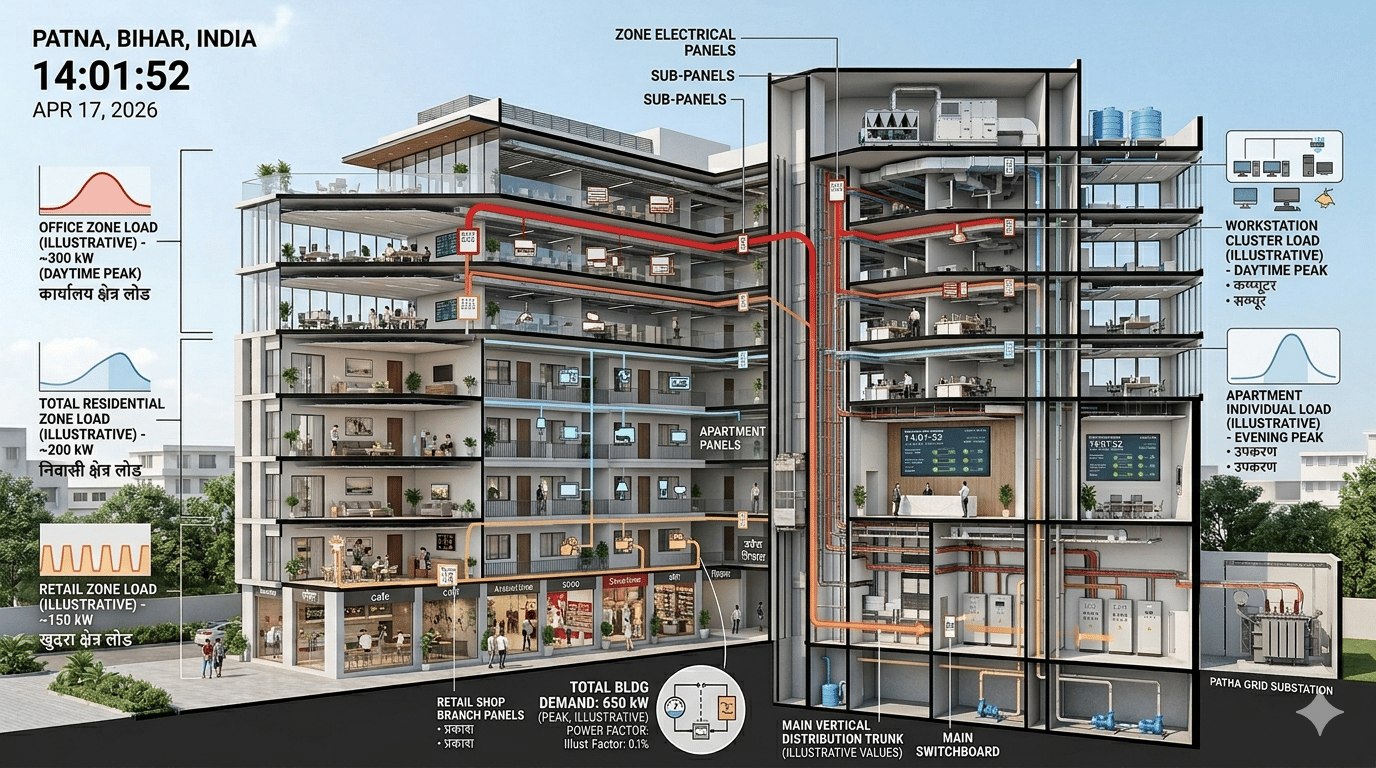
In mixed-use buildings, load balancing is needed since retail, residential, and commercial spaces do not use energy in the same way. So, what is load balancing in MEP systems? It is the process of spreading the load across systems so that no one part gets too much or too little use.
The following explains the importance of load balancing in mixed-use buildings:
-
Retail areas often see higher loads during the day, so systems are designed to handle short-duration peaks
-
Residential zones have more stable demand, which is calculated using typical household usage patterns
-
Office spaces depend on occupancy and equipment use, which affects both electrical and HVAC demand
-
Shared infrastructure must support different load cycles without failure
-
Load balancing helps avoid oversizing systems, which can increase cost and reduce efficiency
This also explains why load balancing is important in mixed-use buildings, since uneven distribution can lead to system stress or inefficiency. In real life, balanced systems work better and are easier to maintain over time.
How Do MEP Engineers Approach Load Zoning for Retail, Residential, and Commercial Units?
In MEP engineering, load zoning is used to break down complex buildings into manageable parts.
To comprehend how do engineers manage loads in large building projects, zoning knowledge is imperative.
Here is how engineers approach:
-
Dividing the building into zones based on usage during early building design
-
Planning separate electrical and HVAC systems where required to avoid overlap
-
Using load calculation methods specific to each zone instead of applying a single approach
-
Considering vertical zoning in high-rise buildings to manage distribution efficiently
-
Aligning zones with actual usage patterns rather than just floor layouts
Each zone is designed individually before being connected to the overall construction design.
It makes systems easier to control and work better overall.
What Are the Most Effective Load Zoning Strategies for High-Density Mixed-Use Developments?
Timing and load use should be considered for zoning in high-density projects.
These are some effective zoning strategies for high-density mixed-use developments:
-
Designing systems based on time-based load variation, where peak demand shifts across zones
-
Using dedicated systems for high-demand areas like retail or food courts
-
Sharing systems between zones with similar usage patterns to improve efficiency
-
Planning backup systems for critical services like lifts and fire safety
-
Integrating energy efficiency measures to reduce total load demand
These strategies help manage the overall energy load without overloading systems.
In practice, zoning changes as the project develops and more accurate data becomes available.
How Do Electrical Load Calculations Differ Across Retail, Residential, and Commercial Zones?
Load calculations are based on factors such as connected loads, usage patterns, and diversity factors for each space. To understand how to calculate electrical and HVAC loads in buildings, the electrical demand of each zone must be considered.
Electrical load calculation changes because of the following reasons:
-
Retail spaces have higher lighting and equipment demand, so calculations focus on peak daytime usage
-
Residential units have lower but more consistent loads, which are estimated using diversity factors
-
Offices depend on equipment and occupancy, so demand varies during working hours
-
Peak demand timings are different across zones, which affects overall load distribution
-
Diversity factors are applied to avoid overestimating total demand
In MEP design, engineers use these inputs to balance the electrical load across the building. It helps make sure that systems are the right size and work as expected.
How Do HVAC and Plumbing Load Demands Vary Between Mixed-Use Building Zones?
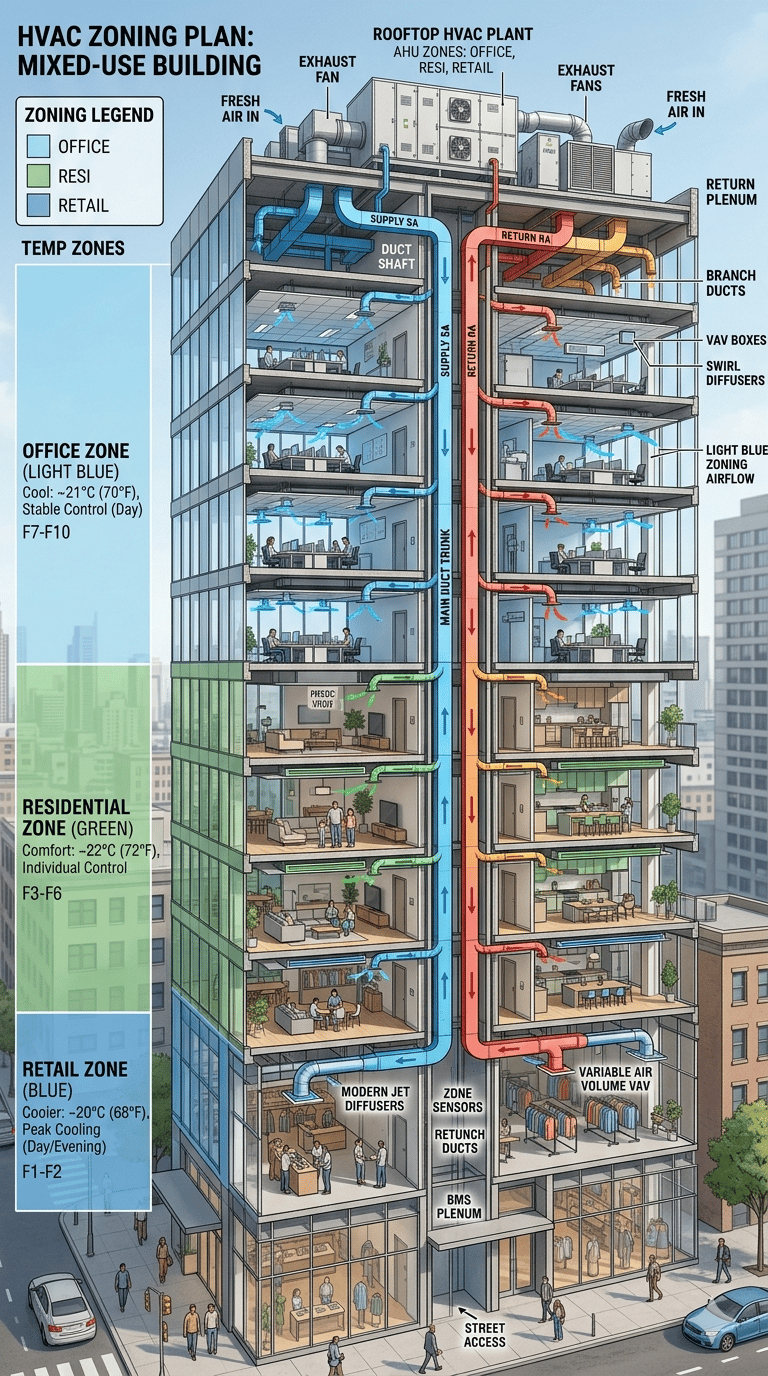
HVAC and plumbing demands vary across zones mainly because each space is used differently, which directly affects HVAC design and system planning.
The following helps understand how different zones operate:
-
Retail areas usually have higher and fluctuating cooling loads due to lighting, equipment, and continuous footfall
-
Residential zones follow more predictable patterns, with peak demand in the morning and evening
-
Office spaces depend on working hours and occupancy, which affects both cooling and ventilation
-
Plumbing demand changes with usage patterns, especially between residential and commercial areas
-
Peak loads do not occur at the same time across all zones, which helps in managing the overall energy load
These differences affect system sizing and load distribution across the building. If not planned properly, it can result in uneven loads or system stress.
What Role Does BIM Play in Coordinating Load Balancing Across Mixed-Use MEP Systems?
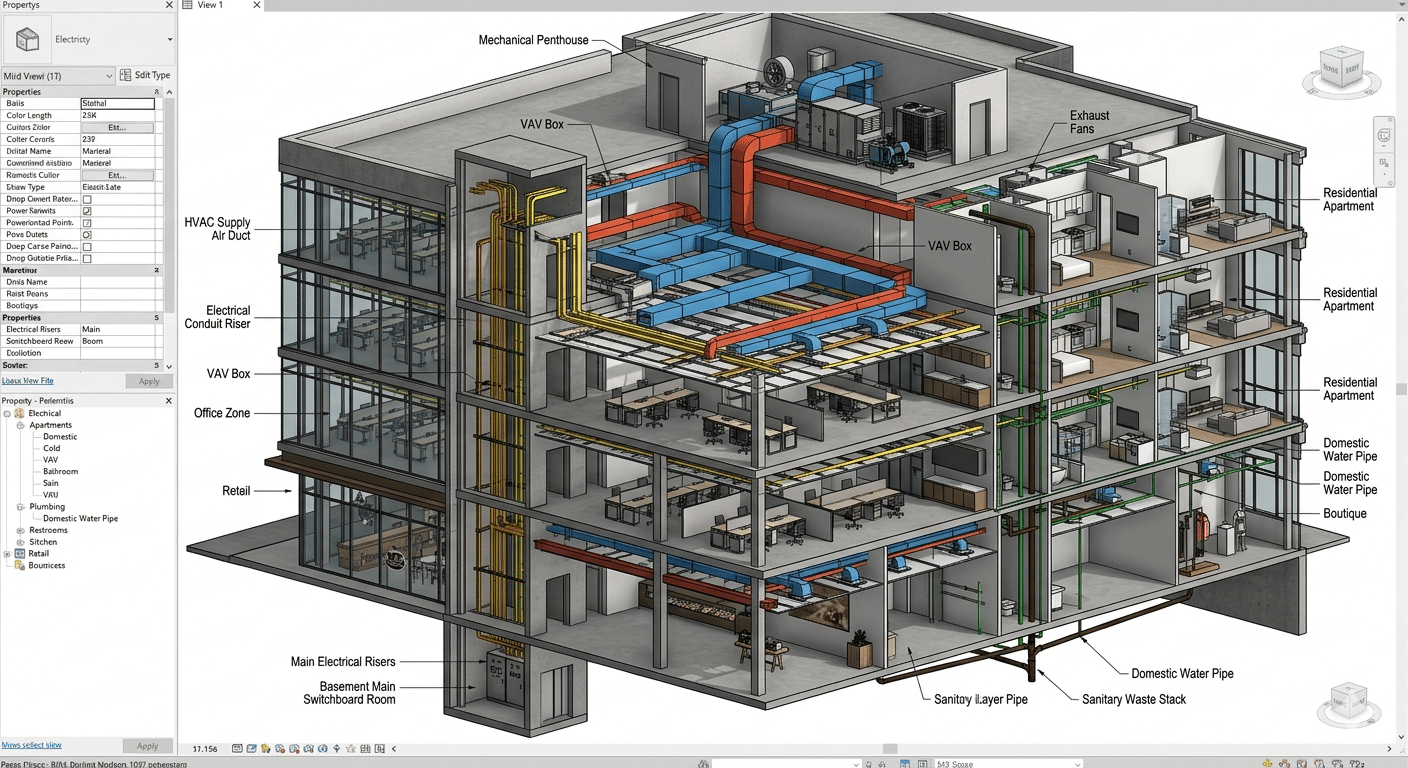
In BIM, teams work on a shared model, which makes it easier to understand how different building systems connect during MEP design.
In practice, it is used for:
-
All building systems are placed in one model, so they can be viewed together
-
Electrical and HVAC loads can be checked in 3D instead of separate drawings
-
Load calculation is handled using the same set of project data
-
Conflicts between systems are noticed early, before work starts on the site
-
Teams stay more aligned as the design moves forward
What Are the Most Common Load Balancing Mistakes in Mixed-Use MEP Design?
Even with proper planning, mistakes can still arise during design and coordination and affect how systems perform.
Some common ones are:
-
Ignoring diversity factors in load calculations, which can result in overestimation
-
Overdesigning systems to stay on the safer side, which increases cost and reduces efficiency
-
Poor coordination between different MEP systems during design
-
Not planning for future expansion while deciding on system capacity
-
Early zoning decisions that later affect how loads are distributed
These issues usually increase cost and affect efficiency. In most cases, better coordination and early planning help reduce such problems.