


What Makes a BIM MEP Course Truly Industry-Relevant?

As construction projects move towards a more digital and data-driven approach, the need for BIM MEP professionals with the right skills is increasing. Recent reports indicate that more than 70% of all AEC firms in the world are using BIM for improved coordination and the elimination of delays in projects.

This transformation emphasizes the need for students to select the right BIM MEP course for industry requirements. Learning software is not the only thing about a course. It should be action-oriented, with emphasis on workflow and collaboration and on real-world projects.

Knowing what makes a course industry relevant enables learners to develop the correct foundations and to enhance their career prospects.

Key Takeaways

  • Industry focus: A good BIM MEP course should not be about tools, but the workflows of real projects.

  • Means of implementation: Courses should offer hands-on learning opportunities (assignments) that are relevant to actual construction training projects.

  • Training relevance to hiring: Alignment of BIM training and hiring expectations.

  • Common gaps: Many programs do not have hands-on practice and design training content is no longer relevant.

  • Career readiness: Selection of the appropriate course helps develop job ready skills for jobs in BIM MEP careers. 

BIM Professional Course for MEP Engineers

Learn Revit and 12+ BIM software with industry workflows in just 7 months.

Apply now

*Limited seats available

What Does “Industry-Relevant” Mean in a BIM MEP Course?

Students learning BIM MEP software in classroom with instructor guidance.

The Industry-focused BIM MEP course closely follows the method of delivering real projects. It is not just theoretical but also applies to the practical applications used by professionals.

Simply put, it's:

  • Real world alignment: training is based on real project needs

  • Workflow-based learning: Learners work through workflows from companies from the AEC

  • Skill relevance: Skills taught are aligned with industry requirements for jobs

A strong course is a construction course, a BIM course, and a design course combined into one structured learning pathway. It makes sure that students know the interdependence of various disciplines in a project.

Another factor affecting industry relevance is how well the course is designed to teach coordination of mechanical, electrical and plumbing systems. This is where the training in MEP training is important.

Learners frequently ask about selecting a job ready BIM MEP course when deciding on a program to take. The secret is to determine if the course is concerned with real workflows, collaboration, and deliverables, or simply software commands.

Which Project Workflows and Deliverables Should a Course Cover?

A quality MEP course should be on the same workflow as in real BIM projects.

Key workflows include:

  • Creating and setting up models: Learners will build up their BIM skills and make the MEP models following the project standards.

  • Coordination between disciplines: Courses should develop the skill to detect and coordinate clashes between systems - this is a fundamental MEP skills requirement.

  • Documentation and drawings: Being able to prepare documents and drawings is an essential part of a good course, and it will be required in various construction documents.

  • Understand how to extract data for estimation and planning: Quantity takeoff and Data extraction using BIM learning.

  • Project collaboration: Courses must be based on a collaborative setting with BIM courses related to real project workflows.

  • Complete submissions as in the real world: should be included in the course for delivery by the end of the project.

These workflows are a must when you're considering what should a good BIM MEP course include. These are the things that cannot be done without learning to be accomplished.

Also Read: Top 10 MEP Engineering Courses in India 

How Do You Evaluate Whether a BIM MEP Course Meets Hiring Needs?

The selection of a right course involves checking whether it is expected by companies in the selection of the candidates.

Examples of key evaluation points include:

  • Real world projects: Projects should be practical and provide students with the opportunity to develop job ready skills

  • They should become proficient in industry BIM tools: that are used for MEP design

  • Understanding the whole project process: Employers appreciate candidates who grasp the project process

  • Using a real portfolio to increase job opportunities: The more of this they have, the better their chances of securing a job

  • Industry mentorship: Guidance from professionals offer real-world insights

Knowing what skills are needed for BIM MEP jobs will make it easier to assess courses. Companies seek out individuals who are good at coordinating, documenting and collaborating.

Why Do Most Courses Fail to Match Real Industry Requirements?

The problem is many courses are focused on software and not applications.

Common issues include:

  • Failing to keep curriculum up to date: There are some programs that are not in line with the industry practices today.

  • Not getting hands on training: Learners can't get hands on training and thus cannot apply effectively.

  • No integration of workflows: Courses do not integrate tools, but teach as separate entities.

  • Lack of working experience: Learners have no experience of real project challenges.

  • Collaboration focus: Weak collaboration focus: Many courses do not pay attention to collaboration, which is essential in BIM projects.

These gaps prevent learners from being able to apply BIM learning after completing a BIM MEP course. That's why finding the right course is key.

Also Read: Who is a MEP Engineer? (Skills, Qualifications, Scope & More) 

How Does Novatr’s BIM MEP Course Address These Industry Gaps?

Engineers using BIM tablets on construction site for MEP installation coordination.

The BIM MEP course by Novatr is based on practical learning and structured workflows to align with the industry requirements.

It fills in common gaps in the following ways:

  • Industry-involved curriculum: The curriculum is designed based on industry-relevant BIM practices in construction projects.

  • Hands-on project work: Where learning is set to work on projects that replicate real-life situations.

  • End to End Workflow Training: Training from creating a model to delivering it.

  • Skill-based learning: It translates to the development of BIM skills as well as MEP skills.

  • Industry Mentorship: Industry experts mentor learners with their experiences, know-how and practical insights.

  • Portfolio development: Students make work for job applications.
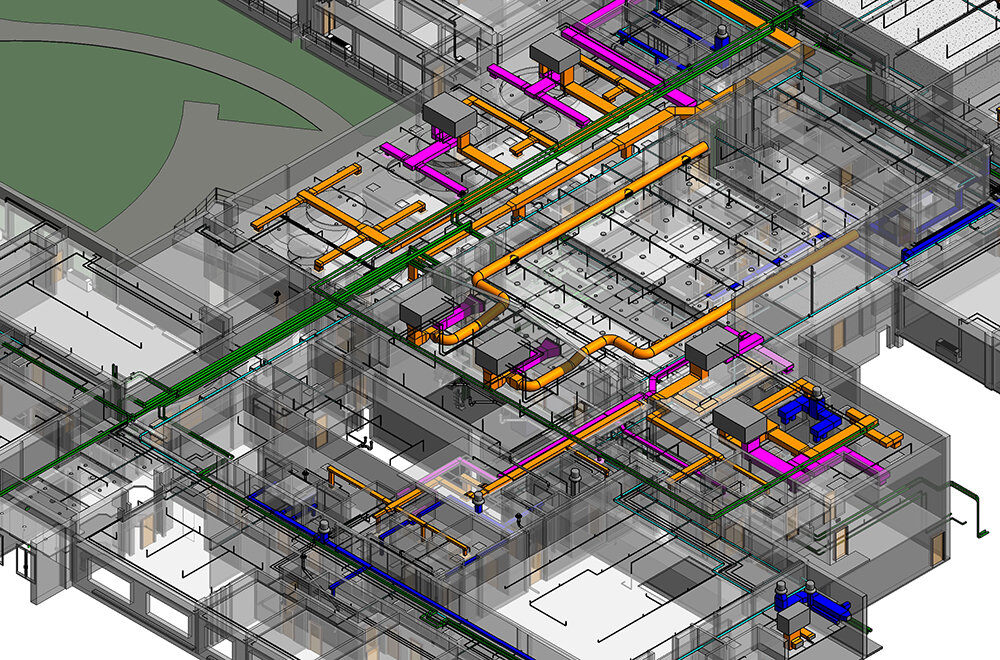
Learn Revit and 12+ BIM software with industry ISO 19650 complaint project simulations in just 7 months.

Apply now

Conclusion

An industry-relevant BIM MEP course emphasizes real projects, skills and workflow. It equips engineers with the skills needed to tackle real-world issues within the context of BIM for Construction. Courses which involve construction training, collaboration and hands-on experience help to establish a strong career base.

Selecting the appropriate program will enable students to acquire skills that are relevant and appropriate to the requirements of industry. These skills can be gained by attending Novatr's BIM Course for MEP Engineers.

There are additional learning resources and insights on the resource page.

FAQs

1. What does an industry ready BIM MEP course need to contain?

Courses that deliver a real experience project workflow along with hands-on training, BIM coordination tasks and tangible deliverable are essential for an industry-ready BIM MEP course.

2. What is the connection between BIM MEP courses and actual project processes?

Courses are organized around workflows and focus on the development of models, coordination, documentation and delivery of projects. This assists the learner to comprehend the correlation of BIM courses align with real project workflows with the industry’s actual project workflow.

3. What are the skills that employers look for in BIM MEP practitioners?

BIM skills, coordination skills and understanding of MEP systems are expected. The knowledge of what skills are needed for BIM MEP jobs helps learners to be better prepared for jobs in real life and enhance their job prospects.

Was this content helpful to you

Dislike No

TABLE OF CONTENTS

Download Syllabus
BIM Professional Course for Civil Engineers

course benefits

40+ live & bonus sessions

1 RIBA-structured capstone project

Learn 8+ BIM software

Autodesk & NSDC certifications

6 guided career sessions

Lifelong access to course content & community

Career counselling & interview preparation

Enter your details to download the course syllabus.

Download Syllabus
BIM Professional Course for Architects V2.0

course benefits

70+ live sessions

3+ RIBA and ISO 19650 structured capstone projects

18+ BIM software access

10+ guided career sessions

Certificates from Autodesk and NSDC

Lifelong access to course content & community

Career counselling & interview preparation

Enter your details to download the course syllabus.

Download Syllabus
Master Computational Design Course for Real-World Application

course benefits

80+ live sessions

50+ assignments

5+ softwares, 15+ plugins

Career counselling and interview prep

Lifelong access to to course content & community

Enter your details to download the course syllabus.

Download Syllabus
Advanced Interior Design with AI

course benefits

Simulated project based learning

Career counselling and interview prep

Lifelong access to course content

Learn 8+ software

3 Certificates of Achievement

Enter your details to download the course syllabus.

Download Syllabus
BIM Professional course for MEP Engineers

course benefits

Autodesk and NSDC Professional Certificates

12+ BIM softwares and plug-ins

80+ hours of live classes

Create 10+ toolkits to kickstart your MEP BIM project.

Dedicated Program Manager and Industry Guide Support

1:1 Career Mentoring

Networking with AEC Industry Professionals

Top 10% learners get exclusive Innovation bootcamp access.

ISO 19650 for BIM workflows

Enter your details to download the course syllabus.

Ready to skyrocket your career?

Begin your next chapter in AEC

with Novatr!

We are here to help you take the industry by storm with advanced, tech-first skills.