---
title: BIM Course Industry Relevance & Skills Guide 2026
description: Learn how to choose an industry-ready BIM course, the key skills modern employers expect, and why real project training matters for construction careers.
image: https://blog.novatr.com/hubfs/ChatGPT%20Image%20Jun%2023%2c%202026%2c%2010_27_45%20AM.png
---
[Blogs](https://www.novatr.com/learning-hub)
- [Architecture & Construction](https://www.novatr.com/learning-hub?category=Architecture+%26+Construction)
- [BIM](https://www.novatr.com/learning-hub?category=BIM)
- [Computational Design](https://www.novatr.com/learning-hub?category=Computational+Design)
- [Company News](https://www.novatr.com/learning-hub?category=Company+News)
- [Expert Talks](https://www.novatr.com/learning-hub?category=Expert+Talks)
Explore Courses
[Just Launched  BIM Professional Program v.2026 Take your career to the next level by mastering the real-world application of BIM. Know More](https://www.novatr.com/courses/bim-professional-program)
[ Master Computational Design Course Break into an advanced career by learning to apply the power of computation to the art of design. Know More](https://www.novatr.com/courses/computational-design)
[Blogs](https://www.novatr.com/learning-hub)
Explore Blogs
- [Architecture & Construction](https://www.novatr.com/learning-hub?category=Architecture+%26+Construction)
- [BIM](https://www.novatr.com/learning-hub?category=BIM)
- [Computational Design](https://www.novatr.com/learning-hub?category=Computational+Design)
- [Company News](https://www.novatr.com/learning-hub?category=Company+News)
- [Expert Talks](https://www.novatr.com/learning-hub?category=Expert+Talks)
Courses
- [BIM Professional Program v.2026](https://www.novatr.com/courses/bim-professional-program)
- [Master Computational Design](https://www.novatr.com/courses/computational-design)
- [BIM/](https://www.novatr.com/learning-hub?category=BIM)
Featured Article
# What Makes a BIM Course Industry-Relevant in 2026?

Neha Singh
June 23, 2026
6 min read

The global building information modeling market is expected to reach a value of $10.27 billion by the end of this year from [$9.12](https://www.fortunebusinessinsights.com/building-information-modelling-software-market-102986#:~:text=9.12%20billion%20in%202025) billion in 2025. This rapid development is revolutionising the way buildings are designed and constructed. This digital revolution makes it impossible to find stable jobs with the help of traditional drafting skills. The professionals need to improve their skills to compete. But, most of the traditional training courses are still limited to simple software instructions and not on job workflows. This guide outlines why BIM course options are so relevant to the construction industry today and will help you choose a course that will equip you for a modern job.
## **Key Takeaways**
- A strong BIM course teaches how projects are delivered, not just how BIM software works.
- Real-world projects and datasets help build practical skills that employers actively seek.
- Knowledge of BIM standards, information management, and coordination workflows improves job readiness.
- Collaboration skills are essential as BIM projects involve architects, engineers, contractors, and consultants working together.
- Industry-relevant BIM training can help professionals transition from software users to valuable project contributors.
Unlock High-Paying Careers With BIM
Master BIM workflows, software and skills on real projects.
Apply Now
\*Limited seats available
## What Makes a BIM Course Industry-Relevant in 2026?
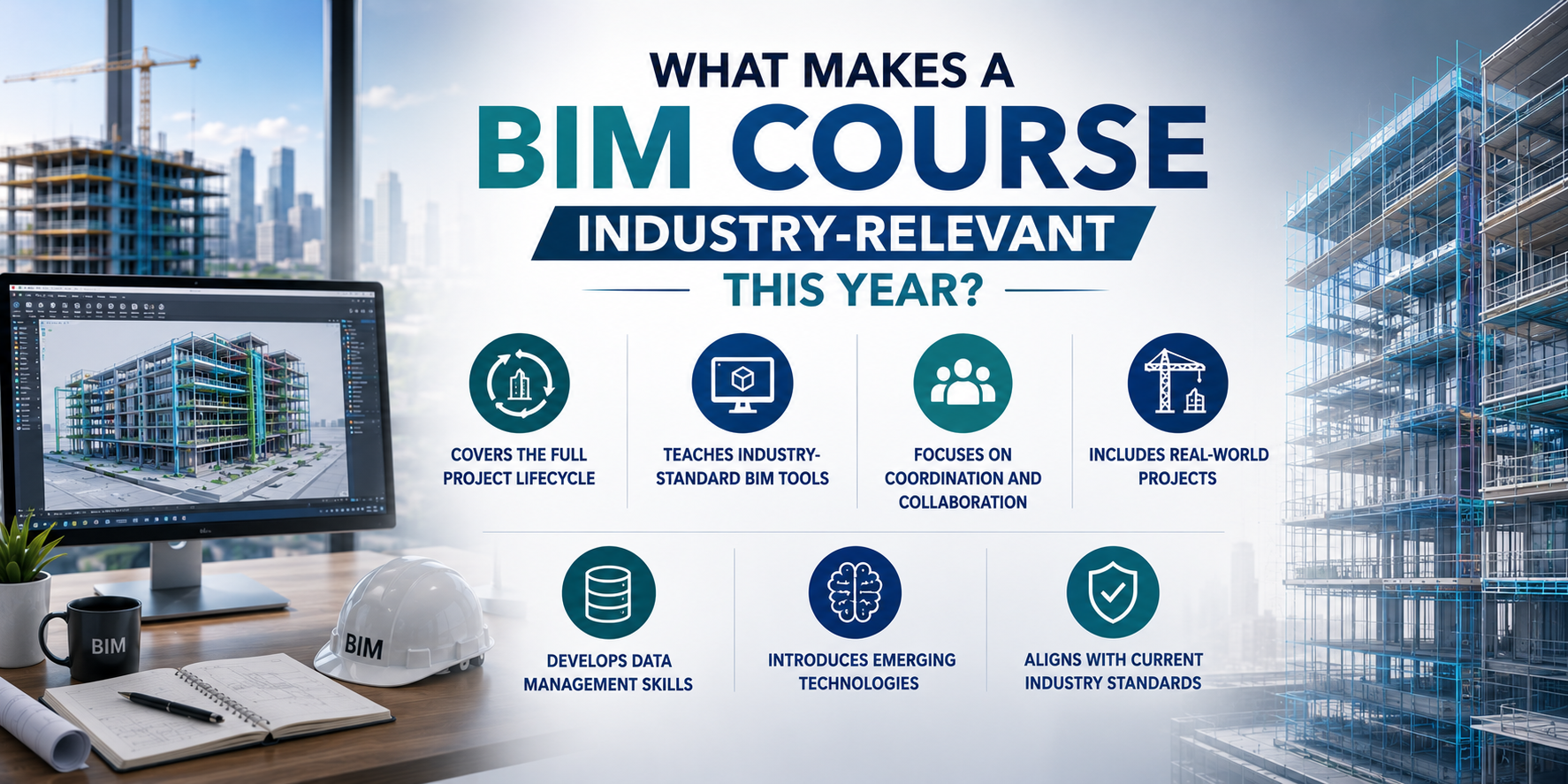
Today's AEC firms need professionals who can do more than create 3D models. They need people who understand BIM workflows, project data, coordination, and digital project delivery. An industry-relevant BIM course should focus on practical skills that match these real-world requirements.
- **Covers the Full Project Lifecycle**
The course should explain how BIM supports projects from design and coordination to construction and facility management.
- **Teaches Industry-Standard [BIM Tools](https://www.novatr.com/blog/bim-modeling-software)**
Beyond Revit, learners should gain exposure to tools like Navisworks, Autodesk Construction Cloud, and other platforms used in modern BIM workflows.
- **Focuses on [Coordination and Collaboration](https://www.novatr.com/blog/digital-tools-for-architecture-design)**
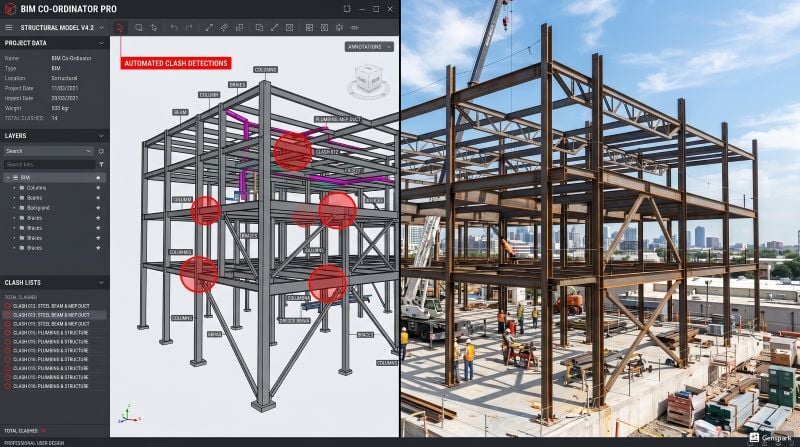
BIM is a team-driven process. Understanding clash detection, model coordination, and multidisciplinary collaboration is essential.
- **Includes Real-World Projects**
Practical, project-based learning helps students apply BIM concepts in situations similar to actual industry projects.
- **Develops Data Management Skills**
BIM professionals must know how to manage project information, quantities, schedules, and documentation, not just create models.
- **Introduces Emerging Technologies**
Topics such as AI, automation, [digital twins](https://www.novatr.com/blog/digital-twin-parametric-buildings-the-future-of-smart-architecture), and cloud collaboration are becoming increasingly important in the AEC industry.
- **Aligns with Current Industry Standards**
Training should reflect modern [BIM practices](https://www.novatr.com/blog/bim-standards-and-best-practices-for-architects), Common Data Environment workflows, and information management standards used by leading firms.
A BIM course becomes truly industry-relevant when it prepares learners not only to use software but also to contribute effectively to real project teams and digital construction workflows.
## **Which BIM Skills Do Employers Expect Today?**
Employers are seeking specific, practical BIM skills which enable a new employee to contribute to a project from the start. Opening software files is no longer sufficient to make it to the top of the list of competitive BIM jobs.
Professionals should have a combination of technical and collaborative skills:
- **Advanced Modeling:** Generating accurate data-rich architectural and structural models.
- **Information Management:** Structuring information based on international standards so that all teams can read it.
- **[Clash Detection](https://www.novatr.com/blog/bim-for-clash-detection):** Spotting those little design issues inside the virtual model before the whole normal on-site construction really begins.
- **Cloud Collaboration:** Editing the same files together, but in a shared digital environment.
- **Data Customisation:** Learning how to read basic visual programming scripts, so you can automate a few simple repetitive modeling tasks across architectural layouts.
- **Model auditing:** Learning to look through large building information sets for local building code compliance, so that before fabrication, you can stop the major construction delays.
## **Why Do Real Projects Matter More Than BIM Software Training?**

Learning BIM software is important, but employers are looking for professionals who can apply those skills in real project environments. Knowing how a tool works is only the starting point. The real value comes from understanding how BIM is used to solve project challenges, improve coordination, and support project delivery.
- **Builds Practical Problem-Solving Skills**
[Real projects](https://www.novatr.com/blog/do-bim-courses-offer-hands-on-projects-or-only-theory) expose learners to common industry challenges such as design conflicts, coordination issues, missing information, and changing project requirements. This experience helps develop the critical thinking skills needed on actual projects.
- **Develops [Collaboration Experience](https://www.novatr.com/blog/how-mep-engineers-work-with-architects-civil-engineers)**
BIM is a collaborative process. Working on project-based assignments helps learners understand how architects, structural engineers, and MEP professionals coordinate and share information throughout a project lifecycle.
- **Provides Exposure to Real [BIM Workflows](https://www.novatr.com/blog/transitioning-from-2d-cad-to-bim-workflows)**
Hands-on projects teach how BIM models move through design, coordination, review, and construction stages, giving learners a better understanding of end-to-end BIM workflows.
- **Improves Job Readiness**
Employers often value project experience as much as software proficiency. Practical BIM projects help learners build portfolios, discuss real scenarios in interviews, and demonstrate skills that are directly relevant to industry roles.
Ultimately, real projects help bridge the gap between learning BIM software and working as a BIM professional, making the transition into the AEC industry much smoother
## How Do Top BIM Courses Stay Industry-Ready?
The BIM industry evolves quickly, with new technologies, workflows, and project delivery methods emerging every year. The best BIM courses stay relevant by continuously updating their curriculum to reflect current industry practices rather than relying on outdated teaching materials.
- **Learn from Industry Practitioners**
Leading programs involve experienced architects, engineers, and BIM professionals who bring [real project insights](https://www.novatr.com/blog/how-bim-improves-collaboration-in-aec-projects) into the learning experience. This helps students understand how BIM is applied in practice, not just in theory.
- **Train on Industry-Standard Tools**
Top BIM courses provide exposure to the software, collaboration platforms, and workflows commonly used by AEC firms, ensuring learners [develop skills](https://www.novatr.com/blog/how-to-make-a-bim-architect-portfolio) that are immediately applicable in the workplace.
- **Use Real-World Projects and Case Studies**
Instead of focusing solely on concepts, industry-relevant programs incorporate practical projects that reflect the challenges professionals encounter during design, coordination, and construction.
- **Continuously Update the Curriculum**
As digital construction, AI, automation, and BIM standards evolve, strong programs adapt their content to ensure learners stay aligned with current industry expectations.
Ultimately, the most effective BIM courses bridge the gap between education and practice, helping learners build skills that are relevant, practical, and valued by employers.
## **What Should You Check Before Choosing a BIM Course?**
****
When considering how to choose an industry ready BIM course to pursue, you must consider beyond the marketing hype. The program needs to have a clear pathway to acquiring the skills that are in demand in AEC careers, and in architecture careers.
If you're considering a program, make sure that it offers these key components:
- **Live Industry Mentors:** The classes should be held by professionals of the industry and not academic teachers.
- **Multi-Software Toolsets:** The course should not only cover one software but also other software and plugins for project coordination and BIM modelling.
- **Practical Portfolio Building:** At the completion of this course, you will have a complete portfolio of practical work to show to potential employers.
- **Career Support:** See resumé review, interview practice and links to hiring companies.
- **Flexible Learning Tracks:** Look for programs that include structured part time options, so construction site engineers who are already working in the field can upskill without having to pause their current day to day assignments.
## How Novatr Prepares You for Industry-Ready BIM Careers
Novatr's [BIM Professional Program](https://www.novatr.com/courses/bim-professional-program?utm_source=organic_search&utm_medium=blog&utm_campaign=) goes beyond teaching Revit or 3D modeling. The curriculum is built around real-world BIM workflows, helping architects and engineers understand project coordination, information management, and digital construction practices used by leading AEC firms.
Through hands-on projects, learners gain experience with industry-standard tools such as Revit, Navisworks, Autodesk Construction Cloud, and BIM collaboration workflows. The program also introduces emerging areas like AI, automation, and [sustainable design](https://www.novatr.com/blog/bim-role-in-sustainable-design-and-salary-growth), ensuring learners stay aligned with the future of the industry.
With project-based learning, mentorship from industry experts, and exposure to multidisciplinary collaboration, Novatr helps professionals build the job-ready BIM skills that employers actively look for in today's AEC market.
Master BIM and Get Hired Faster
Join a community of 8500+ Architects and Engineers.
Explore Now
\*Limited seats available
## **Conclusion**
The construction industry is in constant evolution and a BIM engineer or BIM coordinator must be equipped with the skills that are required in this modern world. If you're looking to take your career in design technology and BIM management to the next level, then you need a program that focuses on actual projects and collaboration. If you want something more formal, but still hands on, you can look into [BIM Professional Program](https://www.novatr.com/courses/bim-professional-program?utm_source=organic_search&utm_medium=blog&utm_campaign=) by [Novatr’s](https://www.novatr.com/).It gives you real world practicing, along with day-to-day exposure to industry tools and project processes.
In case you're looking to read more about the construction technology educational articles and guides, you can check out their[resource page](https://www.novatr.com/learning-hub).
## **FAQs**
### **1. How do you know if a BIM course is job-oriented?**
A job oriented course emphasises on delivery of the projects rather than just theory. Seek out courses that call for a practical portfolio, have industry mentorship, and offer specific placement help to secure competitive opportunities.
### **2. What skills should a modern BIM course teach?**
If you're considering studying BIM, you need to find a course that covers cross-team collaboration, clash detection, ISO 19650 data standards, cloud work-sharing and time-saving plugins beyond just 3D modeling commands.
### **3. Are Revit skills alone enough to get a BIM job?**
No. Revit is a vital modeling application, yet a lot of today’s employers expect those who can understand the whole digital workflow. And to stand out from the rest, you’ll probably need extra capability across multi-disciplinary project coordination, managing hefty data sets, and working with cloud based services too.
Was this content helpful to you
Like Yes
Dislike No

TABLE OF CONTENTS
BIM Is The New Standard. Are You Certified?
Get Certified in BIM
SHARE ON YOUR SOCIALS
Link Copied Successfully
Related articles
[ BIM How Real Construction Projects are Using BIM with AI and AR? 18 June 2026 6 min read](https://blog.novatr.com/blog/how-real-construction-projects-are-using-bim-with-ai-and-ar) [ BIM Civil Top 7 Free Software Tools For Civil Engineers 11 June 2026 8 min read](https://blog.novatr.com/blog/top-7-free-software-tools-for-civil-engineers) [.png) BIM 10 Factors to Pick an Advanced Online BIM Course 18 June 2026 8 min read](https://blog.novatr.com/blog/top-factors-to-choose-bim-course) [ BIM Future Ready Career Paths After Civil Engineering 19 June 2026 3 min read](https://blog.novatr.com/blog/future-ready-career-paths-after-civil-engineering)
Download Syllabus
## BIM Professional Program
Next Cohort
June 2026
Program Duration
7 Months
Premium Program benefits
8 Credentials from Autodesk, NSDC, Novatr
1 program. 10 career paths. Infinite Growth.
40+ ISO 19650 & RIBA real-world projects to practice
1-on-1 guidance. Access 400+ industry experts.
Access the biggest AEC-Tech community on the planet. 8500+ and counting
Curated for you by 100+ global BIM leaders.
Lifelong access to course content
Enter your details to download the program syllabus.
##### BIM Professional Program
June 2026, 7 Months
Your Name Invalid name.
Phone Number Enter a valid phone number
Email Please enter a valid email address.
Select years of experience\* Currently studying 0-1 years 1-2 years 2-4 years 4-8 years 8-10 years 10-12 years 12+ years Invalid selection.
Specialisation Select your background\* Architecture Civil Engineering Mechanical Engineering Electrical Engineering Invalid selection.
Are you professionally trained in interior design?
Yes
No
I agree to the [Terms of Use](https://www.novatr.com/terms-and-conditions) and [Privacy Policy](https://www.novatr.com/privacy-policy), and consent to be contacted by Email, Call, WhatsApp, or SMS.
Submit
Ready to skyrocket your career?
Begin your next chapter in AEC
with Novatr!
We are here to help you take the industry by storm with advanced, tech-first skills.
[Explore Courses](https://www.novatr.com/#courses)
Join our newsletter
Submit
Thank you for signing up.
We’ll send you a nice letter once per week. No spam.

Dare to Disrupt.
Join thousands of people who organise
work and life with Novatr.
Company
- [About Us](https://www.novatr.com/about)
- [BIM Professional Program v.2026](https://www.novatr.com/courses/bim-professional-program)
- [Masters Computational Design](https://www.novatr.com/courses/computational-design)
- [Become a Mentor](https://www.novatr.com/apply-as-mentor)
- [Hiring from Us](https://www.novatr.com/hire-from-us)
- [Careers at Novatr](https://www.novatr.com/career)
Resources
- [Blog](https://www.novatr.com/learning-hub)
- [Media Room](https://www.novatr.com/media-room-home-page)
- [Career Builder](https://www.novatr.com/career-navigator)
- [Events & Webinars](https://www.novatr.com/webinars)
- [FAQs & Support Center](https://www.novatr.com/contact-us)
- [Contact Us](https://www.novatr.com/contact-us)
- [Privacy Policy](https://www.novatr.com/privacy-policy)
- [Terms of Use](https://www.novatr.com/terms-and-conditions)
©2023 Oneistox Network Pvt. Ltd.
All Rights Reserved
```json
{
"@context" : "https://schema.org",
"@type" : "BlogPosting",
"author" : {
"@type" : "Person",
"name" : "Neha Singh",
"url" : "https://blog.novatr.com/blog/author/neha-singh"
},
"dateModified" : "2026-06-23T05:31:59.679Z",
"datePublished" : "2026-06-23T05:22:09.000Z",
"headline" : "BIM Course Industry Relevance & Skills Guide {{year}}",
"image" : [ "https://blog.novatr.com/hubfs/ChatGPT%20Image%20Jun%2023%2c%202026%2c%2010_27_45%20AM.png" ],
"mainEntityOfPage" : {
"@id" : "https://blog.novatr.com/blog/what-makes-a-bim-course-industry-relevant",
"@type" : "WebPage"
},
"publisher" : {
"@type" : "Organization",
"logo" : {
"@type" : "ImageObject",
"url" : "https://blog.novatr.com/hubfs/Novatr%20Prev%20OX-2.svg"
}
}
}
```