


.png)

Introduction
If you have ever wondered what Fusion 360 is and why so many designers and engineers talk about it, it’s because it brings together CAD, CAM, CAE, and PCB platforms in a single tool. With Fusion 360, you can model, simulate, prepare toolpaths, and even design electronics without jumping between multiple programs.
This guide explains what Fusion 360 is, how it works, its key features and benefits, typical pricing, how it compares to tools like Rhino, AutoCAD, and SketchUp, and the best ways to start learning it.
| Parameters | Fusion 360 |
| Key features | Load Simulation Animation CNC Machining PCB Layouts |
| Use in Industry | Electronics, Mechanical design, Furniture making, Architecture, Aerospace design, etc |
| Learning Curve | Steep learning curve: easy for those used to a CAD-based structure. Not very beginner friendly. |
| Price | Annual subscription of $545/year (or $70/month). |
| System Requirements | Available for both Windows and Mac. Memory Requirements: 8 GB memory (RAM) or more is recommended. Graphics Card: 4 GB Video RAM or more recommended. Disk Space: 600 MB disk space. |
What is Fusion 360?
Fusion 360 is a 3D based modelling software, capable of modelling, simulation, and documentation. It was developed by AutoCAD in 2013, and is a cloud-based system with a top-down approach. This means that it allows the users to create larger structures, which are then broken down into smaller components. The user can tweak each specific component to their liking and requirement.
Fusion 360 is a relatively young software, and it is capable of:
- Parametric modelling
- Mesh Modelling
- Surface Modelling
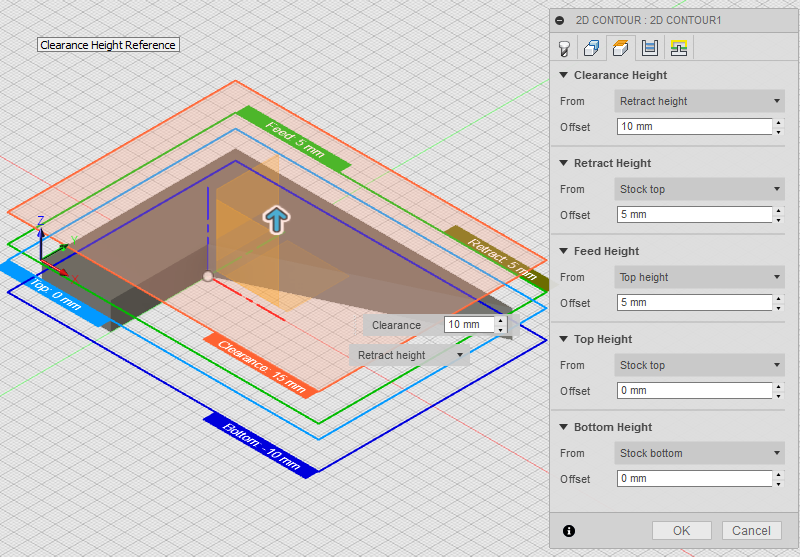
- CAD and CAM integration
- Extremely realistic renders
- Printed Circuit Board (PCB) layout, planning and manufacturing
- Cooling of electronics
- Topology and shape optimisation
Also Read: Top 10 BIM Online Certification Courses in the USA for Architects & Civil Engineers
What are the Benefits of Fusion 360?
Fusion 360 comes with a huge range of benefits. These include:
1. User Interface
Similar to most high-end CAD based software, Fusion 360 comes with a user-friendly interface. It is very intuitive, and comes with a ribbon-style top menu, with the entire screen changing depending on what component the user is working on. For instance, a different set of tools appears when the user is engaged in rendering as opposed to Computer Aided Manufacturing (CAM) and so on.
2. Integrated Electronics
The integration of MCAD (Mechanical Computer Aided Drafting) and ECAD ( Electrical Computer Aided Drafting) allows for co-designing of both and operational seamlessness.
3. Designed to Innovate
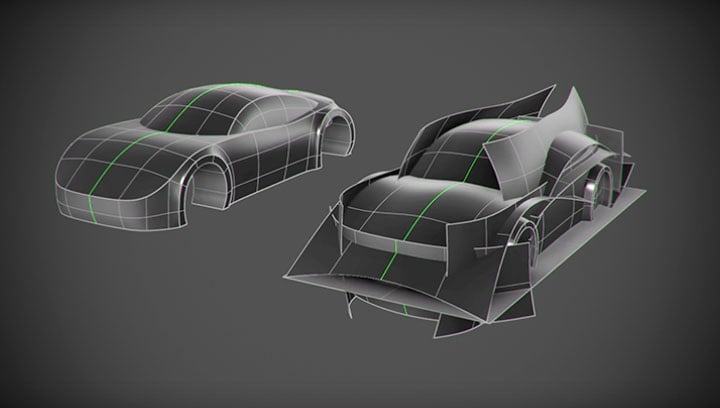
Direct modelling in Fusion 360 can be an extremely interesting process, as the software allows for a lot of creativity and flexibility. It follows a T-spline structure as opposed to a NURBS structure. What this essentially means is that it allows for curves to pass through rectangular structures, making for non-rectangular, curvy patterns and shapes.
What are the Pros and Cons of Using Fusion 360 For Architecture?
Pros
Affordability: Fusion 360 comes at a variety of price ranges for large scale corporations, boutique firms, small scale businesses, start-ups, hobbyists and students.
Streamlined Workflow: Fusion 360 is completely cloud integrated, and so it is possible to collaborate with multiple stakeholders such as co-designers and work on the same project together.
Integrated and Real Life Simulation: Fusion 360 allows a user to accurately test how their design holds up to real life stresses.
Realistic Rendering: Fusion 360 has extremely powerful built-in tools that allow for hyper-realistic rendering. In fact, it has an entire workstation dedicated just to rendering.
Cons
Malware Risks: Many users have found that despite its vast range of uses, Fusion 360 can be prone to frequent crashes.
Keyboard Incompatibility: Most CAD based software allows the user to customise their keyboard controls. However, Fusion 360 does not allow for this.
Frequently Updating Features: Fusion 360 users report that the software comes with very frequent feature updates and patches, which can be irritating to the users.
No Web-Based Version: Unlike SketchUp, it is not possible to work on Fusion 360 without a high speed internet connection and you may frequently lose data and files in the event of a lost connection. This is a drawback of most cloud-based software.
How to Start Learning Fusion 360?
Fusion 360 is very accessible to learn for anyone who is interested. Autodesk offers a huge variety of resources for learners, with a number of official training materials. Additionally, there are a huge number of resources for learning Fusion 360 available on YouTube.
What is the Cost of Fusion 360?
Fusion 360 comes at the extremely affordable price of USD 70/ per month. USD 545/ per month, and USD 1555/ for every 3 years. Additionally, Autodesk offers Fusion 360 for free to students for 3 years, if they can prove their enrollment at an accredited institution.
Fusion 360 is also offered for free to emerging start-ups whose revenue does not exceed USD 100,000 per year, with a staff of fewer than 10 people. It is also available for free to hobbyists engaging in non-commercial design and manufacturing. However, it is important to remember that for hobbyists, the software allows you to have a set of 10 projects active at any given time and no more.
How Do Other Software Compare to Fusion 360?
Fusion 360 has been compared to other 2D and 3D based design software. Its primary competitors in the market include AutoCAD, Rhino, SOLIDWORKS and SketchUp.
Fusion 360 vs Rhino
In comparison to Rhino, Fusion 360 designs are primarily used in industrial design, manufacturing design and engineering, whereas Rhino is utilised more for jewellery design and interior design. Fusion 360 is used more by businesses, who use it for generative design, simulation and additive manufacturing. Rhino, meanwhile, cannot be used for these functions.
Rhino has an easier learning curve than Fusion 360.
Recommended: A Detailed Comparison of Rhino and Fusion 360
AutoCAD vs Fusion 360
AutoCAD is usually used for drafting and documentation work, vs Fusion 360 is used for 3D product design. Fusion 360 drawings can also be imported to AutoCAD, but their functions are usually quite different. Additionally AutoCAD can only work with 2D drawings for drawing, annotating and editing, whereas Fusion 360 is used for simulation, generative design and designing PCB based electrical structures. Fusion 360 architecture models are often preferred to AutoCAD based models.
Fusion 360 vs SketchUp
Fusion 360 and SketchUp are both very popular software, and they both offer varying versions for small businesses, students and hobbyists. SketchUp’s UI is a lot more straightforward and easy to understand, and therefore many uses prefer it. SketchUp also has a very rich.
Therefore, if Fusion 360 is a fruitful software for you, we definitely recommend giving SketchUp a try as well and also seeing how SketchUp compares to other software.
Also Read: Top 10 Software for BIM Consultants
Conclusion: Is Fusion 360 Worth Learning?
Fusion 360 is worth learning if you want one tool that covers CAD, CAM, CAE, and PCB instead of juggling separate programs for each step. It is especially valuable for product designers, mechanical engineers, fabrication-focused architects, industrial designers, and students who want to understand the full path from idea to manufactured object.
For architecture-only and BIM-heavy work, Fusion 360 should be seen as a powerful companion rather than a replacement for platforms like Revit or other BIM tools. If you are planning a long-term career in the AEC or product design industry, combining Fusion 360 with strong CAD/BIM skills can make you much more employable. Upskilling through structured programs, such as the BIM Professional Course for Architects by Novatr that cover tools like Revit, Rhino, Navisworks, and Fusion 360, can help you build a complete digital toolkit and stay relevant in a fast-changing market.
Go to our Resources page to get more insights on AEC careers, software & tools, and industry trends.
Frequently Asked Questions
1. Is Fusion 360 good for architecture and BIM workflows?
Fusion 360 is not a full BIM platform, but it is very useful for detailed components, joinery, furniture, and complex facades that need simulation or CAM. Most teams still rely on tools like Revit for full building BIM and use Fusion 360 for parts that must be engineered or fabricated precisely.
2. How much does Autodesk Fusion 360 cost?
Commercial pricing for Autodesk Fusion 360 is usually around $70 per month or $545 per year, with special plans for multi-year licenses. Students, educators, startups, and hobbyists may qualify for free or heavily discounted versions based on eligibility.
3. Is Fusion 360 easier to learn than AutoCAD or Rhino?
Fusion 360 is easier to learn if you already know another CAD tool, but it can feel more complex than SketchUp or basic AutoCAD drafting. Compared with Rhino, Fusion 360 has more engineering structure and manufacturing tools, while Rhino can feel more open and flexible for pure 3D modeling.
4. What are the system requirements for Fusion 360?
To run Fusion 360 smoothly, you should have at least 8 GB of RAM, around 4 GB of video RAM, a modern CPU, and enough disk space for models and caches. It runs on both Windows and Mac, but a stable internet connection is important because it is cloud-connected.
5. Can Fusion 360 be used for 3D printing and manufacturing?
Yes, Fusion 360 is designed for 3D printing and manufacturing. You can design models, check them for issues, export files for 3D printers, and even generate CNC toolpaths and simulations for mills and routers, all within the same platform.


.png)