---
title: Top Career Opportunities for BIM Professionals in AEC 2026
description: Discover the top career opportunities for BIM professionals. Explore the key skills, roles, and future growth opportunities in the AEC industry.
image: https://blog.novatr.com/hubfs/best%20career%20opportunities%20for%20aec%20professionals%20in%20aec%20industry.png
---
[Blogs](https://www.novatr.com/learning-hub)
- [Architecture & Construction](https://www.novatr.com/learning-hub?category=Architecture+%26+Construction)
- [BIM](https://www.novatr.com/learning-hub?category=BIM)
- [Computational Design](https://www.novatr.com/learning-hub?category=Computational+Design)
- [Company News](https://www.novatr.com/learning-hub?category=Company+News)
- [Expert Talks](https://www.novatr.com/learning-hub?category=Expert+Talks)
Explore Courses
[Just Launched  BIM Professional Program v.2026 Take your career to the next level by mastering the real-world application of BIM. Know More](https://www.novatr.com/courses/bim-professional-program)
[ Master Computational Design Course Break into an advanced career by learning to apply the power of computation to the art of design. Know More](https://www.novatr.com/courses/computational-design)
[Blogs](https://www.novatr.com/learning-hub)
Explore Blogs
- [Architecture & Construction](https://www.novatr.com/learning-hub?category=Architecture+%26+Construction)
- [BIM](https://www.novatr.com/learning-hub?category=BIM)
- [Computational Design](https://www.novatr.com/learning-hub?category=Computational+Design)
- [Company News](https://www.novatr.com/learning-hub?category=Company+News)
- [Expert Talks](https://www.novatr.com/learning-hub?category=Expert+Talks)
Courses
- [BIM Professional Program v.2026](https://www.novatr.com/courses/bim-professional-program)
- [Master Computational Design](https://www.novatr.com/courses/computational-design)
- [BIM/](https://www.novatr.com/learning-hub?category=BIM)
Featured Article
# Best Career Opportunities for BIM Professionals Across the AEC Industry

Pragya Sharma
September 1, 2026
6 min read


A [study by NBS](https://www.thenbs.com/manufacturers/news-and-press/bim-comes-age-construction-most-professionals-now-consider-it-collaborative-project-information-management-process) claims that BIM adoption among AEC professionals stands at a steady 7 out of 10 professionals in over 7 years. Another [survey by Vectorworks](https://www.prnewswire.com/in/news-releases/vectorworks-report-reveals-the-technologies-transforming-the-aec-industry-in-2025-and-beyond-302362557.html) reports that 68% of practitioners are already using BIM in their everyday workflows. These numbers indicate that BIM is becoming a baseline skill rather than a differentiator. For professionals looking to build a career in the AEC industry, comprehending these emerging roles can help identify where BIM skills are creating the greatest value and demand. Let’s explore how this digital transformation is paving the way forward for BIM professionals.
## **Key Takeaways**
- BIM is being extensively introduced in organisational workflows across the AEC domain. This is creating more demand for BIM-skilled professionals across diverse roles.
- From architecture jobs to engineering jobs, BIM is being plugged in as an essential part of the design and build process, making way for new career opportunities.
- Learning BIM is not just about software expertise. Professionals also need to have an acumen of BIM concepts, team collaboration, and project management.
- Individuals can prepare themselves for future BIM jobs by continuously upskilling via BIM courses, forums, and digital content.
Master BIM Before You Fall Behind
Join 8500+ AEC professionals building BIM careers.
Explore the Program
## **What Is Driving the Growing Demand for BIM Professionals Across the AEC Industry?**
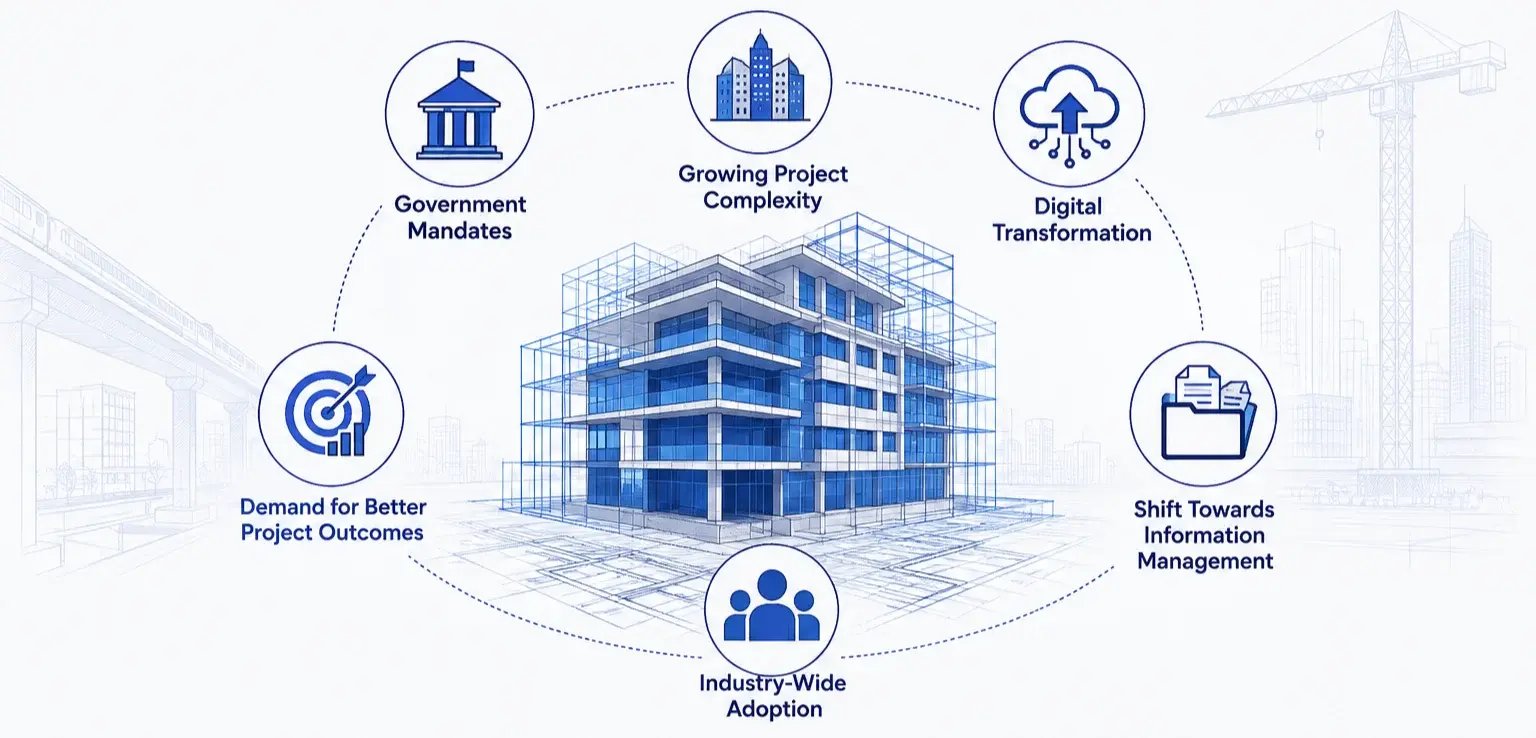
BIM is streamlining workflows in architecture, construction, and infrastructure projects. Hence, most AEC companies around the world are now upgrading from 2D drafting to BIM workflows. Here’s why this is increasing the demand for BIM professionals.
**Government Mandates:** Countries such as the UK, the USA, Canada, the UAE, and [India are actively pushing for public infrastructure](https://www.novatr.com/blog/bim-in-india) and large-scale construction projects. Firms working on such projects are thus diligently hiring BIM professionals to ensure they can deliver high-quality work within the stipulated timeframe.
**Growing Project Complexity:** Modern AEC projects involve multiple disciplines, stakeholders, and interconnected systems. BIM enables teams to coordinate these complexities in a digital environment. This boosts the demand for professionals who can manage models, coordinate disciplines, and resolve conflicts.
**Digital Transformation:** Design and construction companies are now adopting technologies such as cloud collaboration, digital twins, AI, and reality capture alongside BIM. Professionals who understand how these technologies connect with BIM workflows can help organisations integrate them into project delivery.
**Demand for Better Project Outcomes:** Today, clients are placing more emphasis on reducing construction errors, controlling costs, and improving project timelines. BIM helps teams use project data to support these objectives, creating demand for professionals who can turn BIM data into actionable insights.
**Shift Towards Information Management:** BIM is moving beyond 3D modelling and scheduling towards structured information management throughout the project lifecycle. This is creating opportunities for professionals in areas such as coordination, information management, and digital delivery.
**Industry-Wide Adoption:** Contractors, engineers, infrastructure companies, developers, and facility owners are increasingly incorporating BIM into their workflows. As adoption spreads across the AEC value chain, professionals can find [BIM-related opportunities](https://www.novatr.com/blog/bim-career-ladder)across a wider range of organisations and roles.
## **Which AEC Sectors, Roles, and Responsibilities Are Creating the Biggest BIM Career Opportunities?**
Thanks to BIM, the AEC industry is booming with new career paths such as BIM engineering and BIM management. Here’s the list of key roles:
**BIM Modeller/ Architect/ Engineer:** In this role, professionals create comprehensive 3D models of buildings and infrastructure based on design and engineering information. Their responsibilities typically include making discipline-specific models, adding project data, and producing drawings and schedules from the model.
**BIM Coordinator:** They work across multiple disciplines to ensure that architectural, structural, and MEP models work together. They review 3D models, conduct clash detection, coordinate design changes, and help resolve conflicts before they affect construction.
**BIM Manager:** As a senior professional, their job is to oversee the implementation of BIM across projects and teams. Their responsibilities can include developing BIM execution plans, establishing modelling standards, managing information exchange, [coordinating teams](https://www.novatr.com/blog/bim-coordination-workflow-explained-stages-tools-and-standards), and ensuring that project deliverables meet the required BIM standards.
**BIM Information Manager:** With BIM processes evolving to become more holistic, information management is emerging as a specialised career path. These professionals set up processes for organising, exchanging, checking, and maintaining project information throughout the asset lifecycle.
**Digital Construction Specialist:** BIM is finding its feet in the construction domain by helping with construction planning, scheduling, quantity estimation, reality capture, and site operations. Digital construction specialists help translate BIM data into practical workflows that improve project planning, coordination, monitoring, and delivery.
**BIM Consultant:** BIM consultants help organisations develop and implement BIM strategies across their projects and teams. They may advise on software, standards, workflows, training, model quality, and BIM implementation, making the role particularly relevant to companies undergoing digital transformation.
**BIM Director:** Considered the top of the hierarchy role, these BIM professionals can contribute to an organisation’s digital strategy. These roles include creating digital workflows, evaluating emerging technologies, establishing organisational standards, and leading the adoption of BIM and other digital tools across multiple projects.
**BIM in Real Estate and Asset Management:** BIM careers are also extending beyond design and construction into the operational stage of buildings and infrastructure. Developers, owners, and [facility management teams](https://www.novatr.com/blog/top-facility-management-software-for-mep-systems) can use BIM data for asset information, maintenance, space management, and lifecycle planning.
## **What Skills Help BIM Professionals Access High-Growth Opportunities?**
BIM professionals need to be multi-faceted. They should have an assortment of technical and soft skills which make them competent for the industry. Let’s explore these key skills:
**BIM Software Proficiency:** Professionals should be comfortable working with relevant BIM software such as Revit, [Navisworks](https://www.novatr.com/blog/navisworks-type), Archicad, or Civil 3D, depending on their discipline and role. Strong software skills allow them to create accurate models, extract project information, and support different stages of project delivery.
**Understanding of BIM Workflows:** Knowing how to operate BIM software is only one part of working in a BIM environment. Professionals should know model development, information exchange, documentation, coordination, and common data environments to work effectively within a collaborative project workflow.
**Multidisciplinary Coordination:** BIM professionals usually work with architects, engineers, and contractors. The ability to review models, identify clashes, communicate design issues, and coordinate changes across disciplines is therefore essential.
**Problem-Solving Skills:** Individuals in BIM roles often deal with design conflicts, incomplete information, coordination issues, and changing project requirements. Strong analytical skills help them identify the cause of these problems and use BIM data to develop practical solutions.
**Communication and Collaboration:** BIM is inherently collaborative, requiring professionals to work with people from different disciplines. Effective communication helps professionals explain issues, coordinate decisions, and ensure that project information is understood consistently across teams.
**Leadership Skills:** Professionals aiming for senior BIM positions should develop their skills in planning, team management, standards development, and implementation. These capabilities can help them progress from technical roles into BIM coordination, [management](https://www.novatr.com/blog/guide-to-become-bim-manager), and digital supervisory positions.
## **How Can AEC Professionals Prepare for Future BIM Career Opportunities?**
The best way to prepare for future-relevant BIM careers is to upskill in new-age tools, software, and processes. Here’s how:
- Gain experience in the broader spectrum of BIM processes, such as multidisciplinary coordination, documentation, information exchange, and project delivery.
- Work on real-world projects to understand how BIM is applied to solve practical design, construction, and coordination challenges.
- Build a portfolio that demonstrates how you have used BIM to contribute to projects, rather than showcasing software proficiency alone.
- Learn emerging technologies that are beginning to connect with BIM, including AI, automation, [computational design](https://www.novatr.com/blog/design-optimisation-in-architecture-with-computational-design-tools), reality capture, and digital twins.
- Keep up with changing BIM standards, workflows, and industry practices to ensure that your skills remain relevant as organisations adopt more advanced digital processes.
For this purpose, you can explore the [BIM Professional Program](https://www.novatr.com/courses/bim-professional-program?utm_source=organic_search&utm_medium=blog&utm_campaign=) by [Novatr](https://www.novatr.com/) is an online course that offers flexibility for students and working professionals, such as those in construction jobs, to learn at their own pace. This helps individuals prepare for the future of work while continuing their present academic or work commitments. Students also get the opportunity to learn through practising professionals, seek mentorsh
BIM is Advancing. Are You?
Get BIM certified and open doors to a better career.
Join the Program
## **Conclusion**
BIM is opening new career avenues in the AEC industry. Global companies in the architecture, construction, and real estate industry are actively recruiting professionals with BIM skills. Such demand is creating opportunities around a wide range of BIM roles. Therefore, professionals who are skilled in BIM are better positioned to secure leadership roles in the BIM industry and be at the forefront of the future of work.
We suggest you explore [Novatr’s](https://www.novatr.com/) [BIM Professional Program](https://www.novatr.com/courses/bim-professional-program?utm_source=organic_search&utm_medium=blog&utm_campaign=). This 7-month course teaches BIM modelling, fundamentals, workflows, and how to prepare client-ready deliverables. Participants can also apply their learnings on capstone projects and gain feedback on their work. Further, Novatr offers support for resume building, portfolio creation, and placement assistance to help learners become sufficiently skilled for BIM opportunities.
For additional industry insights and learning resources, join us on our [WhatsApp channel](https://whatsapp.com/channel/0029Vb7Gy2LBFLgMx79j7B1b) or visit our [Resources Page](https://www.novatr.com/learning-hub) to learn about the latest trends in architecture and engineering.
## **FAQs**
### **1. How is BIM changing career opportunities in AEC?**
BIM is introducing tech-first roles in the AEC industry, with fields such as robotics, automation, 3D modelling, project management, and digital construction taking centre stage.
### **2. Which skills are most valuable for BIM professionals?**
Skills such as computational design, construction technology, and BIM coordination are most valuable for BIM professionals.
### **3. How can beginners start a career in BIM?**
Beginners can start a career in BIM by upskilling through courses and hands-on experience. This can help them find relevant opportunities in the job market.
Was this content helpful to you
Like Yes
Dislike No

TABLE OF CONTENTS
BIM Is The New Standard. Are You Certified?
Get Certified in BIM
SHARE ON YOUR SOCIALS
Link Copied Successfully
Related articles
[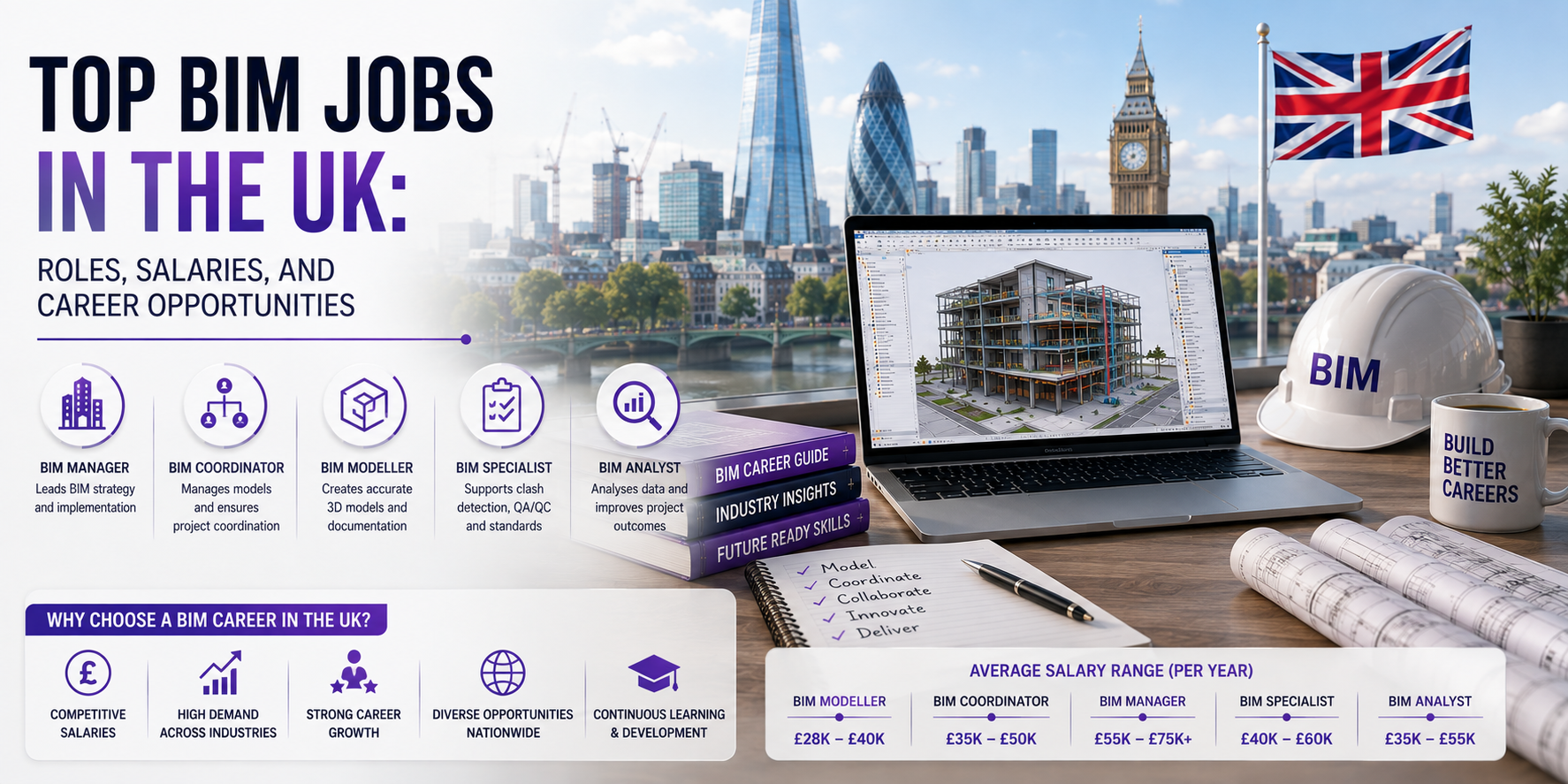 BIM Top BIM Jobs in the UK in 2026: Roles, Salaries, and Career Opportunities 31 August 2026 9 min read](https://blog.novatr.com/blog/bim-careers-in-the-uk) [ BIM What Do BIM Professionals Look for in an AEC Company? 26 August 2026 8 min read](https://blog.novatr.com/blog/what-do-bim-professionals-look-for-in-an-aec-company) [ BIM Civil Metro vs Airport Projects: How BIM Workflows Differ? 5 June 2026 9 min read](https://blog.novatr.com/blog/metro-vs-airport-projects-how-bim-workflows-differ) [ BIM Archi Architecture Courses vs BIM Courses: Which One Gives Better Career Growth? 12 May 2026 4 min read](https://blog.novatr.com/blog/architecture-courses-vs-bim-courses)
Download Syllabus
## BIM Professional Program
Next Cohort
June 2026
Program Duration
7 Months
Premium Program benefits
8 Credentials from Autodesk, NSDC, Novatr
1 program. 10 career paths. Infinite Growth.
40+ ISO 19650 & RIBA real-world projects to practice
1-on-1 guidance. Access 400+ industry experts.
Access the biggest AEC-Tech community on the planet. 8500+ and counting
Curated for you by 100+ global BIM leaders.
Lifelong access to course content
Enter your details to download the program syllabus.
##### BIM Professional Program
June 2026, 7 Months
Your Name Invalid name.
Phone Number Enter a valid phone number
Email Please enter a valid email address.
Select years of experience\* Currently studying 0-1 years 1-2 years 2-4 years 4-8 years 8-10 years 10-12 years 12+ years Invalid selection.
Specialisation Select your background\* Architecture Civil Engineering Mechanical Engineering Electrical Engineering Invalid selection.
Are you professionally trained in interior design?
Yes
No
I agree to the [Terms of Use](https://www.novatr.com/terms-and-conditions) and [Privacy Policy](https://www.novatr.com/privacy-policy), and consent to be contacted by Email, Call, WhatsApp, or SMS.
Submit
Ready to skyrocket your career?
Begin your next chapter in AEC
with Novatr!
We are here to help you take the industry by storm with advanced, tech-first skills.
[Explore Courses](https://www.novatr.com/#courses)
Join our newsletter
Submit
Thank you for signing up.
We’ll send you a nice letter once per week. No spam.

Dare to Disrupt.
Join thousands of people who organise
work and life with Novatr.
Company
- [About Us](https://www.novatr.com/about)
- [BIM Professional Program v.2026](https://www.novatr.com/courses/bim-professional-program)
- [Masters Computational Design](https://www.novatr.com/courses/computational-design)
- [Become a Mentor](https://www.novatr.com/apply-as-mentor)
- [Hiring from Us](https://www.novatr.com/hire-from-us)
- [Careers at Novatr](https://www.novatr.com/career)
Resources
- [Blog](https://www.novatr.com/learning-hub)
- [Media Room](https://www.novatr.com/media-room-home-page)
- [Career Builder](https://www.novatr.com/career-navigator)
- [Events & Webinars](https://www.novatr.com/webinars)
- [FAQs & Support Center](https://www.novatr.com/contact-us)
- [Contact Us](https://www.novatr.com/contact-us)
- [Privacy Policy](https://www.novatr.com/privacy-policy)
- [Terms of Use](https://www.novatr.com/terms-and-conditions)
©2023 Oneistox Network Pvt. Ltd.
All Rights Reserved
```json
{
"@context" : "https://schema.org",
"@type" : "BlogPosting",
"author" : {
"@type" : "Person",
"name" : "Pragya Sharma",
"url" : "https://blog.novatr.com/blog/author/pragya-sharma"
},
"dateModified" : "2026-09-01T07:04:34.081Z",
"datePublished" : "2026-09-01T06:53:46.000Z",
"headline" : "Top Career Opportunities for BIM Professionals in AEC {{year}}",
"image" : [ "https://blog.novatr.com/hubfs/best%20career%20opportunities%20for%20aec%20professionals%20in%20aec%20industry.png" ],
"mainEntityOfPage" : {
"@id" : "https://blog.novatr.com/blog/top-career-opportunities-for-bim-professionals-in-aec",
"@type" : "WebPage"
},
"publisher" : {
"@type" : "Organization",
"logo" : {
"@type" : "ImageObject",
"url" : "https://blog.novatr.com/hubfs/Novatr%20Prev%20OX-2.svg"
}
}
}
```