---
title: How World's Longest Bridge Randselva Built Using BIM & Tekla?
description: Learn how the Randselva Bridge used BIM and Tekla to deliver infrastructure without drawings, transforming digital engineering workflows worldwide
image: https://blog.novatr.com/hubfs/An%20aerial%20view%20of%20the%20Randselva%20Bridge.jpg
---
[Blogs](https://www.novatr.com/learning-hub)
- [Architecture & Construction](https://www.novatr.com/learning-hub?category=Architecture+%26+Construction)
- [BIM](https://www.novatr.com/learning-hub?category=BIM)
- [Computational Design](https://www.novatr.com/learning-hub?category=Computational+Design)
- [Company News](https://www.novatr.com/learning-hub?category=Company+News)
- [Expert Talks](https://www.novatr.com/learning-hub?category=Expert+Talks)
Explore Courses
[Just Launched  BIM Professional Program v.2026 Take your career to the next level by mastering the real-world application of BIM. Know More](https://www.novatr.com/courses/bim-professional-program)
[ Master Computational Design Course Break into an advanced career by learning to apply the power of computation to the art of design. Know More](https://www.novatr.com/courses/computational-design)
[Blogs](https://www.novatr.com/learning-hub)
Explore Blogs
- [Architecture & Construction](https://www.novatr.com/learning-hub?category=Architecture+%26+Construction)
- [BIM](https://www.novatr.com/learning-hub?category=BIM)
- [Computational Design](https://www.novatr.com/learning-hub?category=Computational+Design)
- [Company News](https://www.novatr.com/learning-hub?category=Company+News)
- [Expert Talks](https://www.novatr.com/learning-hub?category=Expert+Talks)
Courses
- [BIM Professional Program v.2026](https://www.novatr.com/courses/bim-professional-program)
- [Master Computational Design](https://www.novatr.com/courses/computational-design)
- [CIVIL/](https://www.novatr.com/learning-hub?category=BIM)
Featured Article
# How World's Longest Bridge Randselva Built Using BIM & Tekla?
Deependra Dobriyal
February 20, 2026
5 min read
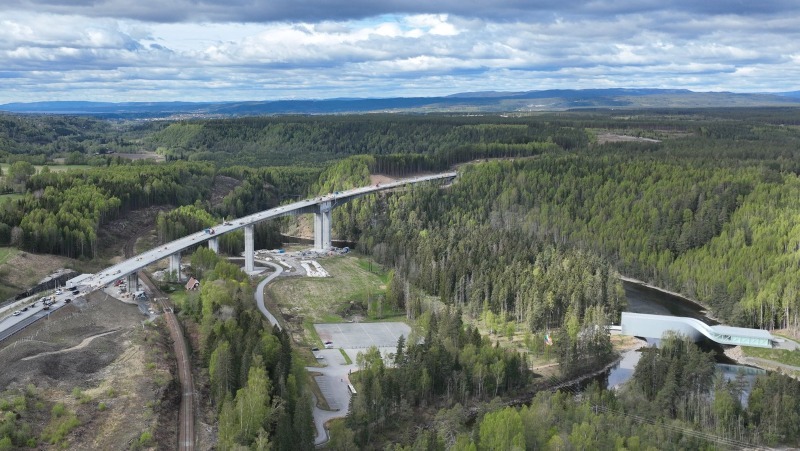

The **longest bridge in the world** built entirely without traditional drawings demonstrates how digital delivery is reshaping infrastructure. The Randselva project showed that a **bridge built using BIM** can move from concept to construction using a coordinated 3D model as the single source of truth.
Governments worldwide are accelerating this shift. For example, according to the [European Commission](https://public-buyers-community.ec.europa.eu/communities/bim-and-public-procurement/resources/analysis-adoption-building-information-modelling), several European countries have integrated BIM into public procurement policies, with nations such as Denmark making BIM mandatory for certain projects as early as 2007.
This growing mandate for digital workflows highlights why infrastructure teams are moving toward model-based delivery instead of drawing-based processes.
The Randselva Bridge in Norway became one of the clearest real-world demonstrations of how **BIM for infrastructure** can redefine collaboration, accuracy, and construction speed.
Unlock High-Paying Careers With BIM
Master BIM workflows, software and skills on real projects.
Apply Now
\*Limited seats available
## **Why the Randselva Bridge Changed Infrastructure BIM Forever?**
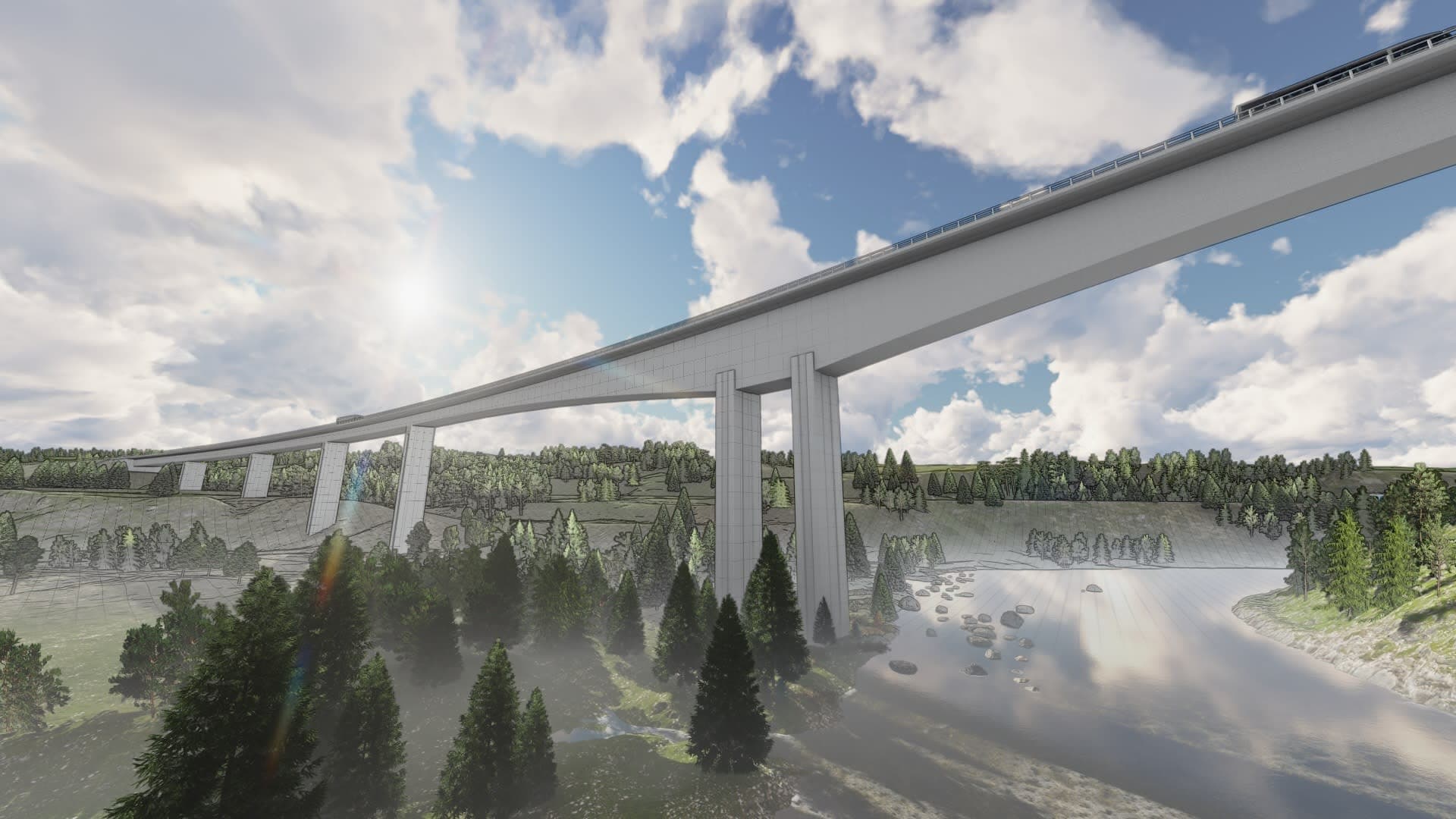
The Randselva Bridge is widely recognized as the **world's longest bridge built without drawings**, a milestone that challenged decades of engineering practice. Instead of producing thousands of 2D sheets, the entire project relied on a federated digital model.
This shift altered how risk was managed. In traditional bridge delivery, drawings pass through multiple interpretations before reaching the site. Each interpretation introduces the possibility of dimensional inconsistencies, sequencing misunderstandings, or rework. By contrast, the model-based workflow ensured that every discipline worked from synchronized geometry and data.
Another defining change was the level of confidence stakeholders had in decision-making. Because the model contained precise information tied to fabrication and installation, teams could validate assumptions early rather than waiting for physical construction to expose problems.
The project team also demonstrated that digital modeling could support highly detailed reinforcement layouts, curved alignments, and staged construction logic simultaneously. These are conditions where drawing-heavy workflows often struggle to maintain clarity.
The project also demonstrated how **BIM for construction** can handle infrastructure-scale complexity, not just buildings. From reinforcement detailing to segment casting, every component was defined digitally before it reached the site.
Over time, this model-centric approach also supports asset management after completion. The same dataset can inform inspections, repairs, and future upgrades, allowing infrastructure owners to treat the model as a living reference rather than a static archive.
## **Role of BIM and Tekla Structures in the Project**
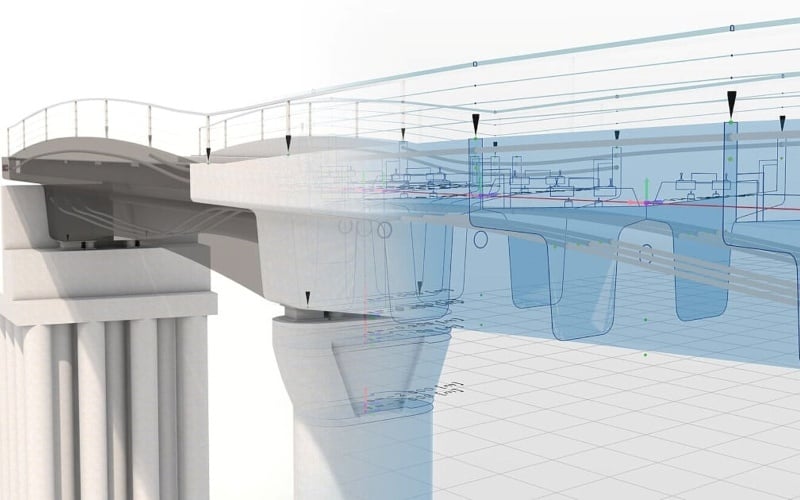
To understand how this transformation worked in practice, it is helpful to look at the specific ways BIM and Tekla Structures supported engineering and construction workflows.
The project relied heavily on [BIM structural design using Tekla](https://www.novatr.com/blog/tekla-for-civil-engineers-benefits-applications), which enabled teams to connect structural detailing directly with fabrication and construction planning. The following roles highlight how the system functioned throughout the lifecycle:
- The Tekla model acted as the central coordination platform for designers, contractors, and fabricators.
- Reinforcement, geometry, and structural data were modeled to construction-level detail, reducing interpretation risks.
- Engineers validated structural performance using model-based simulations instead of drawing reviews.
- Fabrication teams extracted data directly from the model, ensuring dimensional accuracy.
- Construction sequencing was visualized digitally to plan installation and reduce clashes.
- Updates were shared in real time, allowing teams to adapt without revising large document sets.
- The model supported traceability, making quality control easier across multiple project phases.
Beyond coordination, this workflow enabled smoother collaboration between offices located in different regions. Digital environments allowed specialists to review the same elements simultaneously, shortening review cycles and strengthening interdisciplinary alignment.
This integrated workflow represents how [**BIM for infrastructure**](https://www.novatr.com/blog/bim-in-india)enables better collaboration compared to fragmented design approaches.
## **How Engineers and Site Teams Worked Directly from the Model?**
One of the most significant innovations in the **bridge built using BIM** approach was how site teams interacted with the model itself.
Instead of relying on printed drawings, engineers accessed digital information through coordinated platforms. Field teams used model views to confirm geometry, reinforcement placement, and assembly sequences.
This changed how construction knowledge was communicated. Visual references reduced reliance on written interpretation and allowed teams to understand complex areas quickly. Workers could examine specific components, isolate views, and verify alignment conditions before installation began.
This allowed construction teams to:
- Visualize components before installation
- Detect issues earlier through model coordination
- Align fabrication and site tolerances precisely
- Reduce time spent interpreting documentation
Digital access also improved verification workflows. Inspectors could compare constructed elements against the model to ensure compliance, strengthening quality assurance processes.
The use of model-driven communication helped reduce delays that typically arise from clarifications or design queries. Instead of waiting for revised drawings, teams could resolve uncertainties through shared digital review.
Such workflows align with broader industry movement toward data-driven execution environments, where models function as operational tools rather than design references.
This method is increasingly recognized as a practical implementation of **BIM for construction**, where digital data drives execution instead of static drawings.
## **Key Lessons for Civil & Structural Engineers**

The **Randselva Bridge** offers several important takeaways for professionals transitioning into digital infrastructure delivery. These lessons reflect how engineering roles, workflows, and required competencies are evolving alongside model-based project delivery.
Important lessons from the project include:
- Engineers must develop skills beyond analysis and design. Understanding how to structure information within coordinated models is becoming as important as calculating forces or designing members.
- Collaboration now depends on shared datasets rather than isolated deliverables. Engineers must communicate decisions through model intelligence, which requires familiarity with integrated platforms and data workflows.
- The project highlights the growing importance of **BIM structural design using Tekla** as a functional capability for infrastructure professionals working on bridges and transportation systems.
- Adaptability is essential. Engineers must be prepared to work in environments where updates occur continuously and coordination is dynamic rather than sequential. This requires a mindset that values integration, verification, and shared accountability across disciplines.
For professionals seeking to build these capabilities, structured learning pathways such as the [**BIM course for civil engineers**](https://www.novatr.com/us/courses/bim-for-civil-engineers) by [Novatr](https://www.novatr.com/us) help to translate theory into applied digital delivery methods used on projects like Randselva.
The industry direction is clear. Engineers who understand model-based collaboration will be better positioned to participate in complex infrastructure programs driven by digital standards.
Master BIM and Get Hired Faster
Join a community of 8500+ Architects and Engineers.
Explore Now
\*Limited seats available
## **Conclusion**
The Randselva Bridge stands as a defining example of how the **longest bridge in the world** delivered through model-based workflows shows a transformation in infrastructure engineering.
By functioning as the world's longest bridge built without drawings, it demonstrated that coordinated digital models can replace traditional documentation while improving accuracy and collaboration. The project showed how a **bridge built using BIM** can connect structural analysis, detailing, fabrication, and construction into a unified process.
For civil and structural engineers, this shift highlights the growing importance of digital coordination, constructability modeling, and lifecycle-ready data environments. Skills aligned with **BIM for infrastructure** and integrated delivery are becoming central to modern engineering practice.
Educational pathways are evolving to reflect these needs. The [BIM professional Course for Civil Engineers](https://www.novatr.com/us/courses/bim-for-civil-engineers) offered by [Novatr](https://www.novatr.com/us) focuses on applied BIM workflows, coordination strategies, and real-world tool usage aligned with current infrastructure delivery methods. The learning method emphasizes practical understanding so engineers can confidently contribute to digitally managed projects.
Visit our [resource page](https://www.novatr.com/learning-hub) to explore more learning materials that support the transition from traditional design methods to collaborative, model-driven engineering environments.
Was this content helpful to you
Like Yes
Dislike No

TABLE OF CONTENTS
BIM Is The New Standard. Are You Certified?
Get Certified in BIM
SHARE ON YOUR SOCIALS
Link Copied Successfully
Related articles
[ MCD Impressive Engineering of the World's Largest Masonry Dome by Filippo Brunelleschi | 2026 Updated 17 July 2023 8 min read](https://blog.novatr.com/blog/worlds-biggest-dome-by-filippo-brunelleschi) [ MCD World's Greatest Stadium Designs in 2026 4 September 2024 11 min read](https://blog.novatr.com/blog/greatest-stadium-designs) [ Building Information Modelling Famous Architectural Designers Who Shaped the World of Design 17 June 2025 8 min read](https://blog.novatr.com/blog/famous-architectural-designers) [ BIM Civil Surat Diamond Bourse: How BIM Brought the World’s Largest Office Building to Life? 5 June 2026 7 min read](https://blog.novatr.com/blog/surat-diamond-bourse-how-bim-brought-the-worlds-largest-office-building-to-life)
Download Syllabus
## BIM Professional Program
Next Cohort
June 2026
Program Duration
7 Months
Premium Program benefits
8 Credentials from Autodesk, NSDC, Novatr
1 program. 10 career paths. Infinite Growth.
40+ ISO 19650 & RIBA real-world projects to practice
1-on-1 guidance. Access 400+ industry experts.
Access the biggest AEC-Tech community on the planet. 8500+ and counting
Curated for you by 100+ global BIM leaders.
Lifelong access to course content
Enter your details to download the program syllabus.
##### BIM Professional Program
June 2026, 7 Months
Your Name Invalid name.
Phone Number Enter a valid phone number
Email Please enter a valid email address.
Select years of experience\* Currently studying 0-1 years 1-2 years 2-4 years 4-8 years 8-10 years 10-12 years 12+ years Invalid selection.
Specialisation Select your background\* Architecture Civil Engineering Mechanical Engineering Electrical Engineering Invalid selection.
Are you professionally trained in interior design?
Yes
No
I agree to the [Terms of Use](https://www.novatr.com/terms-and-conditions) and [Privacy Policy](https://www.novatr.com/privacy-policy), and consent to be contacted by Email, Call, WhatsApp, or SMS.
Submit
Ready to skyrocket your career?
Begin your next chapter in AEC
with Novatr!
We are here to help you take the industry by storm with advanced, tech-first skills.
[Explore Courses](https://www.novatr.com/#courses)
Join our newsletter
Submit
Thank you for signing up.
We’ll send you a nice letter once per week. No spam.

Dare to Disrupt.
Join thousands of people who organise
work and life with Novatr.
Company
- [About Us](https://www.novatr.com/about)
- [BIM Professional Program v.2026](https://www.novatr.com/courses/bim-professional-program)
- [Masters Computational Design](https://www.novatr.com/courses/computational-design)
- [Become a Mentor](https://www.novatr.com/apply-as-mentor)
- [Hiring from Us](https://www.novatr.com/hire-from-us)
- [Careers at Novatr](https://www.novatr.com/career)
Resources
- [Blog](https://www.novatr.com/learning-hub)
- [Media Room](https://www.novatr.com/media-room-home-page)
- [Career Builder](https://www.novatr.com/career-navigator)
- [Events & Webinars](https://www.novatr.com/webinars)
- [FAQs & Support Center](https://www.novatr.com/contact-us)
- [Contact Us](https://www.novatr.com/contact-us)
- [Privacy Policy](https://www.novatr.com/privacy-policy)
- [Terms of Use](https://www.novatr.com/terms-and-conditions)
©2023 Oneistox Network Pvt. Ltd.
All Rights Reserved
```json
{
"@context" : "https://schema.org",
"@type" : "BlogPosting",
"author" : {
"@type" : "Person",
"name" : "Deependra Dobriyal",
"url" : "https://blog.novatr.com/blog/author/deependra-dobriyal"
},
"dateModified" : "2026-02-20T12:15:10.422Z",
"datePublished" : "2026-02-20T12:11:22.000Z",
"headline" : "How World's Longest Bridge Randselva Built Using BIM & Tekla?",
"image" : [ "https://blog.novatr.com/hubfs/An%20aerial%20view%20of%20the%20Randselva%20Bridge.jpg" ],
"mainEntityOfPage" : {
"@id" : "https://blog.novatr.com/blog/how-worlds-longest-bridge-randselva-built-using-bim-tekla",
"@type" : "WebPage"
},
"publisher" : {
"@type" : "Organization",
"logo" : {
"@type" : "ImageObject",
"url" : "https://blog.novatr.com/hubfs/Novatr%20Prev%20OX-2.svg"
}
}
}
```