---
title: How Vision AI Boosts MEP Inspections & Site Monitoring? 2026
description: Learn how Vision AI in construction improves MEP inspections, enhancing site monitoring with greater accuracy, speed, and safety on projects.
image: https://blog.novatr.com/hubfs/How%20Vision%20AI%20is%20Transforming%20MEP%20Inspections%20and%20Site%20Monitoring.png
---
[Blogs](https://www.novatr.com/learning-hub)
- [Architecture & Construction](https://www.novatr.com/learning-hub?category=Architecture+%26+Construction)
- [BIM](https://www.novatr.com/learning-hub?category=BIM)
- [Computational Design](https://www.novatr.com/learning-hub?category=Computational+Design)
- [Company News](https://www.novatr.com/learning-hub?category=Company+News)
- [Expert Talks](https://www.novatr.com/learning-hub?category=Expert+Talks)
Explore Courses
[Just Launched  BIM Professional Program v.2026 Take your career to the next level by mastering the real-world application of BIM. Know More](https://www.novatr.com/courses/bim-professional-program)
[ Master Computational Design Course Break into an advanced career by learning to apply the power of computation to the art of design. Know More](https://www.novatr.com/courses/computational-design)
[Blogs](https://www.novatr.com/learning-hub)
Explore Blogs
- [Architecture & Construction](https://www.novatr.com/learning-hub?category=Architecture+%26+Construction)
- [BIM](https://www.novatr.com/learning-hub?category=BIM)
- [Computational Design](https://www.novatr.com/learning-hub?category=Computational+Design)
- [Company News](https://www.novatr.com/learning-hub?category=Company+News)
- [Expert Talks](https://www.novatr.com/learning-hub?category=Expert+Talks)
Courses
- [BIM Professional Program v.2026](https://www.novatr.com/courses/bim-professional-program)
- [Master Computational Design](https://www.novatr.com/courses/computational-design)
- [MEP/](https://www.novatr.com/learning-hub?category=BIM)
Featured Article
# How Vision AI is Transforming MEP Inspections and Site Monitoring

Neha Singh
February 13, 2026
5 min read
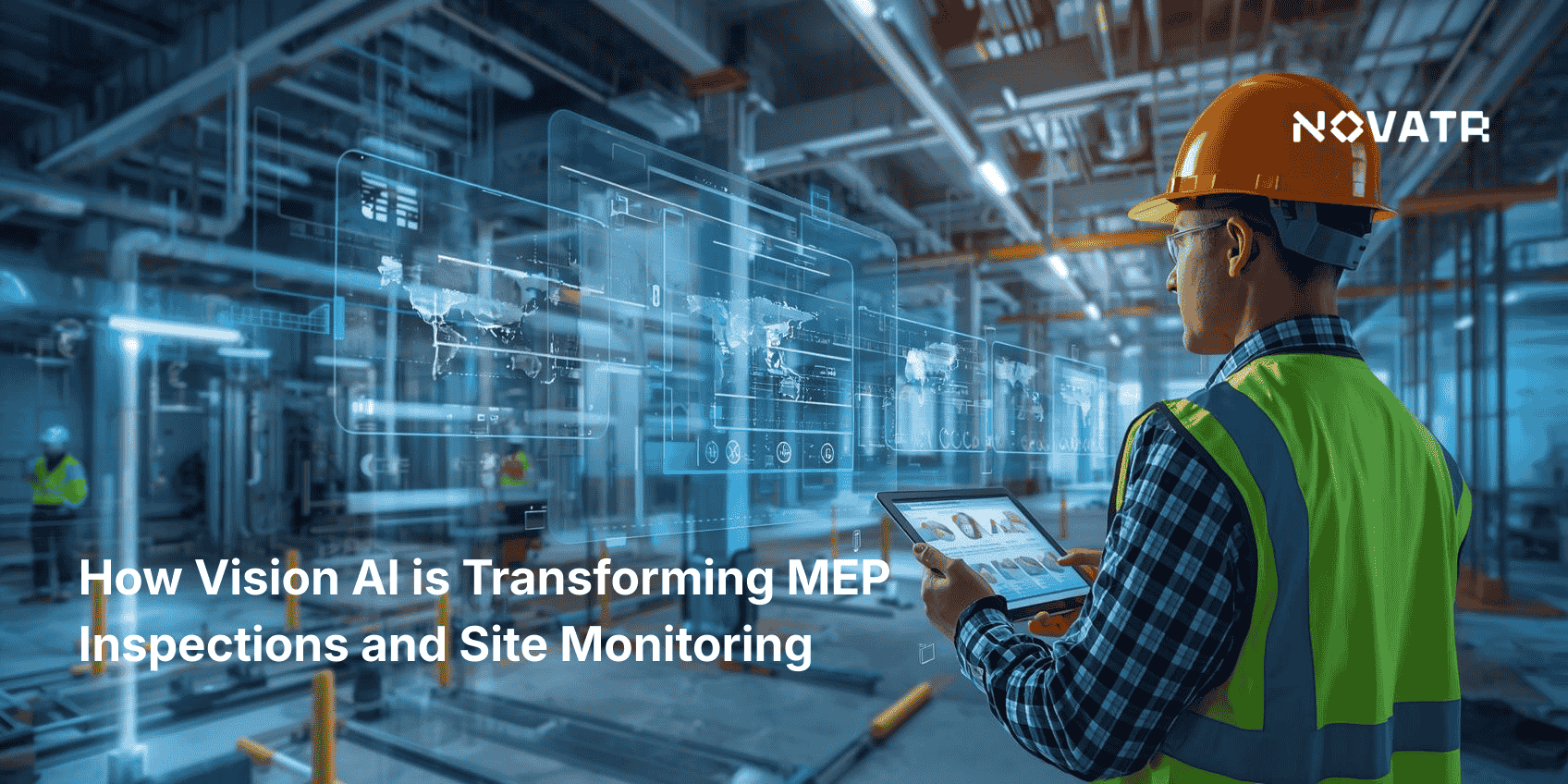

Vision AI is reshaping construction inspections, providing precise, data-driven oversight of complex systems. Through AI site monitoring, teams can track installations, spot anomalies, and maintain high standards efficiently. Skilled professionals apply these technologies effectively, with MEP engineers in the U.S. earning an average salary of [$101,752](https://www.ziprecruiter.com/Salaries/Mep-Engineer-Salary) per year, reflecting the level of expertise required.
Using computer vision for MEP, Vision AI automates the detection of assets and potential issues in site scans and images. This approach streamlines inspections, improves accuracy, and strengthens safety protocols. Organizations adopting these tools achieve faster reporting, better operational control, and measurable results, showing how Vision AI is transforming MEP inspections and elevating overall site monitoring.
Unlock High-Paying Careers With BIM
Master BIM workflows, software and skills on real projects.
Apply Now
\*Limited seats available
## **What Is Vision AI And How Is It Changing MEP Inspections?**
Vision AI applies advanced machine learning and image recognition to analyze visual data from buildings and construction sites. It can detect patterns, track changes, and provide meaningful insights that guide decision-making. This technology also enhances smart building inspections, helping teams identify critical areas and prioritize actions with more clarity and precision.
Here’s how Vision AI is changing MEP inspections:
- It detects potential issues immediately, helping teams address problems before they disrupt workflows or project schedules.
- Automated image analysis ensures consistent reporting and minimizes errors caused by manual inspections across multiple sites.
- Continuous monitoring captures deviations and irregularities quickly, supporting safer operations and reducing human oversight risks effectively.
- Trend tracking identifies recurring anomalies, helping plan maintenance and prevent future system failures before they escalate.
- Integration with MEP asset detection speeds identification, classification, and tracking of equipment, making inspections more efficient.
- Managers can use digital tools to monitor progress in real time, gaining full visibility of site operations and priorities.
## **How Do Open-Vocabulary Vision Models Identify MEP Assets In Images And Site Scans?**
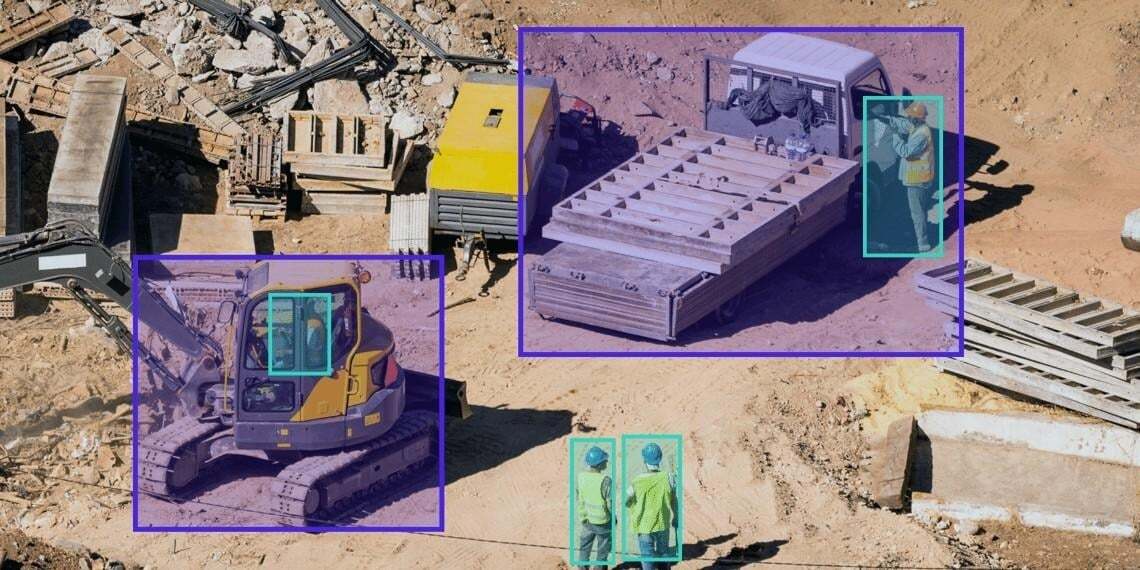
Open-vocabulary vision models process images and site scans using advanced algorithms to understand visual context, recognize patterns, and interpret object features. By comparing these visuals to extensive datasets, they generate actionable insights that improve monitoring and inspection workflows. These capabilities integrate seamlessly with construction automation tools, enhancing visibility, tracking, and decision-making across construction projects.
Here’s how open-vocabulary vision models for MEP asset recognition work to identify and track assets in site images and scans:
- They identify and label assets in images without needing predefined categories, adapting to new equipment and configurations.
- Using MEP quality control technology, these models highlight defects, inconsistencies, and deviations from standards for corrective action.
- Models examine spatial relationships to determine the position, alignment, and connectivity of assets within complex layouts.
- They analyze historical images to detect missing or misaligned components and track changes over time.
- Integration with digital site supervision provides centralized monitoring, helping managers validate asset placement and overall site progress.
- Insights support MEP engineering teams by improving planning, design verification, and maintenance coordination efficiently.
## **How Does Vision AI Improve Accuracy, Safety, And Speed In MEP Site Monitoring?**
Vision AI collects and analyzes visual and sensor data continuously, providing teams with real-time insight into site conditions. By tracking installation progress and highlighting potential inconsistencies early, it supports faster decision-making. This shows how computer vision improves accuracy and safety in MEP inspections, helping managers maintain high-quality oversight without slowing project timelines.
Here’s how Vision AI improves accuracy, safety, and speed in MEP site monitoring:
- Advanced algorithms verify that each component is installed correctly according to design specifications.
- Predictive analysis identifies patterns that may indicate emerging safety hazards on the site.
- Automated defect detection in MEP systems using AI identifies equipment inconsistencies or wear and highlights urgent issues for timely repair.
- Data from multiple sensors is synchronized automatically, reducing delays caused by manual checks.
- Visual alerts flag unusual configurations or missing equipment to prevent potential operational errors.
- AI safety monitoring evaluates ongoing tasks and provides actionable safety feedback for teams in real time.
## **Did You Know?**
About [70%](https://zipdo.co/ai-in-the-construction-industry-statistics/) of new construction projects that use AI report increased safety measures, highlighting the role of intelligent visual and monitoring technologies in enhancing oversight and risk management on-site.
## **Which MEP Inspection Tasks Benefit the Most from Automated Visual Detection?**
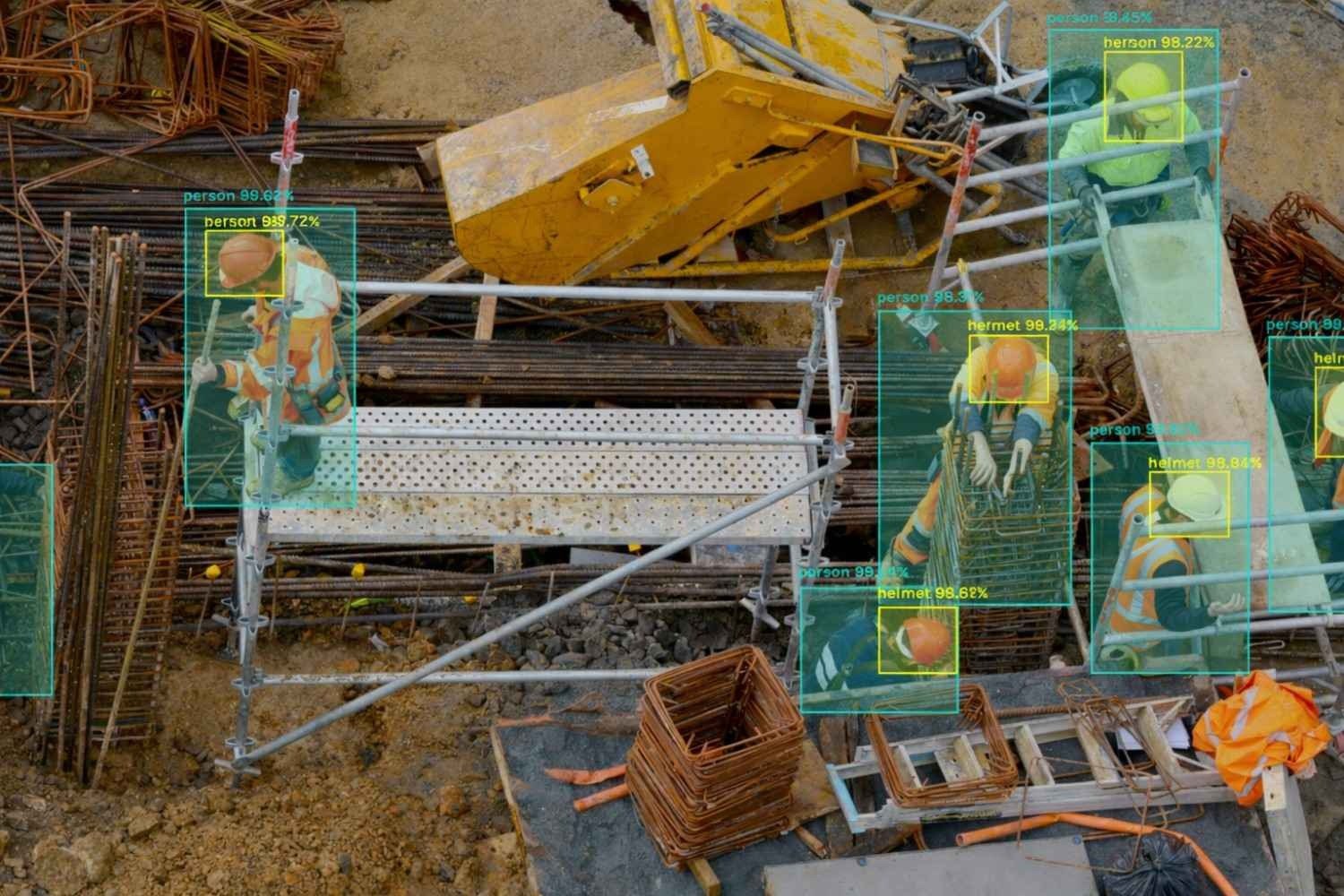
Automated visual detection can streamline inspections across complex MEP systems, identifying issues that may be missed in manual checks. It is particularly useful in repetitive or detailed tasks, ensuring consistency and speed. These advancements are highlighted in vision AI applications in HVAC electrical and plumbing checks, improving oversight and operational efficiency.
Here are the main MEP inspection tasks that benefit the most from automated visual detection:
- **HVAC System Inspections:** Ducts, vents, and airflow components are reviewed quickly to confirm correct installation.
- **Electrical Panel Checks:** Wiring, breakers, and connections are examined to detect errors or missing elements.
- **Plumbing Inspections:** Pipes, joints, and fixtures are monitored for leaks, alignment, and proper placement.
- **Safety System Inspections:** Emergency exits, alarm systems, and protective equipment are regularly examined to ensure operational readiness.
- **Fire Protection System Review:** Sprinklers, alarms, and emergency systems are checked for proper operation and compliance.
- **Data Management and Reporting:** Using MEP software, inspection results are organized and tracked efficiently across projects.
## **What Tools and Platforms Support Vision AI Adoption in MEP Workflows?**
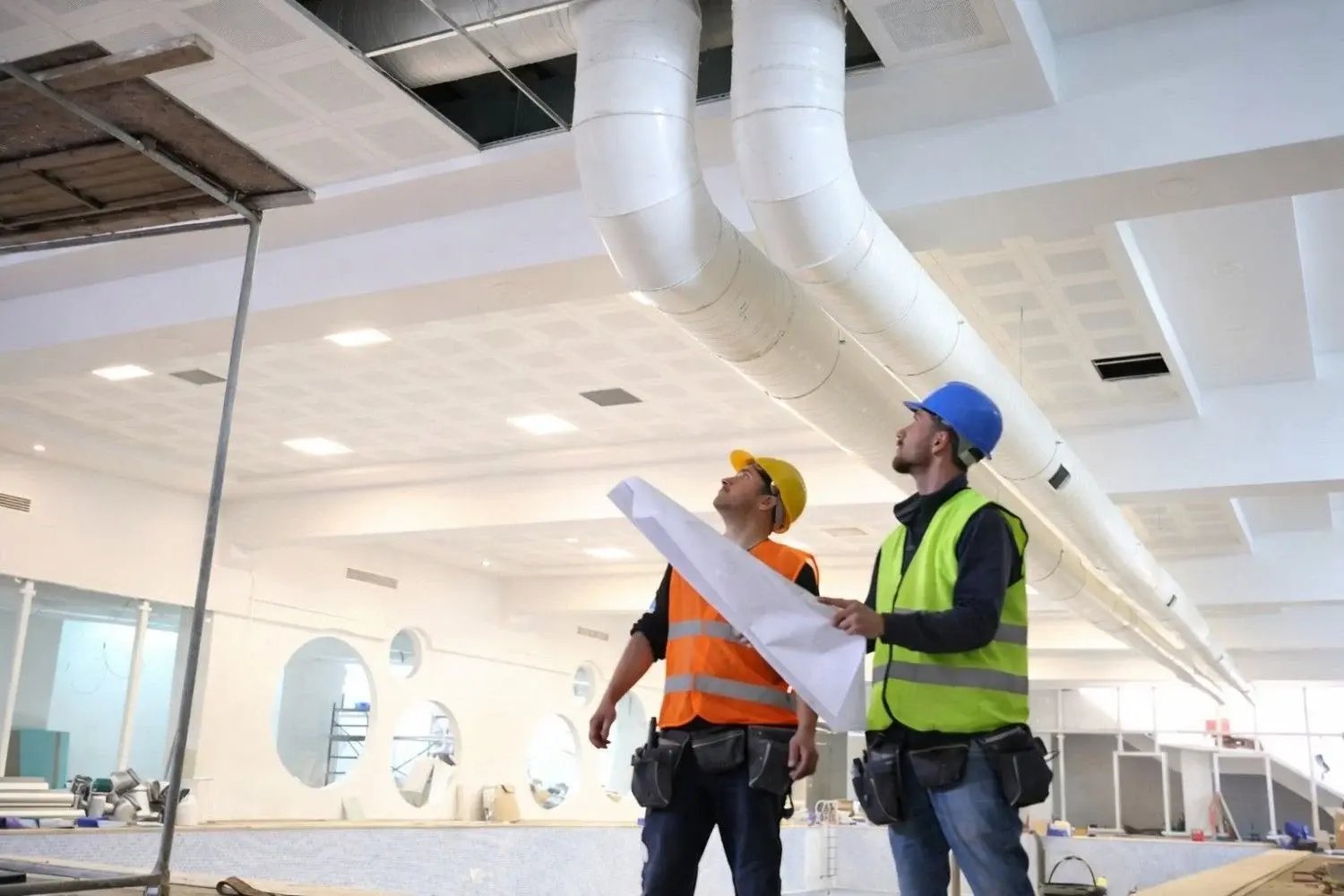
Vision AI adoption in MEP workflows relies on platforms that capture, analyze, and manage visual site data efficiently. These systems simplify inspections, track progress, and reduce manual effort while enhancing decision-making. Modern solutions use AI tools for automated MEP site monitoring to improve accuracy, visibility, and operational workflow across projects.
Here are key tools and platforms that support Vision AI adoption in MEP workflows:
- **OpenSpace:** Captures site imagery and uses AI to track construction progress and detect deviations.
- **Procore:** Construction management platform with AI-driven insights, reporting, and workflow tracking.
- **Doxel:** Analyzes field images against BIM models to monitor quality and project progress.
- **Buildots:** Uses 360° camera captures for real-time progress tracking and plan verification.
- **Vitruvi Control:** AI-powered platform that verifies work quality automatically using site visuals.
Master BIM and Get Hired Faster
Join a community of 8500+ Architects and Engineers.
Explore Now
\*Limited seats available
## **Conclusion**
Vision AI is reshaping inspection workflows by providing clear visual insights, improving site oversight, and supporting faster decision-making. Its ability to capture and analyze complex site data significantly reduces errors and improves operational clarity, enabling teams to monitor installations with greater precision and maintain consistent project standards across large-scale construction environments.
For professionals looking to deepen their skills, the [BIM Course for MEP Engineers](https://www.novatr.com/us/courses/bim-for-mep-engineers) offered by [Novatr](https://www.novatr.com/us) provides structured learning on integrating digital tools with inspection workflows. Visit our [resource page](https://www.novatr.com/learning-hub) for additional guidance and materials that highlight emerging technologies and their applications in modern MEP site monitoring.
## **FAQs**
### **1. How does Vision AI improve accuracy in site monitoring for MEP systems?**
Vision AI continuously analyzes visual and sensor data to identify inconsistencies in real time. This ensures that installation and maintenance work are tracked precisely across complex sites.
### **2. What types of issues can Vision AI detect during MEP inspections?**
It can identify misaligned components, missing installations, and potential equipment defects. Additionally, it flags anomalies in electrical, HVAC, and plumbing systems that might affect performance.
### **3. How does Vision AI help reduce manual inspection time on construction sites?**
Vision AI automates the review of images and scans, eliminating the need for repeated physical checks. Teams can focus on critical tasks while maintaining thorough oversight across all project areas.
Was this content helpful to you
Like Yes
Dislike No

TABLE OF CONTENTS
BIM Is The New Standard. Are You Certified?
Get Certified in BIM
SHARE ON YOUR SOCIALS
Link Copied Successfully
Related articles
[ Predictive Maintenance with AI: Extending the Life of MEP Systems 16 February 2026 5 min read](https://blog.novatr.com/blog/predictive-maintenance-with-ai-in-mep-systems) [.png) How AR is Enhancing On-Site MEP Installation Accuracy 22 April 2026 6 min read](https://blog.novatr.com/blog/using-ar-on-site-mep-projects) [.png) MEP Digital Twin for MEP Engineers: Extending BIM into Building Operations 14 May 2026 6 min read](https://blog.novatr.com/blog/digital-twin-for-bim-operations) [ BIM Civil Want to Work on Mеtro Projеcts? Lеarn Thеsе BIM Skills 28 May 2026 7 min read](https://blog.novatr.com/blog/bim-skills-for-metro-projects-and-infrastructure-careers)
Download Syllabus
## BIM Professional Program
Next Cohort
June 2026
Program Duration
7 Months
Premium Program benefits
8 Credentials from Autodesk, NSDC, Novatr
1 program. 10 career paths. Infinite Growth.
40+ ISO 19650 & RIBA real-world projects to practice
1-on-1 guidance. Access 400+ industry experts.
Access the biggest AEC-Tech community on the planet. 8500+ and counting
Curated for you by 100+ global BIM leaders.
Lifelong access to course content
Enter your details to download the program syllabus.
##### BIM Professional Program
June 2026, 7 Months
Your Name Invalid name.
Phone Number Enter a valid phone number
Email Please enter a valid email address.
Select years of experience\* Currently studying 0-1 years 1-2 years 2-4 years 4-8 years 8-10 years 10-12 years 12+ years Invalid selection.
Specialisation Select your background\* Architecture Civil Engineering Mechanical Engineering Electrical Engineering Invalid selection.
Are you professionally trained in interior design?
Yes
No
I agree to the [Terms of Use](https://www.novatr.com/terms-and-conditions) and [Privacy Policy](https://www.novatr.com/privacy-policy), and consent to be contacted by Email, Call, WhatsApp, or SMS.
Submit
Ready to skyrocket your career?
Begin your next chapter in AEC
with Novatr!
We are here to help you take the industry by storm with advanced, tech-first skills.
[Explore Courses](https://www.novatr.com/#courses)
Join our newsletter
Submit
Thank you for signing up.
We’ll send you a nice letter once per week. No spam.

Dare to Disrupt.
Join thousands of people who organise
work and life with Novatr.
Company
- [About Us](https://www.novatr.com/about)
- [BIM Professional Program v.2026](https://www.novatr.com/courses/bim-professional-program)
- [Masters Computational Design](https://www.novatr.com/courses/computational-design)
- [Become a Mentor](https://www.novatr.com/apply-as-mentor)
- [Hiring from Us](https://www.novatr.com/hire-from-us)
- [Careers at Novatr](https://www.novatr.com/career)
Resources
- [Blog](https://www.novatr.com/learning-hub)
- [Media Room](https://www.novatr.com/media-room-home-page)
- [Career Builder](https://www.novatr.com/career-navigator)
- [Events & Webinars](https://www.novatr.com/webinars)
- [FAQs & Support Center](https://www.novatr.com/contact-us)
- [Contact Us](https://www.novatr.com/contact-us)
- [Privacy Policy](https://www.novatr.com/privacy-policy)
- [Terms of Use](https://www.novatr.com/terms-and-conditions)
©2023 Oneistox Network Pvt. Ltd.
All Rights Reserved
```json
{
"@context" : "https://schema.org",
"@type" : "BlogPosting",
"author" : {
"@type" : "Person",
"name" : "Neha Singh",
"url" : "https://blog.novatr.com/blog/author/neha-singh"
},
"dateModified" : "2026-02-13T09:51:44.768Z",
"datePublished" : "2026-02-13T09:36:23.000Z",
"headline" : " How Vision AI Boosts MEP Inspections & Site Monitoring? {{year}}",
"image" : [ "https://blog.novatr.com/hubfs/How%20Vision%20AI%20is%20Transforming%20MEP%20Inspections%20and%20Site%20Monitoring.png" ],
"mainEntityOfPage" : {
"@id" : "https://blog.novatr.com/blog/how-vision-ai-boosts-mep-inspections-and-site-monitoring",
"@type" : "WebPage"
},
"publisher" : {
"@type" : "Organization",
"logo" : {
"@type" : "ImageObject",
"url" : "https://blog.novatr.com/hubfs/Novatr%20Prev%20OX-2.svg"
}
}
}
```