---
title: How Smart Cities Like Pune, Surat, and Indore Are Using BIM? 2026
description: Find out how Pune, Surat, and Indore have turned into smart cities with BIM, the future of BIM, and which certifications you should consider to upskill.
image: https://blog.novatr.com/hubfs/How%20Smart%20Cities%20like%20Pune%2c%20Surat%2c%20and%20Indore%20are%20using%20BIM%20(1).jpg
---
[Blogs](https://www.novatr.com/learning-hub)
- [Architecture & Construction](https://www.novatr.com/learning-hub?category=Architecture+%26+Construction)
- [BIM](https://www.novatr.com/learning-hub?category=BIM)
- [Computational Design](https://www.novatr.com/learning-hub?category=Computational+Design)
- [Company News](https://www.novatr.com/learning-hub?category=Company+News)
- [Expert Talks](https://www.novatr.com/learning-hub?category=Expert+Talks)
Explore Courses
[Just Launched  BIM Professional Program v.2026 Take your career to the next level by mastering the real-world application of BIM. Know More](https://www.novatr.com/courses/bim-professional-program)
[ Master Computational Design Course Break into an advanced career by learning to apply the power of computation to the art of design. Know More](https://www.novatr.com/courses/computational-design)
[Blogs](https://www.novatr.com/learning-hub)
Explore Blogs
- [Architecture & Construction](https://www.novatr.com/learning-hub?category=Architecture+%26+Construction)
- [BIM](https://www.novatr.com/learning-hub?category=BIM)
- [Computational Design](https://www.novatr.com/learning-hub?category=Computational+Design)
- [Company News](https://www.novatr.com/learning-hub?category=Company+News)
- [Expert Talks](https://www.novatr.com/learning-hub?category=Expert+Talks)
Courses
- [BIM Professional Program v.2026](https://www.novatr.com/courses/bim-professional-program)
- [Master Computational Design](https://www.novatr.com/courses/computational-design)
- [Archi/](https://www.novatr.com/learning-hub?category=BIM)
Featured Article
# How Smart Cities Like Pune, Surat, and Indore Are Using BIM?

Harshita Chaudhary
April 28, 2026
7 min read
.jpg)

Smart cities in India are now a data-driven urban transformation, and BIM is the reason why it’s possible.
Pune, Surat, and Indore are among the frontrunners of India's Smart Cities Mission and are among the few cities to have completed their designated project portfolios. Pune has invested significantly in road infrastructure, smart water management, and integrated command centres for urban monitoring. Surat has rebuilt its urban resilience after the devastating 2005–2006 floods, overhauling drainage and early-warning systems. Indore has distinguished itself through disciplined waste management, consistently earning the title of India's cleanest city.
Across smart cities in India, BIM is being positioned as the digital framework that brings greater coordination, fewer errors, and better lifecycle management to these kinds of infrastructure priorities, even as city-level adoption remains uneven and largely project-driven.
Unlock High-Paying Careers With BIM
Master BIM workflows, software and skills on real projects.
Apply Now
\*Limited seats available
## What Is BIM and Why Are Indian Smart Cities Adopting It Now?
Building Information Modeling (BIM) is an intelligent, data-rich process that digitises every stage of infrastructure design, construction, and lifecycle management, replacing fragmented workflows with a single, interconnected model.
The question of what role BIM plays in smart cities in India can be answered structurally: it converts reactive urban planning into evidence-based city planning, where coordination happens before concrete is poured, not after.
India's adoption is gaining formal momentum. From 2024, CPWD mandated BIM for all central government projects above ₹20 crore ([source](https://www.primaversity.com/post/complete-guide-to-government-bim-mandates-in-india-cpwd-nhai-smart-cities-projects-bim-mandate)). MoHUA has promoted BIM India adoption through programmes like Delhi Metro Phase IV. BIM infrastructure also increasingly integrates with GIS in smart city projects for spatial accuracy, while digital twin applications are emerging in large-scale infrastructure globally, including select projects in India.
The benefits of BIM in urban development are documented: reduced design conflicts, better cost predictability, and faster coordination.
For smart cities in India, smart infrastructure built on BIM is a non-negotiable.
## How Is Pune Using BIM to Plan and Manage Its Urban Infrastructure Projects?
Pune is among the ambitious smart cities India has created.
The city's infrastructure investments are substantial: ₹190 crore directed toward road development, 100 electric buses integrated into public transit, smart water management systems, and a centralised command centre for urban monitoring ([source](https://indiatvnews.com/photos/india-top-10-smart-cities-in-india-in-2024-2024-12-29-968538)).These reflect a serious city-planning intent, backed by capital allocation.
Within this environment, BIM's role in digital construction and infrastructure design is growing. CPWD's 2024 mandate requires all government-funded projects above ₹20 crore to be executed using BIM[(source)](https://www.primaversity.com/post/complete-guide-to-government-bim-mandates-in-india-cpwd-nhai-smart-cities-projects-bim-mandate), a threshold that applies directly to contractors operating within Pune's infrastructure pipeline. BIM helps reduce costs and delays by improving coordination, identifying clashes early, and supporting accurate scheduling, which minimises rework and timeline disruptions across large public infrastructure projects ([source](https://www.novatr.com/blog/bim-in-india)).
What Pune demonstrates, within BIM India's broader trajectory, is that cities with organised project governance and investment scale create the right conditions for smart infrastructure adoption, even where city-level BIM mandates are still evolving.
## How Is Surat Leveraging BIM for Flood Management and Smart Utility Planning?
Surat has a history of flooding, and its response through developing BIM-led infrastructure is instructive for climate-vulnerable cities in India
After catastrophic floods in 2005 and 2006 submerged most of the city, Surat rebuilt its urban resilience through an early-warning system linking weather forecasts, river-level data, and dam operations, capable of predicting floods up to 48 hours in advance. Warnings are pushed through text messages, social media, sirens, and local networks, reaching large parts of the population ([source](https://smartgovernance.in/beyond-the-smart-city-trap-indias-future-lies-in-resilience/)). This infrastructure-first approach to city planning is what distinguishes Surat from cities that respond to floods rather than anticipate them.
Surat's most critical flood protection measures include embankments and retaining walls on the River Tapi, complemented by drainage channel upgrades and stormwater management improvements ([source](https://www.mdpi.com/2073-445X/12/3/627)). Within this framework, BIM infrastructure and digital construction methodologies are increasingly relevant for drainage upgrades and utility coordination, particularly as CPWD mandates push BIM adoption into large government-funded projects.
Surat's integrated urban planning environment, combining early-warning systems, smart utilities, and climate governance, represents the kind of foundation where infrastructure design tools like BIM can deliver measurable operational value for smart city projects.
## How Is Indore Integrating BIM Into Its Waste Management and Road Development Workflows?
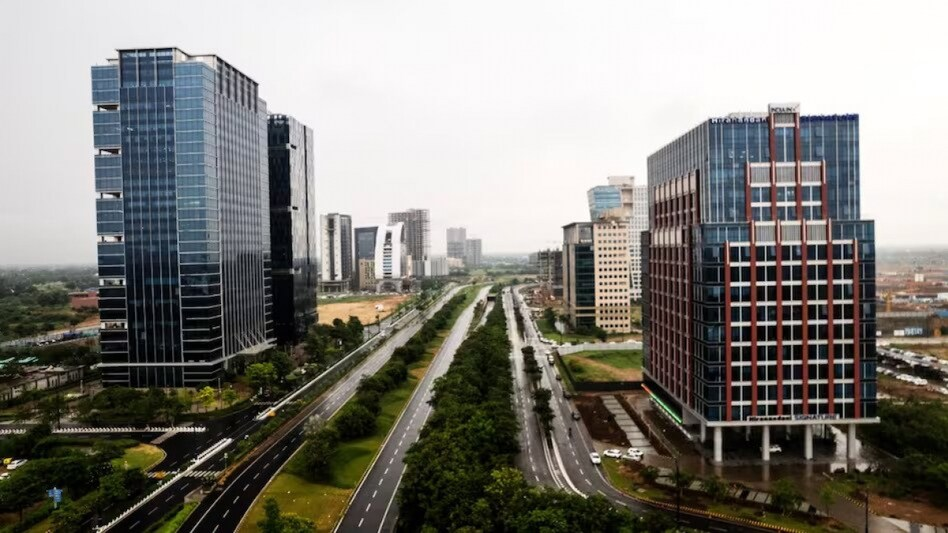
Indore is the cleanest city in India, and this outcome is the result of deliberate planning and execution. As one of the most process-driven smart cities India has developed, Indore systematically embeds BIM into both waste management and road development workflows.
The city has invested in smart waste management systems, slum housing redevelopment, and solar power installations[(source)](https://indiatvnews.com/photos/india-top-10-smart-cities-in-india-in-2024-2024-12-29-968538), all areas where coordinated infrastructure design and digital construction practices generate measurable efficiency gains. Indore continues to be recognised for its waste handling processes and sustainable retrofitting initiatives, with smart classrooms and improved healthcare further reinforcing its liveability credentials ([source](https://propacity.com/blogs/top-10-smart-cities-in-india-2/)).
BIM India's progress is often measured in marquee cities, but Indore proves that process-level BIM adoption drives equally significant outcomes.
Consistency in execution is what enables smart infrastructure to be sustainable.
## How Does BIM Help Indian Smart Cities Reduce Construction Cost and Project Delays?
Cost overruns and delays are not anomalies in Indian infrastructure; they're structural problems. BIM addresses these challenges at the project inception stage, which is precisely why Smart Cities in India are increasingly mandating its adoption across projects.
According to the Global BIM Survey 2023, BIM adoption has reduced construction costs by 15% and construction time by 30% on projects where it has been implemented. In India, verified large-scale applications include Delhi Metro Phase IV, Mumbai International Airport Terminal 2, Bengaluru International Airport, and the Statue of Unity ([source](https://www.businesstoday.in/opinion/columns/story/making-cities-smart-why-india-needs-to-embrace-this-new-technology-to-rapidly-transform-its-urban-space-406419-2023-11-20)).
BIM helps reduce costs and delays by improving coordination, identifying clashes early, and supporting accurate scheduling, minimising rework, change orders, and timeline disruptions across large public infrastructure projects ([source](https://www.novatr.com/blog/bim-in-india)).It aligns agencies within digital construction workflows, improving urban planning coordination across contractors, civic bodies, and utility providers.
## What Is the Future of BIM Adoption Across India's Smart City Mission Projects?
The Smart Cities Mission has formally concluded, but its infrastructure momentum continues, and BIM India adoption is accelerating within that context.
India's BIM market is projected to grow at a CAGR of 17% between 2023 and 2028, driven primarily by rising demand from smart city projects, government mandates, and the push for digital construction at scale ([source](https://www.constructionplacements.com/future-bim-india-trends-innovations/)).Large-scale programmes, including Bharatmala and Sagarmala, are already integrating BIM for urban planning and project management ([source](https://www.constructionplacements.com/future-bim-india-trends-innovations/)).
In June 2025, Autodesk launched an India-focused "BIM Package for Viksit Bharat," integrating localised standards into its tools to support infrastructure design aligned with national engineering codes ([source](https://www.imarcgroup.com/india-building-information-modeling-market)).
Digital twin tech, which is built on BIM foundations, is expected to play a critical role in the next generation of smart infrastructure projects across smart cities in India.
## Which BIM Certifications Are Globally Recognised and Worth Pursuing From India?
As smart cities India enters its next infrastructure phase, the demand is unambiguous: professionals who can deliver digital construction workflows, sustainability frameworks, and collaborative BIM infrastructure environments, not just theoretical knowledge, but executable competency. Novatr's BIM Professional Course is built precisely for that.
**1. Process-Driven BIM Skill Development:** Through structured studio modules, Foundation, Core, Collaborative, Capstone, and Specialisation, learners build hands-on proficiency in Autodesk Revit, Navisworks, and Dynamo, covering clash detection, 4D scheduling, cost reviews, and sustainable design workflows.
**2. Industry-Expert Mentorship:** Live sessions and masterclasses are led by practising BIM managers, computational designers, and AEC technology leaders, offering direct exposure to the professional standards the industry actually operates by.
**3. Career-Focused Outcomes** From ISO 19650 compliance to resume building, LinkedIn positioning, and mock interviews, Novatr's placement support is designed to connect learners with serious opportunities across design, construction, and project management firms.
**4. Flexible, Structured Learning** A blended model of live instruction and self-paced study, supported by responsive faculty and personalised progress tracking, ensures learning stays rigorous without being rigid.
Master BIM and Get Hired Faster
Join a community of 8500+ Architects and Engineers.
Explore Now
\*Limited seats available
## Conclusion
India's cities are growing fast, and the way they are planned, built, and managed is changing with them. BIM is responsible for that change, helping smart cities in India move from fragmented, delayed construction to data-driven delivery.
Cities like Pune, Surat, and Indore are already showing what structured urban investment looks like. As government mandates expand and smart city projects grow in scale, the professionals who understand BIM won't just have an edge, they'll be the ones the industry actively seeks out.
BIM India is no longer a niche skill. It is fast becoming the foundation of modern urban planning and smart infrastructure. For those ready to take that step, structured programs like [Novatr's](https://www.novatr.com/learning-hub) [BIM Professional Course for Architects](https://www.novatr.com/courses/building-information-modelling) offer a practical, industry-aligned pathway to building the competencies that BIM careers in India and globally increasingly demand.
## FAQs
### **1. How are cities like Pune, Surat, and Indore integrating BIM into their urban infrastructure projects?**
These cities use BIM for metro rail, drainage, and road projects, enabling 3D visualization, clash detection, and coordinated contractor workflows under Smart Cities Mission mandates.
### **2. What types of smart city projects in India are currently being executed using BIM workflows?**
Metro rail corridors, smart roads, integrated command centers, water supply networks, and affordable housing projects are actively using BIM for design coordination and lifecycle management.
### **3. How is the Indian government's Smart Cities Mission driving the adoption of BIM in urban development?**
The mission mandates digital-first infrastructure delivery, encouraging BIM adoption through MoHUA guidelines, capacity-building programs, and linking project approvals to standardized digital modeling practices.
Was this content helpful to you
Like Yes
Dislike No
.jpg)
TABLE OF CONTENTS
BIM Is The New Standard. Are You Certified?
Get Certified in BIM
SHARE ON YOUR SOCIALS
Link Copied Successfully
Related articles
[.jpg) BIM Archi How CPWD is Embracing Digital Construction in 2026 22 May 2026 5 min read](https://blog.novatr.com/blog/digital-construction-shift-with-cpwd) [ BIM Bangalore Metro Phase 3 Is Here - What It Means for BIM Engineers in India? 25 June 2026 3 min read](https://blog.novatr.com/blog/bangalore-metro-phase-3) [ CIVIL Top BIM Projects in India 2026 27 March 2026 6 min read](https://blog.novatr.com/blog/top-bim-projects-in-india) [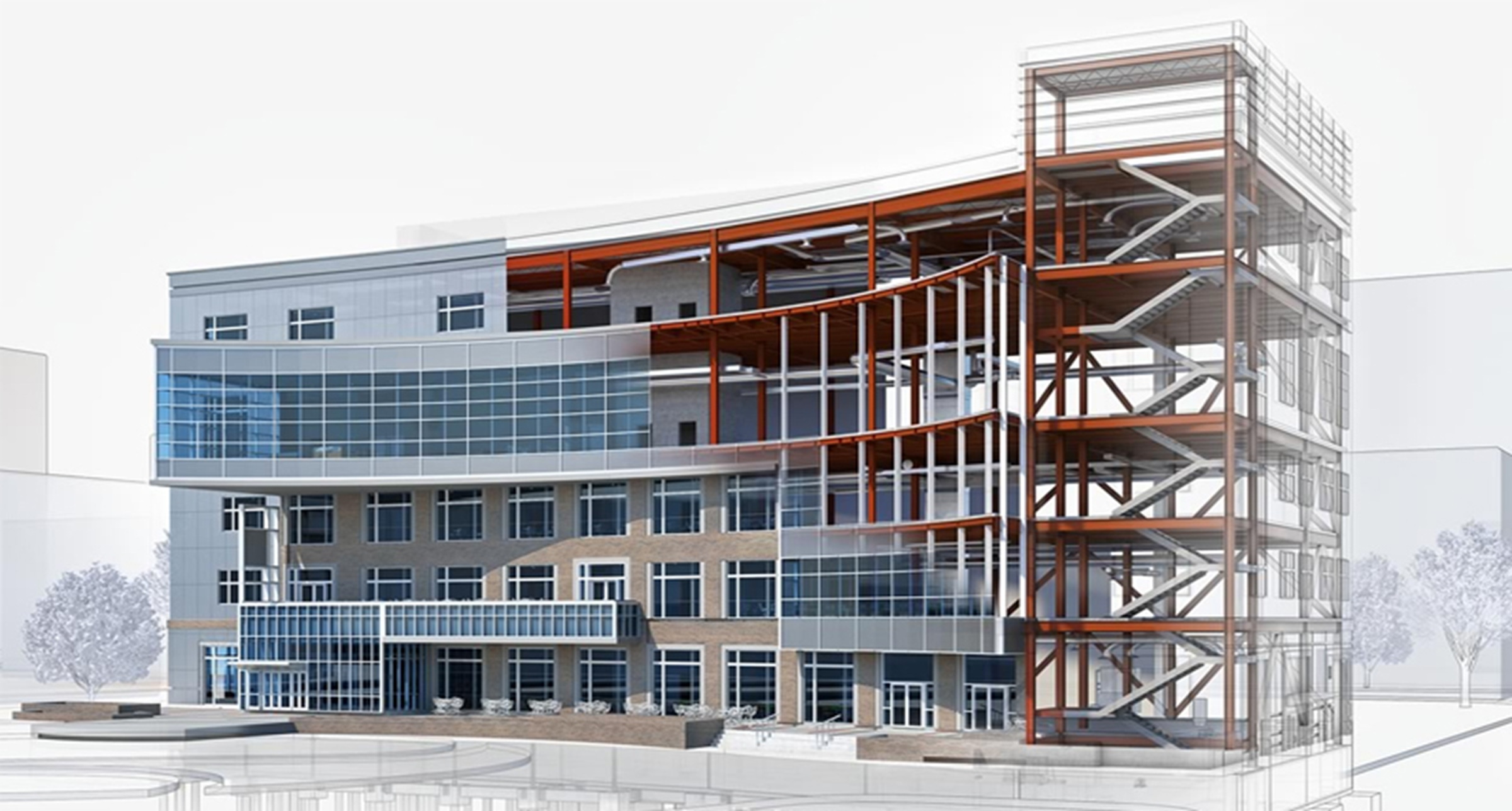 BIM Civil India’s Construction Industry in 2030: Will BIM Be the Standard? 5 June 2026 7 min read](https://blog.novatr.com/blog/indias-construction-industry-in-2030-will-bim-be-the-standard)
Download Syllabus
## BIM Professional Program
Next Cohort
June 2026
Program Duration
7 Months
Premium Program benefits
8 Credentials from Autodesk, NSDC, Novatr
1 program. 10 career paths. Infinite Growth.
40+ ISO 19650 & RIBA real-world projects to practice
1-on-1 guidance. Access 400+ industry experts.
Access the biggest AEC-Tech community on the planet. 8500+ and counting
Curated for you by 100+ global BIM leaders.
Lifelong access to course content
Enter your details to download the program syllabus.
##### BIM Professional Program
June 2026, 7 Months
Your Name Invalid name.
Phone Number Enter a valid phone number
Email Please enter a valid email address.
Select years of experience\* Currently studying 0-1 years 1-2 years 2-4 years 4-8 years 8-10 years 10-12 years 12+ years Invalid selection.
Specialisation Select your background\* Architecture Civil Engineering Mechanical Engineering Electrical Engineering Invalid selection.
Are you professionally trained in interior design?
Yes
No
I agree to the [Terms of Use](https://www.novatr.com/terms-and-conditions) and [Privacy Policy](https://www.novatr.com/privacy-policy), and consent to be contacted by Email, Call, WhatsApp, or SMS.
Submit
Ready to skyrocket your career?
Begin your next chapter in AEC
with Novatr!
We are here to help you take the industry by storm with advanced, tech-first skills.
[Explore Courses](https://www.novatr.com/#courses)
Join our newsletter
Submit
Thank you for signing up.
We’ll send you a nice letter once per week. No spam.

Dare to Disrupt.
Join thousands of people who organise
work and life with Novatr.
Company
- [About Us](https://www.novatr.com/about)
- [BIM Professional Program v.2026](https://www.novatr.com/courses/bim-professional-program)
- [Masters Computational Design](https://www.novatr.com/courses/computational-design)
- [Become a Mentor](https://www.novatr.com/apply-as-mentor)
- [Hiring from Us](https://www.novatr.com/hire-from-us)
- [Careers at Novatr](https://www.novatr.com/career)
Resources
- [Blog](https://www.novatr.com/learning-hub)
- [Media Room](https://www.novatr.com/media-room-home-page)
- [Career Builder](https://www.novatr.com/career-navigator)
- [Events & Webinars](https://www.novatr.com/webinars)
- [FAQs & Support Center](https://www.novatr.com/contact-us)
- [Contact Us](https://www.novatr.com/contact-us)
- [Privacy Policy](https://www.novatr.com/privacy-policy)
- [Terms of Use](https://www.novatr.com/terms-and-conditions)
©2023 Oneistox Network Pvt. Ltd.
All Rights Reserved
```json
{
"@context" : "https://schema.org",
"@type" : "BlogPosting",
"author" : {
"@type" : "Person",
"name" : "Harshita Chaudhary",
"url" : "https://blog.novatr.com/blog/author/harshita-chaudhary"
},
"dateModified" : "2026-06-08T05:40:14.704Z",
"datePublished" : "2026-04-28T05:34:04.000Z",
"headline" : "How Smart Cities Like Pune, Surat, and Indore Are Using BIM? {{year}}",
"image" : [ "https://blog.novatr.com/hubfs/How%20Smart%20Cities%20like%20Pune%2c%20Surat%2c%20and%20Indore%20are%20using%20BIM%20(1).jpg" ],
"mainEntityOfPage" : {
"@id" : "https://blog.novatr.com/blog/how-indian-smart-cities-are-using-bim",
"@type" : "WebPage"
},
"publisher" : {
"@type" : "Organization",
"logo" : {
"@type" : "ImageObject",
"url" : "https://blog.novatr.com/hubfs/Novatr%20Prev%20OX-2.svg"
}
}
}
```