---
title: "From AutoCAD to BIM: MEP Engineers’ Career Shift 2026"
description: Understand why BIM knowledge is critical for MEP engineers, driving faster career growth, higher value roles, and digital project delivery.
image: https://blog.novatr.com/hubfs/SME%20Insight_%20Why%20BIM%20Skills%20Can%20Double%20Your%20Growth%20Opportunities%20in%20MEP%20(2).png
---
[Blogs](https://www.novatr.com/learning-hub)
- [Architecture & Construction](https://www.novatr.com/learning-hub?category=Architecture+%26+Construction)
- [BIM](https://www.novatr.com/learning-hub?category=BIM)
- [Computational Design](https://www.novatr.com/learning-hub?category=Computational+Design)
- [Company News](https://www.novatr.com/learning-hub?category=Company+News)
- [Expert Talks](https://www.novatr.com/learning-hub?category=Expert+Talks)
Explore Courses
[Just Launched  BIM Professional Program v.2026 Take your career to the next level by mastering the real-world application of BIM. Know More](https://www.novatr.com/courses/bim-professional-program)
[ Master Computational Design Course Break into an advanced career by learning to apply the power of computation to the art of design. Know More](https://www.novatr.com/courses/computational-design)
[Blogs](https://www.novatr.com/learning-hub)
Explore Blogs
- [Architecture & Construction](https://www.novatr.com/learning-hub?category=Architecture+%26+Construction)
- [BIM](https://www.novatr.com/learning-hub?category=BIM)
- [Computational Design](https://www.novatr.com/learning-hub?category=Computational+Design)
- [Company News](https://www.novatr.com/learning-hub?category=Company+News)
- [Expert Talks](https://www.novatr.com/learning-hub?category=Expert+Talks)
Courses
- [BIM Professional Program v.2026](https://www.novatr.com/courses/bim-professional-program)
- [Master Computational Design](https://www.novatr.com/courses/computational-design)
- [MEP/](https://www.novatr.com/learning-hub?category=BIM)
Featured Article
# From AutoCAD to BIM: How MEP Engineers Can Unlock Faster Growth and Higher Value Roles
Gaurav Puri
December 15, 2025
11 min read
.png)

Gaurav Puri is a BIM Consultant. They have been involved in projects such as Birla Century Mills and FIDC Gate, Dubai.
Mastering BIM skills can significantly enhance and accelerate growth opportunities for professionals in the MEP (Mechanical, Electrical, and Plumbing) sector. As construction projects become increasingly complex and data-driven, BIM enables accurate 3D modeling, clash detection, and seamless MEP coordination across disciplines, thereby reducing errors and rework.
For MEP engineers, this means faster design iterations, improved system integration, and more predictable and efficient project delivery. Moreover, BIM proficiency is valued in global markets, opening doors to international collaborations and remote project roles. It also positions professionals for leadership in digital construction, sustainability initiatives, and smart building design. With BIM, MEP engineers not only boost their technical capabilities but also elevate their strategic value, leading to higher compensation, broader responsibilities, and faster career advancement. For early-stage professionals, developing BIM skills now can significantly widen long-term growth opportunities
Unlock High-Paying Careers With BIM
Master BIM workflows, software and skills on real projects.
Apply Now
\*Limited seats available
## Why Traditional MEP Engineering Skills Are No Longer Enough
Historically, the construction industry faced significant challenges due to site coordination issues and the absence of real-time visualisation. These gaps often resulted in delays, cost overruns, and miscommunication among stakeholders.
With the rise of BIM technology, designers and contractors are now able to visualise construction virtually before it begins. This has improved decision-making on-site by enabling:
- Early detection of clashes and design conflicts
- Improved coordination between disciplines (MEP, structural, architectural)
- Faster resolution of issues through model-based communication
- Enhanced collaboration across teams, even in remote settings
By simulating real-world conditions and integrating all project data into a single model, BIM training enables professionals to make informed decisions, reduce errors, and deliver projects more efficiently.
With the AEC industry embracing digital transformation, BIM workflows and software tools have proven to significantly reduce project costs, improve coordination, and enhance overall efficiency. This shift is not just technological—it's strategic.
As a result, employers are increasingly seeking BIM-skilled professionals who understand modern workflows and can contribute to smarter, faster, and more sustainable project delivery. Engineers with BIM expertise have a clear advantage, as they:
- Align with evolving industry standards
- Enable better collaboration across disciplines
- Contribute to cost-effective and timely execution
Those who invest in learning BIM today will be better positioned for career growth, higher earning potential, and access to global opportunities, especially as governments and private sectors continue to mandate BIM adoption.
As the construction industry continues to evolve, traditional workflows are rapidly being replaced by digital processes powered by BIM, AI, and automation. Engineers who rely solely on outdated methods risk falling behind in a market that increasingly values efficiency, collaboration, and data-driven decision-making.
If professionals don’t learn or adapt to new technologies and workflows, they may miss out on:
- High-growth career opportunities
- Competitive salary hikes
- Participation in cutting-edge projects
- Global mobility and relevance
The shift is already happening—companies and governments are mandating BIM, and digital tools are becoming the norm. Those who embrace this change will be better positioned to lead, innovate, and thrive in the future of construction.
## The Changing Demand for MEP Engineers
So, why do MEP Engineers need BIM knowledge? Over the past decade, the demand for MEP engineers has changed considerably, driven by a major industry shift from 2D CAD-based workflows to BIM-enabled processes.
### From Traditional to Digital
Historically, the construction industry faced challenges like:
- Poor site coordination
- Limited visualisation
- Frequent design conflicts
- Cost overruns due to late-stage changes
These issues stemmed from fragmented workflows and the lack of integrated design tools.
### The BIM Revolution
With the rise of BIM technology, MEP engineers increasingly play a central role in:
- Virtual construction planning
- Clash detection and resolution
- Real-time collaboration across disciplines
- Data-driven decision-making
This shift has made MEP engineers more valuable than ever, as they contribute directly to project efficiency, sustainability, and cost control.
### Employer Expectations
Today’s employers demand BIM-ready MEP engineers who:
- Understand modern workflows and software tools
- Coordinate seamlessly with architectural and structural teams
- Are capable of working in cloud-based environments
- Adapt to AI and automation tools
### Missed Opportunities for Non-Adopters
Engineers who have not adapted to BIM risk:
- Losing out on high-growth roles
- Missing competitive salary hikes
- Being excluded from global and government-mandated projects
The industry continues to evolve rapidly, and professionals who embrace BIM are better positioned to lead, innovate, and thrive.
## What Gaps Exist in Engineers Who Use Only AutoCAD?
While AutoCAD has been a foundational tool in the AEC industry for decades, the shift toward BIM-enabled workflows has exposed several critical gaps in engineers who rely solely on traditional tools:
### 1. Limited Visualisation Capabilities
- AutoCAD is primarily 2D, which restricts the ability to visualise complex building systems.
- Engineers lose access to one of the major benefits of BIM for MEP professionals.
### 2. Poor Coordination Across Disciplines
- Traditional workflows often lead to fragmented communication between MEP, architectural, and structural teams.
- BIM supports real-time collaboration and integrated models, reducing errors and minimising coordination gaps and rework across teams.
### 3. No Data-Driven Insights
- AutoCAD drawings lack embedded model-based data attributes, making it difficult to perform detailed analysis, system-level simulation, or performance monitoring.
- BIM models carry rich metadata, supporting energy modeling, cost estimation, and lifecycle planning & management.
### 4. Manual and Time-Consuming Processes
- Tasks like clash detection, quantity take-offs, and documentation are manual and susceptible to inconsistencies in AutoCAD.
- BIM automates these processes, thereby improving accuracy and shortening project turnaround time.
### 5. Reduced Career Mobility
- Employers increasingly demand BIM-ready MEP engineers who are proficient with digital tools such as Revit, Navisworks, and cloud-based platforms.
- Engineers who don’t upskill risk missing out on high-growth roles, global opportunities, and competitive salaries. Hence, career opportunities for MEP engineers with BIM expand significantly, often resulting in faster role advancement and wider deployment across complex project environments.
## The Competitive Edge BIM Brings to MEP Engineers
BIM adoption has significantly expanded the traditional role of engineers, transforming them from design-focused specialists into multidisciplinary collaborators and strategic decision-makers. With BIM-enabled workflows, engineers are no longer confined to their individual systems; they now contribute to data-rich 3D model creation that integrates architecture, structure, and MEP systems. They play a central role in coordination by identifying and resolving clashes during early design stages, ensuring smooth collaboration across teams. Moreover, BIM equips professionals to make informed decisions using data-rich models that analyse performance, cost, and sustainability throughout the project lifecycle. This evolution not only increases their professional value but also enhances their visibility and involvement, and leadership within project teams.
- Salary impact: BIM-ready roles command higher packages. As BIM becomes the industry standard, professionals with BIM expertise are increasingly in demand across the construction and engineering sectors. Employers are actively seeking engineers who can work across platforms like Revit, Navisworks, and BIM 360, manage coordination and clash detection, and contribute to cost and time savings through efficient workflows. This specialised skill set not only enhances project outcomes but also commands higher compensation. In regions where BIM adoption is accelerating, BIM-ready engineers often earn 15–30% more than their counterparts who rely solely on traditional tools like AutoCAD, reflecting the growing value of digital proficiency in today’s competitive job market.
- Global opportunities: BIM functions as a common digital framework in international projects and is increasingly recognised as a global standard within the construction industry. Countries across Europe, the Middle East, and Asia are mandating its use for public infrastructure and large-scale development programmes, reinforcing its strategic significance.
This widespread adoption is creating cross-border career opportunities for professionals skilled in BIM workflows, as they are able to contribute to international projects with greater alignment and efficiency. BIM serves as a common digital language, enabling seamless collaboration among multidisciplinary teams regardless of geographic location.
As a result, engineers who master BIM are not only future-ready but also globally employable, gaining access to remote assignments, overseas placements, and diverse project portfolios. Their proficiency in model-driven workflows makes them highly relevant and competitive in the global job market, which directly strengthens career growth and mobility.
## Salary and Growth Difference Between BIM and Non-BIM MEP Engineers
Over the last 5–10 years, the demand for BIM-skilled MEP engineers has grown significantly compared to those who continue working with traditional tools like AutoCAD. This shift is largely due to the industry's transition from 2D CAD workflows to BIM-enabled processes, which offer better MEP coordination, visualisation, and data integration.
- Engineers who rely solely on AutoCAD often face limitations in collaboration, clash detection, and real-time decision-making. Their roles tend to remain narrowly focused on drafting and basic BIM design tasks. In contrast, BIM-trained engineers are involved in a broader scope of work, design, coordination, simulation, and even facility management. This expanded role makes them more valuable to employers and project teams.
- As a result, BIM professionals typically command higher salaries and faster career growth. Employers tend to invest more in engineers who can contribute to cost savings, efficient workflows, and smarter project delivery. Additionally, BIM has become a global standard, opening up international opportunities for those who are proficient in its tools and workflows. Engineers who have not adapted to BIM risk missing out on high-growth roles, competitive packages, and participation in large-scale, innovative projects.
- In short, the gap between BIM and non-BIM MEP engineers is widening, not just in skills, but in career potential, earning power, and global relevance.
## Roles Open Only to BIM-trained Professionals
There are several projects and roles in the construction and infrastructure sectors that are specifically open to BIM-trained professionals because these roles require digital and collaborative delivery methods supported by BIM.
For example, large-scale infrastructure projects like metro systems, airports, and smart city developments often mandate BIM as part of their execution strategy. These projects require engineers who can operate confidently in model-based environments to manage complex coordination between disciplines, perform clash detection, and contribute to data-rich models that support scheduling, costing, and facility management. Traditional CAD users typically lack the integrated modeling and collaboration capabilities needed for such tasks.
Roles such as BIM Manager, BIM Coordinator, MEP BIM Engineer, and Digital Twin Analyst are designed around BIM workflows. These positions involve responsibilities, such as managing federated models, ensuring compliance with BIM execution plans, and using tools such as Revit, Navisworks, and BIM 360. Without BIM proficiency, candidates are generally not considered for these roles, as they require a deep understanding of model-based design, coordination, and data integration.
In essence, BIM-trained professionals are not only eligible for more advanced and better-paying roles, but they are also critical for the successful delivery of modern, tech-driven construction projects.
## Real-Life Growth Stories from BIM-Enabled Engineers
Some examples of engineers who transitioned into BIM and experienced accelerated growth include:
One such example is Rahul Bopche, an electrical engineer who initially struggled with a complex project involving multidisciplinary coordination, as his exposure was limited to electrical services. A senior colleague provided informal mentorship, helping him develop stronger problem-solving abilities and broaden his technical understanding. Today, he applies those skills across multiple projects and credits that guidance as a key contributor to his early career progression.
Transitioning from traditional engineering to BIM often transforms career trajectories. In the early professional stages, engineers working on-site with limited awareness of other disciplines typically encounter slower growth. However, once they begin engaging with BIM methodologies, their perspective on the AEC industry expands considerably. BIM enhances technical knowledge, facilitates better understanding of coordination across systems, and enables participation in more complex project requirements. As a result, within a span of approximately two years, an engineer can progress to a higher role in a new organisation and achieve up to a 35% increase in compensation.
Projects/clients That Become accessible after Upskilling:
After transitioning from traditional engineering to BIM, professionals gain access to a wider and more advanced portfolio of projects. These include large-scale infrastructure initiatives, smart city developments, complex building systems, and international assignments that require digital delivery. BIM-trained engineers frequently contribute to projects such as airports, hospitals, metro networks, and high-rise developments, where coordination across structural, architectural, and MEP systems is critical.
The client base also expands significantly, ranging from leading construction firms and public sector organisations to technology-oriented developers and sustainability-driven enterprises. The ability to create accurate 3D models, perform clash detection, interpret data-rich environments, and support multidisciplinary handovers makes BIM-trained professionals highly sought after. This positions them strongly for project environments that prioritise precision, workflow efficiency, and technically robust execution.
## Key Skills Beyond BIM Software That Engineers Need
BIM is far more than just using Revit, it’s a comprehensive approach to digital construction that emphasizes collaboration, coordination, and intelligent decision-making. While Revit is a powerful modeling tool, BIM encompasses the entire lifecycle of a building, involving multiple disciplines working together in a shared digital environment. Effective BIM implementation includes clash detection to identify and resolve design conflicts early, coordination across architectural, structural, and MEP systems, and real-time collaboration using cloud platforms. This integrated process improves accuracy, reduces rework, and enhances project outcomes, making BIM a strategic framework rather than just a software skill.
In addition, communication, problem-solving, and multidisciplinary awareness play a critical role in successful BIM-led execution. Clear communication ensures alignment between stakeholders, including architects, engineers, consultants, and contractors, minimising delays, misinterpretations, and rework. Strong problem-solving abilities enable professionals to address design complexities, resolve clashes efficiently, and adapt to evolving project requirements. Similarly, understanding how different disciplines interact within a building system enables stronger coordination workflows and reduces design conflicts. Collectively, these capabilities encourage innovation, strengthen collaboration, and support higher execution quality within digitally enabled construction environments.
## Soft or Technical Skills Engineers Should Develop
Beyond learning Revit or Navisworks, engineers aiming to grow in BIM should cultivate a blend of technical depth and soft skills. Technically, it is important to understand construction workflows, clash detection, and how BIM integrates with scheduling and cost estimation. Familiarity with platforms like BIM 360 or Synchro, and even basic scripting with Dynamo or Python, can significantly enhance efficiency and automation. On the soft skills side, strong communication and collaboration are essential since BIM is a highly interdisciplinary field. Engineers need to coordinate with architects, consultants, and contractors effectively. Problem-solving, attention to detail, and adaptability are also crucial, especially as BIM standards and tools evolve rapidly. Leadership and strategic thinking become increasingly important as one moves into roles like BIM Lead or Manager, where guiding teams and aligning digital delivery with project goals is key.
## Mistakes to Avoid When Training With BIM
When engineers view BIM as merely software training, they often miss the bigger picture of what BIM truly represents. BIM is not just about learning tools like Revit or Navisworks, it is a process-driven approach that transforms how projects are planned, designed, constructed, and maintained. Treating it as just software leads to a shallow understanding and limits growth. One common mistake is focusing only on modelling skills without understanding coordination, data management, or project workflows. Engineers may become proficient in drawing walls or ducts but struggle when asked to manage federated models, resolve clashes, or contribute to a BIM Execution Plan.
Another issue is ignoring the collaborative nature of BIM. It is not a solo activity, it requires communication across disciplines, understanding standards such as ISO 19650, and aligning with project goals. Additionally, when BIM is seen as a one-time training activity, engineers often stop learning after mastering a few tools. However, BIM evolves constantly, with new technologies such as digital twins, 4D/5D simulation, and AI integration. Staying stagnant can quickly make skills obsolete. Ultimately, the mindset shift, from “software operator” to “digital construction strategist”, is what separates those who plateau from those who thrive in BIM careers.
## Why BIM Will Continue to Define Career Growth
Global adoption trends (Middle East, Europe, India): Globally, BIM adoption is progressing at different speeds across regions. In the Middle East, countries such as the UAE and Saudi Arabia are leading with mandatory BIM implementation on public projects, driven by large-scale infrastructure and smart city initiatives. Europe has a more mature and standardised BIM environment, with countries such as the UK, Germany, and the Nordic region integrating BIM into national construction policies and sustainability objectives. Meanwhile, India is in a growth phase, with increasing BIM use in urban development and infrastructure projects, although challenges such as skill gaps and resistance to change still exist. Overall, BIM is evolving from a design tool into a strategic framework for digital construction across these regions.
The MEP (Mechanical, Electrical, and Plumbing) industry is undergoing a significant transformation as Digital Twin technology, Artificial Intelligence (AI), and automation converge to reshape how buildings are designed, built, and maintained using BIM. Digital Twins serve as dynamic, real-time virtual representations of physical systems, enabling engineers to monitor building performance, predict failures, optimise energy usage, and refine maintenance strategies. AI is transforming MEP workflows by automating clash detection, generating layouts, forecasting system loads, and enhancing sustainability through more informed design decisions. Meanwhile, automation tools are streamlining repetitive tasks such as routing ducts and pipes, producing fabrication-ready models, and enabling real-time coordination across disciplines. Together, these technologies integrate closely with BIM platforms, creating seamless, intelligent workflows that improve efficiency, accuracy, and innovation across the building lifecycle.
## BIM for MEP in the Next Five Years
As the construction industry continues to expand rapidly, the adoption of AI-driven tools, diverse software platforms, and cloud-based collaboration is transforming multiple aspects of project delivery—from manpower requirements and documentation processes to coordination accuracy and execution speed. Over the next five years, the demand for BIM professionals is expected to rise significantly. With more organisations shifting to BIM-led delivery in both private and public sector projects, and with governments increasingly mandating BIM for infrastructure development, the requirement for skilled talent will continue to accelerate. This evolution presents a defining moment for the industry and for individuals aiming to build future-ready MEP careers within construction technology, solidifying BIM as a central capability in MEP engineering.
## Advice for Professionals Starting Their MEP Career
According to the subject matter expert, many professionals have built successful careers in MEP and BIM even without an initial technical background in the domain. The early phase can be challenging, as it requires time to understand building norms, compliance criteria, and discipline-based coordination practices. However, once professionals begin working on live projects and gain exposure to relevant software tools and workflows, career growth becomes substantially faster, with stronger impact on project outcomes and interdisciplinary coordination.
Master BIM and Get Hired Faster
Join a community of 8500+ Architects and Engineers.
Explore Now
\*Limited seats available
## **Conclusion**
The global construction industry is undergoing a major digital transformation, with regions such as the Middle East, Europe, and India advancing BIM-driven project mandates across large-scale developments. This shift is not merely about improving delivery timelines—it is reshaping how teams design, coordinate, build, and operate assets. The integration of Digital Twins, AI-based automation, simulation workflows, and data-driven decision systems is accelerating change across the MEP sector. These technologies are enabling smarter design practices, predictive maintenance insights, and real-time performance optimisation, ultimately making construction workflows more sustainable, efficient, and transparent.
For professionals, particularly those entering the field, this is a critical opportunity. BIM proficiency has moved beyond an optional skill status and has become a fundamental industry requirement. As organisations continue investing in digital transformation and modern execution frameworks, the demand for BIM-skilled MEP engineers will continue to grow. Building expertise in BIM, while keeping pace with emerging technologies such as AI, Digital Twins, and automated modelling systems, will be essential for long-term professional relevance and advancement.
For those considering the upskilling route, Novatr’s [**BIM Professional Course for MEP Engineers**](https://www.novatr.com/courses/bim-for-mep-engineers) offers a solid starting point, providing in-depth exposure to BIM workflows, tools, and computational design processes aligned with industry expectations.
Was this content helpful to you
Like Yes
Dislike No
.png)
TABLE OF CONTENTS
BIM Is The New Standard. Are You Certified?
Get Certified in BIM
SHARE ON YOUR SOCIALS
Link Copied Successfully
Related articles
[ Computational Design Beyond Code and Tools | Ar. Jayanaveena (Zaha Hadid Architects) 30 October 2025 4 min read](https://blog.novatr.com/blog/computational-design-beyond-code-and-tools-ar.-jayanaveena-zaha-hadid-architects) [ How to Learn Rhino 3D - Expert Take! 30 March 2026 4 min read](https://blog.novatr.com/blog/how-to-learn-rhino-3d-expert-take) [ Best YouTube Channels, Courses & Communities to Learn Navisworks 25 February 2026 5 min read](https://blog.novatr.com/blog/resources-to-learn-navisworks-effectively) [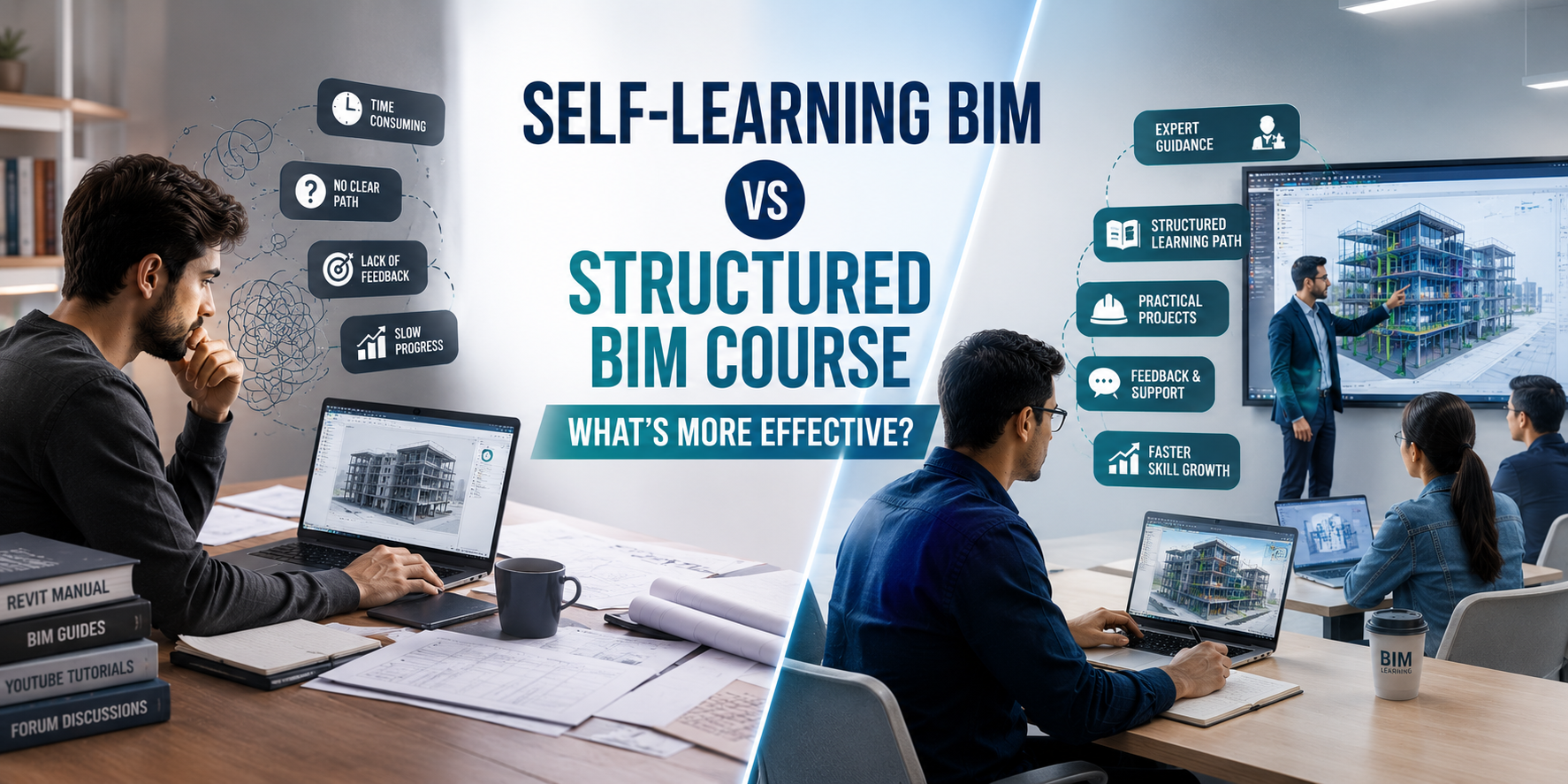 BIM Self-Learning BIM vs Structured BIM Course: What’s More Effective? 22 June 2026 6 min read](https://blog.novatr.com/blog/self-learning-bim-vs-structured-bim-course)
Download Syllabus
## BIM Professional Program
Next Cohort
June 2026
Program Duration
7 Months
Premium Program benefits
8 Credentials from Autodesk, NSDC, Novatr
1 program. 10 career paths. Infinite Growth.
40+ ISO 19650 & RIBA real-world projects to practice
1-on-1 guidance. Access 400+ industry experts.
Access the biggest AEC-Tech community on the planet. 8500+ and counting
Curated for you by 100+ global BIM leaders.
Lifelong access to course content
Enter your details to download the program syllabus.
##### BIM Professional Program
June 2026, 7 Months
Your Name Invalid name.
Phone Number Enter a valid phone number
Email Please enter a valid email address.
Select years of experience\* Currently studying 0-1 years 1-2 years 2-4 years 4-8 years 8-10 years 10-12 years 12+ years Invalid selection.
Specialisation Select your background\* Architecture Civil Engineering Mechanical Engineering Electrical Engineering Invalid selection.
Are you professionally trained in interior design?
Yes
No
I agree to the [Terms of Use](https://www.novatr.com/terms-and-conditions) and [Privacy Policy](https://www.novatr.com/privacy-policy), and consent to be contacted by Email, Call, WhatsApp, or SMS.
Submit
Ready to skyrocket your career?
Begin your next chapter in AEC
with Novatr!
We are here to help you take the industry by storm with advanced, tech-first skills.
[Explore Courses](https://www.novatr.com/#courses)
Join our newsletter
Submit
Thank you for signing up.
We’ll send you a nice letter once per week. No spam.

Dare to Disrupt.
Join thousands of people who organise
work and life with Novatr.
Company
- [About Us](https://www.novatr.com/about)
- [BIM Professional Program v.2026](https://www.novatr.com/courses/bim-professional-program)
- [Masters Computational Design](https://www.novatr.com/courses/computational-design)
- [Become a Mentor](https://www.novatr.com/apply-as-mentor)
- [Hiring from Us](https://www.novatr.com/hire-from-us)
- [Careers at Novatr](https://www.novatr.com/career)
Resources
- [Blog](https://www.novatr.com/learning-hub)
- [Media Room](https://www.novatr.com/media-room-home-page)
- [Career Builder](https://www.novatr.com/career-navigator)
- [Events & Webinars](https://www.novatr.com/webinars)
- [FAQs & Support Center](https://www.novatr.com/contact-us)
- [Contact Us](https://www.novatr.com/contact-us)
- [Privacy Policy](https://www.novatr.com/privacy-policy)
- [Terms of Use](https://www.novatr.com/terms-and-conditions)
©2023 Oneistox Network Pvt. Ltd.
All Rights Reserved
```json
{
"@context" : "https://schema.org",
"@type" : "BlogPosting",
"author" : {
"@type" : "Person",
"name" : "Gaurav Puri",
"url" : "https://blog.novatr.com/blog/author/gaurav-puri"
},
"dateModified" : "2025-12-15T06:30:50.485Z",
"datePublished" : "2025-12-15T06:25:36.000Z",
"headline" : "From AutoCAD to BIM: MEP Engineers’ Career Shift 2026",
"image" : [ "https://blog.novatr.com/hubfs/SME%20Insight_%20Why%20BIM%20Skills%20Can%20Double%20Your%20Growth%20Opportunities%20in%20MEP%20(2).png" ],
"mainEntityOfPage" : {
"@id" : "https://blog.novatr.com/blog/from-autocad-to-bim-mep-engineers-career-shift",
"@type" : "WebPage"
},
"publisher" : {
"@type" : "Organization",
"logo" : {
"@type" : "ImageObject",
"url" : "https://blog.novatr.com/hubfs/Novatr%20Prev%20OX-2.svg"
}
}
}
```