---
title: "AI in BIM: Automation Transforming Construction"
description: Explore how AI-powered BIM automates clash detection, generative design, and compliance checks; cutting costs, time, and errors while upskilling civil engineers.
image: https://blog.novatr.com/hubfs/AI%20in%20BIM%20Transforming%20Construction%20Industry.jpg
---
[Blogs](https://www.novatr.com/learning-hub)
- [Architecture & Construction](https://www.novatr.com/learning-hub?category=Architecture+%26+Construction)
- [BIM](https://www.novatr.com/learning-hub?category=BIM)
- [Computational Design](https://www.novatr.com/learning-hub?category=Computational+Design)
- [Company News](https://www.novatr.com/learning-hub?category=Company+News)
- [Expert Talks](https://www.novatr.com/learning-hub?category=Expert+Talks)
Explore Courses
[Just Launched  BIM Professional Program v.2026 Take your career to the next level by mastering the real-world application of BIM. Know More](https://www.novatr.com/courses/bim-professional-program)
[ Master Computational Design Course Break into an advanced career by learning to apply the power of computation to the art of design. Know More](https://www.novatr.com/courses/computational-design)
[Blogs](https://www.novatr.com/learning-hub)
Explore Blogs
- [Architecture & Construction](https://www.novatr.com/learning-hub?category=Architecture+%26+Construction)
- [BIM](https://www.novatr.com/learning-hub?category=BIM)
- [Computational Design](https://www.novatr.com/learning-hub?category=Computational+Design)
- [Company News](https://www.novatr.com/learning-hub?category=Company+News)
- [Expert Talks](https://www.novatr.com/learning-hub?category=Expert+Talks)
Courses
- [BIM Professional Program v.2026](https://www.novatr.com/courses/bim-professional-program)
- [Master Computational Design](https://www.novatr.com/courses/computational-design)
- [CIVIL/](https://www.novatr.com/learning-hub?category=BIM)
Featured Article
# AI in BIM: Automation Transforming Construction

Harshita Chaudhary
June 5, 2026
7 min read
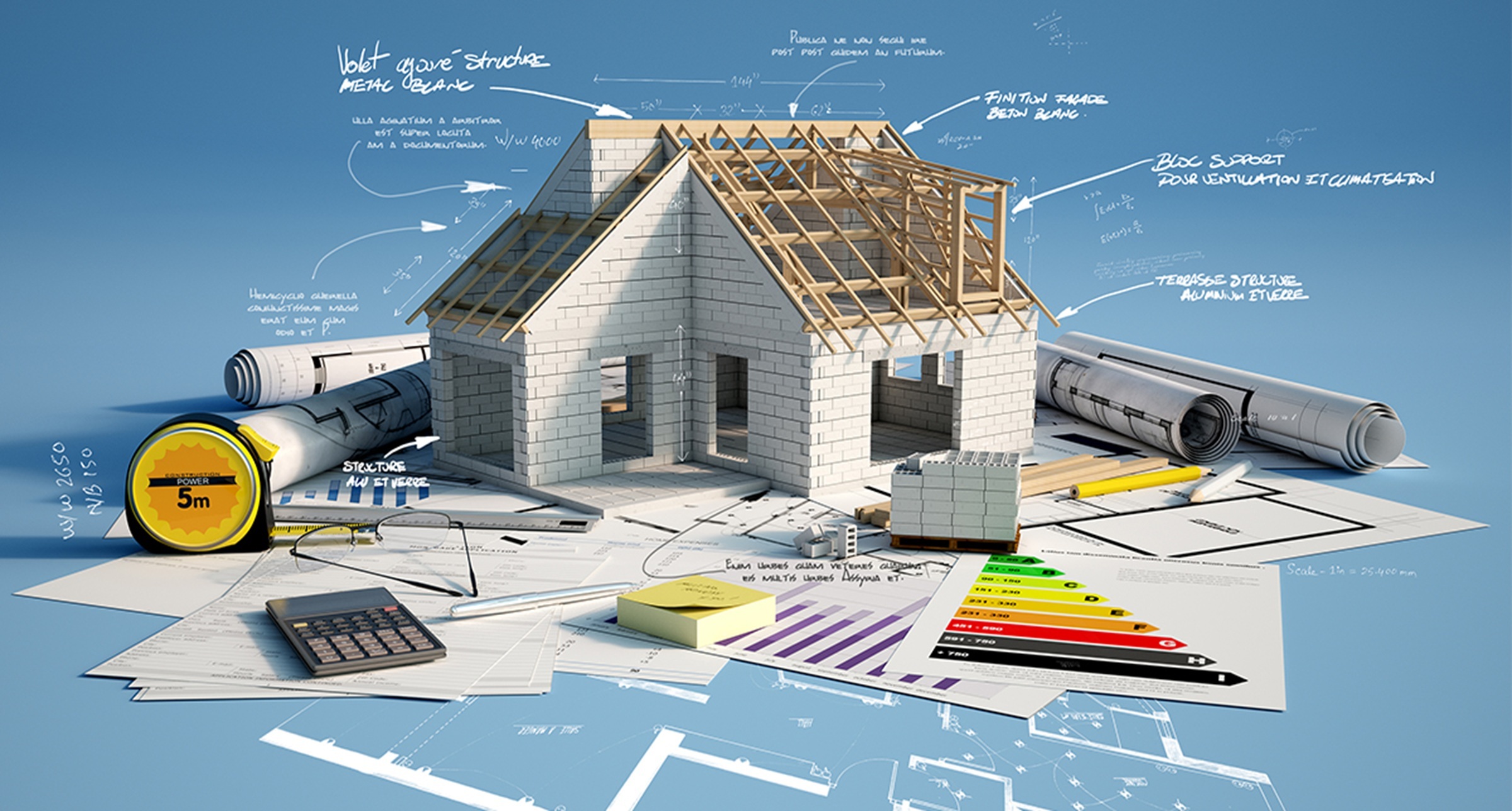

**BIM technology in construction** has evolved from being a coordination tool into an intelligent, data-driven system. **AI in BIM** is transforming project workflows by reducing manual corrections, automatically aligning systems, and preventing errors before they occur.”
This shift is fundamentally changing how construction teams operate. **BIM Automation** and **BIM process automation** are eliminating repetitive tasks across the **BIM in the construction industry**. Tasks like clash detection, which once required hours of manual review, can now be completed in seconds. Design iterations that once stretched timelines are generated instantly.
This is not an incremental improvement. It is a redefinition of how construction workflows operate. Understanding **AI in BIM** is now essential for professionals working in **BIM technology in construction**. This blog is going to cover how these systems function, what **BIM skills engineers** now require, and **where to learn BIM** in ways that reflect current industry practice.
Unlock High-Paying Careers With BIM
Master BIM workflows, software and skills on real projects.
Apply Now
\*Limited seats available
## What is BIM and AI in Construction?
Building Information Modeling (BIM) serves as a digital representation of a construction project, including both its physical and functional characteristics. It centralises project data across design, construction, and operations.
AI-powered BIM refers to the integration of machine learning algorithms, data analytics, and automation tools within BIM platforms to enhance model intelligence and workflow efficiency. Unlike traditional **BIM technology in construction**, which focuses on data-rich 3D modeling, AI-enabled systems can analyse patterns, predict issues, and adapt to changes.
This evolution transforms BIM from a static modeling tool into a dynamic, intelligent system that continuously learns and improves. **AI in BIM** enables process automation across construction workflows, from clash detection to generative design. Understanding this integration is now part of essential **BIM Skills for engineers**.
## How AI is Enhancing BIM Workflows?
AI in BIM is improving workflows across multiple areas of construction. In AI-enhanced environments, predictive analytics flag routing strategies likely to cause congestion during the modeling phase itself, and designers receive proactive feedback, reducing clashes generated in later coordination cycles.
Machine learning algorithms analyse patterns from previous projects, predict clashes early, and automatically recommend corrective actions. This marks a significant advancement in BIM Automation.
AI can eliminate irrelevant clashes, rank them by severity and project impact, and propose design adjustments based on learned patterns from past projects.
AI systems can automatically check BIM models against building codes, standards, and project specifications, eliminating manual compliance review. This **BIM process automation** in the **BIM in the construction industry** redefines what **BIM Skills for engineers** now require.
## Key Applications of BIM + AI in Real Projects
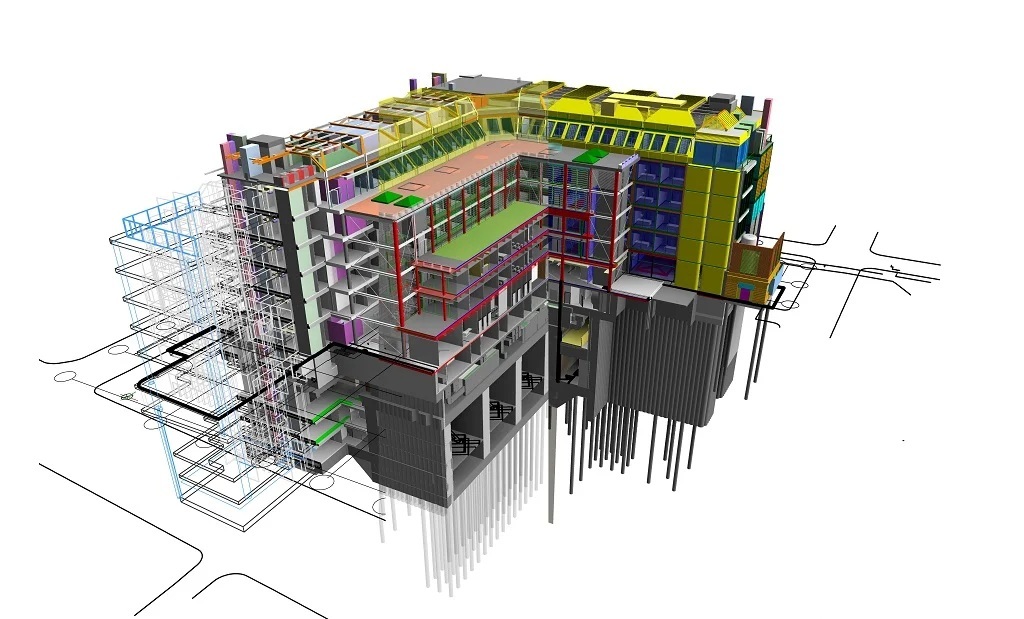
**AI in BIM** is being used across multiple project applications in the **BIM in construction industry**:
**1. Generative Design**: AI-powered systems evaluate thousands of design possibilities within minutes based on parameters like costs, comfort, energy performance, and materials, enabling teams to select optimal solutions faster. This represents advanced **BIM Automation** in early design stages.
**2. Automated Clash Detection**: AI filters irrelevant clashes, ranks them by severity, and proposes design adjustments based on learned patterns, reducing manual coordination time significantly.
**3. Scan-to-BIM Automation** AI-enhanced object classification converts raw point cloud data into intelligent BIM objects like walls, pipes, and columns, eliminating labour-intensive manual modeling.
**4. Predictive Project Management**: AI-driven tools analyse historical project data to forecast timelines, labour requirements, and potential risks, improving schedule accuracy.
**5. Automated Code Compliance**: AI systems automatically check BIM models against building codes, standards, and project specifications, removing manual review cycles.
## Benefits of Automation in Construction
BIM Automation and process automation deliver measurable improvements across the construction industry:
**1. Reduced Design Time**: **AI in BIM** can reduce design and documentation time by up to 30%, allowing professionals to focus on high-value tasks rather than repetitive modeling work.
**2. Cost Reduction**: AI-based planning tools have reduced construction costs by up to 30% by optimising labour and equipment use, while automation of routing, tagging, and scheduling saves hundreds of hours per project.
**3. Error Elimination**: Automated BIM workflows cut down on repetitive manual tasks and reduce human errors while boosting efficiency and overall productivity. Clash-free coordination eliminates costly on-site conflicts.
**4. Improved Productivity**: Automation in routing, tagging, and scheduling saves hundreds of man-hours, while built-in algorithms identify and eliminate conflicts between MEP systems before construction begins.
**5. Enhanced Decision-Making**: AI-driven tools analyse historical project data to forecast timelines, labour requirements, and potential risks, enabling proactive rather than reactive project management. This represents a fundamental shift in **BIM technology in construction** workflows, making **BIM Skills for engineers** essential for competitive advantage.
## Limitations and Challenges of BIM + AI
Despite its advantages, implementing **AI in BIM** comes with several challenges
**1. High Implementation Costs**: Adopting AI requires considerable initial spending on technology and skill development, making entry difficult for smaller firms. Software licensing, computing infrastructure, specialised hardware, and training programs represent substantial capital investment that many organisations cannot absorb immediately.
**2. Data Integration and Interoperability**: The primary challenges revolve around data integration and interoperability, as BIM and AI systems frequently operate on different platforms and data structures, resulting in complexities in data exchange and synchronisation. Data incompatibility arising from differences in coordinate systems, levels of detail, and data structures between BIM and partner systems remains the dominant challenge.
**3. Skills Gap**: Utilisation of AI in BIM requires a thorough understanding of AI algorithms, necessitating comprehensive training and skill development among industry professionals. Understanding **where to learn BIM** with AI integration is critical for building relevant **BIM Skills for engineers**. The industry lacks sufficiently trained professionals.
**4. Lack of Standardisation**: Issues such as a lack of standardised AI frameworks pose hurdles to widespread adoption, with different vendors implementing **BIM technology in construction** solutions in incompatible ways.
## Skills Required for BIM Automation Roles
**BIM Automation** roles require strong **Revit** modeling skills and mastery of **Dynamo** for **BIM process automation**. Engineers need **Python** or **C#** programming to build custom scripts. Knowledge of **AI in BIM** helps create intelligent workflows. Understanding **BIM technology in construction** ensures practical automation solutions. Also, **collaboration workflows** and **clash detection** using **Navisworks** are essential. Data management skills are also growing in importance as **BIM in construction industry** projects become complex. For BIM Skills for engineers, professionals must combine technical modeling expertise with coding knowledge.
## How to Learn BIM and Automation Skills
The [**BIM Professional Course for Civil Engineers**](https://www.novatr.com/courses/bim-for-civil-engineers) by **Novatr** is an invite-only program designed for civil, site, and structural engineers who want to build a career in **BIM automation**. This **BIM** course runs for **7 months** and includes **12+ software tools** like **Revit**, **AutoCAD**, **Civil 3D**, **Dynamo**, and **Navisworks**.
You'll attend **weekly live sessions** with global mentors from top AEC companies and work on **3+ ISO 19650 structured capstone projects**. The curriculum combines recorded content, live learning sessions, query resolution, and personalised feedback.
Graduates receive **certificates from Autodesk, NSDC, and Novatr**, plus **placement assistance** for BIM roles in globally operating firms
Master BIM and Get Hired Faster
Join a community of 8500+ Architects and Engineers.
Explore Now
\*Limited seats available
## Conclusion
**AI in BIM** is reshaping **BIM technology in construction** by automating workflows, eliminating errors, and accelerating design. BIM Automation and BIM process automation are becoming essential across modern construction projects. Professionals need updated **BIM skills for engineers**, combining modeling expertise with coding and AI knowledge. If you're wondering **where to learn BIM** with automation, programs like Novatr's **BIM Professional Course for Civil Engineers** offer practical, industry-aligned training. Professionals who embrace these changes today will be better positioned for success as BIM technology in construction continues evolving toward intelligent, automated workflows.
Check out [Novatr’s](https://www.novatr.com/) [BIM Professional Course for Civil Engineers](https://www.novatr.com/courses/bim-for-civil-engineers), and for more information, head to the [resources page](https://www.novatr.com/learning-hub) to find learning material and training that strengthen your resume and make you stand out in a competitive market.
Was this content helpful to you
Like Yes
Dislike No

TABLE OF CONTENTS
BIM Is The New Standard. Are You Certified?
Get Certified in BIM
SHARE ON YOUR SOCIALS
Link Copied Successfully
Related articles
[ BIM Civil How Delhi-Mumbai Industrial Corridor Are Built using BIM? 5 June 2026 7 min read](https://blog.novatr.com/blog/how-delhi-mumbai-industrial-corridor-are-built-using-bim) [ BIM Civil Surat Diamond Bourse: How BIM Brought the World’s Largest Office Building to Life? 5 June 2026 7 min read](https://blog.novatr.com/blog/surat-diamond-bourse-how-bim-brought-the-worlds-largest-office-building-to-life) [ BIM Civil How Chennai-Bangalore Industrial Corridor Are Built using BIM? 5 June 2026 7 min read](https://blog.novatr.com/blog/how-chennai-bangalore-industrial-corridor-are-built-using-bim) [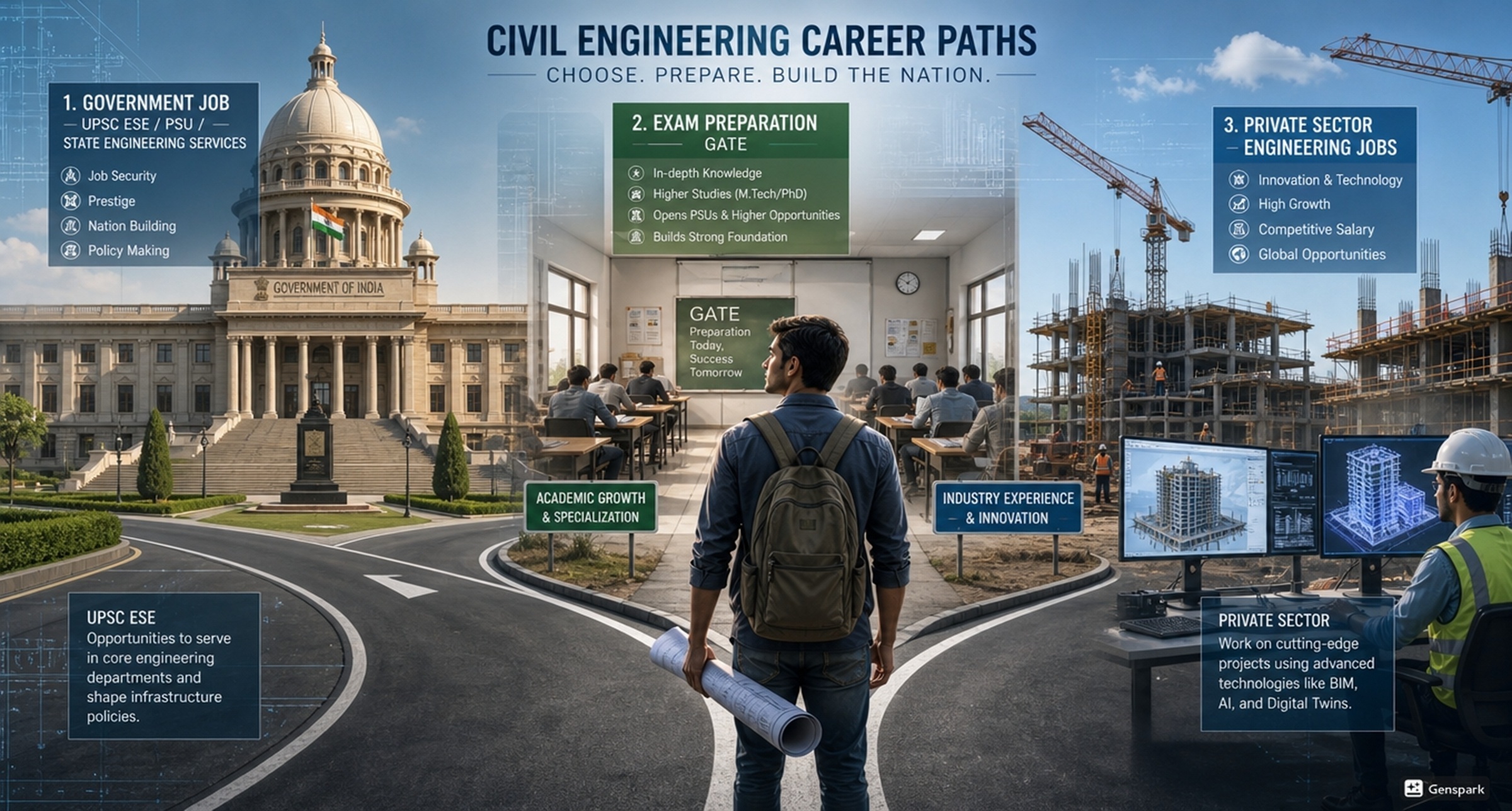 BIM Civil UPSC ESE vs GATE vs Private Jobs: Which Career Path is Better? 11 June 2026 9 min read](https://blog.novatr.com/blog/upsc-ese-vs-gate-vs-private-jobs-which-career-path-is-better)
Download Syllabus
## BIM Professional Program
Next Cohort
June 2026
Program Duration
7 Months
Premium Program benefits
8 Credentials from Autodesk, NSDC, Novatr
1 program. 10 career paths. Infinite Growth.
40+ ISO 19650 & RIBA real-world projects to practice
1-on-1 guidance. Access 400+ industry experts.
Access the biggest AEC-Tech community on the planet. 8500+ and counting
Curated for you by 100+ global BIM leaders.
Lifelong access to course content
Enter your details to download the program syllabus.
##### BIM Professional Program
June 2026, 7 Months
Your Name Invalid name.
Phone Number Enter a valid phone number
Email Please enter a valid email address.
Select years of experience\* Currently studying 0-1 years 1-2 years 2-4 years 4-8 years 8-10 years 10-12 years 12+ years Invalid selection.
Specialisation Select your background\* Architecture Civil Engineering Mechanical Engineering Electrical Engineering Invalid selection.
Are you professionally trained in interior design?
Yes
No
I agree to the [Terms of Use](https://www.novatr.com/terms-and-conditions) and [Privacy Policy](https://www.novatr.com/privacy-policy), and consent to be contacted by Email, Call, WhatsApp, or SMS.
Submit
Ready to skyrocket your career?
Begin your next chapter in AEC
with Novatr!
We are here to help you take the industry by storm with advanced, tech-first skills.
[Explore Courses](https://www.novatr.com/#courses)
Join our newsletter
Submit
Thank you for signing up.
We’ll send you a nice letter once per week. No spam.

Dare to Disrupt.
Join thousands of people who organise
work and life with Novatr.
Company
- [About Us](https://www.novatr.com/about)
- [BIM Professional Program v.2026](https://www.novatr.com/courses/bim-professional-program)
- [Masters Computational Design](https://www.novatr.com/courses/computational-design)
- [Become a Mentor](https://www.novatr.com/apply-as-mentor)
- [Hiring from Us](https://www.novatr.com/hire-from-us)
- [Careers at Novatr](https://www.novatr.com/career)
Resources
- [Blog](https://www.novatr.com/learning-hub)
- [Media Room](https://www.novatr.com/media-room-home-page)
- [Career Builder](https://www.novatr.com/career-navigator)
- [Events & Webinars](https://www.novatr.com/webinars)
- [FAQs & Support Center](https://www.novatr.com/contact-us)
- [Contact Us](https://www.novatr.com/contact-us)
- [Privacy Policy](https://www.novatr.com/privacy-policy)
- [Terms of Use](https://www.novatr.com/terms-and-conditions)
©2023 Oneistox Network Pvt. Ltd.
All Rights Reserved
```json
{
"@context" : "https://schema.org",
"@type" : "BlogPosting",
"author" : {
"@type" : "Person",
"name" : "Harshita Chaudhary",
"url" : "https://blog.novatr.com/blog/author/harshita-chaudhary"
},
"dateModified" : "2026-06-05T05:58:47.427Z",
"datePublished" : "2026-06-05T05:57:40.000Z",
"headline" : "AI in BIM: Automation Transforming Construction",
"image" : [ "https://blog.novatr.com/hubfs/AI%20in%20BIM%20Transforming%20Construction%20Industry.jpg" ],
"mainEntityOfPage" : {
"@id" : "https://blog.novatr.com/blog/ai-in-bim-automation-transforming-construction",
"@type" : "WebPage"
},
"publisher" : {
"@type" : "Organization",
"logo" : {
"@type" : "ImageObject",
"url" : "https://blog.novatr.com/hubfs/Novatr%20Prev%20OX-2.svg"
}
}
}
```