---
title: 7 Ways BIM Certification Accelerates Architecture Careers 2026
description: Learn how BIM certification boosts architecture careers. Discover key skills, salary growth, improved job opportunities, and top BIM training programs.
image: https://blog.novatr.com/hubfs/Untitled%20design%20(31).png
---
[Blogs](https://www.novatr.com/learning-hub)
- [Architecture & Construction](https://www.novatr.com/learning-hub?category=Architecture+%26+Construction)
- [BIM](https://www.novatr.com/learning-hub?category=BIM)
- [Computational Design](https://www.novatr.com/learning-hub?category=Computational+Design)
- [Company News](https://www.novatr.com/learning-hub?category=Company+News)
- [Expert Talks](https://www.novatr.com/learning-hub?category=Expert+Talks)
Explore Courses
[Just Launched  BIM Professional Program v.2026 Take your career to the next level by mastering the real-world application of BIM. Know More](https://www.novatr.com/courses/bim-professional-program)
[ Master Computational Design Course Break into an advanced career by learning to apply the power of computation to the art of design. Know More](https://www.novatr.com/courses/computational-design)
[Blogs](https://www.novatr.com/learning-hub)
Explore Blogs
- [Architecture & Construction](https://www.novatr.com/learning-hub?category=Architecture+%26+Construction)
- [BIM](https://www.novatr.com/learning-hub?category=BIM)
- [Computational Design](https://www.novatr.com/learning-hub?category=Computational+Design)
- [Company News](https://www.novatr.com/learning-hub?category=Company+News)
- [Expert Talks](https://www.novatr.com/learning-hub?category=Expert+Talks)
Courses
- [BIM Professional Program v.2026](https://www.novatr.com/courses/bim-professional-program)
- [Master Computational Design](https://www.novatr.com/courses/computational-design)
- [BIM/](https://www.novatr.com/learning-hub?category=BIM)
Featured Article
# 7 Ways BIM Certification Accelerates Architecture Careers

Neha Singh
June 22, 2026
6 min read
.png)

The industry of architecture is moving towards a new generation of 3D data-driven workflows and away from the 2D drafting era. Today's buildings are designed in a sophisticated manner, and require a number of teams to coordinate, and these teams are spread all over the world. More than 70% of large-scale architectural firms are currently using BIM in their projects to minimise errors and boost efficiency, according to information from the ArchAdemia. This change has led to the fact that for many positions, a degree may no longer be sufficient. BIM certification helps professionals to learn new tools and collaborative project delivery. This professional certification defines your technical expertise, and assists you to get better jobs in a competitive job market.
## **Key Takeaways**
- BIM certification speeds up your career growth from basic drafting into management type roles like BIM Coordinator.
- Structured training helps build the important BIM skills, allowing architects to manage complex data, do clash detection, and make quick design revisions.
- Having professional credentials, proves your expertise to employers and shows how BIM certification can boost your job chances with top firms.
- Advanced technical knowledge helps close the gap between design and execution, by tying 3D models straight to on site construction data.
Unlock High-Paying Careers With BIM
Master BIM workflows, software and skills on real projects.
Apply Now
\*Limited seats available
## 7 Ways How BIM Certification Accelerates Architecture Careers
BIM certification does more than validate software knowledge. It equips architects with skills that directly impact project delivery, collaboration, and career growth. Here are some of the ways it can accelerate your career:
- **Demonstrates Industry-Recognized Expertise**
A BIM certification shows employers that you understand BIM workflows, standards, and best practices beyond basic design software skills.
- **Improves Job Opportunities**
Many architecture and AEC firms actively seek BIM-trained professionals as digital construction and collaborative project delivery become more common.
- **Builds Stronger Technical Skills**
Certification programs teach architects how to create, manage, and coordinate intelligent building models rather than just producing drawings.
- **Enhances Project Collaboration**
BIM-certified architects can work more effectively with structural, MEP, and construction teams, reducing coordination issues and project delays.
- **Increases Productivity and Efficiency**
Understanding BIM processes helps architects streamline workflows, reduce rework, and spend more time on design and problem-solving.
- **Creates Opportunities for Career Advancement**
BIM skills can open pathways to specialized roles such as BIM Architect, BIM Coordinator, BIM Manager, and Digital Design Lead.
- **Prepares Architects for the Future of AEC**
As technologies like BIM, AI, automation, and digital twins become more integrated into project delivery, certified professionals are better positioned for long-term career growth.
## **Why Do Certified BIM Professionals Stand Out in Hiring?**
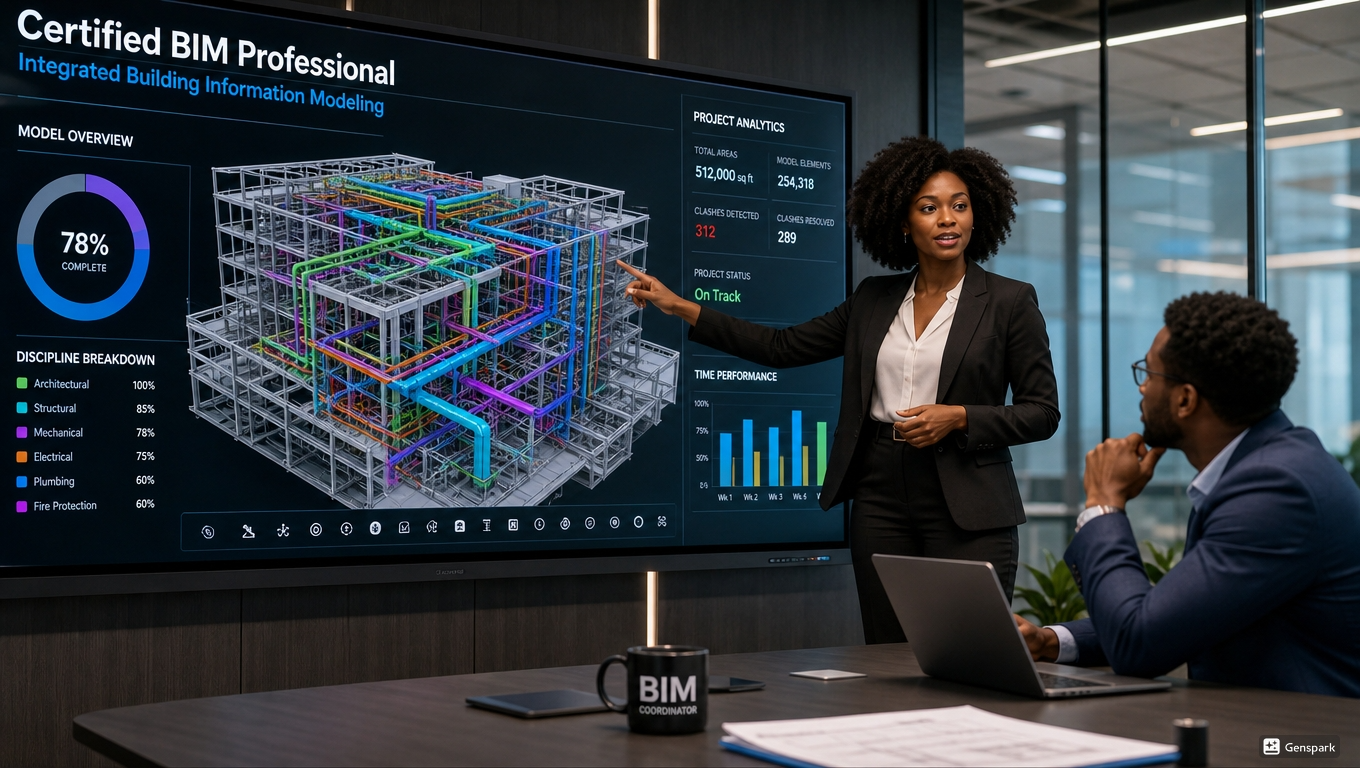
In large companies, hiring managers see hundreds of resumes when they are looking for competitive architecture jobs. If you have a professional BIM certification on your CV, it's easy to show that you have technical skills. It demonstrates that you don't have to attend expensive basic training with the company in order to join a project.
This certification will address one of the biggest challenges employers have, will this person be able to handle the complex project data? International data rules (such as ISO 19650) must be followed in large government contracts and infrastructure projects. Using an architect with a recognised BIM certification decreases risk for the company. It gives clients the confidence that the team can provide them with accurate models, which will give you a significant edge in your architecture careers.
## **How Can BIM Certification Improve Project Roles and Responsibilities?**
Junior architects frequently end up repeating the same modeling operations, such as modifying door schedules or correcting basic lines, without any special training. As you become more proficient in BIM skills, your on-site and office duties will evolve.
- [Clash Detection](https://www.novatr.com/blog/bim-and-clash-detection-in-construction): You are the person that conducts the clash detection process between structural beams and air conditioning ducts before the construction work starts.
- **Model Management:** You manage the main project file that is edited by several team members at once.
- **Data Integration:** You link the visual model with [cost estimation](https://www.novatr.com/blog/bim-for-cost-estimation) databases and project timelines.
## **What Career Growth Opportunities Open Up After BIM Certification?**

The job path for today's architect is quite different from what it was ten years ago. Technical skills can lead to certain leadership positions which are not part of the traditional design hierarchy.
| **Job Title** | **Core Focus** | **Experience Level** |
| --- | --- | --- |
| **BIM Modeler** | Making 3D objects and simple documentation | Entry Level |
| **BIM Coordinator** | Combining the models from various engineering teams. | Mid Level |
| **BIM Manager** | Establishing company data requirements and processes | Senior Level |
| **Digital Delivery Director** | Leading the development of the firm's technology strategy. Managing the firm's technology strategy. | Executive Level |
If you get your architect certification, you can progress this ladder at a much quicker rate. You can change careers in years instead of years, and go into roles of coordination and management, which are more secure and higher-paying. This trajectory is clearly visible, measurable, and a path towards corporate leadership, this is the reason what are benefits of BIM certification for architects.
## **Which Type of BIM Certification Is Most Relevant for Architects Today?**

Our modern BIM training courses are not all created equal. Some courses teach you only how to use a particular piece of software, without considering the overall workflows in projects. For architecture careers in today's world, it's important to have a program that teaches software mechanics and also real industry standards.
That's where niche platforms come in handy. The[BIM Professional Program](https://www.novatr.com/courses/bim-professional-program?utm_source=organic_search&utm_medium=blog&utm_campaign=) by Novatr is an extremely practical and project-based learning approach. You don't work on hypothetical models; you work on real models of residential and commercial buildings.
You will learn some of the key tools such as [Autodesk Revit](https://www.novatr.com/blog/detailed-revit-guide) and [Navisworks](https://www.novatr.com/blog/navisworks-for-clash-detection), as well as advanced plugins such as pyRevit and [DiRoots](https://www.novatr.com/blog/what-is-diroots-plugin-why-should-civil-engineers-care).One which automate routine tasks. Understanding the connection between these tools in international standards gives you the exact skill set that international design firms are searching for.
Master BIM and Get Hired Faster
Join a community of 8500+ Architects and Engineers.
Explore Now
\*Limited seats available
## **Conclusion**
Automated, data-driven design is forever altering the face of modern architecture. If you only use traditional drawing techniques, you may be restricted in your career choices. Getting a BIM certification, can be a practical hands on approach to refresh your technical skills, move up toward management roles, and generally how BIM certification improves job opportunities, on projects. Courses such as the[BIM Professional Program](https://www.novatr.com/courses/bim-professional-program?utm_source=organic_search&utm_medium=blog&utm_campaign=) from[Novatr](https://www.novatr.com/) provide practical project experience to help you differentiate yourself in a competitive market.
For more industry information, trends and technical guides that help, visit our[resource page](https://www.novatr.com/learning-hub) and continue your education.
## **FAQs**
### **1. Is BIM certification worth it for architects?**
Yes, it is very worthwhile. Digital models are crucial to the architecture industry for planning and executing projects. Having a certification means that you have more advanced technical skills and will get rid of the lower level draft jobs and get to more lucrative management positions in a much shorter time.
### **2. What are the benefits of BIM certification for architects?**
It allows you to manage a large amount of project data, avoid design errors and get automatic clash detection, and collaborate effortlessly with engineering teams. It also provides you with a clear career path to more lucrative positions like BIM Coordinator or BIM Manager.
### **3. How does BIM certification improve job opportunities?**
There are lots of big design companies that require certified professionals to meet the strict requirements of projects in foreign countries. This qualification will make you stand out in the job market with the best global companies and immediately attract the attention of recruiters.
Was this content helpful to you
Like Yes
Dislike No
.png)
TABLE OF CONTENTS
BIM Is The New Standard. Are You Certified?
Get Certified in BIM
SHARE ON YOUR SOCIALS
Link Copied Successfully
Related articles
[ BIM Civil How Real BIM Projects Work: From Design to Construction? 5 May 2026 5 min read](https://blog.novatr.com/blog/the-practicality-of-bim-projects-from-design-to-construction) [ BIM Civil BIM Coordination vs Traditional Coordination? And Why BIM Coordination is better? 28 April 2026 5 min read](https://blog.novatr.com/blog/bim-coordination-vs-traditional-coordination-and-why-bim-coordination-is-better) [ BIM How Structural Draftsmen Can Transition to BIM in 7 Months – Certifications & Key Software Skills 11 November 2025 5 min read](https://blog.novatr.com/blog/how-structural-draftsmen-can-transition-to-bim-in-7-months-certifications-key-software-skills) [ BIM How To Transition from Revit Specialist to High-Paying BIM Coordinator? 11 November 2025 4 min read](https://blog.novatr.com/blog/how-to-transition-from-revit-specialist-to-high-paying-bim-coordinator)
Download Syllabus
## BIM Professional Program
Next Cohort
June 2026
Program Duration
7 Months
Premium Program benefits
8 Credentials from Autodesk, NSDC, Novatr
1 program. 10 career paths. Infinite Growth.
40+ ISO 19650 & RIBA real-world projects to practice
1-on-1 guidance. Access 400+ industry experts.
Access the biggest AEC-Tech community on the planet. 8500+ and counting
Curated for you by 100+ global BIM leaders.
Lifelong access to course content
Enter your details to download the program syllabus.
##### BIM Professional Program
June 2026, 7 Months
Your Name Invalid name.
Phone Number Enter a valid phone number
Email Please enter a valid email address.
Select years of experience\* Currently studying 0-1 years 1-2 years 2-4 years 4-8 years 8-10 years 10-12 years 12+ years Invalid selection.
Specialisation Select your background\* Architecture Civil Engineering Mechanical Engineering Electrical Engineering Invalid selection.
Are you professionally trained in interior design?
Yes
No
I agree to the [Terms of Use](https://www.novatr.com/terms-and-conditions) and [Privacy Policy](https://www.novatr.com/privacy-policy), and consent to be contacted by Email, Call, WhatsApp, or SMS.
Submit
Ready to skyrocket your career?
Begin your next chapter in AEC
with Novatr!
We are here to help you take the industry by storm with advanced, tech-first skills.
[Explore Courses](https://www.novatr.com/#courses)
Join our newsletter
Submit
Thank you for signing up.
We’ll send you a nice letter once per week. No spam.

Dare to Disrupt.
Join thousands of people who organise
work and life with Novatr.
Company
- [About Us](https://www.novatr.com/about)
- [BIM Professional Program v.2026](https://www.novatr.com/courses/bim-professional-program)
- [Masters Computational Design](https://www.novatr.com/courses/computational-design)
- [Become a Mentor](https://www.novatr.com/apply-as-mentor)
- [Hiring from Us](https://www.novatr.com/hire-from-us)
- [Careers at Novatr](https://www.novatr.com/career)
Resources
- [Blog](https://www.novatr.com/learning-hub)
- [Media Room](https://www.novatr.com/media-room-home-page)
- [Career Builder](https://www.novatr.com/career-navigator)
- [Events & Webinars](https://www.novatr.com/webinars)
- [FAQs & Support Center](https://www.novatr.com/contact-us)
- [Contact Us](https://www.novatr.com/contact-us)
- [Privacy Policy](https://www.novatr.com/privacy-policy)
- [Terms of Use](https://www.novatr.com/terms-and-conditions)
©2023 Oneistox Network Pvt. Ltd.
All Rights Reserved
```json
{
"@context" : "https://schema.org",
"@type" : "BlogPosting",
"author" : {
"@type" : "Person",
"name" : "Neha Singh",
"url" : "https://blog.novatr.com/blog/author/neha-singh"
},
"dateModified" : "2026-06-22T11:19:51.455Z",
"datePublished" : "2026-06-22T07:24:46.000Z",
"headline" : "7 Ways BIM Certification Accelerates Architecture Careers {{year}}",
"image" : [ "https://blog.novatr.com/hubfs/Untitled%20design%20(31).png" ],
"mainEntityOfPage" : {
"@id" : "https://blog.novatr.com/blog/7-ways-bim-certification-accelerates-architecture-career",
"@type" : "WebPage"
},
"publisher" : {
"@type" : "Organization",
"logo" : {
"@type" : "ImageObject",
"url" : "https://blog.novatr.com/hubfs/Novatr%20Prev%20OX-2.svg"
}
}
}
```